Samādhi develops when the conditions supporting agitation are gradually removed and the mind becomes steady, unified and pliable. These studies bring together the Buddha’s instructions on sense restraint, moderation, wakefulness, hindrances, ānāpānasati, jhāna and the development of a mind fit for deeper insight.
Explore Samādhi Studies
Studies and practical guidance for establishing samādhi and developing the mind.
Showing 49–60 of 67 studies

Jhāna as Purification
Bhikkuvagga explains jhāna in a most refined way thus clearing off the doubts in the hearts of practitioner
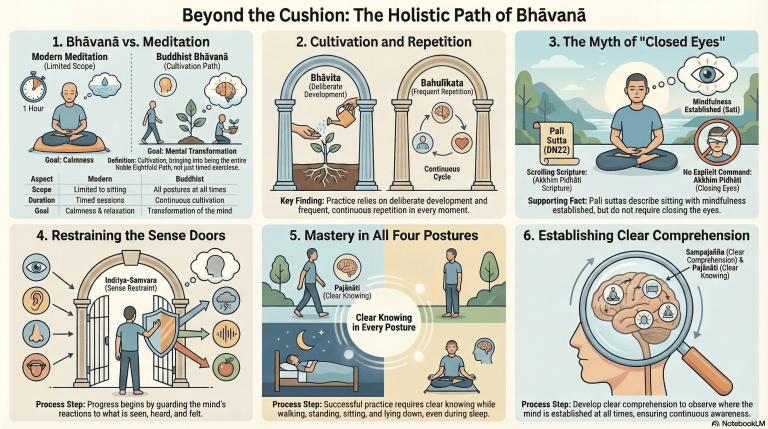
Did the Buddha Teach “Closed-Eyes Meditation”?
This study invites a deeper reconsideration of what bhāvanā actually means in the Buddha’s teaching. Instead of defining practice by a particular posture, a timer, or whether the physical eyes are open…
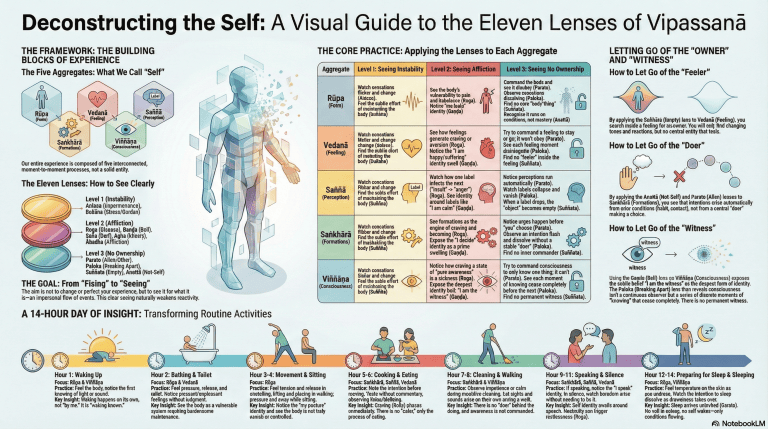
Turn the Five Khandhas Like a Jewel—Until “I” and “Mine” Cannot Be Found
This essay is about looking at five aggregates in 11 lenses when then makes one to experience "No I" or i'm" this or that. Worth trying to understand the depth of Dhamma

Paṭisambhidāmagga — Ānāpānassatikathā: The Tree and the Saw
Uses the tree-and-saw method to explain steady mindfulness at the breath-contact point without chasing past or future breaths, linking this stability with effort, jhāna and insight.
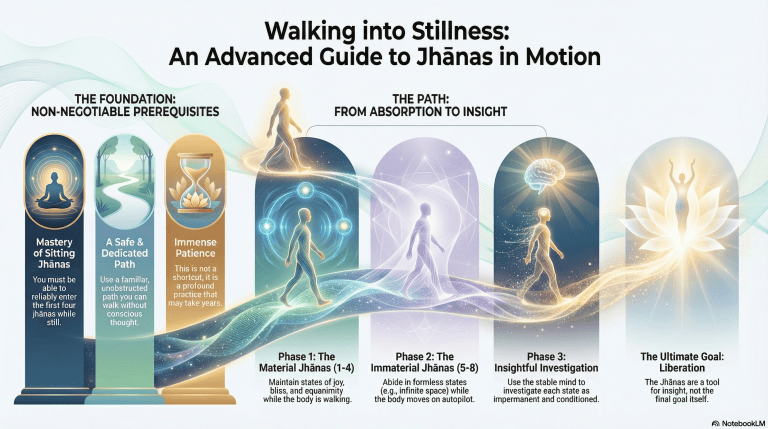
Attaining jhānas in walking
DHAMMA ESSENCE — SURGICAL REASSESSMENT Walking Jhāna • Rūpa Jhāna • Arūpa Attainments • Insight WORDPRESS EXCERPT RECOMMENDATION: An advanced inquiry into whether deep collectedness can remain stable while walking—and a more…

Can I meditate for an hour?
When we want to do sitting meditation with closed eyes, there would be lot of obstacles that comes. Do we really understand the Dhamma?
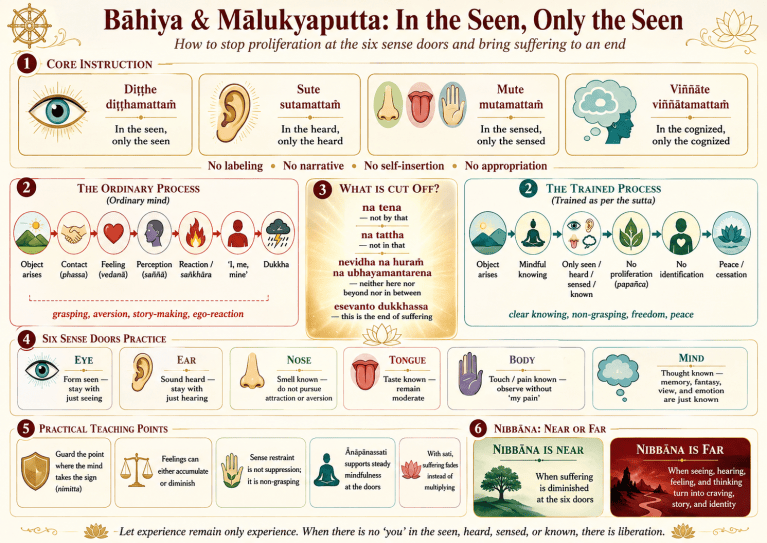
Ud 1.10 — Bāhiyasutta with SN 35.95 Mālukyaputtasutta: In the Seen, Only the Seen
Brings together Bāhiya and Mālukyaputta to show how seeing, hearing, sensing and cognizing remain free when contact is not turned into appropriation, identity and proliferation.
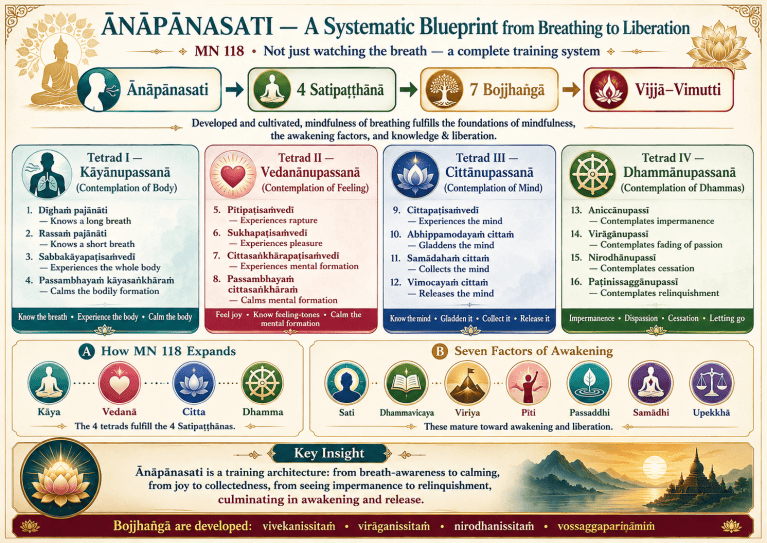
MN 118 — Ānāpānassatisutta
Presents MN 118 as a complete sixteen-step training through body, feeling, mind and dhammas, progressing from breath awareness to calming, insight, fading, cessation and relinquishment.
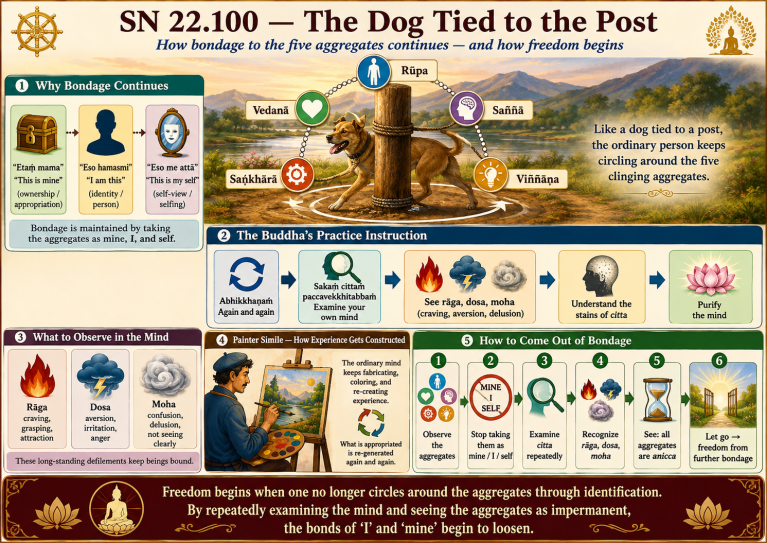
SN 22.100 — Dutiyagaddulabaddhasutta
Uses the dog tied to a post to show how identification with the five aggregates keeps beings circling within saṁsāra, and how relinquishment ends that bondage.
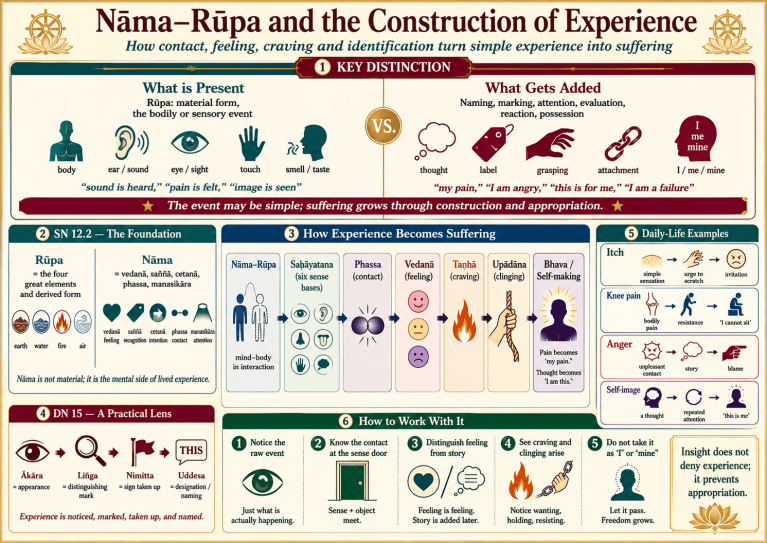
What is name & form?
SN 12.2 • MN 38 • DN 15 • Nāma–Rūpa • Phassa • Vipassanā Nāma–Rūpa: How Experience Becomes “Pain,” “Anger,” “Self” and “Mine” This essay begins with the definition of nāma–rūpa in…
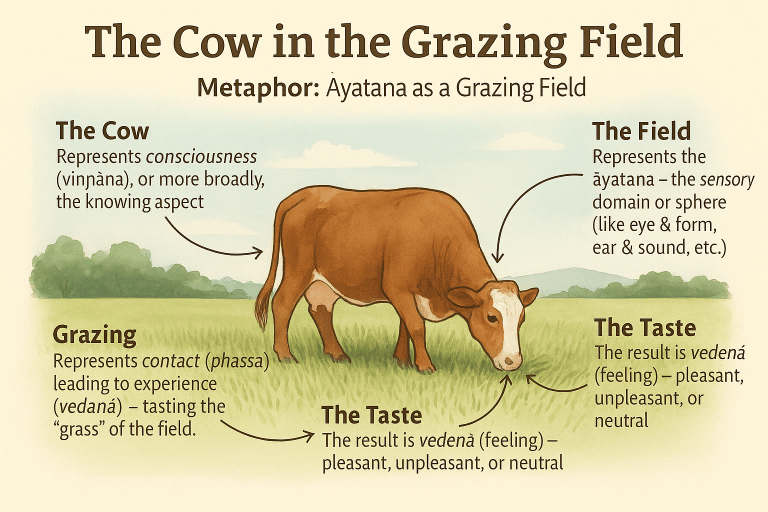
MN 137 — Saḷāyatanavibhaṅgasutta: Six Sense Field Experiences
Maps experience across the six sense bases from object, consciousness, contact and feeling through craving and mental responses, culminating in the refinement of upekkhā and atammayatā.

MN 121 — Cūḷasuññatasutta: Progressive Entry into Emptiness
Explains MN 121 as a progressive entry into emptiness, where each field is known as empty of what is absent while clearly recognizing what still remains.
Page 5 of 6