Bhojane mattaññutā
Training in moderation in eating as part of the gradual training and as support for clarity, wakefulness and sustained practice.
Showing 1–8 of 8 studies
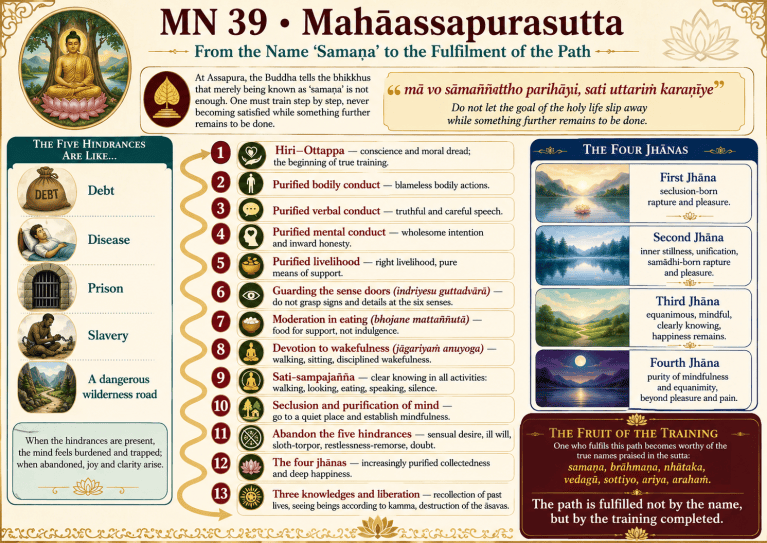
MN39 Mahāassapurasutta
MN 39 presents the Buddha’s gradual training as a cumulative path from hiri-ottappa and purified conduct through sense restraint, moderation, wakefulness, sati-sampajañña, jhāna, and finally the destruction of the āsavas. MN 39…
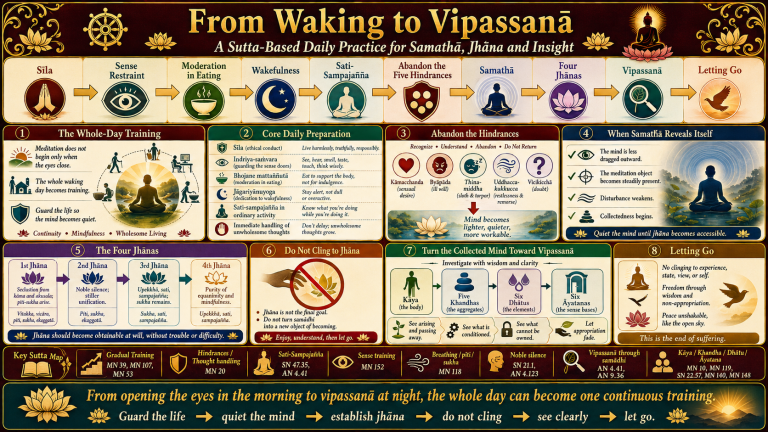
From Daily Discipline to Samathā, Jhāna and Vipassanā
From Waking to Vipassanā presents meditation as a continuous training rather than an isolated sitting practice. Drawing especially on MN 39, MN 107 and MN 53, it shows how sīla, guarding the…
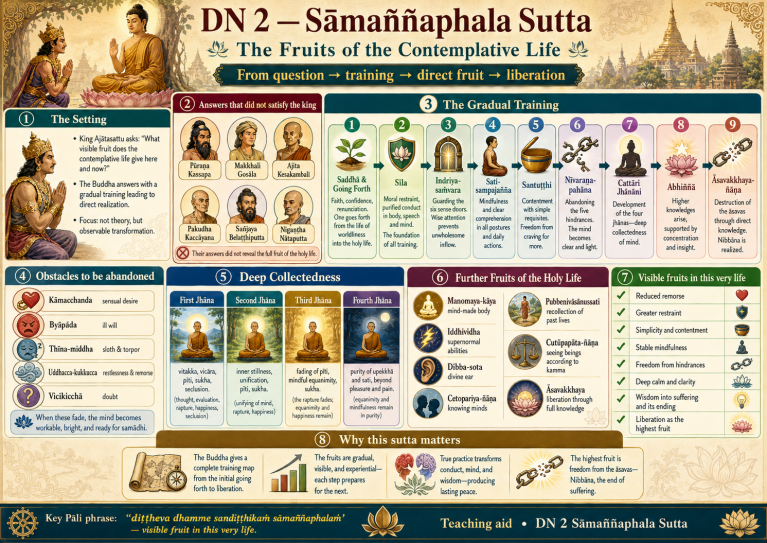
DN 2 — Sāmaññaphalasutta
Maps the gradual training from sīla and sense restraint through sati-sampajañña, abandonment of the hindrances and jhāna to the destruction of the āsavas.

MN 107 — Gaṇakamoggallānasutta
Presents the Buddha’s gradual training step by step, from sīla and sense restraint through moderation, wakefulness, hindrance abandonment and jhāna toward liberation.

AN 4.122 — Ūmibhayasutta
Uses waves, crocodiles, whirlpools and sharks to represent four dangers that can overturn a practitioner: wounded pride, attachment to food, sensuality and attraction to the opposite sex.
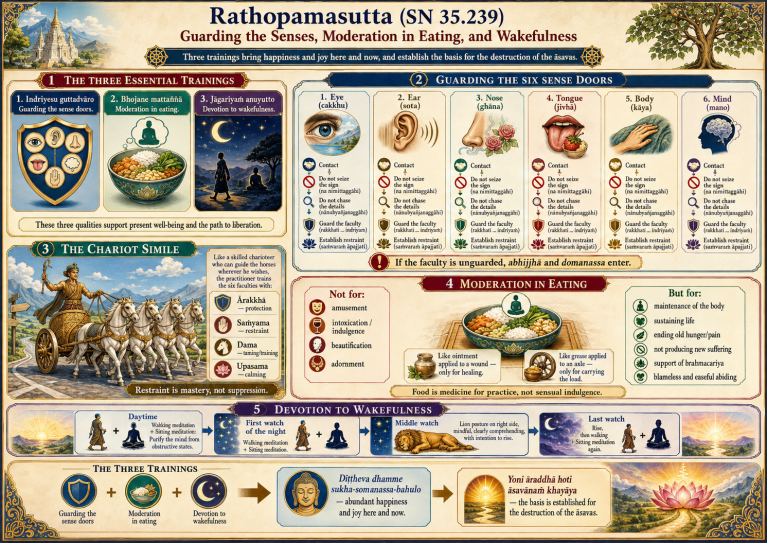
SN 35.239 — Rathopamasutta
Uses the chariot simile to emphasize three foundations of serious practice: guarding the sense doors, moderation in eating and devotion to wakefulness.
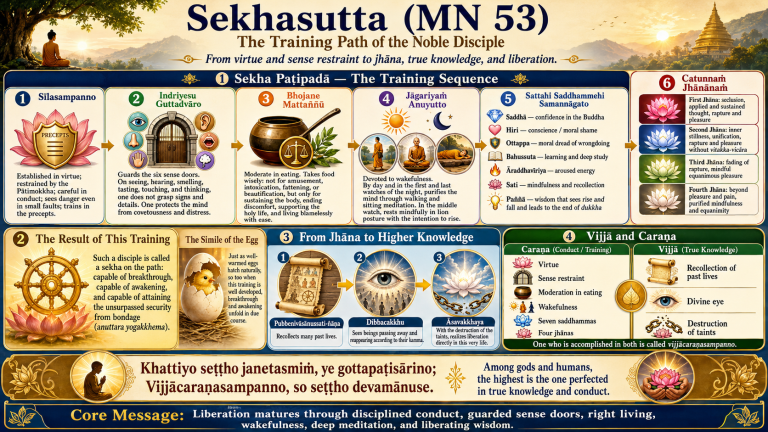
MN 53 — Sekhasutta
Presents the trainee’s development through conduct and knowledge, including sīla, sense restraint, moderation, wakefulness, seven good qualities, jhāna and the three higher knowledges.

Snp 4.16 — Sāriputtasutta: Like a Silversmith Refining Silver
Uses Snp 4.16 as a practical guide for householders, showing how silence, restraint, careful speech, moderation and gradual refinement can turn daily life into training.