Indriya-saṁvara
Teachings on guarding the six sense doors and understanding how contact with sights, sounds, smells, tastes, touches and thoughts conditions reaction.
Showing 1–12 of 20 studies

AN 5.55 Mātāputtasutta
This important sutta explains in detail on how a man gets involved with woman and how a woman gets involved with man irrespective of whatever designations they create and how the lust…
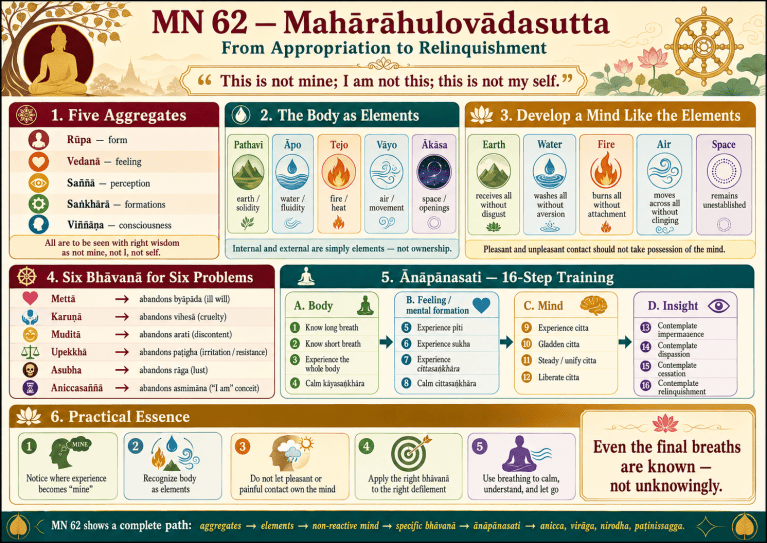
MN 62 Maharahulovadasutta
MN 62 Mahārāhulovādasutta is far more than a discourse on mindfulness of breathing. The Buddha gives Rāhula a complete training: seeing the five aggregates and elements without ownership, developing a mind that…
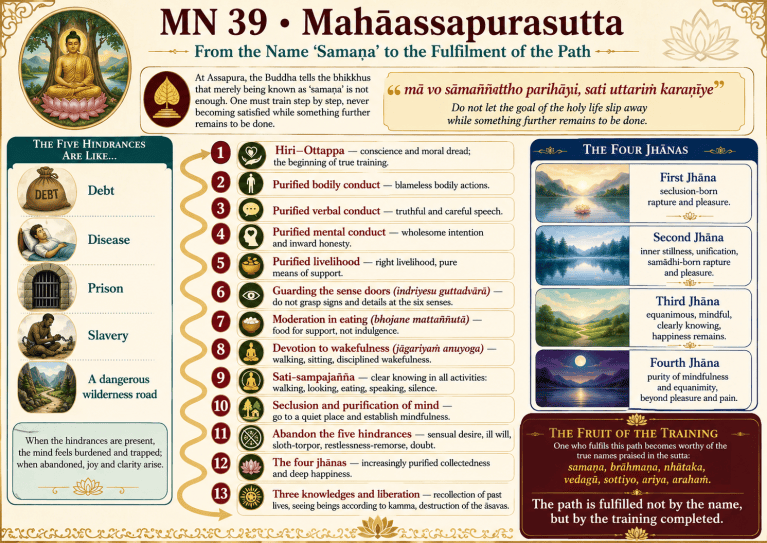
MN39 Mahāassapurasutta
MN 39 presents the Buddha’s gradual training as a cumulative path from hiri-ottappa and purified conduct through sense restraint, moderation, wakefulness, sati-sampajañña, jhāna, and finally the destruction of the āsavas. MN 39…
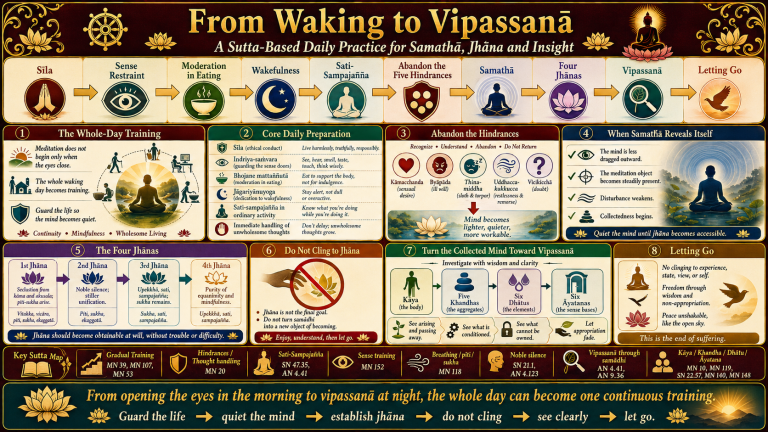
From Daily Discipline to Samathā, Jhāna and Vipassanā
From Waking to Vipassanā presents meditation as a continuous training rather than an isolated sitting practice. Drawing especially on MN 39, MN 107 and MN 53, it shows how sīla, guarding the…
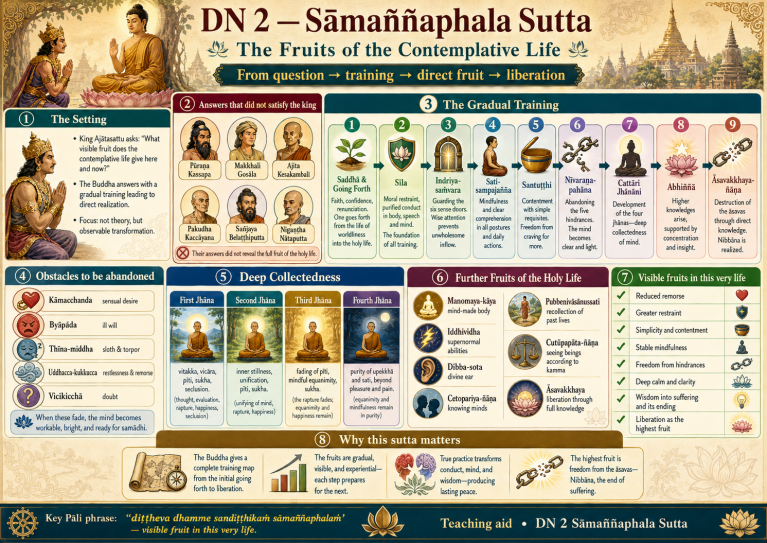
DN 2 — Sāmaññaphalasutta
Maps the gradual training from sīla and sense restraint through sati-sampajañña, abandonment of the hindrances and jhāna to the destruction of the āsavas.
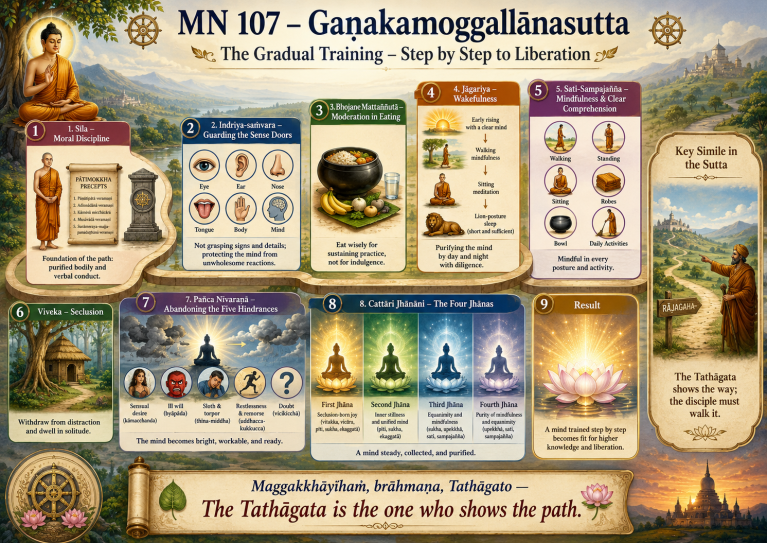
MN 107 — Gaṇakamoggallānasutta
Presents the Buddha’s gradual training step by step, from sīla and sense restraint through moderation, wakefulness, hindrance abandonment and jhāna toward liberation.
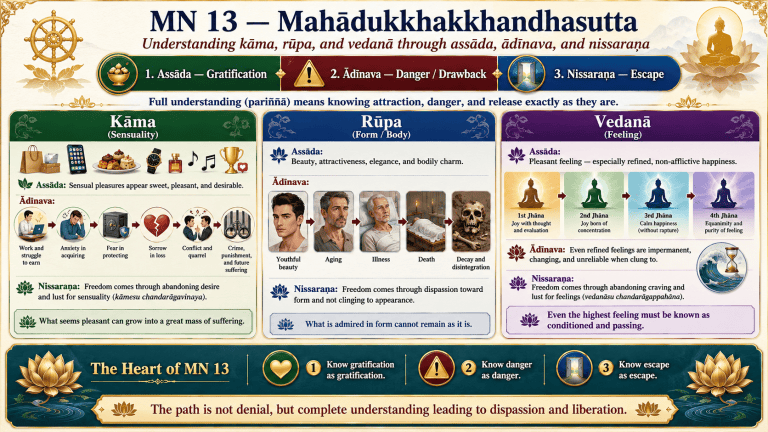
MN 13 — Mahādukkhakkhandhasutta
Explains full understanding of sensuality, form and feeling through three aspects—gratification, danger and escape—rather than through abstract belief or partial analysis.
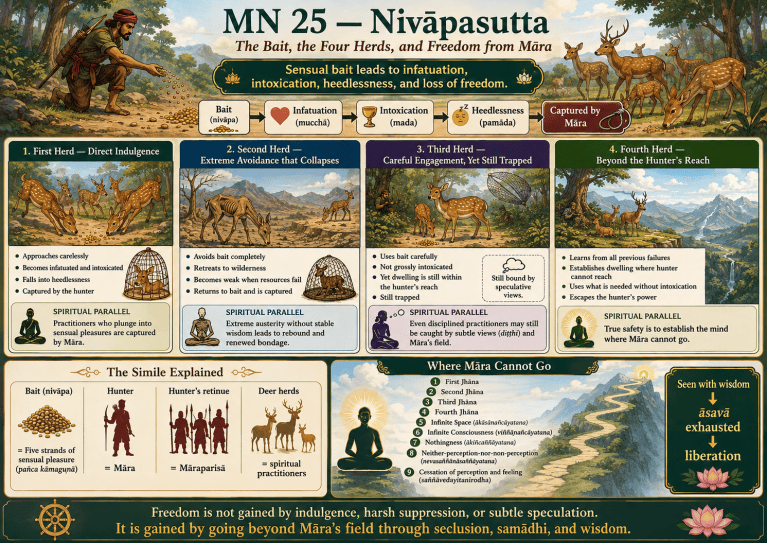
MN 25 — Nivāpasutta
Uses the hunter-and-bait simile to show how sensuality and heedlessness trap beings, and how restraint, seclusion and deep meditative development lead beyond Māra’s reach.
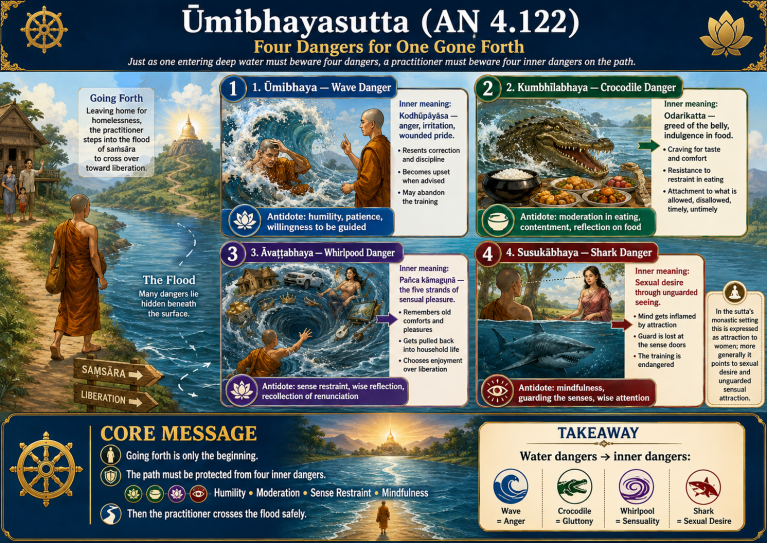
AN 4.122 — Ūmibhayasutta
Uses waves, crocodiles, whirlpools and sharks to represent four dangers that can overturn a practitioner: wounded pride, attachment to food, sensuality and attraction to the opposite sex.

SN 35.244 — Dukkhadhammasutta
Shows how insight into the five aggregates and the six sense doors changes one’s relationship to sensuality, exposing danger and supporting dispassion and release.
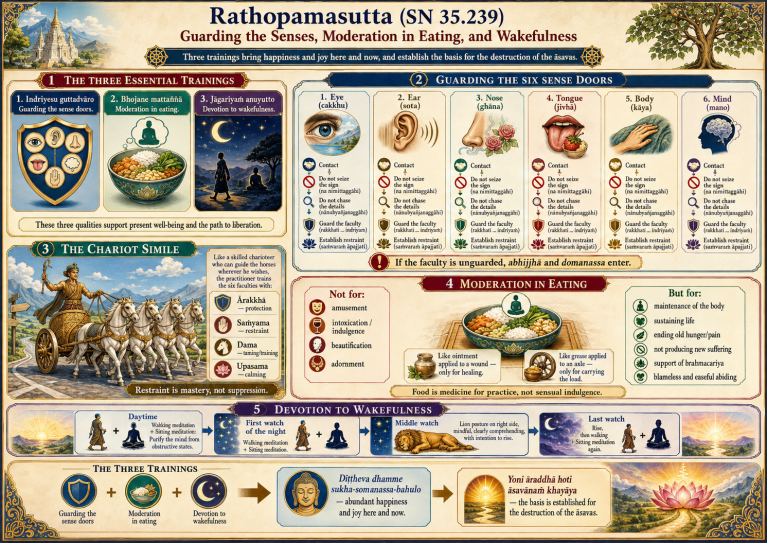
SN 35.239 — Rathopamasutta
Uses the chariot simile to emphasize three foundations of serious practice: guarding the sense doors, moderation in eating and devotion to wakefulness.
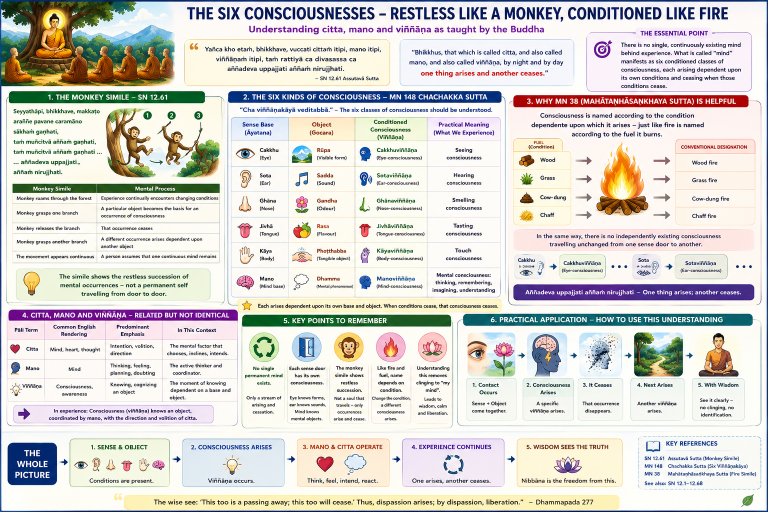
Sense Doors – How to understand?
Introduction There are 6 consciousness depending upon the type of the senses. The Buddha does not present a single permanent “mind” that remains unchanged while merely looking through six different windows. What…
Page 1 of 2