Sati-Sampajañña
Training in sati and clear comprehension throughout the four postures and the ordinary activities of daily life.
Showing 1–12 of 30 studies

AN 5.55 Mātāputtasutta
This important sutta explains in detail on how a man gets involved with woman and how a woman gets involved with man irrespective of whatever designations they create and how the lust…
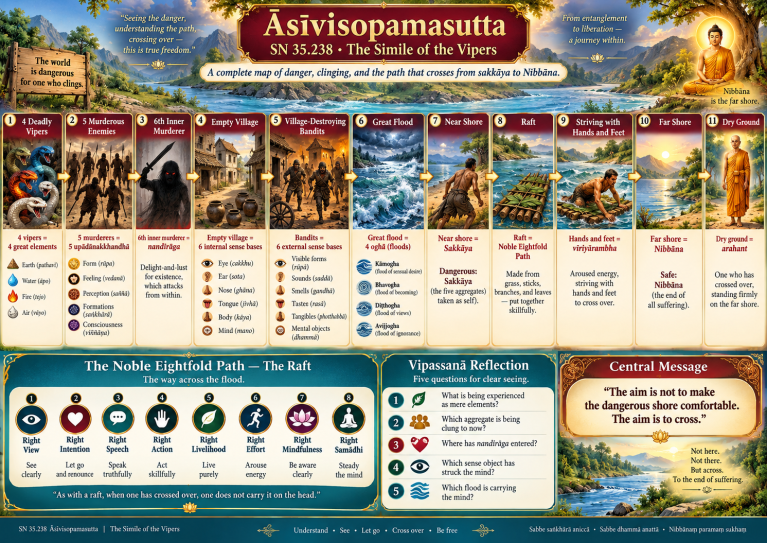
SN 35.238 Āsīvisopamasutta
This sutta provies strong Vipassanā treatment of: body as four elements, why the Buddha specifies upādānakkhandha, nandīrāga as the danger carried within, the six bases as suñña, sense objects as continual impact,…
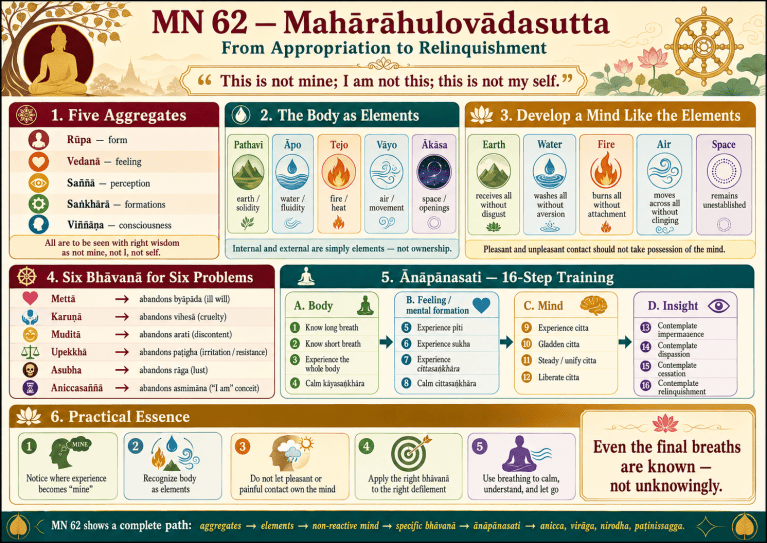
MN 62 Maharahulovadasutta
MN 62 Mahārāhulovādasutta is far more than a discourse on mindfulness of breathing. The Buddha gives Rāhula a complete training: seeing the five aggregates and elements without ownership, developing a mind that…
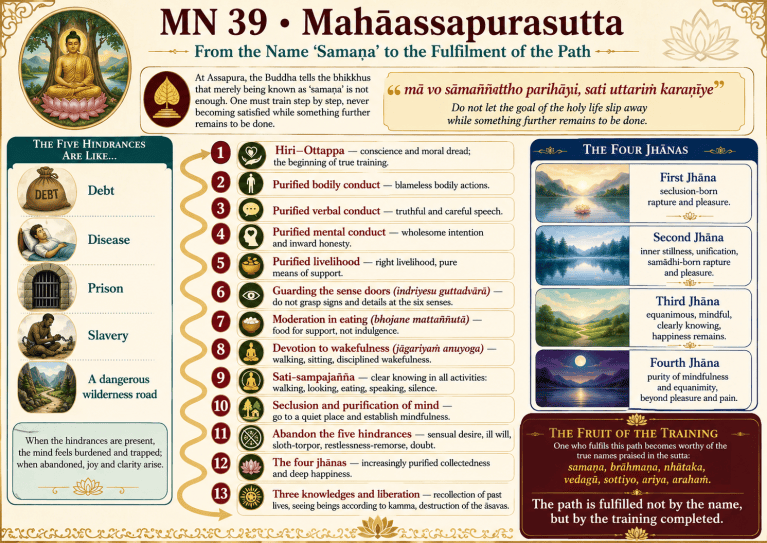
MN39 Mahāassapurasutta
MN 39 presents the Buddha’s gradual training as a cumulative path from hiri-ottappa and purified conduct through sense restraint, moderation, wakefulness, sati-sampajañña, jhāna, and finally the destruction of the āsavas. MN 39…

What is Sati?
Sati is one of the most frequently used—and frequently oversimplified—terms in the Buddha’s teaching. Often translated merely as “mindfulness” or “present-moment awareness,” its meaning becomes much richer when SN 48.10, MN 118,…
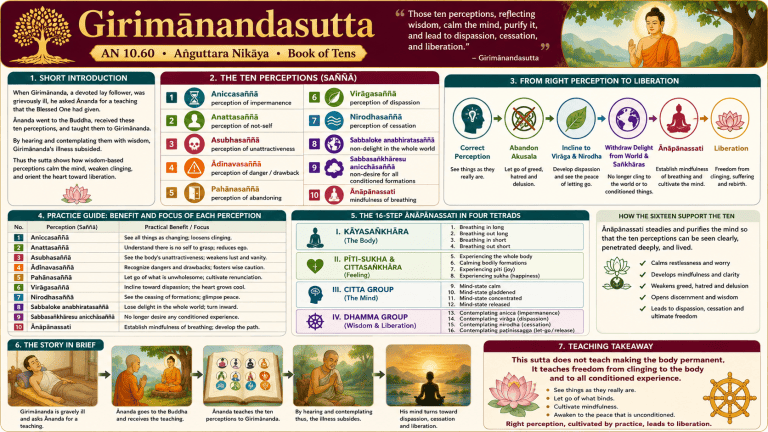
AN 10.60 Girimānandasutta
AN 10.60, the Girimānandasutta, is a profound discourse in which the Buddha responds to the grave illness of Venerable Girimānanda by teaching ten perceptions that radically transform how a practitioner understands the…
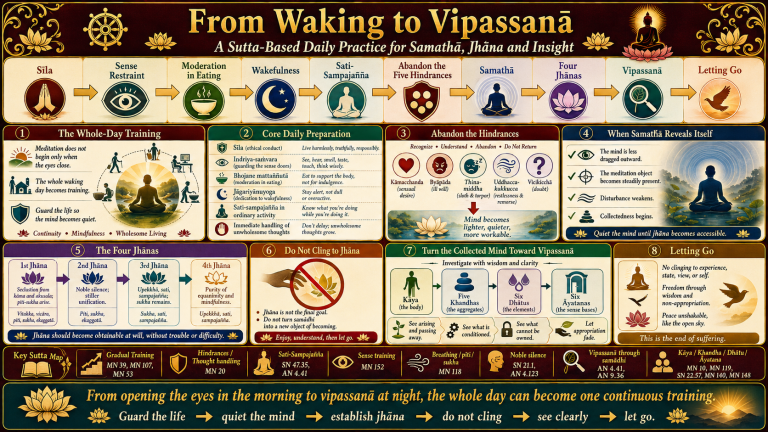
From Daily Discipline to Samathā, Jhāna and Vipassanā
From Waking to Vipassanā presents meditation as a continuous training rather than an isolated sitting practice. Drawing especially on MN 39, MN 107 and MN 53, it shows how sīla, guarding the…
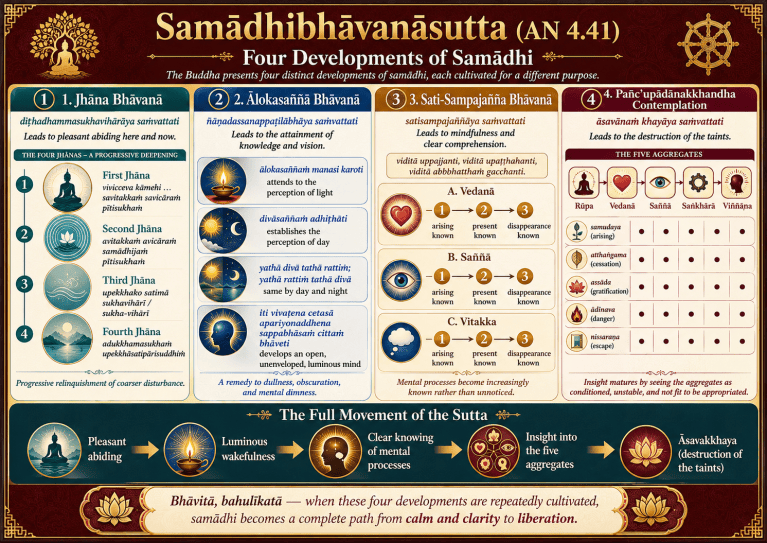
AN 4.41 — Samādhibhāvanāsutta
Distinguishes four developments of samādhi, each cultivated for a different purpose: pleasant abiding, knowledge and vision, sati-sampajañña, and destruction of the āsavas.
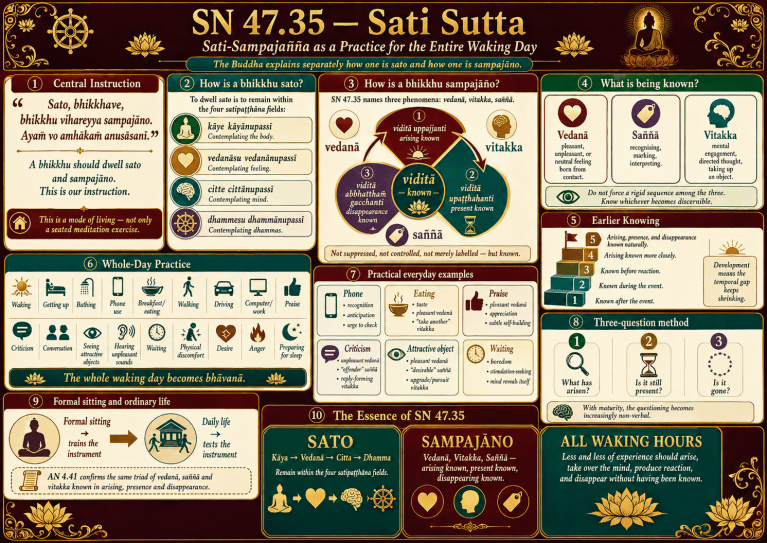
SN 47.35 — Satisutta
Clarifies sati through the four satipaṭṭhānas and explains sampajañña as direct knowing of vedanā, vitakka and saññā as they arise, remain and disappear.
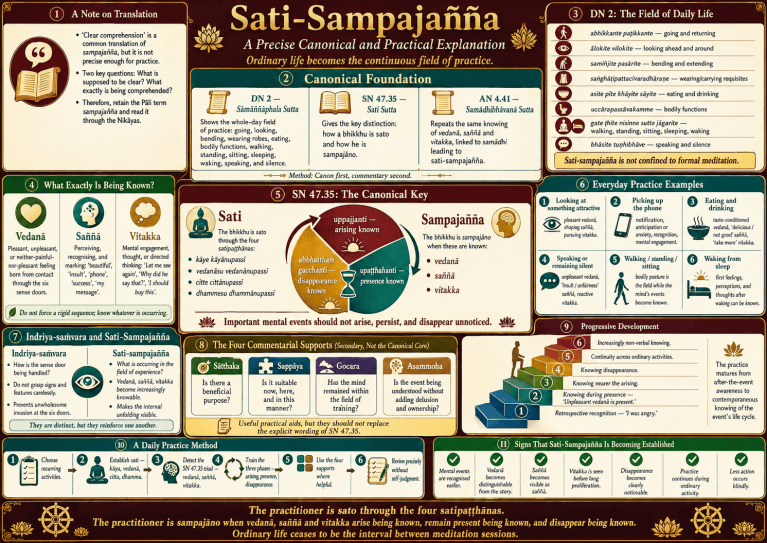
Sati-Sampajañña
Complete listening edition Listen to the full Sati-Sampajañña explanation A continuous reading of this entire page, including the canonical foundation, daily-life examples, practical development, and conclusion. Your browser does not support audio…
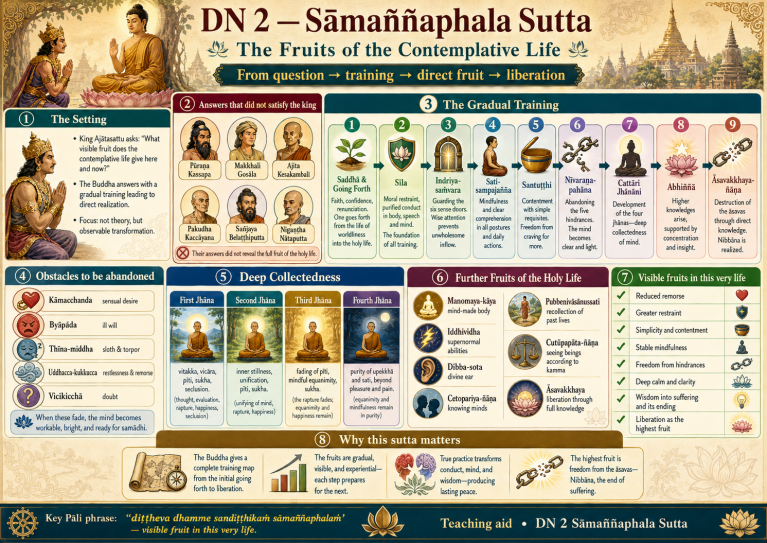
DN 2 — Sāmaññaphalasutta
Maps the gradual training from sīla and sense restraint through sati-sampajañña, abandonment of the hindrances and jhāna to the destruction of the āsavas.
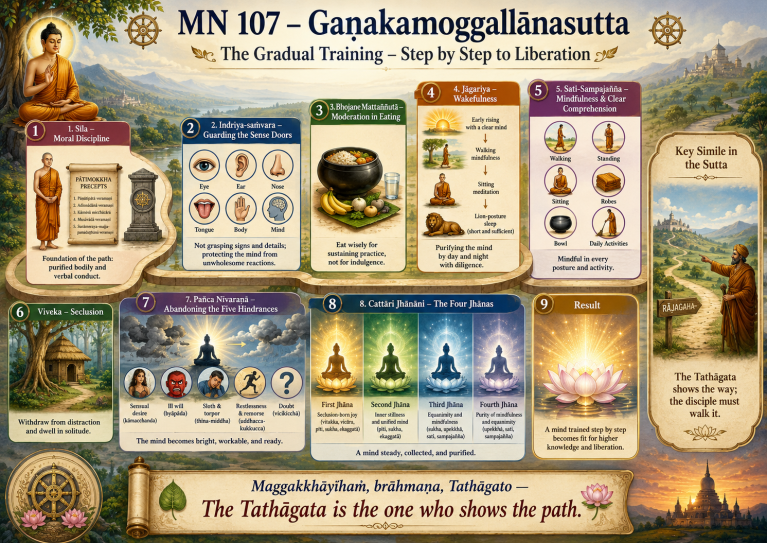
MN 107 — Gaṇakamoggallānasutta
Presents the Buddha’s gradual training step by step, from sīla and sense restraint through moderation, wakefulness, hindrance abandonment and jhāna toward liberation.
Page 1 of 3