Sīla
Training in wholesome conduct, restraint, precepts, hiri-ottappa, careful conduct and abandoning bodily, verbal and mental misconduct.
Showing 1–12 of 22 studies
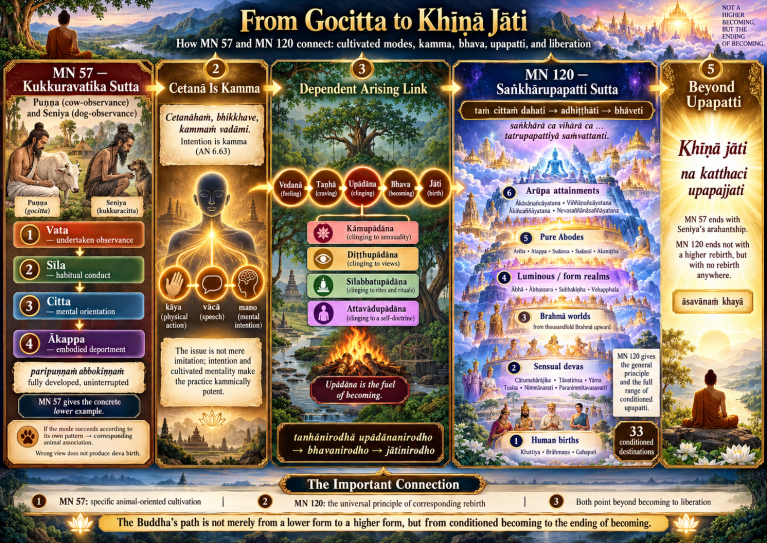
From Gocitta to the Ending of Bhava
How cultivation shapes Animal, Human, Deva and Brahmā existence and how the Buddha ends becoming
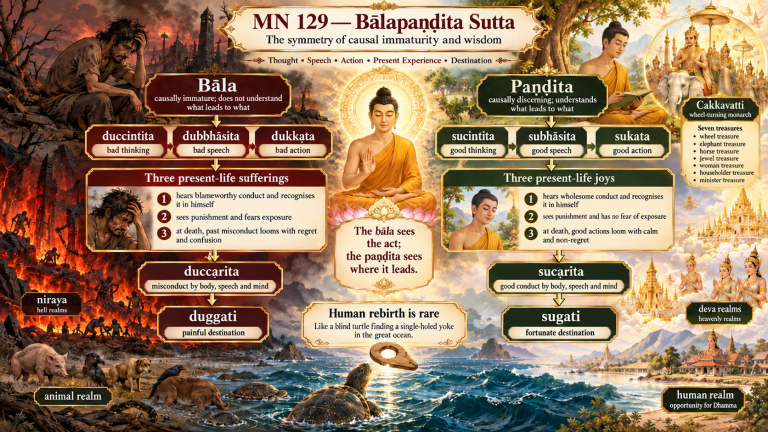
MN 129 Bālapaṇḍitasutta
This sutta explains on how an immature person would behave vs a mature person who knows what to be done and what should not be done and how the immaturity leads to…
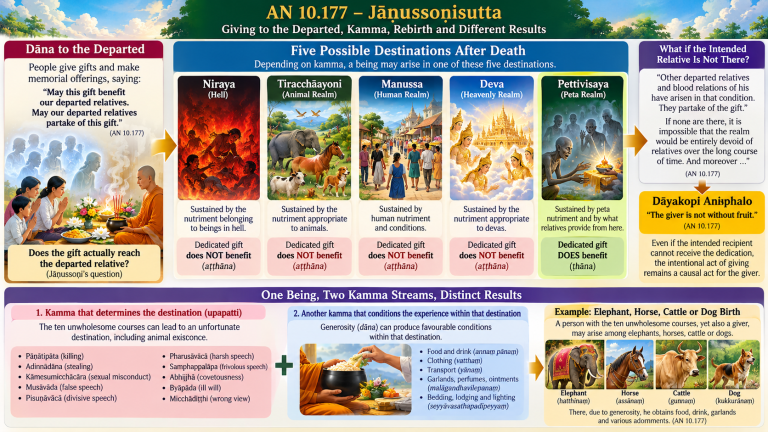
AN 10.177 Jāṇussoṇisutta
In this sutta, Buddha explains to Jānussoni on how kamma gets formed and how giving to departed gets accumulated and what happens in different realms
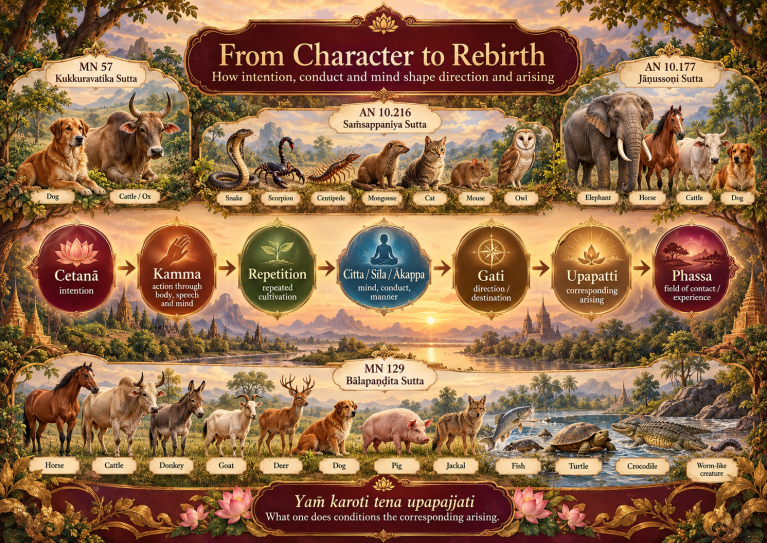
From Character to Rebirth
This essay takes into consideration many sutta's which relate to how rebirth happens in lower realm and how one can protect oneself from being born in those realms by practicing morality and…
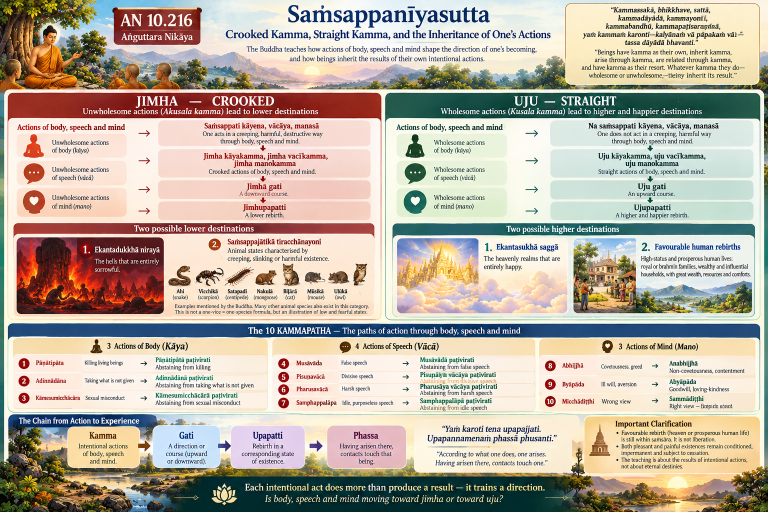
AN 10.216 Saṁsappanīyasutta
A fantastic sutta that explains on how beings would be reborn in lower realms and Buddha explains the name of animals while doing good deeds get into heaven or human birth
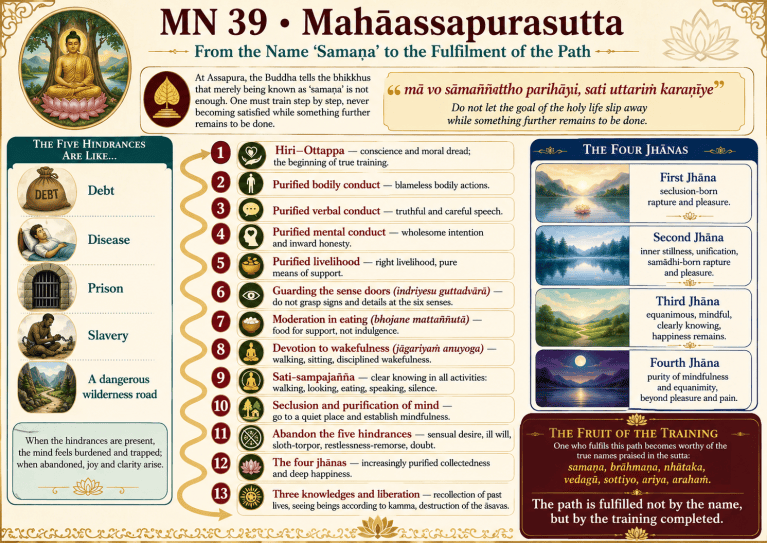
MN39 Mahāassapurasutta
MN 39 presents the Buddha’s gradual training as a cumulative path from hiri-ottappa and purified conduct through sense restraint, moderation, wakefulness, sati-sampajañña, jhāna, and finally the destruction of the āsavas. MN 39…
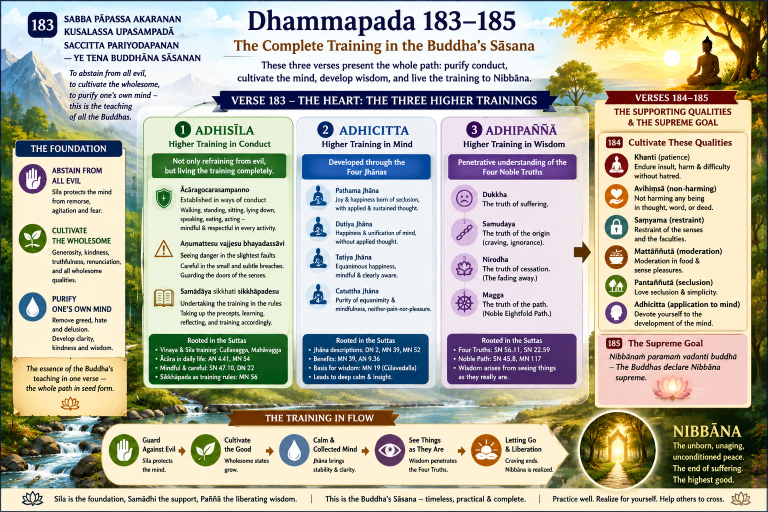
Dhammapada 183 – 185
Dhammapada verses 183–185 are often read as simple ethical instructions, but together they present a remarkably complete summary of the Buddha’s training. Verse 183 can be understood through the three higher trainings:…
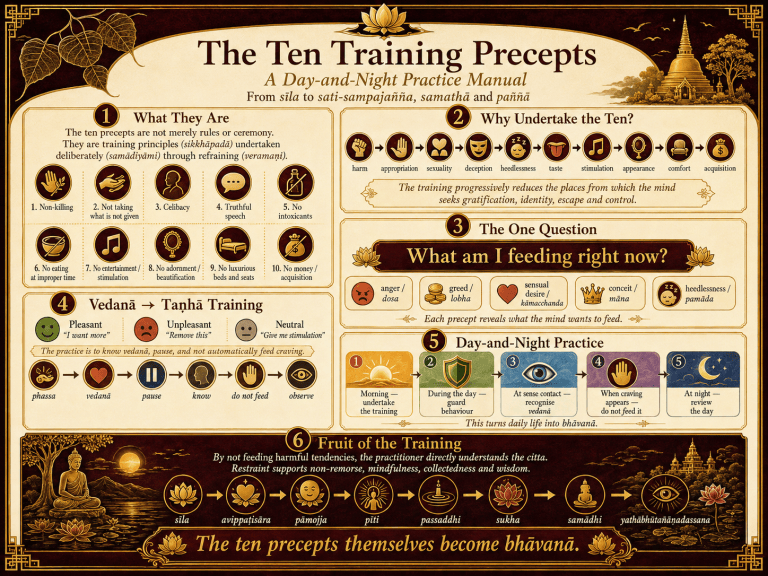
KP 2 — Dasasikkhāpada
Explores the Ten Training Precepts as practical training in restraint, simplicity and purification of conduct that supports deeper development of the mind.
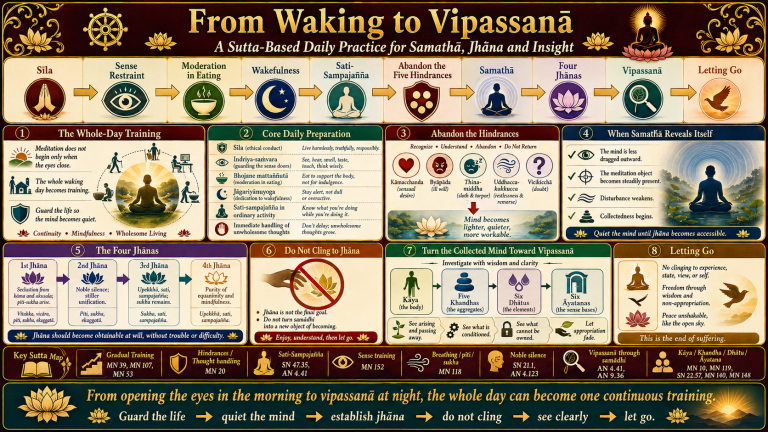
From Daily Discipline to Samathā, Jhāna and Vipassanā
From Waking to Vipassanā presents meditation as a continuous training rather than an isolated sitting practice. Drawing especially on MN 39, MN 107 and MN 53, it shows how sīla, guarding the…
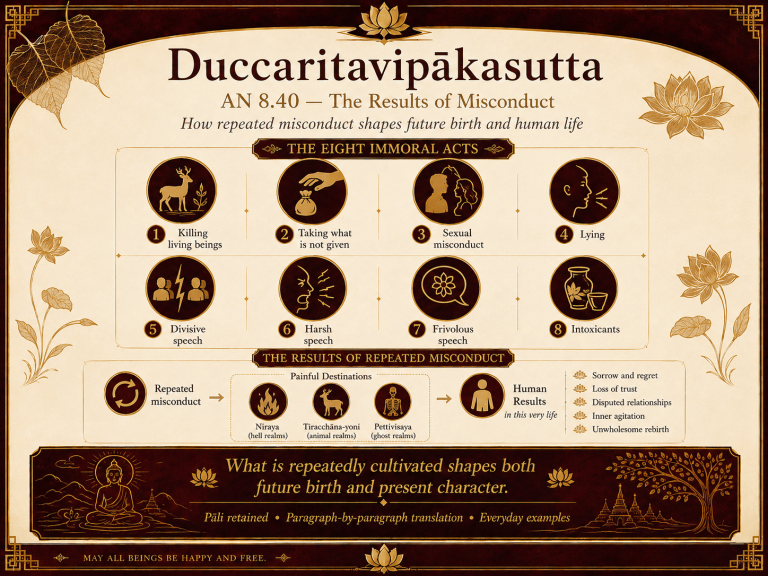
AN 8.40 — Duccaritavipākasutta
Explains how repeatedly cultivated misconduct gains strength and produces consequences, showing sīla as a lived pattern of action rather than merely a set of rules.
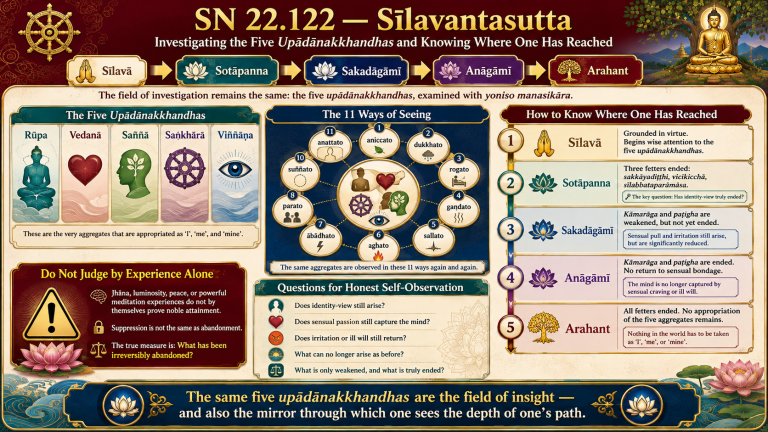
SN 22.122 — Sīlavantasutta
Shows how contemplation of the five aggregates remains central throughout the stages of the noble path, from virtuous practitioner through the four levels of awakening.
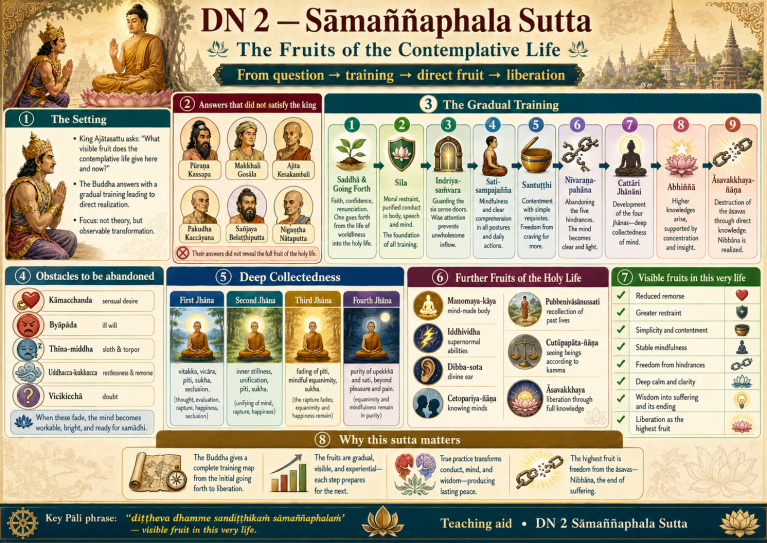
DN 2 — Sāmaññaphalasutta
Maps the gradual training from sīla and sense restraint through sati-sampajañña, abandonment of the hindrances and jhāna to the destruction of the āsavas.
Page 1 of 2