Samādhi develops when the conditions supporting agitation are gradually removed and the mind becomes steady, unified and pliable. These studies bring together the Buddha’s instructions on sense restraint, moderation, wakefulness, hindrances, ānāpānasati, jhāna and the development of a mind fit for deeper insight.
Explore Samādhi Studies
Studies and practical guidance for establishing samādhi and developing the mind.
Showing 37–48 of 67 studies
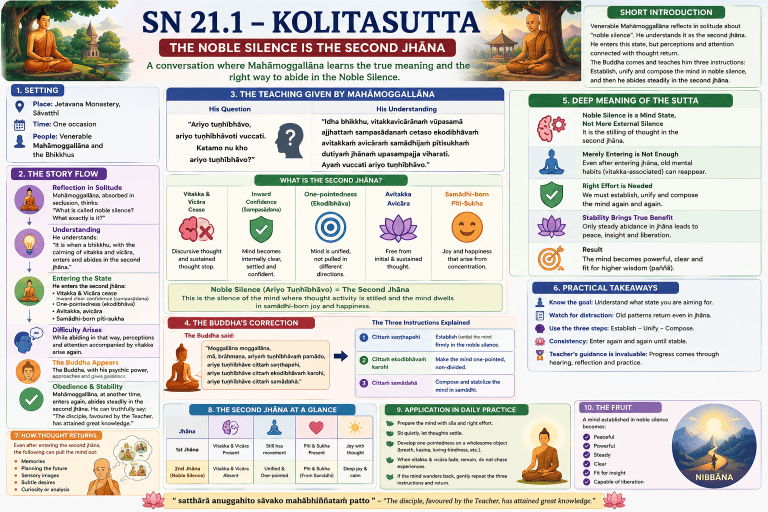
SN 21.1 — Kolitasutta
Defines ariya tuṇhībhāva, noble silence, through the second jhāna where vitakka and vicāra subside and the mind becomes inwardly unified and clear.
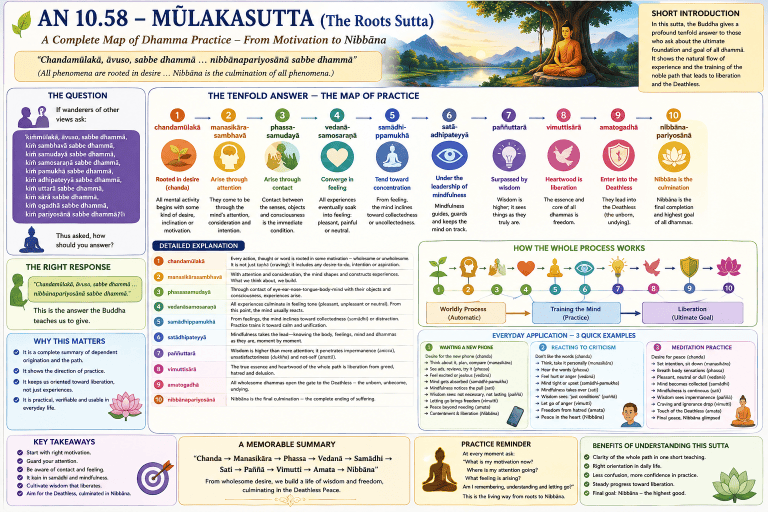
AN 10.58 — Mūlakasutta
Maps the movement of dhammas from chanda through attention, contact and feeling, then through samādhi, sati and paññā toward release and Nibbāna.
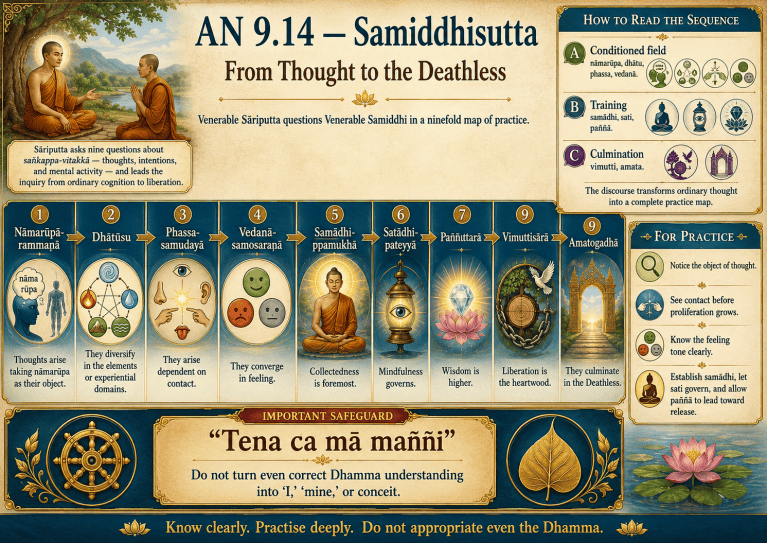
AN 9.14 — Samiddhisutta
Uses nine questions to map experience from nāmarūpa, contact and feeling through samādhi, sati and paññā to liberation and the Deathless.
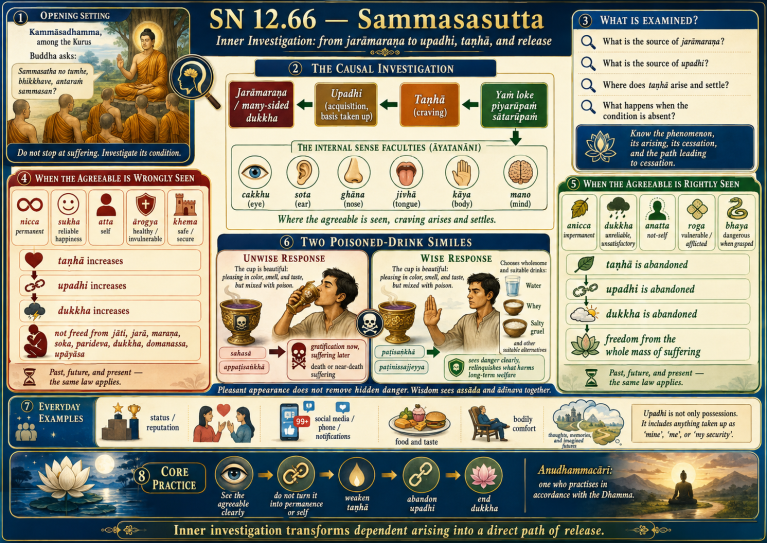
SN 12.66 — Sammasasutta
Investigates suffering through its causal chain, tracing jarāmaraṇa and dukkha back through upadhi and taṇhā to what appears agreeable at the six sense faculties.

Exposition of Nettippakaraṇa
Presents the Nettippakaraṇa’s Nayasamuṭṭhāna as a map of bondage and release, tracing how ignorance and craving develop into clinging and how the corresponding path dismantles them.
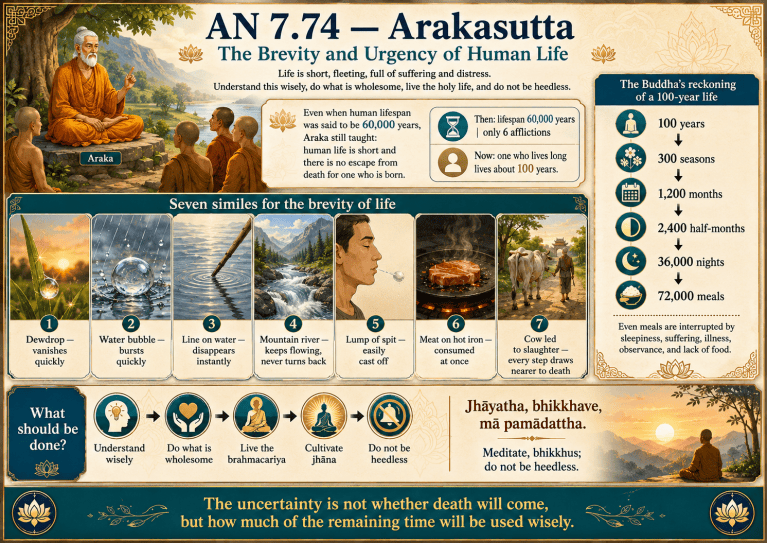
AN 7.74 — Arakasutta
Uses seven similes to expose the brevity and fragility of human life, strengthening urgency for practice rather than complacency about how much time remains.
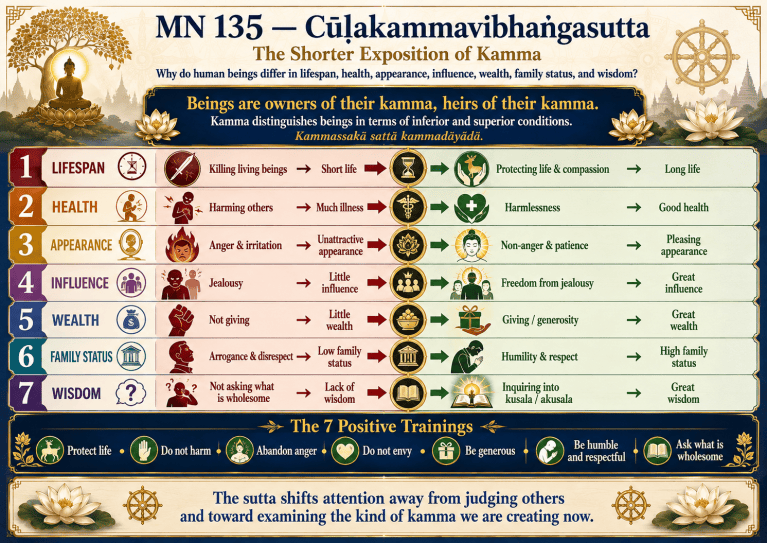
MN 135 — Cūḷakammavibhaṅgasutta
Explains how intentional conduct conditions differences in lifespan, health, appearance, influence, wealth, family status and wisdom, emphasizing that beings are heirs to their kamma.
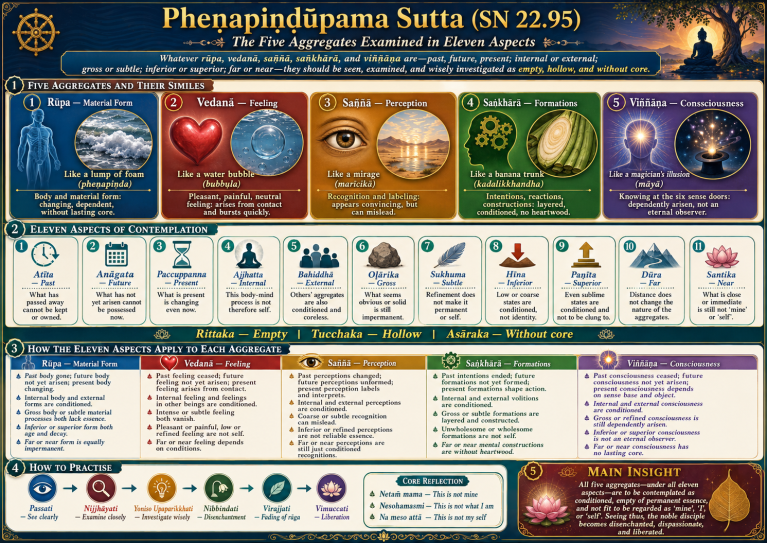
SN 22.95 — Pheṇapiṇḍūpamasutta: A Lump of Foam
Uses five vivid similes—foam, bubble, mirage, plantain trunk and illusion—to show how the five aggregates are empty of anything stable, substantial or fit to be taken as self.
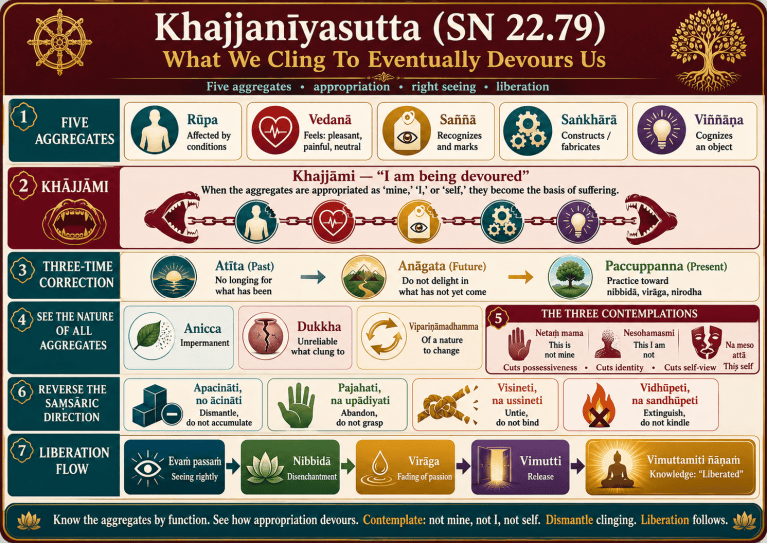
SN 22.79 — Khajjanīyasutta
Shows how the five aggregates consume the practitioner when grasped as “mine,” “I” or “self,” and how seeing their impermanence and change supports relinquishment.
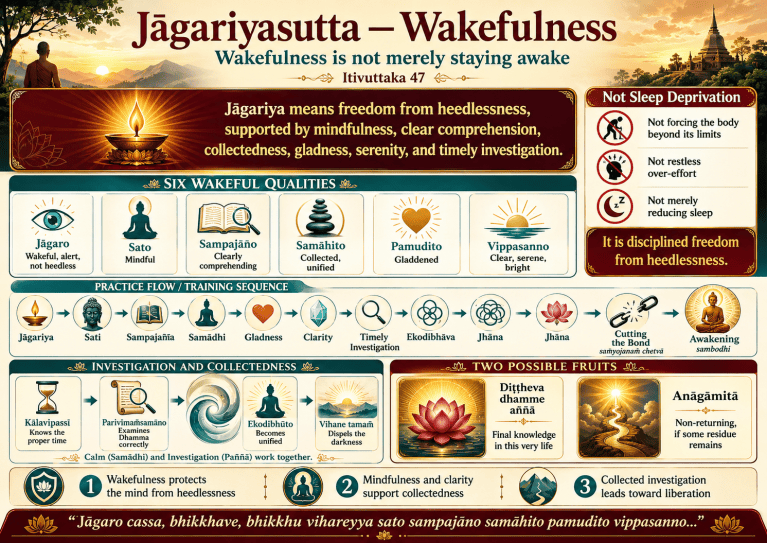
Iti 47 — Jāgariyasutta
Defines jāgariya as more than staying awake: true wakefulness combines sati, sampajañña, samādhi, gladness, investigation and jhāna to dispel ignorance.
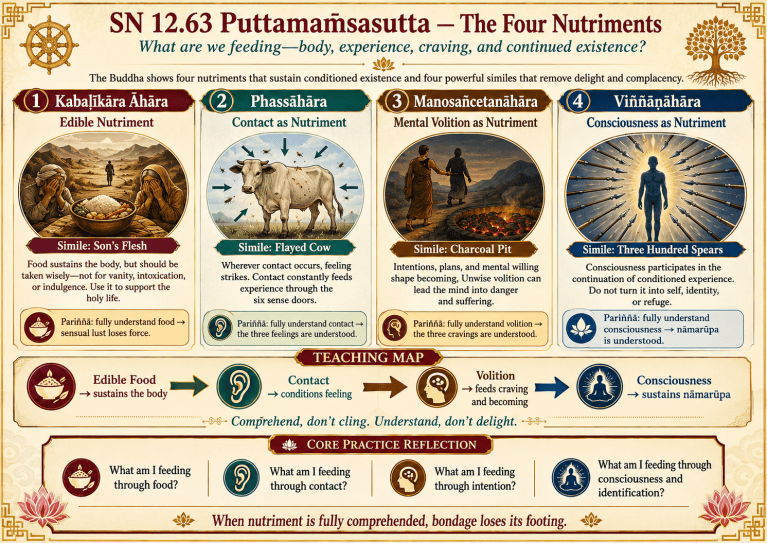
SN 12.63 — Puttamaṁsasutta
Expands āhāra beyond edible food to contact, mental volition and consciousness, using four unforgettable similes to show how nutriment sustains conditioned existence.
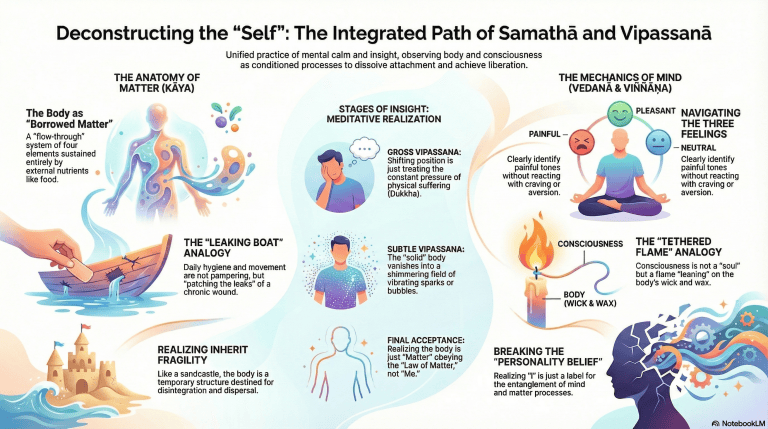
Practice of Samathā and Vipassanā — MN 74 & MN 77
Explains samathā and vipassanā as mutually supporting dimensions of one training: calm stabilizes the mind for direct seeing, while insight weakens attachment and wrong view.
Page 4 of 6