Jhāna
Teachings and practice concerning the rūpa-jhānas, arūpa attainments and their role in the Buddha’s path of development.
Showing 1–12 of 23 studies
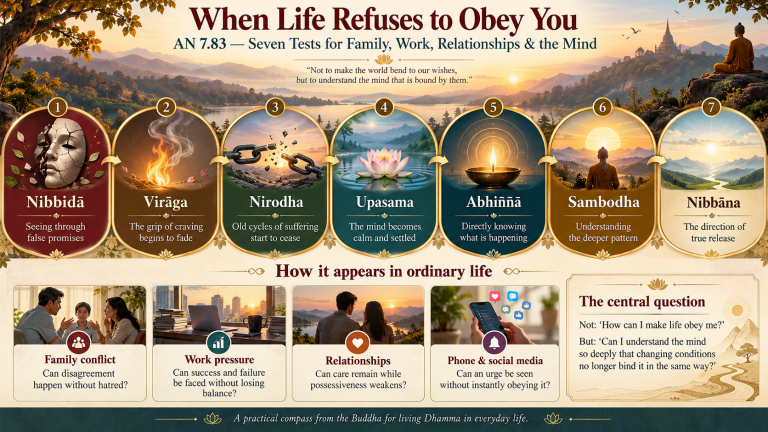
When life refuses to obey you?
When life does not go in your way, what would you like to do? Are you going to fight with it or find out the reasons why this is not working? Can…
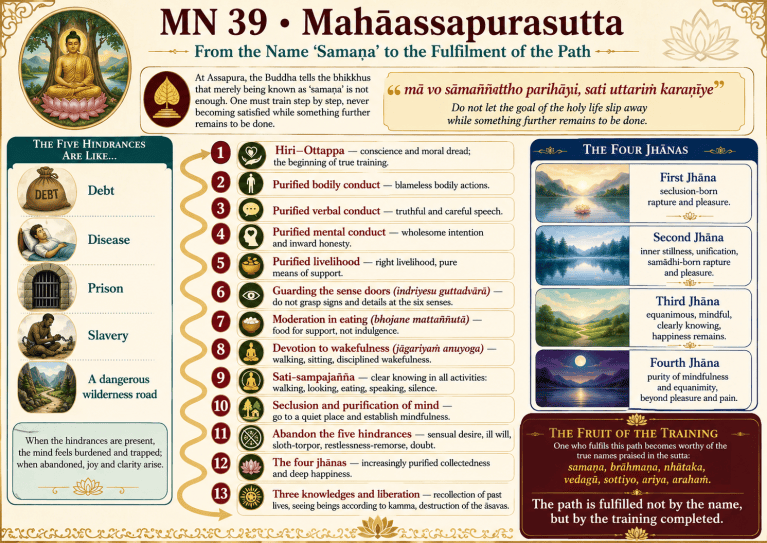
MN39 Mahāassapurasutta
MN 39 presents the Buddha’s gradual training as a cumulative path from hiri-ottappa and purified conduct through sense restraint, moderation, wakefulness, sati-sampajañña, jhāna, and finally the destruction of the āsavas. MN 39…
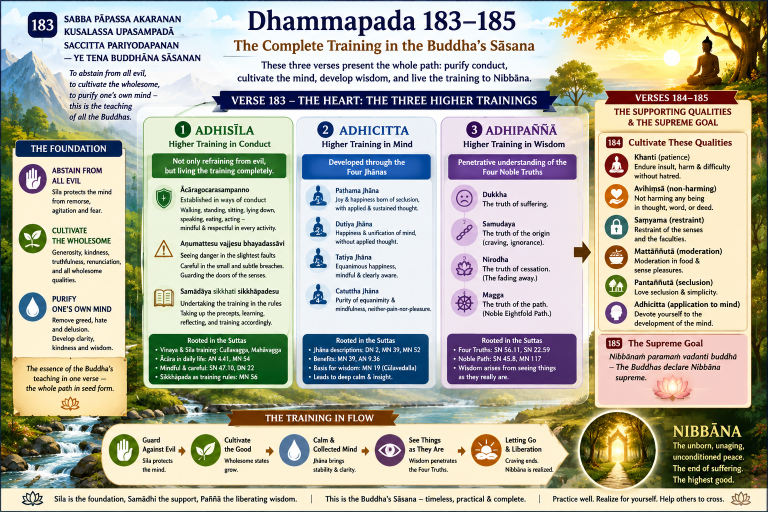
Dhammapada 183 – 185
Dhammapada verses 183–185 are often read as simple ethical instructions, but together they present a remarkably complete summary of the Buddha’s training. Verse 183 can be understood through the three higher trainings:…
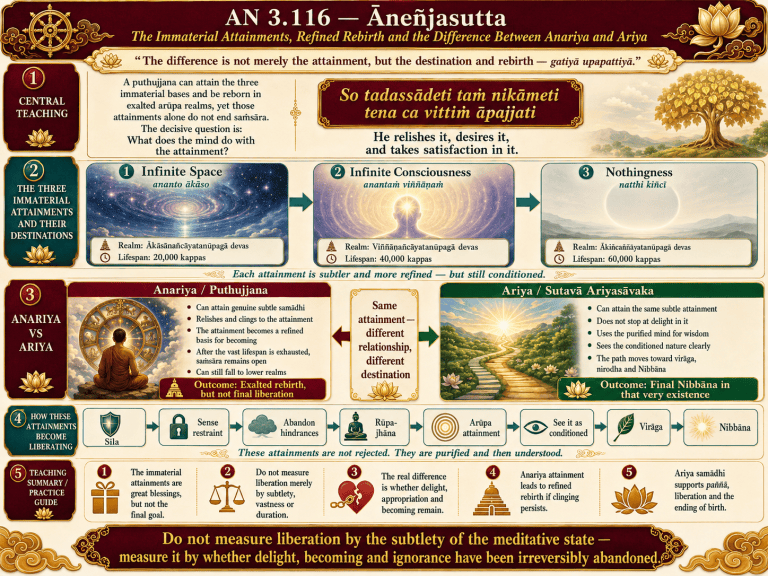
AN 3.116 Āneñjasutta
AN 3.116, the Āneñjasutta, is an important discourse for understanding the difference between sublime meditative attainment and final liberation. The Buddha shows that a practitioner may attain the bases of infinite space,…
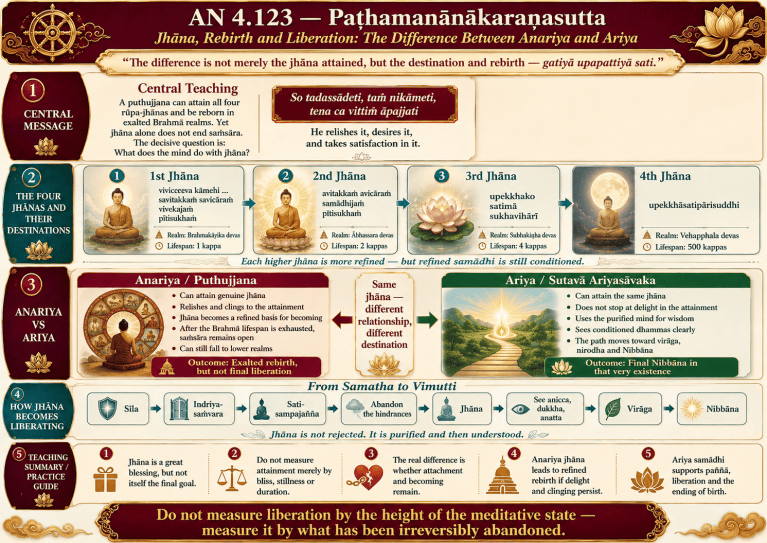
AN 4.123 Paṭhamanānākaraṇasutta
AN 4.123, the Paṭhamanānākaraṇasutta, is an important discourse for understanding the difference between jhāna attainment and liberation. The Buddha shows that even an uninstructed puthujjana can develop the four rūpa-jhānas, dwell in…
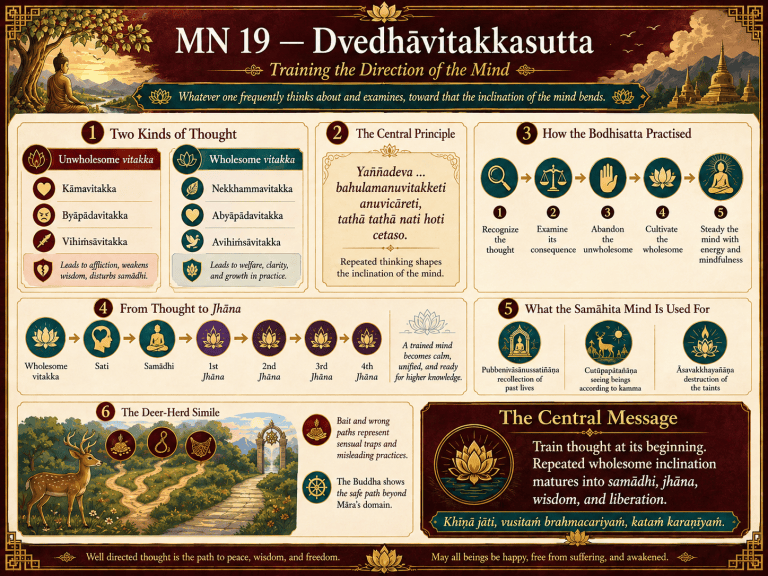
MN 19 Dvedhāvitakkasutta
MN 19, the Dvedhāvitakkasutta, is a remarkably practical discourse in which the Buddha describes how, before awakening, he trained his own mind by dividing thought into two directions: kāma, byāpāda and vihiṁsā…
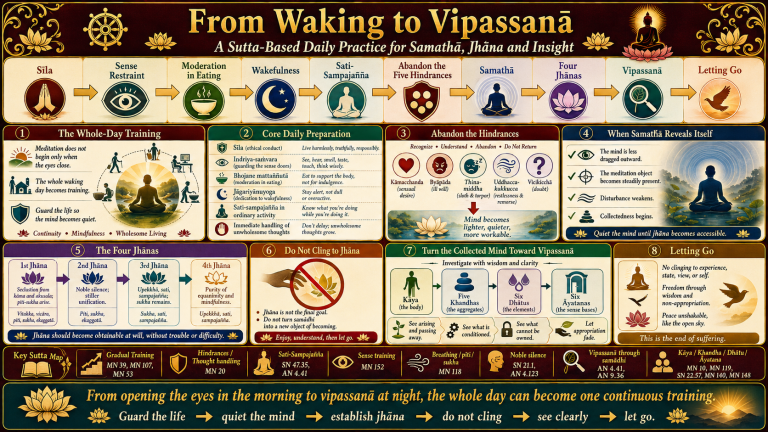
From Daily Discipline to Samathā, Jhāna and Vipassanā
From Waking to Vipassanā presents meditation as a continuous training rather than an isolated sitting practice. Drawing especially on MN 39, MN 107 and MN 53, it shows how sīla, guarding the…
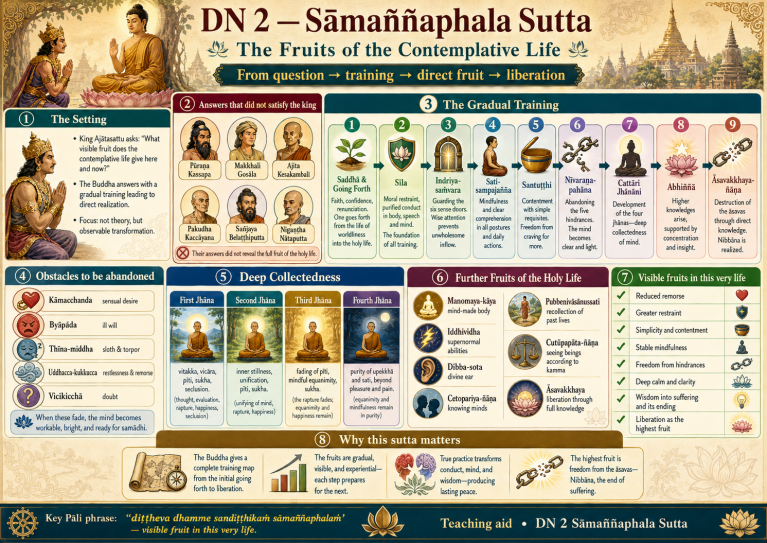
DN 2 — Sāmaññaphalasutta
Maps the gradual training from sīla and sense restraint through sati-sampajañña, abandonment of the hindrances and jhāna to the destruction of the āsavas.
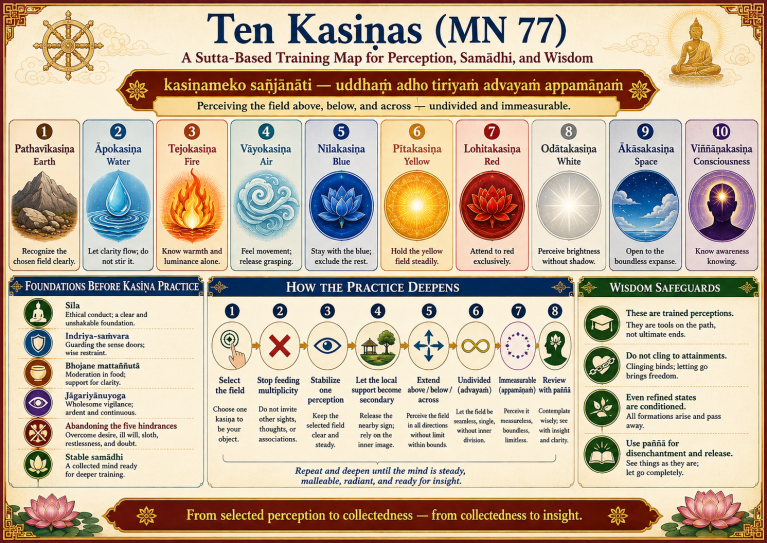
Ten Kasiṇas
The Ten Kasiṇas in MN 77 present a profound training in saññā — perception. The Buddha describes ten totalities—earth, water, fire, air, blue, yellow, red, white, space, and consciousness—and applies the same…
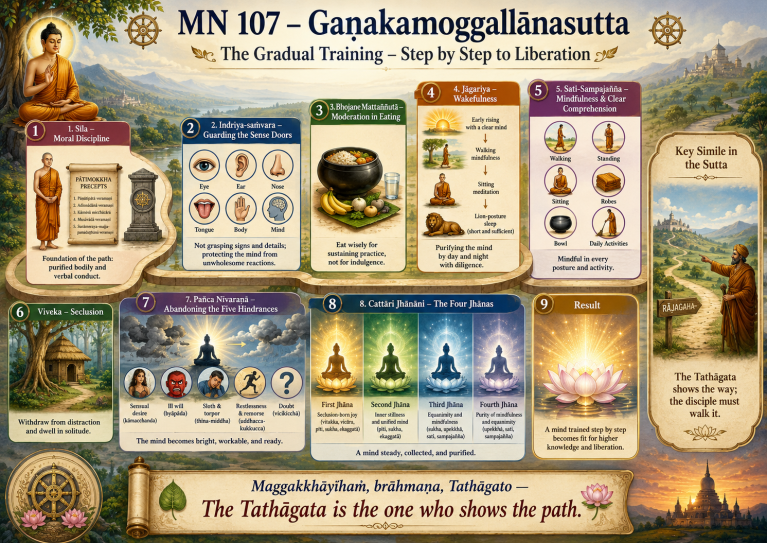
MN 107 — Gaṇakamoggallānasutta
Presents the Buddha’s gradual training step by step, from sīla and sense restraint through moderation, wakefulness, hindrance abandonment and jhāna toward liberation.
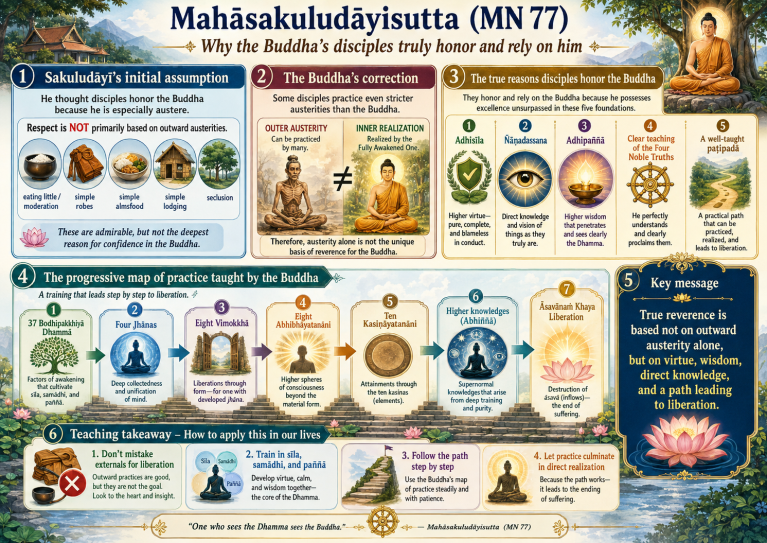
MN 77 — Mahāsakuludāyisutta
Explains why the Buddha’s disciples respect and rely upon him, moving beyond outward austerity to the depth of training, realization and liberating knowledge he teaches.
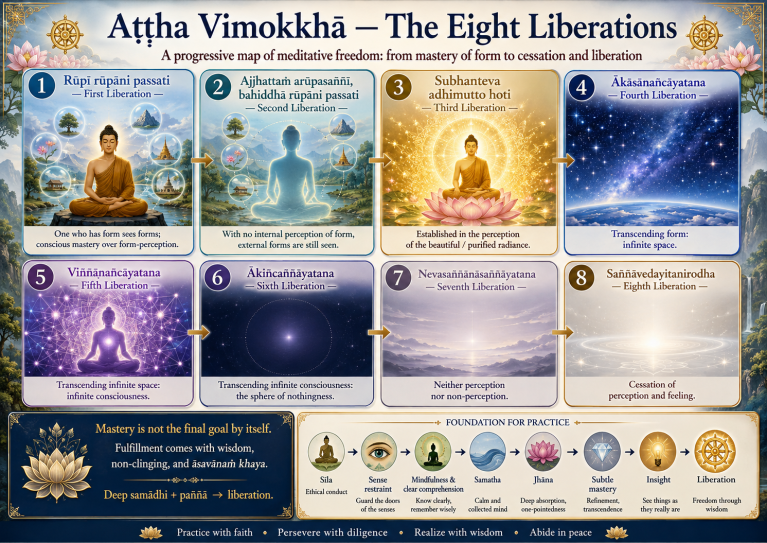
Aṭṭha Vimokkhā
Maps the Eight Liberations from mastery in relation to form through the formless attainments and culminates in saññāvedayitanirodha, the cessation of perception and feeling.
Page 1 of 2