Nibbāna & Noble Attainments
Teachings on cessation, fetters and the noble attainments from Sotāpanna through Arahant, with the ending of birth and death as the goal.
Showing 1–12 of 41 studies
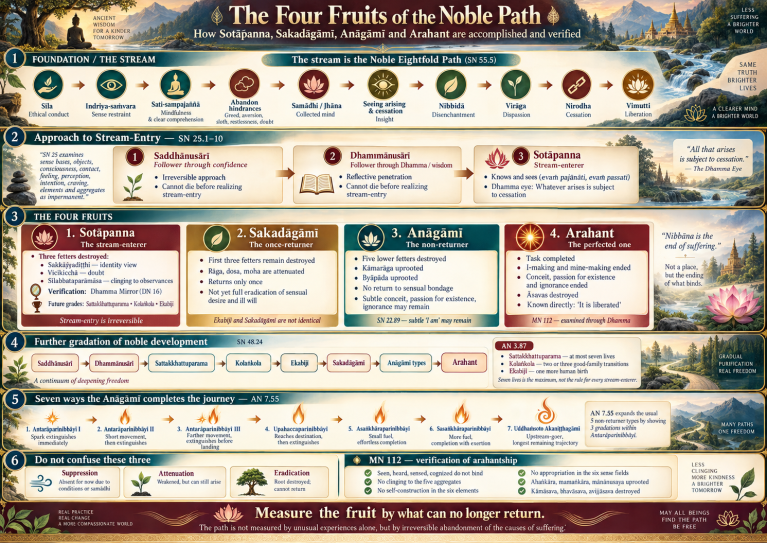
The Four Fruits of the Noble Path
This essay focuses upon four fruits as in Sotapanna, Sakadagami, Anāgami and Arahat on how to know where one has reached including the sutta references
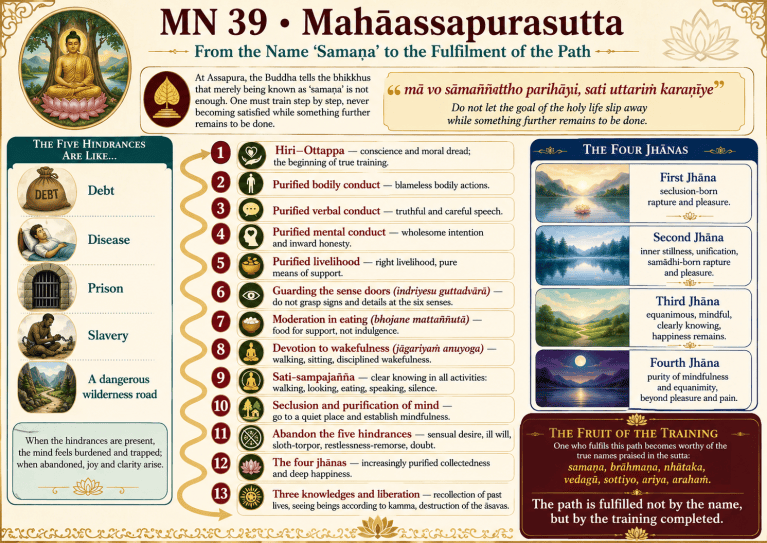
MN39 Mahāassapurasutta
MN 39 presents the Buddha’s gradual training as a cumulative path from hiri-ottappa and purified conduct through sense restraint, moderation, wakefulness, sati-sampajañña, jhāna, and finally the destruction of the āsavas. MN 39…
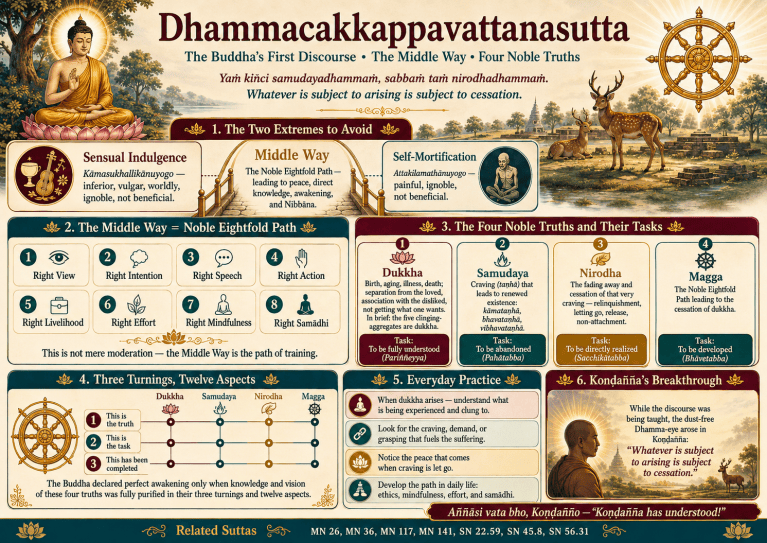
SN56.11 Dhammacakkappavattanasutta
The Dhammacakkappavattanasutta (SN 56.11) is the discourse in which the Buddha first set the Dhamma wheel in motion at Isipatana. Yet its importance goes far beyond being the first teaching after his…
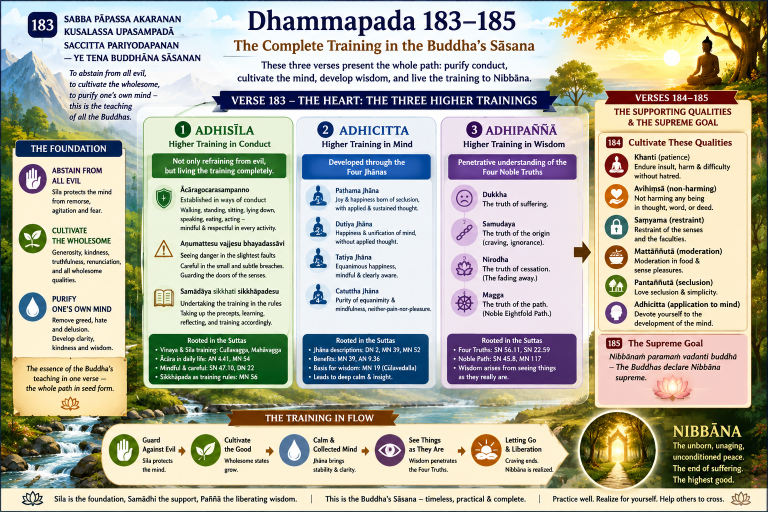
Dhammapada 183 – 185
Dhammapada verses 183–185 are often read as simple ethical instructions, but together they present a remarkably complete summary of the Buddha’s training. Verse 183 can be understood through the three higher trainings:…
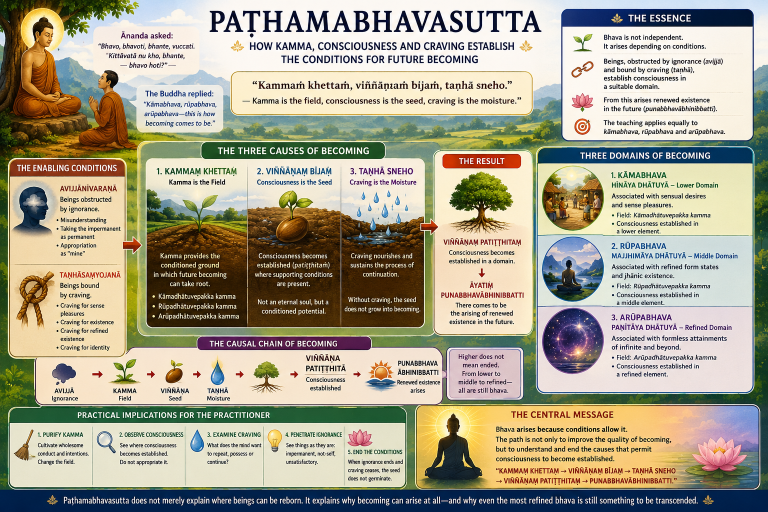
AN 3.76 Paṭhamabhavasutta
Short Introduction The Paṭhamabhavasutta gives a remarkably concise explanation of how bhava—becoming and renewed existence—comes to be. In response to Venerable Ānanda, the Buddha describes the causal process through a powerful agricultural…
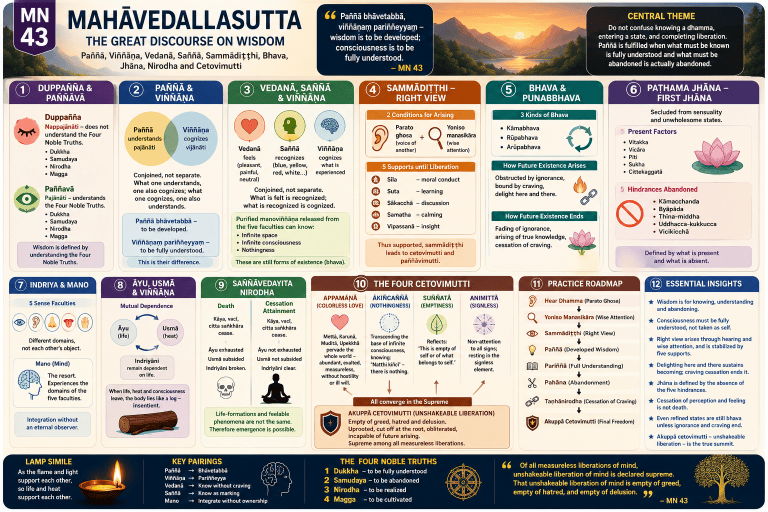
MN 43 Mahāvedallasutta
The Mahāvedallasutta is one of the most analytically rich discourses in the Middle Length Discourses. Rather than presenting a single linear sermon, it unfolds as a sustained dialogue in which Venerable Mahākoṭṭhika…
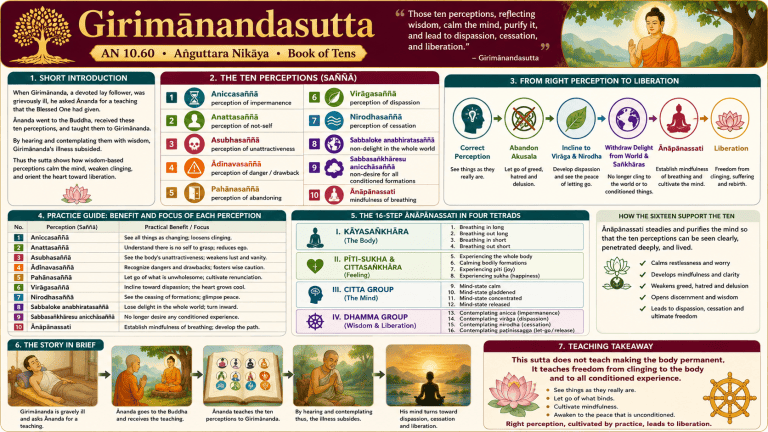
AN 10.60 Girimānandasutta
AN 10.60, the Girimānandasutta, is a profound discourse in which the Buddha responds to the grave illness of Venerable Girimānanda by teaching ten perceptions that radically transform how a practitioner understands the…
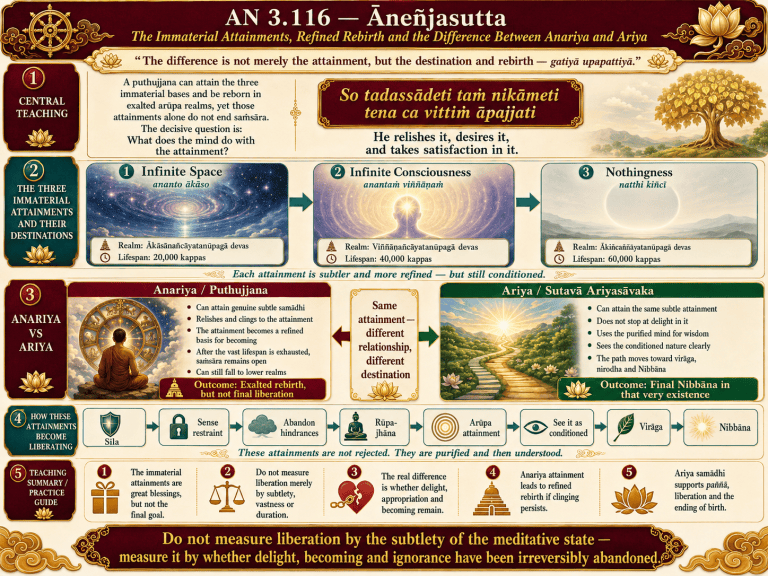
AN 3.116 Āneñjasutta
AN 3.116, the Āneñjasutta, is an important discourse for understanding the difference between sublime meditative attainment and final liberation. The Buddha shows that a practitioner may attain the bases of infinite space,…
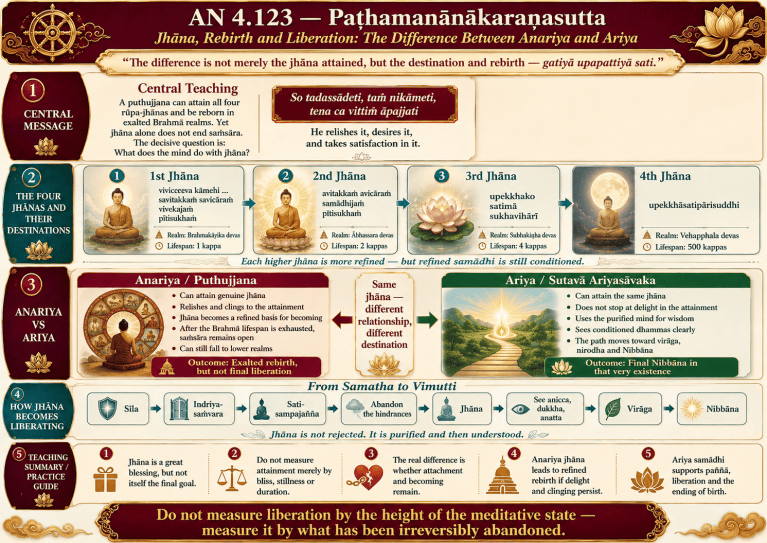
AN 4.123 Paṭhamanānākaraṇasutta
AN 4.123, the Paṭhamanānākaraṇasutta, is an important discourse for understanding the difference between jhāna attainment and liberation. The Buddha shows that even an uninstructed puthujjana can develop the four rūpa-jhānas, dwell in…
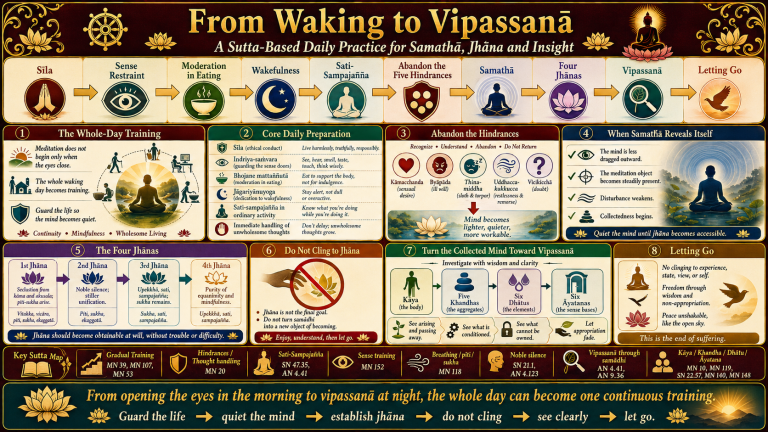
From Daily Discipline to Samathā, Jhāna and Vipassanā
From Waking to Vipassanā presents meditation as a continuous training rather than an isolated sitting practice. Drawing especially on MN 39, MN 107 and MN 53, it shows how sīla, guarding the…
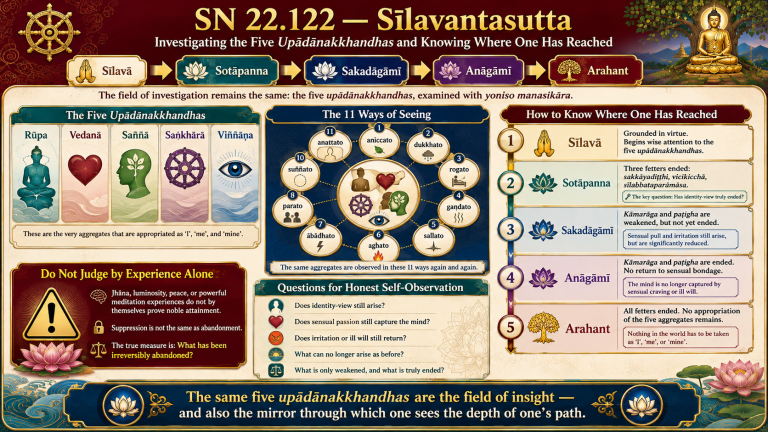
SN 22.122 — Sīlavantasutta
Shows how contemplation of the five aggregates remains central throughout the stages of the noble path, from virtuous practitioner through the four levels of awakening.
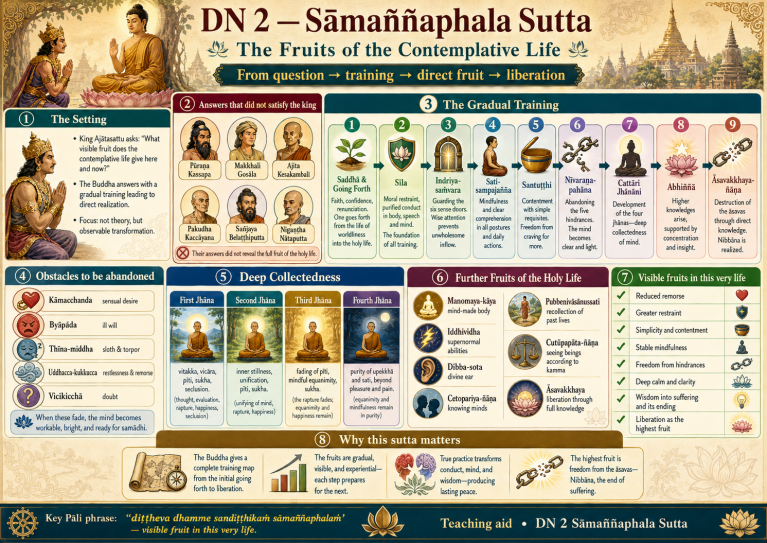
DN 2 — Sāmaññaphalasutta
Maps the gradual training from sīla and sense restraint through sati-sampajañña, abandonment of the hindrances and jhāna to the destruction of the āsavas.
Page 1 of 4