Samādhi develops when the conditions supporting agitation are gradually removed and the mind becomes steady, unified and pliable. These studies bring together the Buddha’s instructions on sense restraint, moderation, wakefulness, hindrances, ānāpānasati, jhāna and the development of a mind fit for deeper insight.
Explore Samādhi Studies
Studies and practical guidance for establishing samādhi and developing the mind.
Showing 13–24 of 67 studies
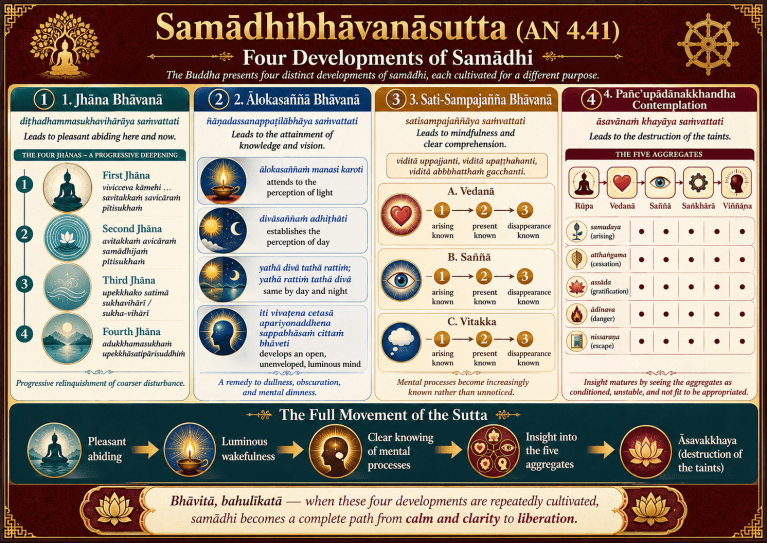
AN 4.41 — Samādhibhāvanāsutta
Distinguishes four developments of samādhi, each cultivated for a different purpose: pleasant abiding, knowledge and vision, sati-sampajañña, and destruction of the āsavas.

SN 47.35 — Satisutta
Clarifies sati through the four satipaṭṭhānas and explains sampajañña as direct knowing of vedanā, vitakka and saññā as they arise, remain and disappear.
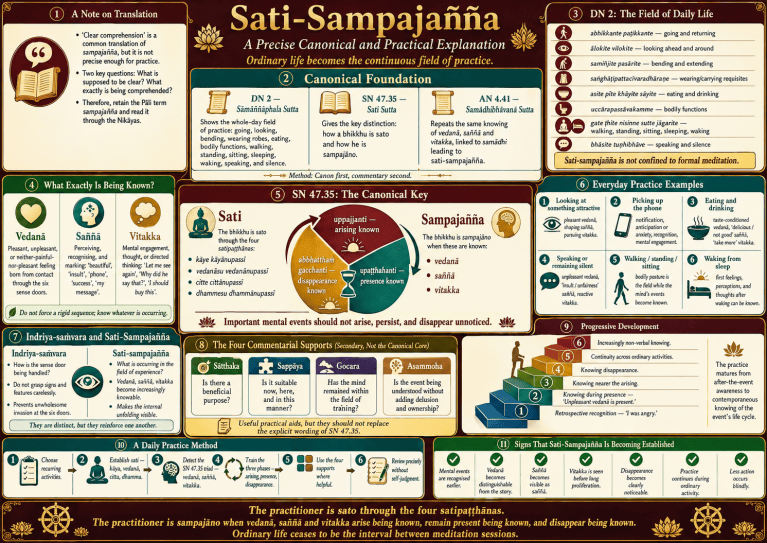
Sati-Sampajañña
Complete listening edition Listen to the full Sati-Sampajañña explanation A continuous reading of this entire page, including the canonical foundation, daily-life examples, practical development, and conclusion. Your browser does not support audio…
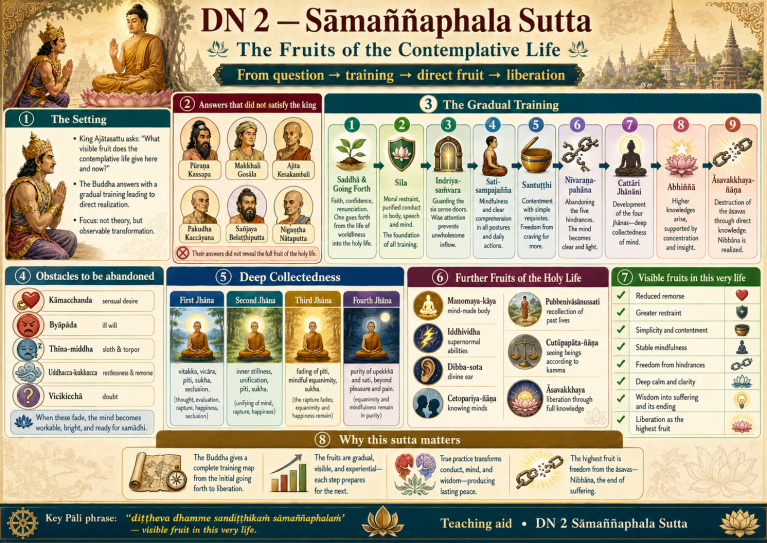
DN 2 — Sāmaññaphalasutta
Maps the gradual training from sīla and sense restraint through sati-sampajañña, abandonment of the hindrances and jhāna to the destruction of the āsavas.
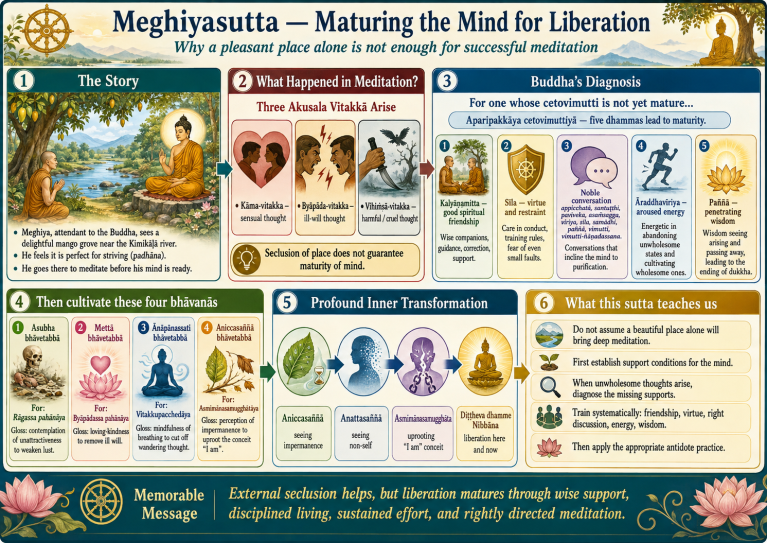
AN 9.3 — Meghiyasutta
Shows that pleasant surroundings and sincere effort are not enough; good friendship, sīla, suitable Dhamma discussion, energy and paññā must mature the mind for liberation.

AN 4.38 — Patilīnasutta
Defines true withdrawal not as physical seclusion but as the ending of speculative truth-claims, all searching, bodily disturbance in fourth jhāna, and the conceit “I am.”
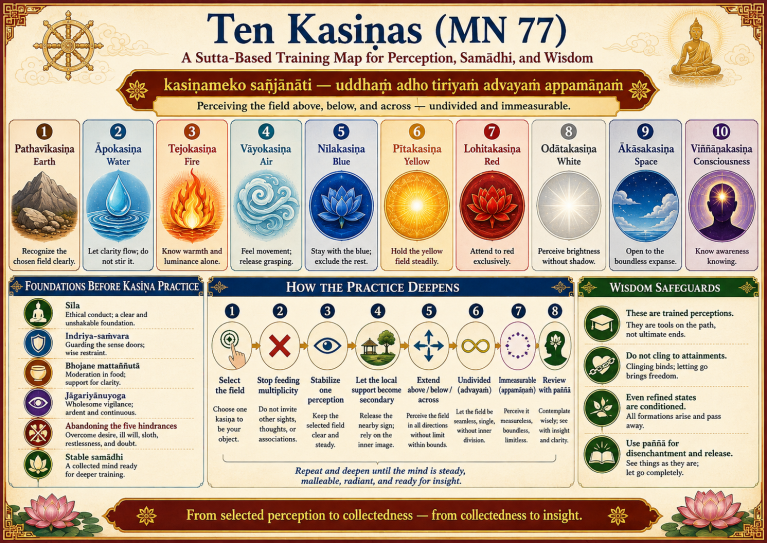
Ten Kasiṇas
The Ten Kasiṇas in MN 77 present a profound training in saññā — perception. The Buddha describes ten totalities—earth, water, fire, air, blue, yellow, red, white, space, and consciousness—and applies the same…
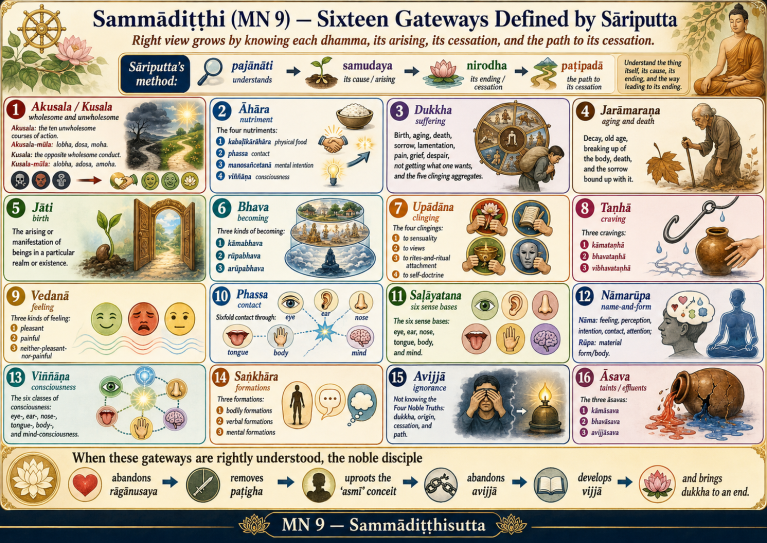
MN 9 — Sammādiṭṭhisutta
Explains sammādiṭṭhi as direct understanding of a dhamma together with its arising, cessation and the path leading to cessation, rather than merely holding correct beliefs.
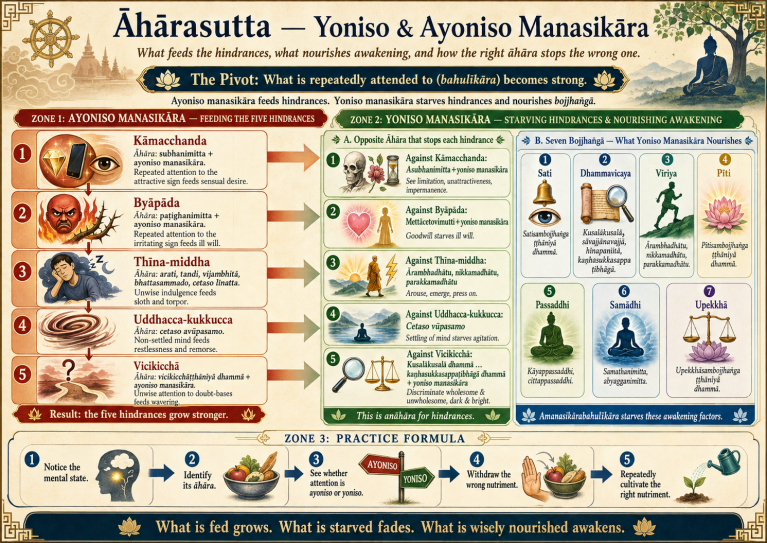
SN 46.51 — Āhārasutta: Detailed Continuation on Hindrances and Awakening Factors
Shows that the five hindrances and seven awakening factors depend on nutriment: what is repeatedly fed grows, while what is deprived of support weakens and fades.

MN 107 — Gaṇakamoggallānasutta
Presents the Buddha’s gradual training step by step, from sīla and sense restraint through moderation, wakefulness, hindrance abandonment and jhāna toward liberation.
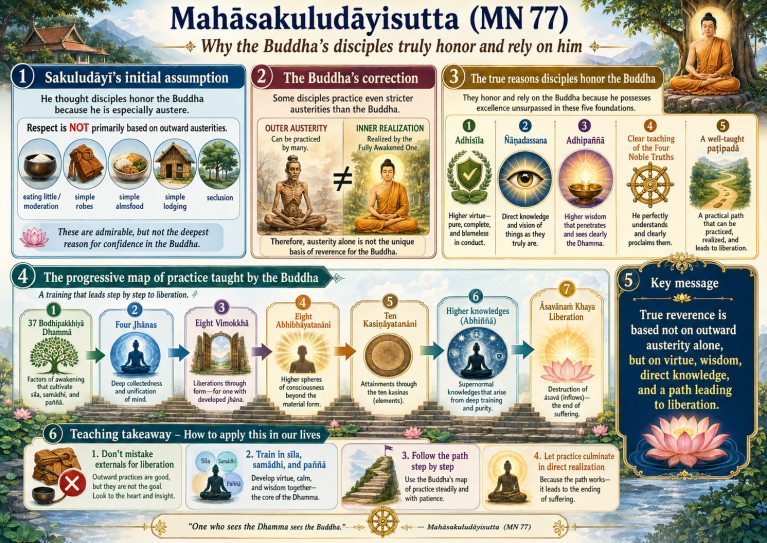
MN 77 — Mahāsakuludāyisutta
Explains why the Buddha’s disciples respect and rely upon him, moving beyond outward austerity to the depth of training, realization and liberating knowledge he teaches.
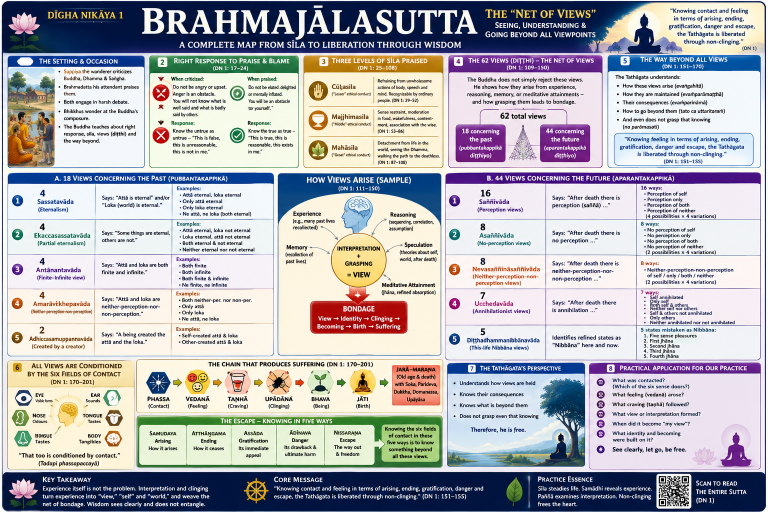
DN 1 — Brahmajālasutta
Examines sīla, speculative views and their arising through contact and feeling, showing how freedom comes not through argument but through understanding and non-clinging.
Page 2 of 6