Vipassanā
Insight training through direct investigation of conditioned experience, including khandhas, sense bases, dependent arising, impermanence, suffering and not-self.
Showing 1–12 of 50 studies
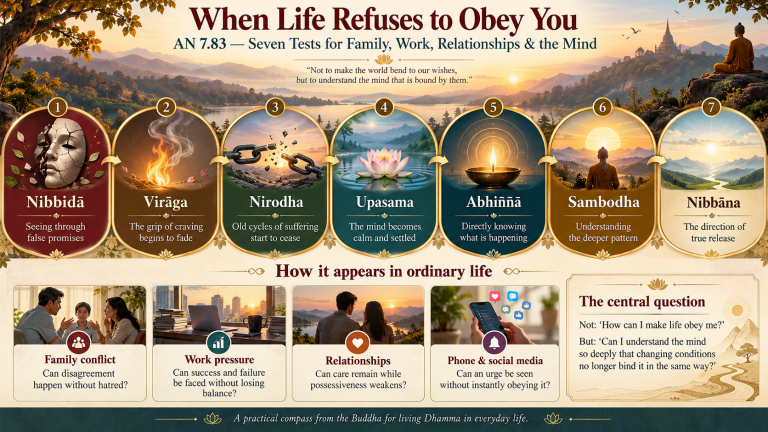
When life refuses to obey you?
When life does not go in your way, what would you like to do? Are you going to fight with it or find out the reasons why this is not working? Can…
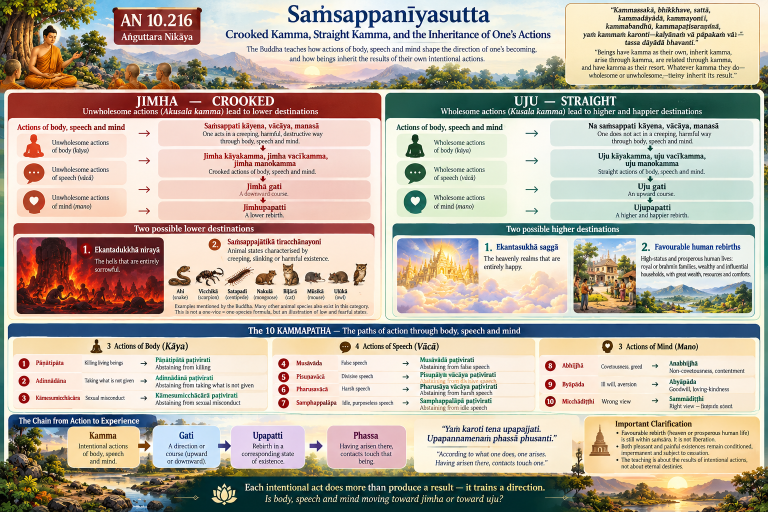
AN 10.216 Saṁsappanīyasutta
A fantastic sutta that explains on how beings would be reborn in lower realms and Buddha explains the name of animals while doing good deeds get into heaven or human birth
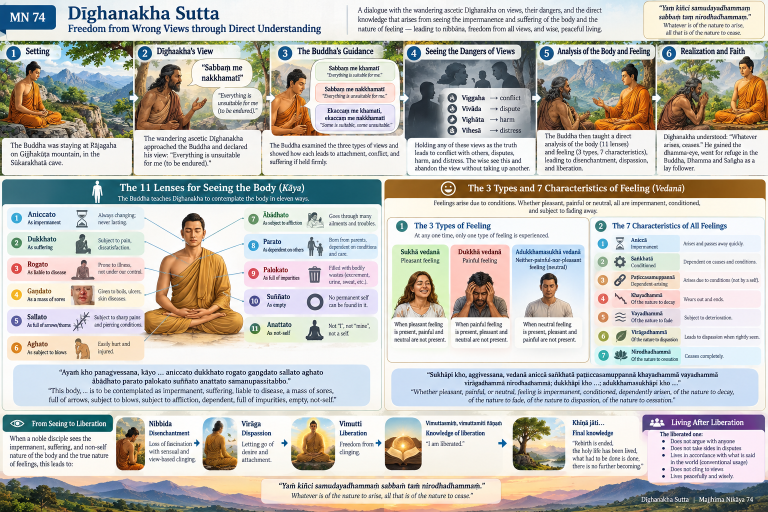
MN 74 Dīghanakhasutta
An exceptional sutta that explains step by step progression on how to attain Vipassana and get liberated from Samsara. In this sutta, Sariputta attains Arahat phala samapatti
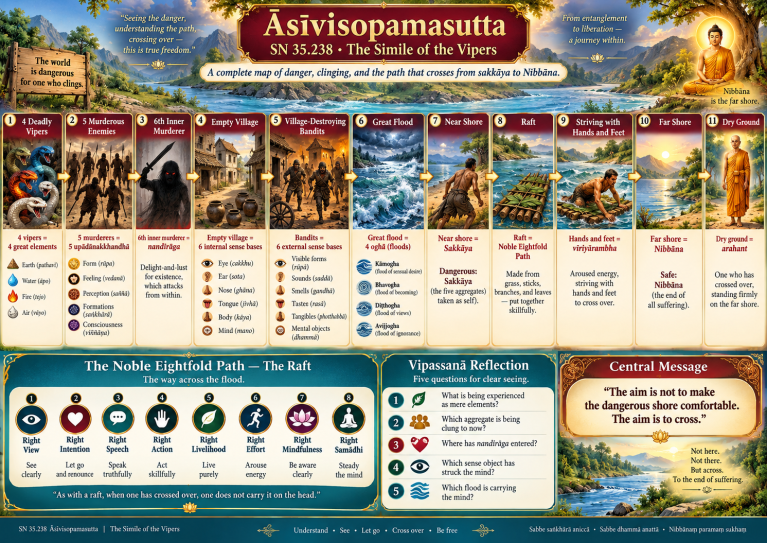
SN 35.238 Āsīvisopamasutta
This sutta provies strong Vipassanā treatment of: body as four elements, why the Buddha specifies upādānakkhandha, nandīrāga as the danger carried within, the six bases as suñña, sense objects as continual impact,…
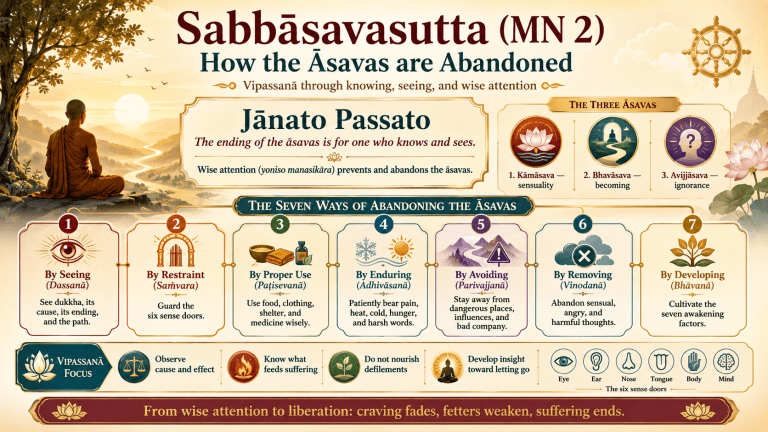
MN 2 Sabbāsavasutta
This important sutta explains the asavas or fermentations that we have accumulated and what should be removed and what should be developed in this place
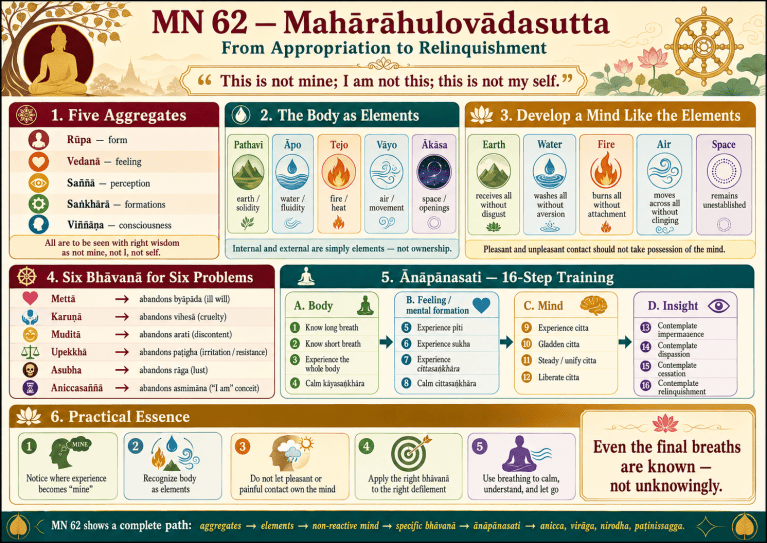
MN 62 Maharahulovadasutta
MN 62 Mahārāhulovādasutta is far more than a discourse on mindfulness of breathing. The Buddha gives Rāhula a complete training: seeing the five aggregates and elements without ownership, developing a mind that…
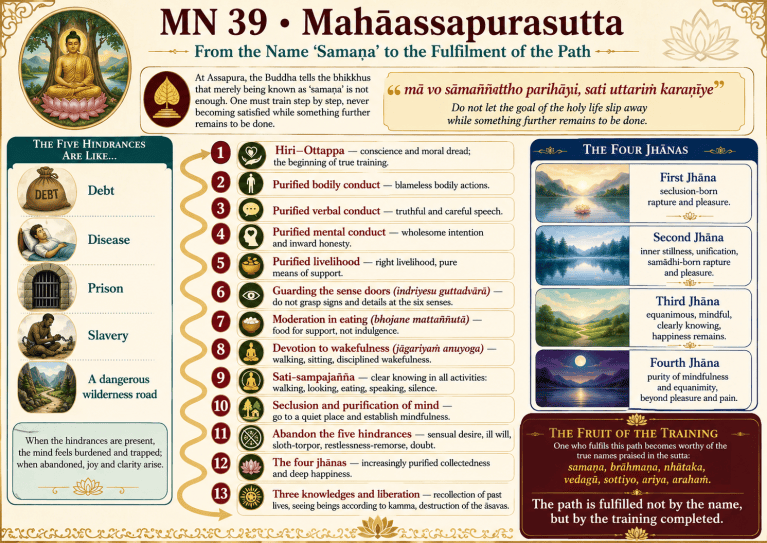
MN39 Mahāassapurasutta
MN 39 presents the Buddha’s gradual training as a cumulative path from hiri-ottappa and purified conduct through sense restraint, moderation, wakefulness, sati-sampajañña, jhāna, and finally the destruction of the āsavas. MN 39…
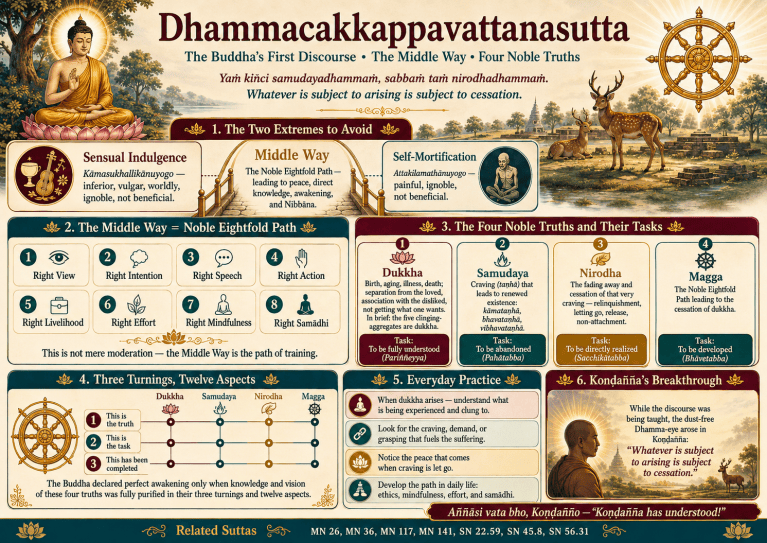
SN56.11 Dhammacakkappavattanasutta
The Dhammacakkappavattanasutta (SN 56.11) is the discourse in which the Buddha first set the Dhamma wheel in motion at Isipatana. Yet its importance goes far beyond being the first teaching after his…
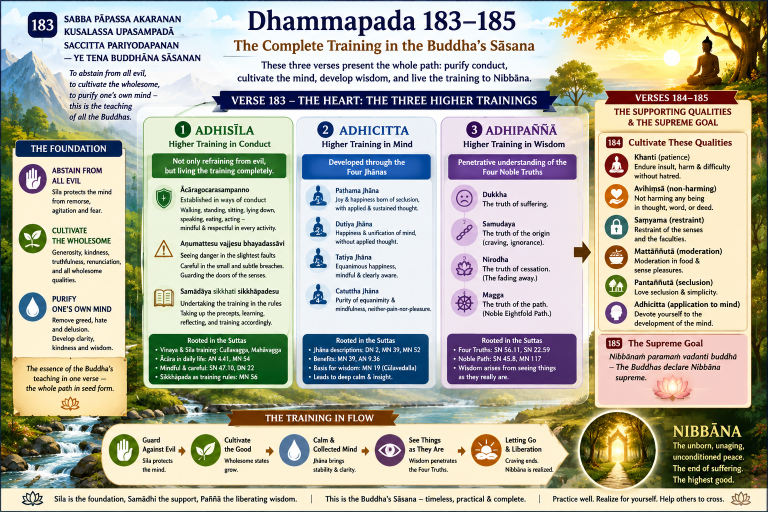
Dhammapada 183 – 185
Dhammapada verses 183–185 are often read as simple ethical instructions, but together they present a remarkably complete summary of the Buddha’s training. Verse 183 can be understood through the three higher trainings:…
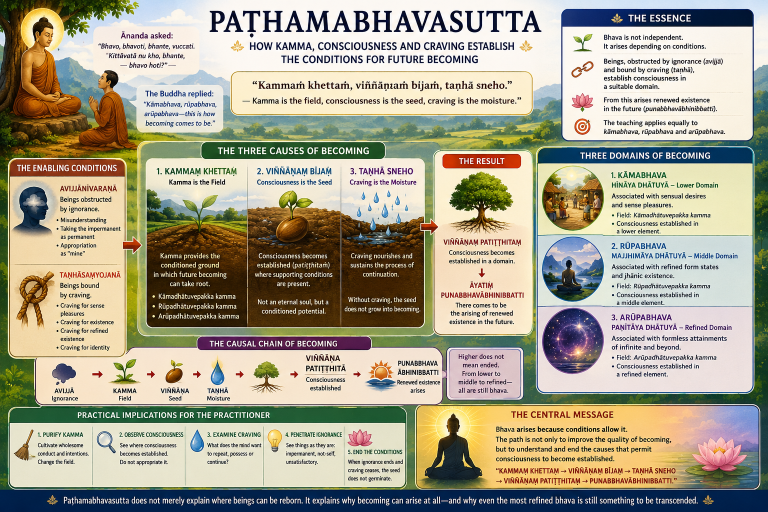
AN 3.76 Paṭhamabhavasutta
Short Introduction The Paṭhamabhavasutta gives a remarkably concise explanation of how bhava—becoming and renewed existence—comes to be. In response to Venerable Ānanda, the Buddha describes the causal process through a powerful agricultural…
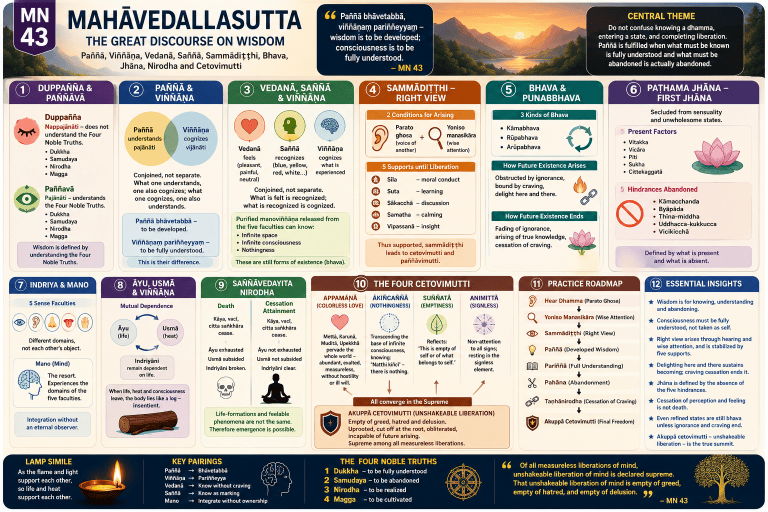
MN 43 Mahāvedallasutta
The Mahāvedallasutta is one of the most analytically rich discourses in the Middle Length Discourses. Rather than presenting a single linear sermon, it unfolds as a sustained dialogue in which Venerable Mahākoṭṭhika…
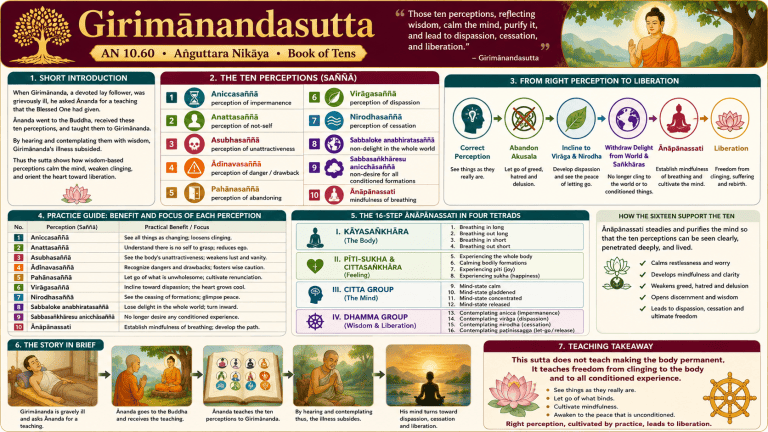
AN 10.60 Girimānandasutta
AN 10.60, the Girimānandasutta, is a profound discourse in which the Buddha responds to the grave illness of Venerable Girimānanda by teaching ten perceptions that radically transform how a practitioner understands the…
Page 1 of 5