These suttas and studies have been selected for close examination during retreat. Rather than reading many teachings quickly, use them slowly: understand the instruction, test it in practice, observe its result and return to the text with greater clarity.
Suttas for Retreat Practice
Selected suttas and essays intended for careful study and practical application during retreat.
Showing 1–12 of 23 studies
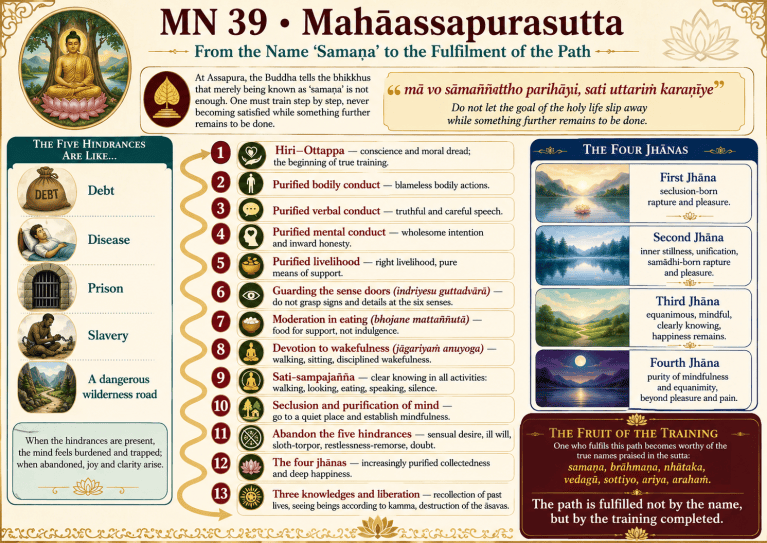
MN39 Mahāassapurasutta
MN 39 presents the Buddha’s gradual training as a cumulative path from hiri-ottappa and purified conduct through sense restraint, moderation, wakefulness, sati-sampajañña, jhāna, and finally the destruction of the āsavas. MN 39…

What is Sati?
Sati is one of the most frequently used—and frequently oversimplified—terms in the Buddha’s teaching. Often translated merely as “mindfulness” or “present-moment awareness,” its meaning becomes much richer when SN 48.10, MN 118,…
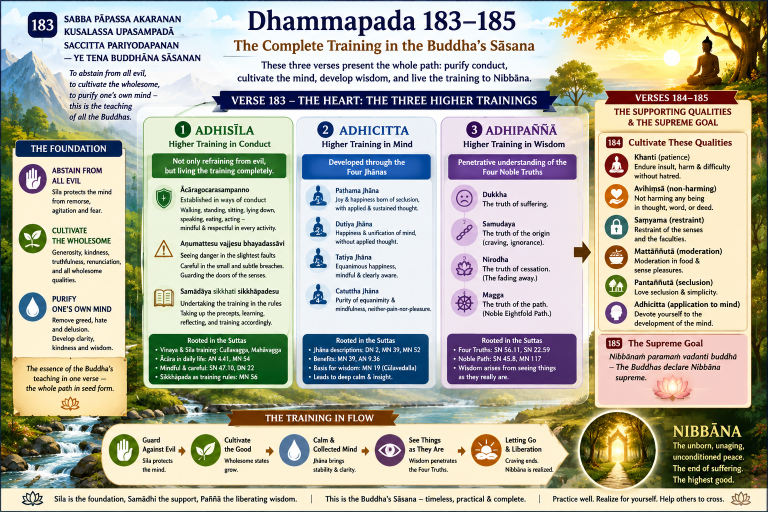
Dhammapada 183 – 185
Dhammapada verses 183–185 are often read as simple ethical instructions, but together they present a remarkably complete summary of the Buddha’s training. Verse 183 can be understood through the three higher trainings:…
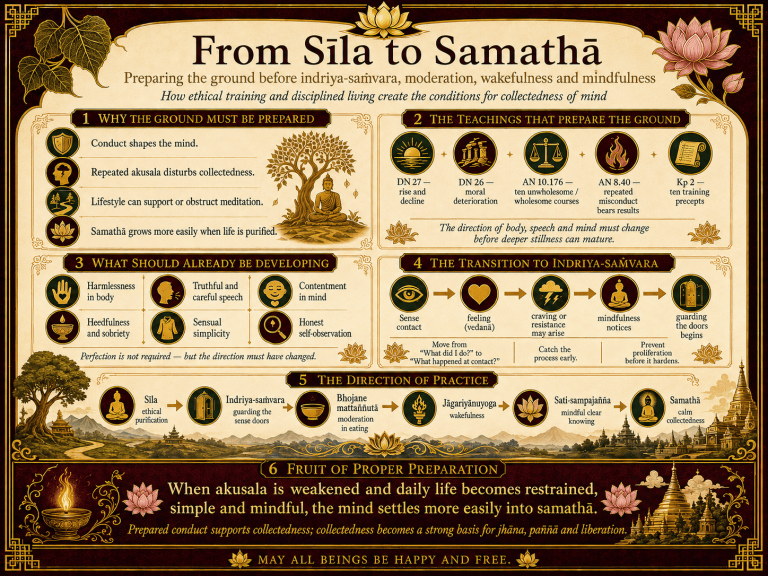
From Sīla to Samathā
From Sīla to Samathā presents the Buddha’s training as one continuous progression rather than a collection of separate practices. Before guarding the sense doors or trying to establish samathā, the practitioner must…
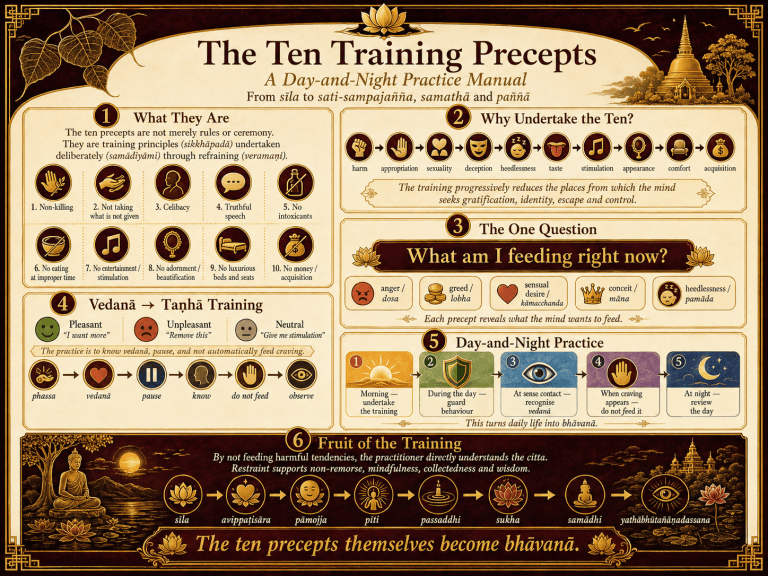
KP 2 — Dasasikkhāpada
Explores the Ten Training Precepts as practical training in restraint, simplicity and purification of conduct that supports deeper development of the mind.
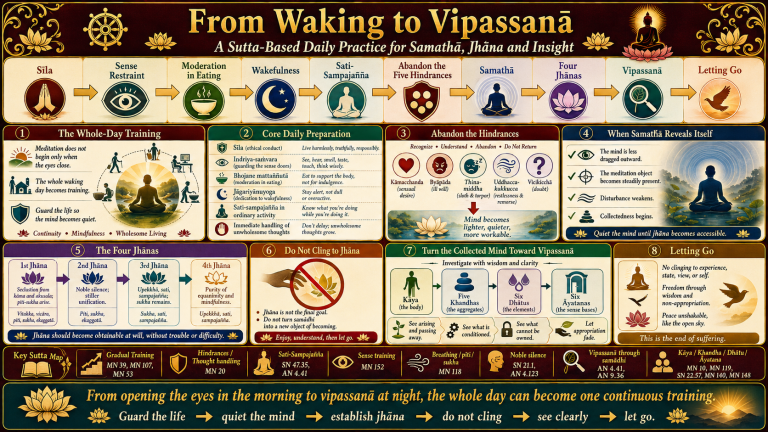
From Daily Discipline to Samathā, Jhāna and Vipassanā
From Waking to Vipassanā presents meditation as a continuous training rather than an isolated sitting practice. Drawing especially on MN 39, MN 107 and MN 53, it shows how sīla, guarding the…
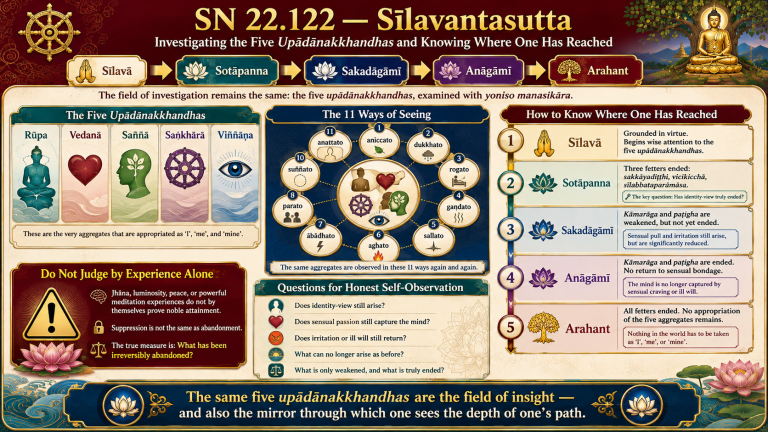
SN 22.122 — Sīlavantasutta
Shows how contemplation of the five aggregates remains central throughout the stages of the noble path, from virtuous practitioner through the four levels of awakening.
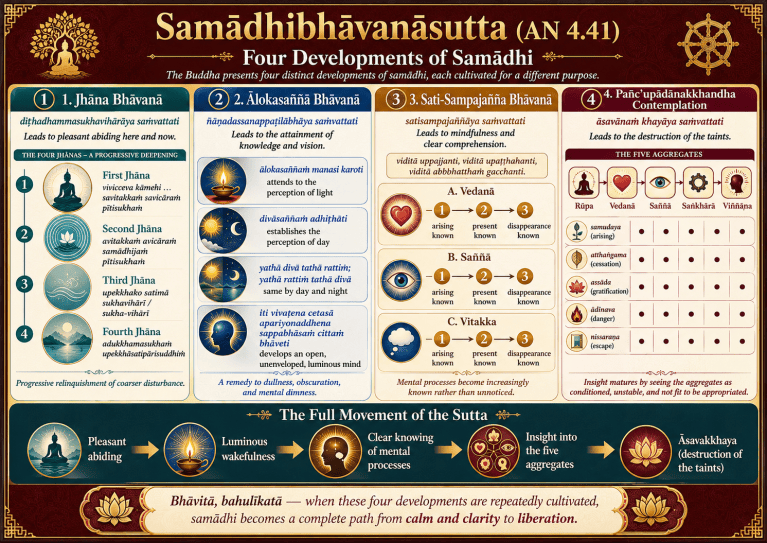
AN 4.41 — Samādhibhāvanāsutta
Distinguishes four developments of samādhi, each cultivated for a different purpose: pleasant abiding, knowledge and vision, sati-sampajañña, and destruction of the āsavas.
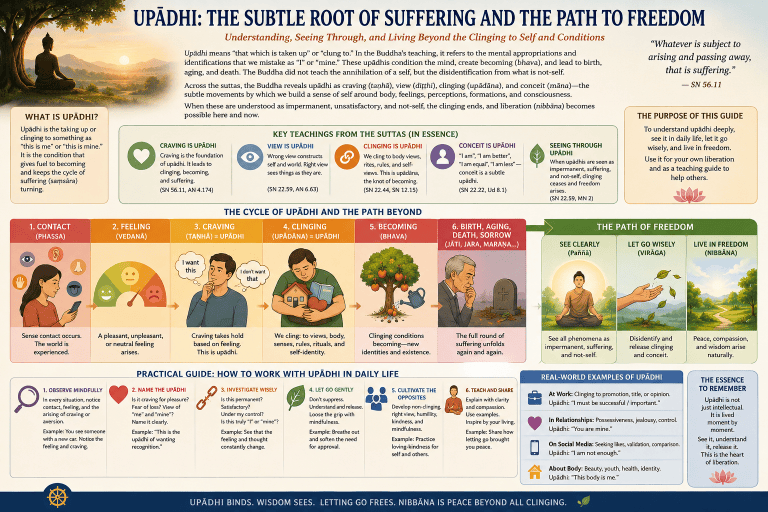
What is Upadhi?
Upadhi reveals how the mind turns conditioned experiences into “mine,” then builds identity, security and dependence around them. Through craving, appropriation and delight, possessions, relationships, views, status, memories and even refined meditative…
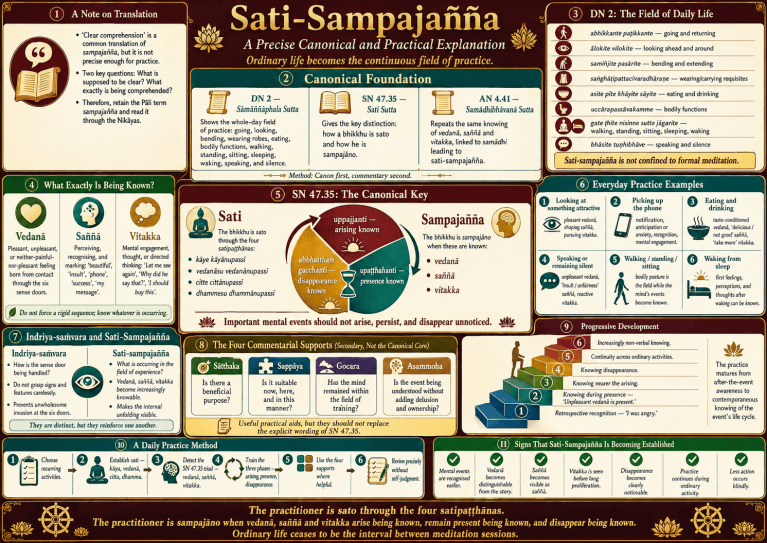
Sati-Sampajañña
Complete listening edition Listen to the full Sati-Sampajañña explanation A continuous reading of this entire page, including the canonical foundation, daily-life examples, practical development, and conclusion. Your browser does not support audio…
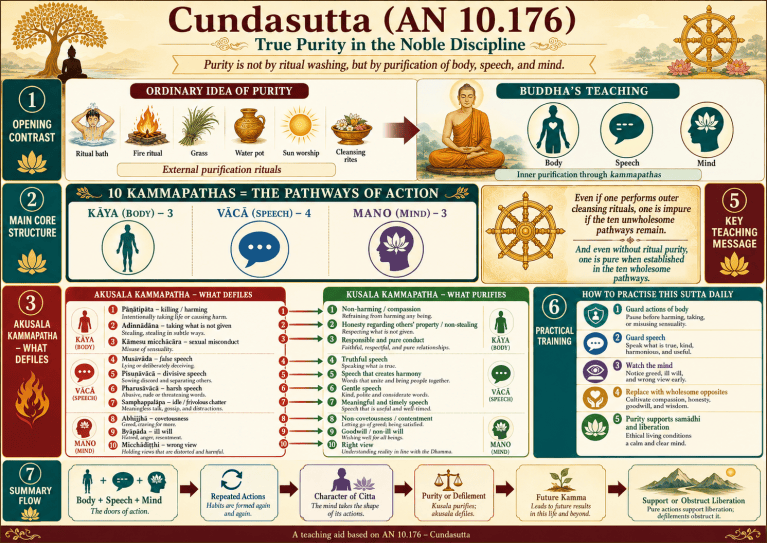
AN 10.176 — Cundasutta
Redefines purification away from external rites and toward wholesome conduct of body, speech and mind through the ten courses of kusala kamma.
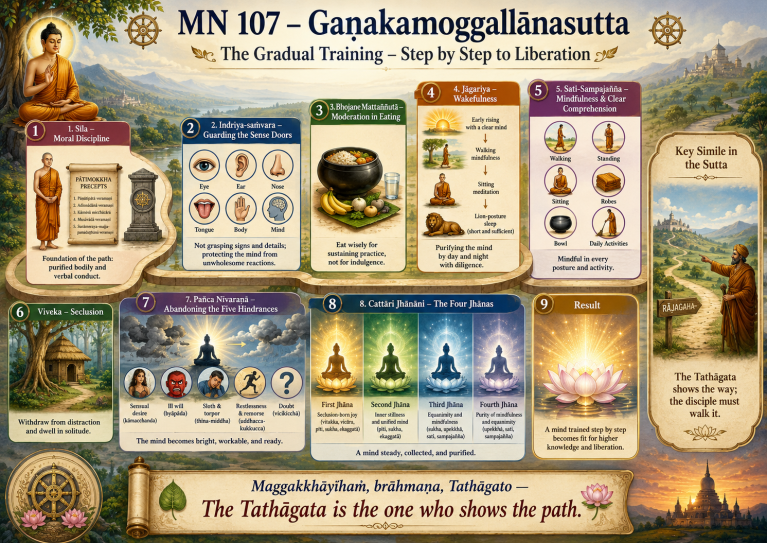
MN 107 — Gaṇakamoggallānasutta
Presents the Buddha’s gradual training step by step, from sīla and sense restraint through moderation, wakefulness, hindrance abandonment and jhāna toward liberation.
Page 1 of 2