Samādhi develops when the conditions supporting agitation are gradually removed and the mind becomes steady, unified and pliable. These studies bring together the Buddha’s instructions on sense restraint, moderation, wakefulness, hindrances, ānāpānasati, jhāna and the development of a mind fit for deeper insight.
Explore Samādhi Studies
Studies and practical guidance for establishing samādhi and developing the mind.
Showing 25–36 of 67 studies
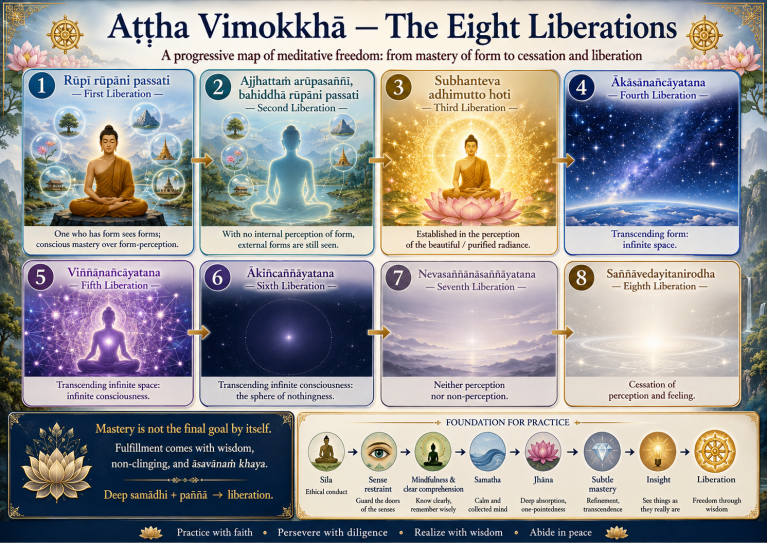
Aṭṭha Vimokkhā
Maps the Eight Liberations from mastery in relation to form through the formless attainments and culminates in saññāvedayitanirodha, the cessation of perception and feeling.
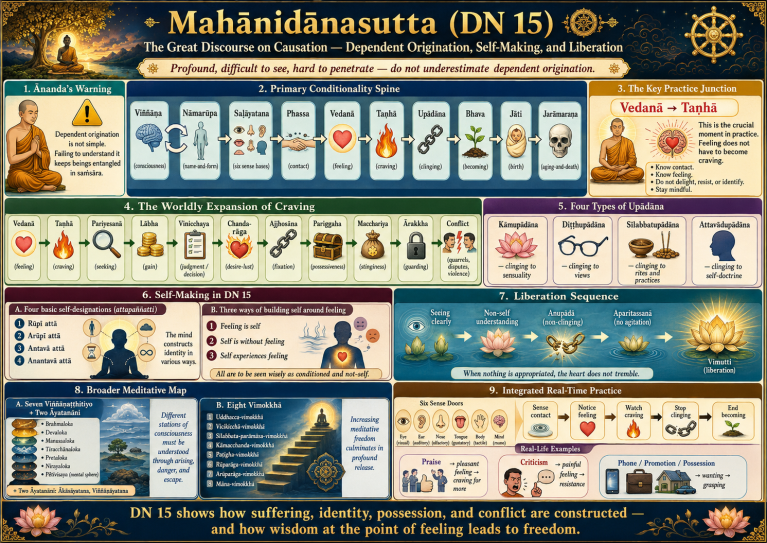
DN 15 — Mahānidānasutta
Explores the profound structure of paṭiccasamuppāda, showing why dependent origination is difficult to penetrate and how misunderstanding it keeps beings entangled in saṁsāra.
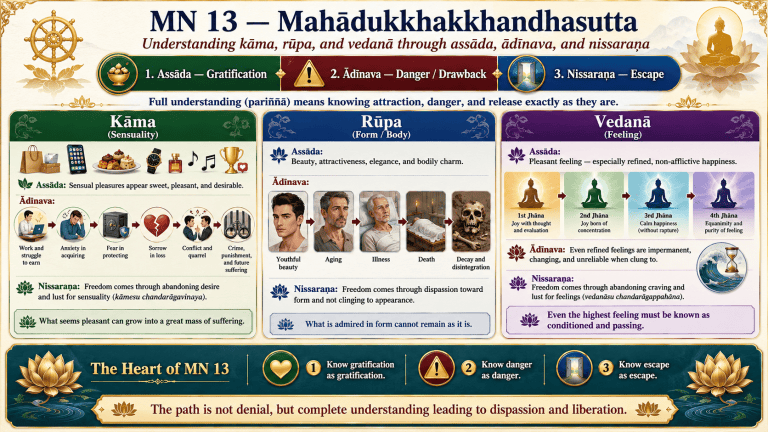
MN 13 — Mahādukkhakkhandhasutta
Explains full understanding of sensuality, form and feeling through three aspects—gratification, danger and escape—rather than through abstract belief or partial analysis.

MN 25 — Nivāpasutta
Uses the hunter-and-bait simile to show how sensuality and heedlessness trap beings, and how restraint, seclusion and deep meditative development lead beyond Māra’s reach.

MN 26 — Pāsarāsisutta
Contrasts the ignoble search for security within what is itself subject to birth, aging and death with the noble search for the unborn, unaging and deathless.
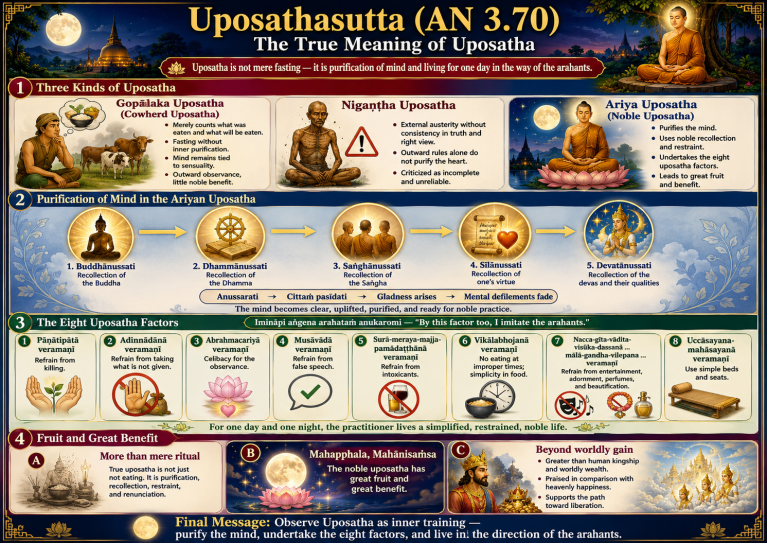
AN 3.70 — Uposathasutta
Distinguishes superficial observance from the Ariyan uposatha, where recollection, purification and restraint transform a ritual day into genuine training of conduct and mind.
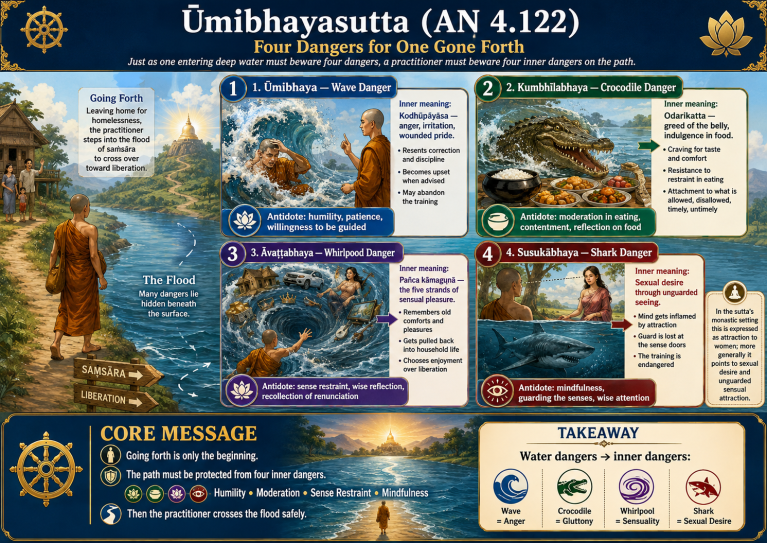
AN 4.122 — Ūmibhayasutta
Uses waves, crocodiles, whirlpools and sharks to represent four dangers that can overturn a practitioner: wounded pride, attachment to food, sensuality and attraction to the opposite sex.
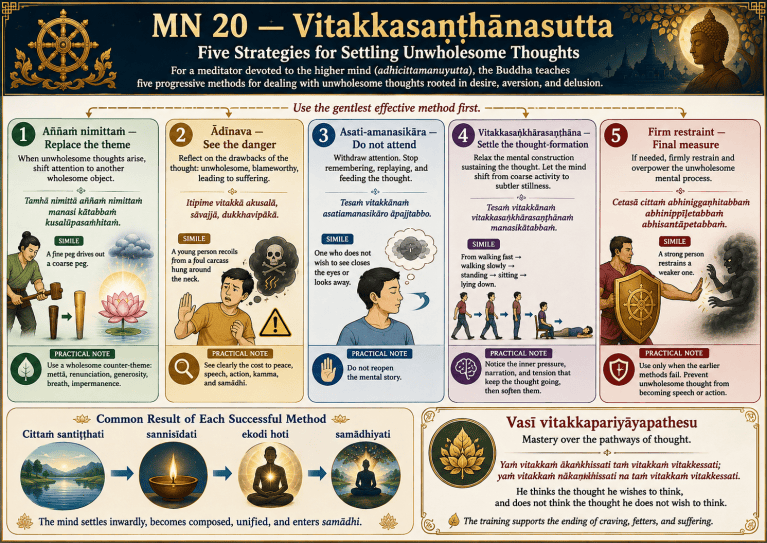
MN 20 — Vitakkasaṇṭhānasutta
Presents five progressively stronger methods for abandoning persistent unwholesome thoughts, from replacing the theme to withdrawing attention, calming formations and applying firm restraint.
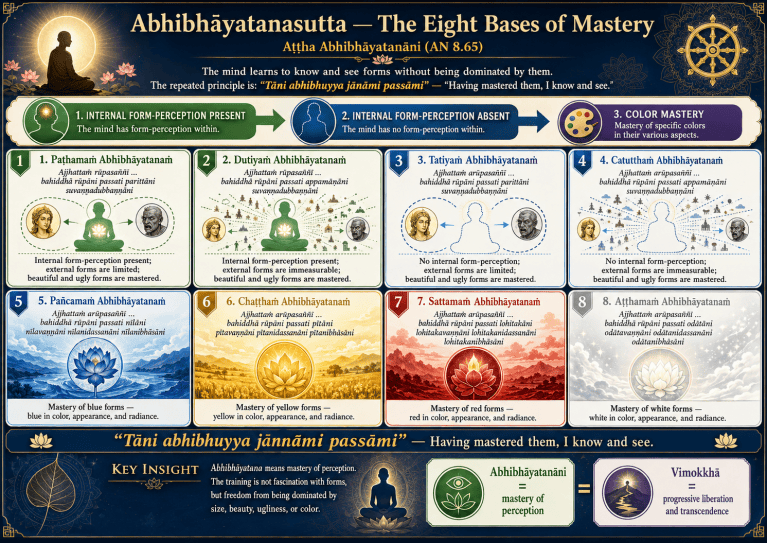
AN 8.65 — Abhibhāyatanasutta
Explains eight bases of mastery in which perception of form is deliberately developed until external forms no longer dominate the mind, culminating in mastery of four refined color fields.

AN 8.66 — Vimokkhasutta
Maps eight meditative liberations from refined mastery of form through the formless attainments, culminating in cessation of perception and feeling.
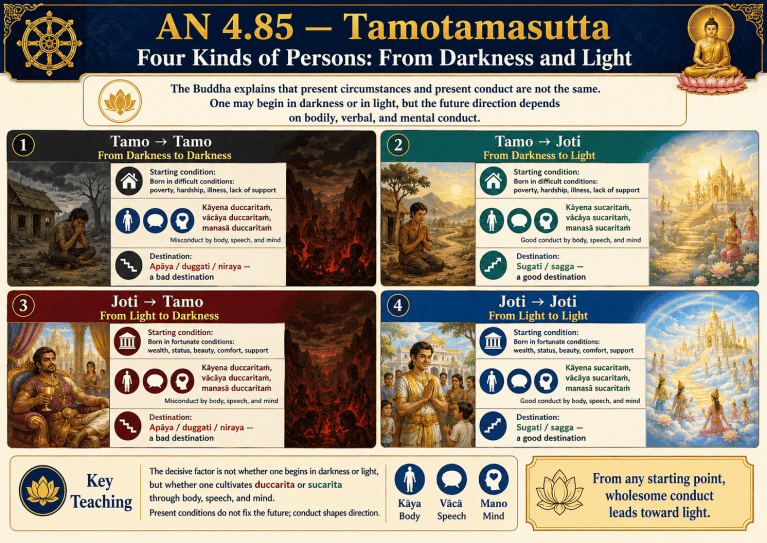
AN 4.85 — Tamotamasutta
Distinguishes present circumstances from present conduct through four trajectories—darkness to darkness, darkness to light, light to darkness and light to light.
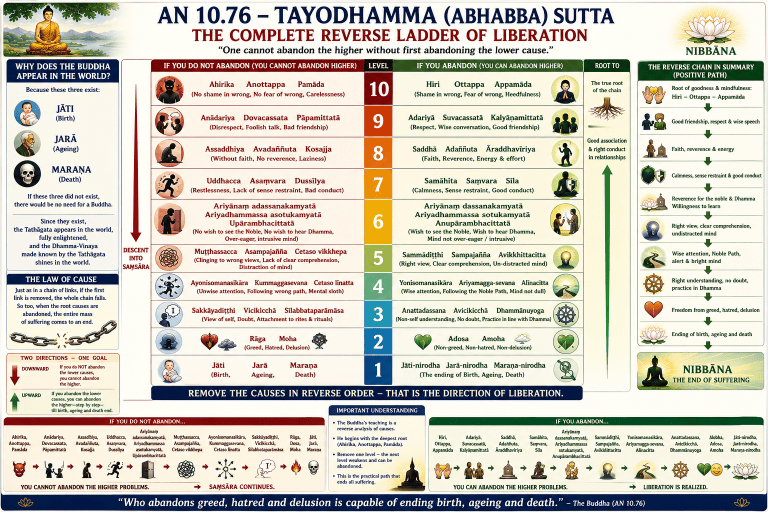
AN 10.76 — Tayodhammasutta
Traces the conditions that make liberation impossible or possible, moving through heedlessness, bad friendship, misconduct and wrong attention to the corresponding wholesome reversal.
Page 3 of 6