Samādhi develops when the conditions supporting agitation are gradually removed and the mind becomes steady, unified and pliable. These studies bring together the Buddha’s instructions on sense restraint, moderation, wakefulness, hindrances, ānāpānasati, jhāna and the development of a mind fit for deeper insight.
Explore Samādhi Studies
Studies and practical guidance for establishing samādhi and developing the mind.
Showing 1–12 of 67 studies
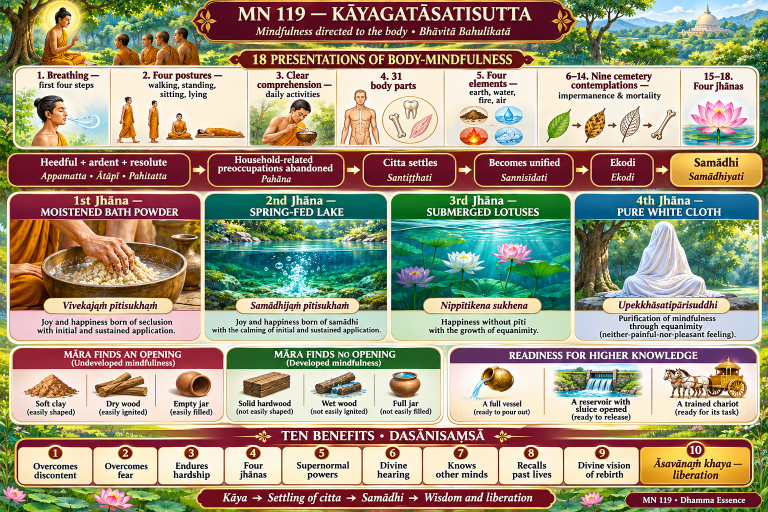
MN 119 Kāyagatāsatisutta
Eighteen bodily-mindfulness presentations, the inward settling of citta, the four jhāna similes, Māra’s openings, readiness for higher knowledge and ten benefits culminating in āsavānaṁ khaya.
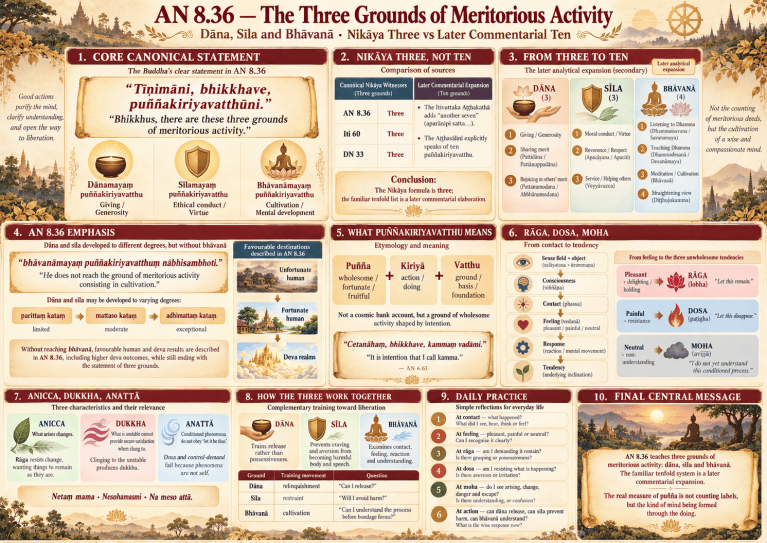
AN 8.36 Puññakiriyavatthusutta
AN 8.36 presents three grounds of meritorious activity—dāna, sīla and bhāvanā. This study translates the sutta, distinguishes the later tenfold commentarial scheme, and examines rāga, dosa and moha through lived experience.
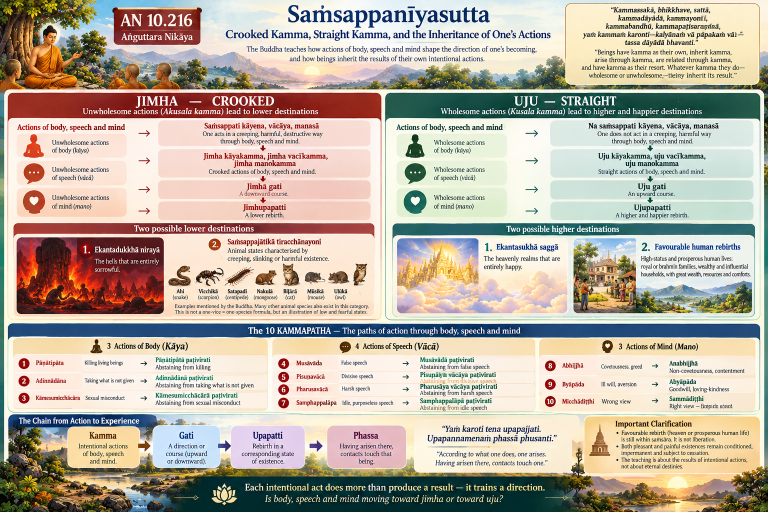
AN 10.216 Saṁsappanīyasutta
A fantastic sutta that explains on how beings would be reborn in lower realms and Buddha explains the name of animals while doing good deeds get into heaven or human birth
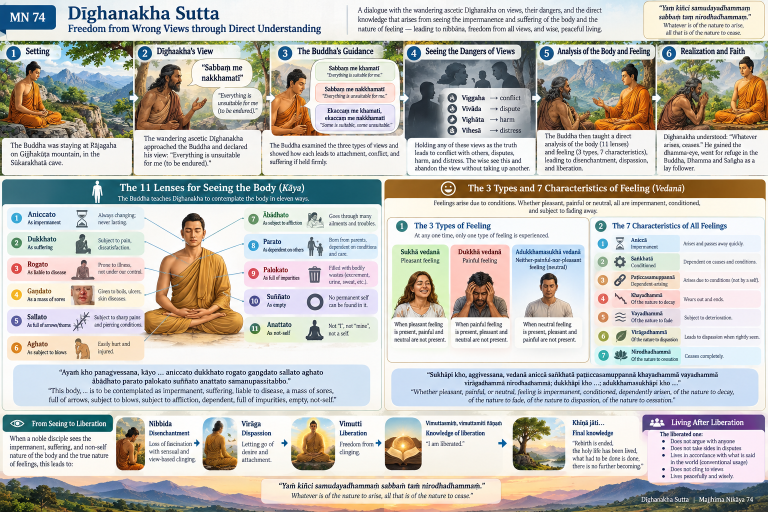
MN 74 Dīghanakhasutta
An exceptional sutta that explains step by step progression on how to attain Vipassana and get liberated from Samsara. In this sutta, Sariputta attains Arahat phala samapatti

DN 11 Kevaṭṭasutta
This important sutta explains on various stages and why one should not get attached to miracles, reading mind and instead focus on liberation. Also includes the famous viññanām anidassanam
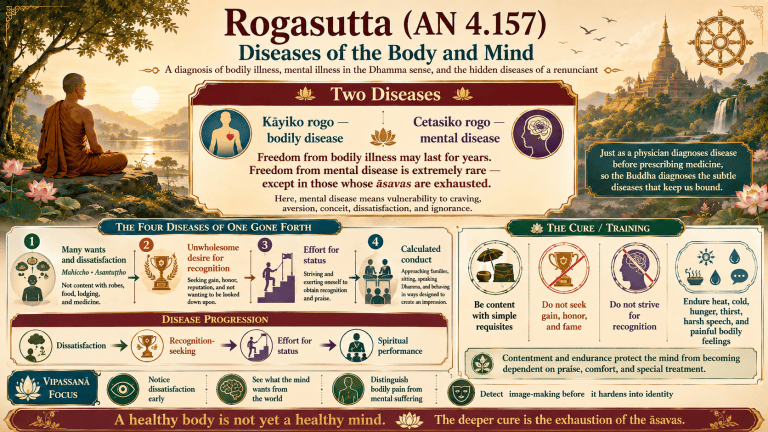
AN 4.157 Rogasutta
A person can have no diseases even for 100 years, but none can confirm that they don't have mental diseases even for an hour or less since cetasika roga or disease is…

What is Sati?
Sati is one of the most frequently used—and frequently oversimplified—terms in the Buddha’s teaching. Often translated merely as “mindfulness” or “present-moment awareness,” its meaning becomes much richer when SN 48.10, MN 118,…
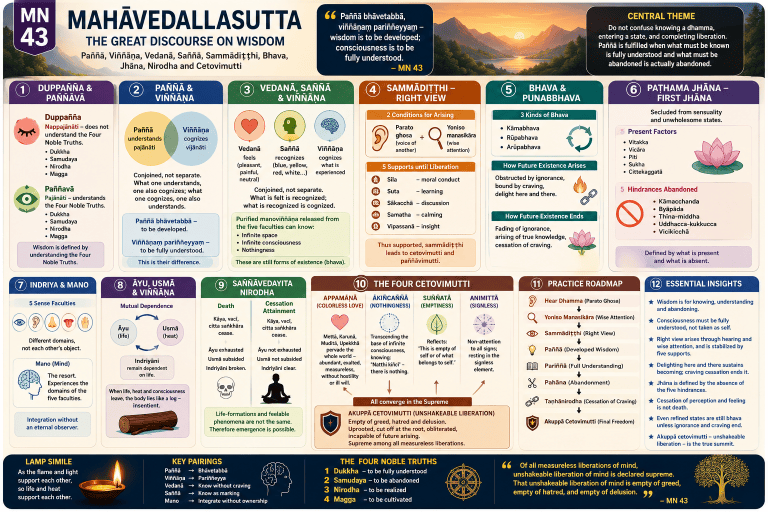
MN 43 Mahāvedallasutta
The Mahāvedallasutta is one of the most analytically rich discourses in the Middle Length Discourses. Rather than presenting a single linear sermon, it unfolds as a sustained dialogue in which Venerable Mahākoṭṭhika…
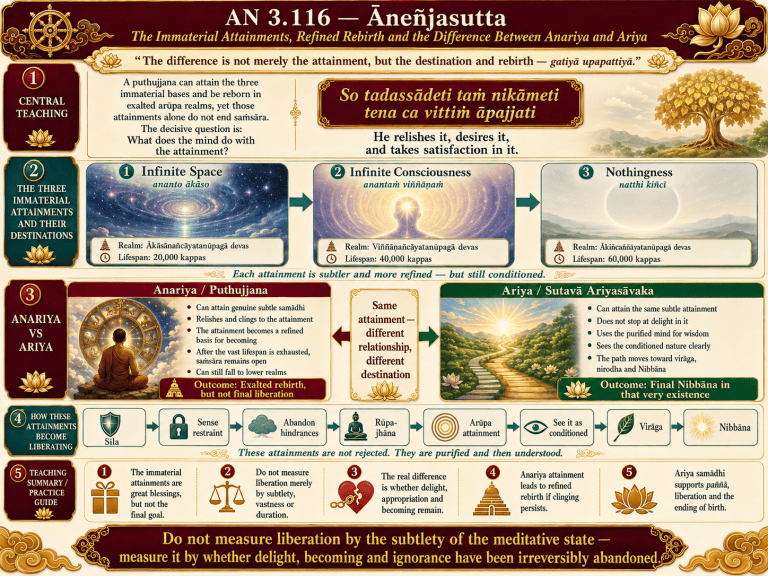
AN 3.116 Āneñjasutta
AN 3.116, the Āneñjasutta, is an important discourse for understanding the difference between sublime meditative attainment and final liberation. The Buddha shows that a practitioner may attain the bases of infinite space,…
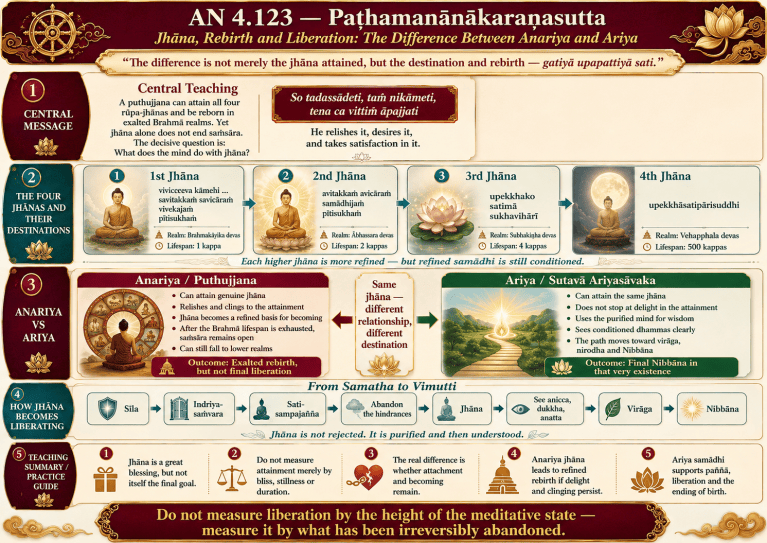
AN 4.123 Paṭhamanānākaraṇasutta
AN 4.123, the Paṭhamanānākaraṇasutta, is an important discourse for understanding the difference between jhāna attainment and liberation. The Buddha shows that even an uninstructed puthujjana can develop the four rūpa-jhānas, dwell in…
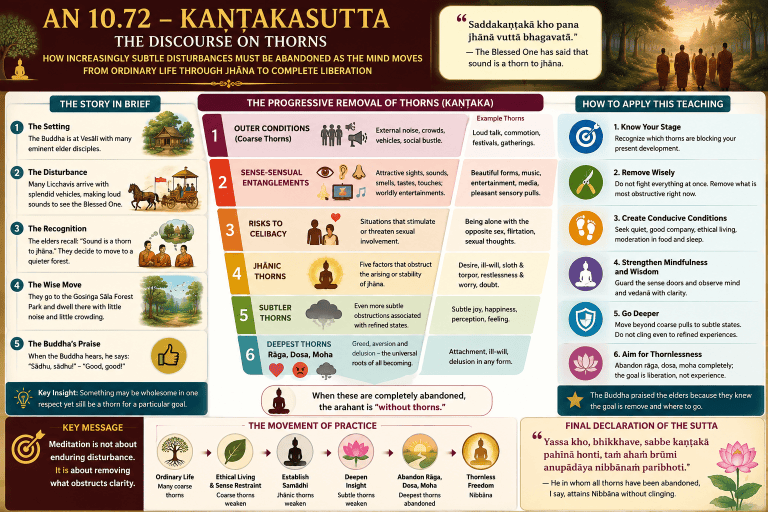
AN 10.72 — Kaṇṭakasutta
Presents practice as the progressive removal of increasingly subtle “thorns,” from external disturbance and social entanglement through deeper meditative development.
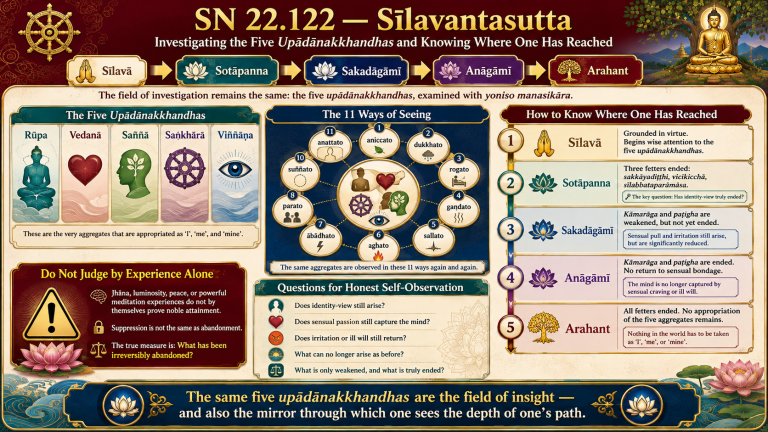
SN 22.122 — Sīlavantasutta
Shows how contemplation of the five aggregates remains central throughout the stages of the noble path, from virtuous practitioner through the four levels of awakening.
Page 1 of 6