Vipassanā
Insight training through direct investigation of conditioned experience, including khandhas, sense bases, dependent arising, impermanence, suffering and not-self.
Showing 13–24 of 52 studies
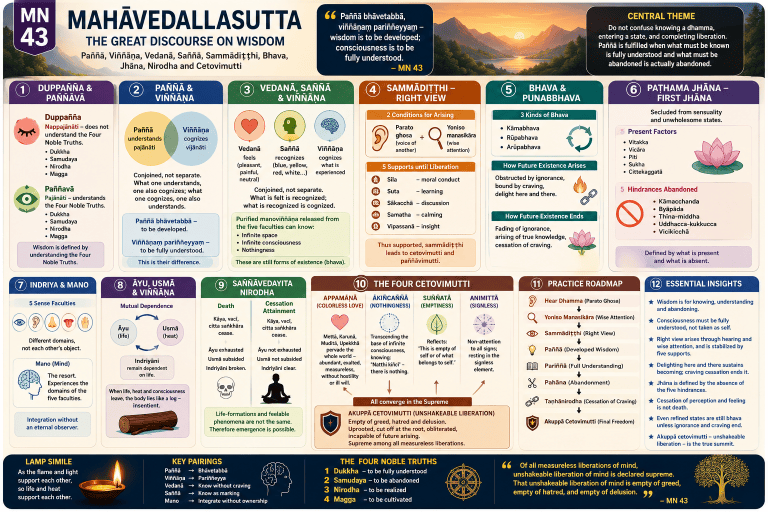
MN 43 Mahāvedallasutta
The Mahāvedallasutta is one of the most analytically rich discourses in the Middle Length Discourses. Rather than presenting a single linear sermon, it unfolds as a sustained dialogue in which Venerable Mahākoṭṭhika…
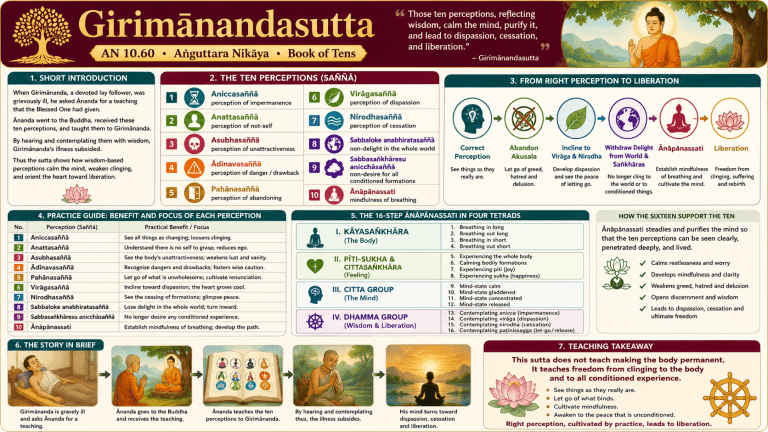
AN 10.60 Girimānandasutta
AN 10.60, the Girimānandasutta, is a profound discourse in which the Buddha responds to the grave illness of Venerable Girimānanda by teaching ten perceptions that radically transform how a practitioner understands the…
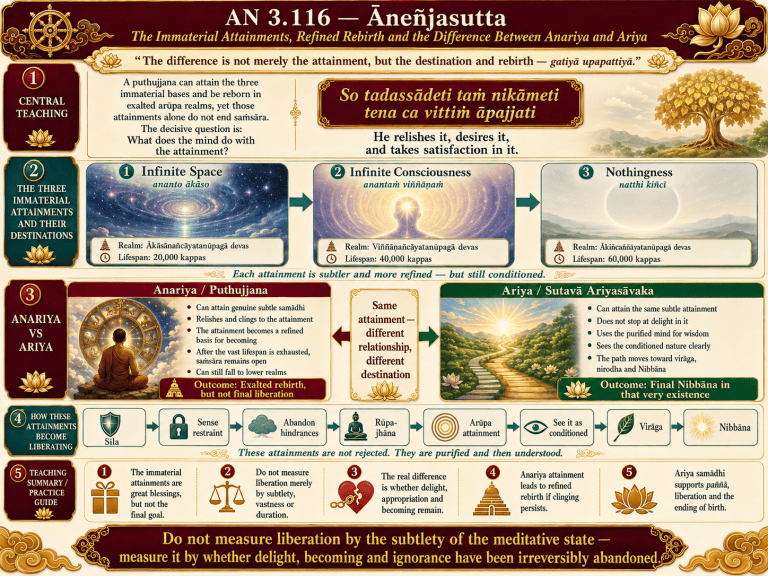
AN 3.116 Āneñjasutta
AN 3.116, the Āneñjasutta, is an important discourse for understanding the difference between sublime meditative attainment and final liberation. The Buddha shows that a practitioner may attain the bases of infinite space,…
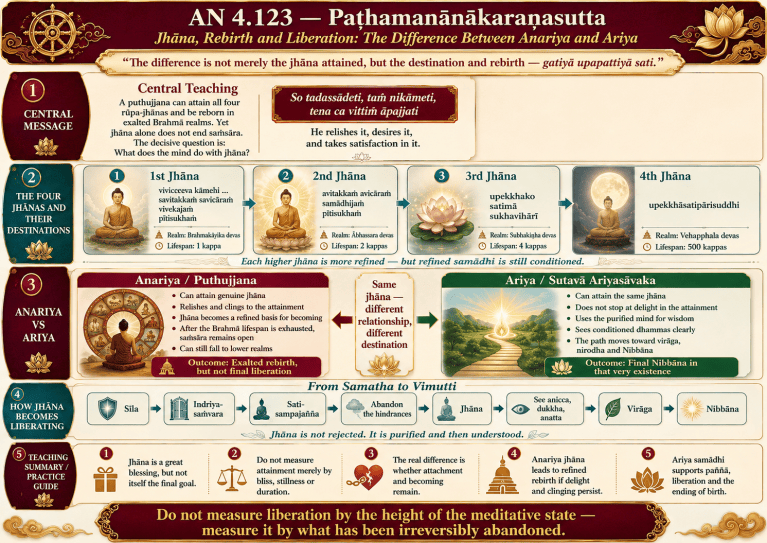
AN 4.123 Paṭhamanānākaraṇasutta
AN 4.123, the Paṭhamanānākaraṇasutta, is an important discourse for understanding the difference between jhāna attainment and liberation. The Buddha shows that even an uninstructed puthujjana can develop the four rūpa-jhānas, dwell in…
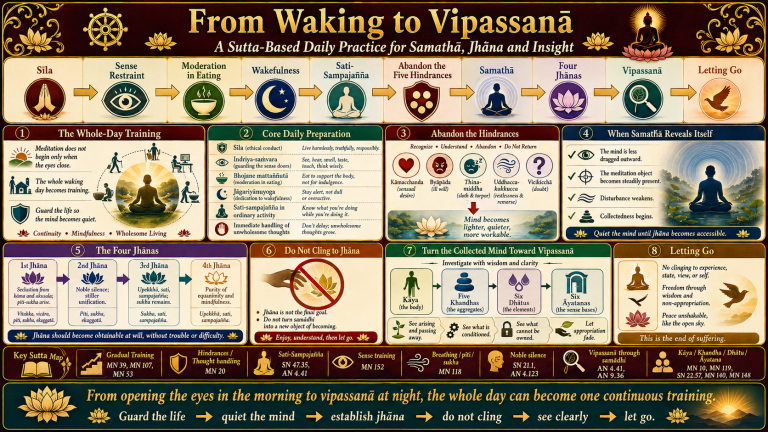
From Daily Discipline to Samathā, Jhāna and Vipassanā
From Waking to Vipassanā presents meditation as a continuous training rather than an isolated sitting practice. Drawing especially on MN 39, MN 107 and MN 53, it shows how sīla, guarding the…
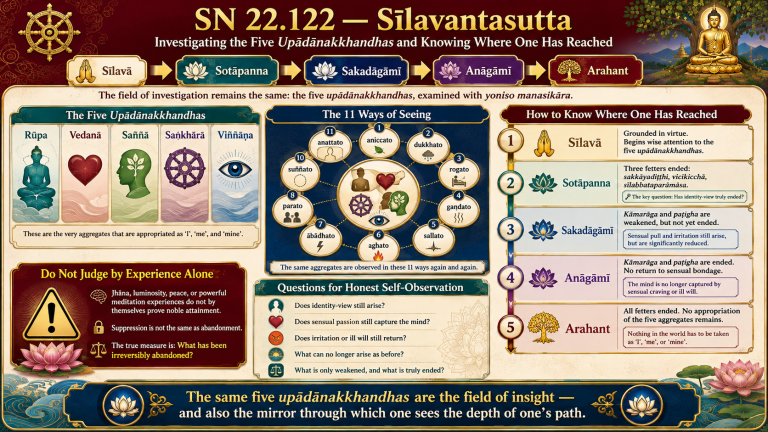
SN 22.122 — Sīlavantasutta
Shows how contemplation of the five aggregates remains central throughout the stages of the noble path, from virtuous practitioner through the four levels of awakening.
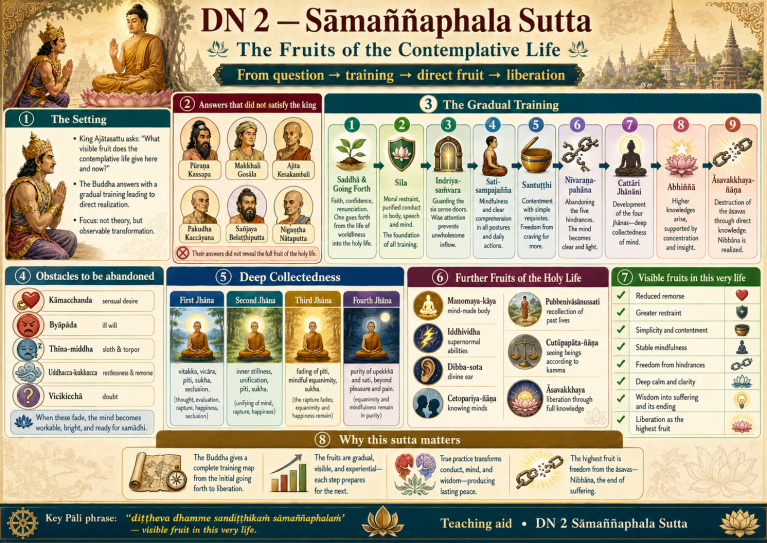
DN 2 — Sāmaññaphalasutta
Maps the gradual training from sīla and sense restraint through sati-sampajañña, abandonment of the hindrances and jhāna to the destruction of the āsavas.

AN 4.38 — Patilīnasutta
Defines true withdrawal not as physical seclusion but as the ending of speculative truth-claims, all searching, bodily disturbance in fourth jhāna, and the conceit “I am.”
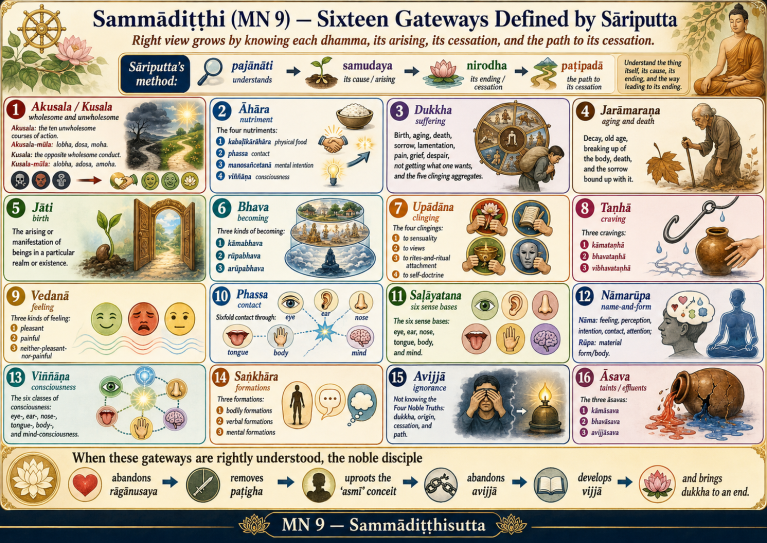
MN 9 — Sammādiṭṭhisutta
Explains sammādiṭṭhi as direct understanding of a dhamma together with its arising, cessation and the path leading to cessation, rather than merely holding correct beliefs.
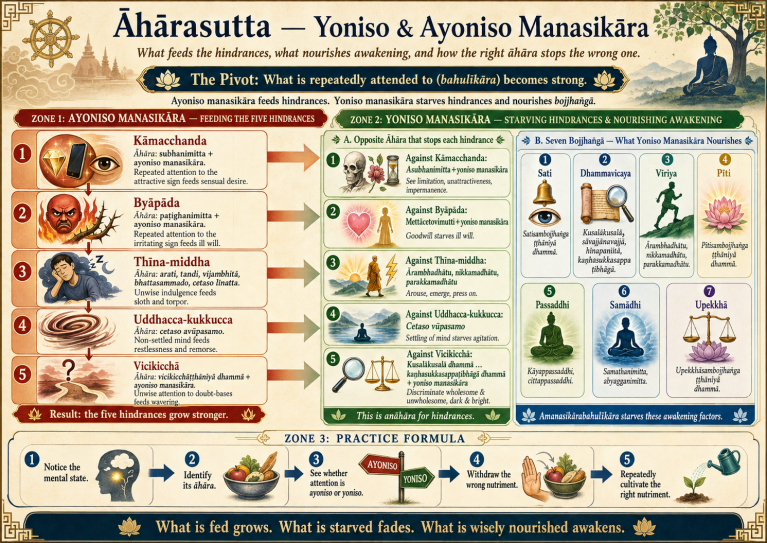
SN 46.51 — Āhārasutta: Detailed Continuation on Hindrances and Awakening Factors
Shows that the five hindrances and seven awakening factors depend on nutriment: what is repeatedly fed grows, while what is deprived of support weakens and fades.
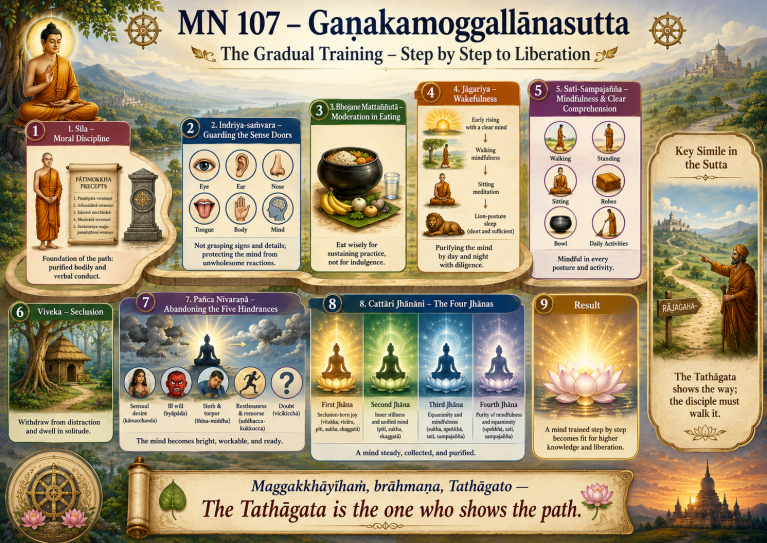
MN 107 — Gaṇakamoggallānasutta
Presents the Buddha’s gradual training step by step, from sīla and sense restraint through moderation, wakefulness, hindrance abandonment and jhāna toward liberation.
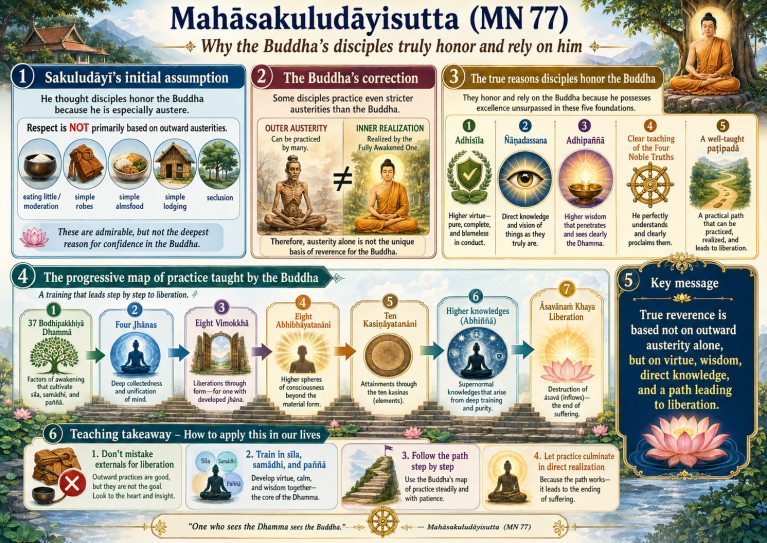
MN 77 — Mahāsakuludāyisutta
Explains why the Buddha’s disciples respect and rely upon him, moving beyond outward austerity to the depth of training, realization and liberating knowledge he teaches.
Page 2 of 5