Vipassanā
Insight training through direct investigation of conditioned experience, including khandhas, sense bases, dependent arising, impermanence, suffering and not-self.
Showing 37–48 of 50 studies
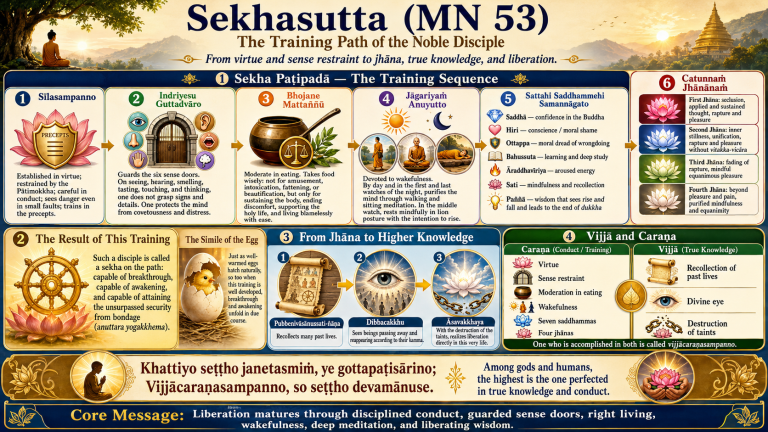
MN 53 — Sekhasutta
Presents the trainee’s development through conduct and knowledge, including sīla, sense restraint, moderation, wakefulness, seven good qualities, jhāna and the three higher knowledges.
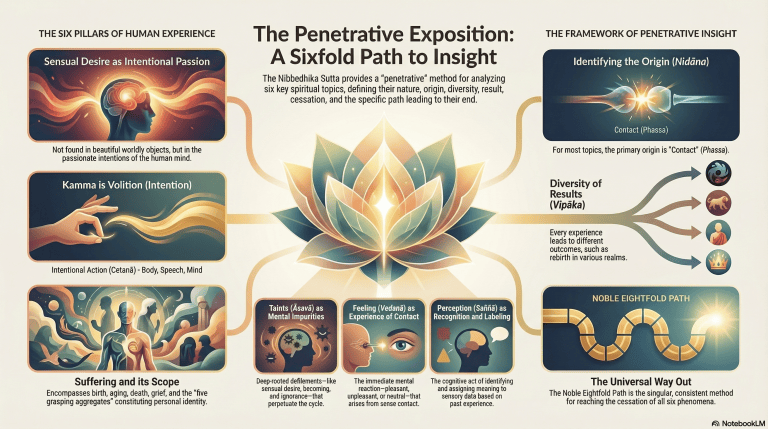
AN 6.63 — Nibbedhikasutta: Penetrative Exposition of the Dhamma
Presents the penetrative exposition of Dhamma through six core subjects—sensuality, feelings, perceptions, āsavas, kamma and suffering—each examined through arising, diversity, result, cessation and path.

Day 7 – Vipassana Insight: The Five Elements and the Seizing Mind
Brisbane Retreat day 7 – Practical VipassnaWelcome to the Vipassana day !!!So today, what we are going to do is that in the next 2 hours almost 2 hours it'll be continuous…
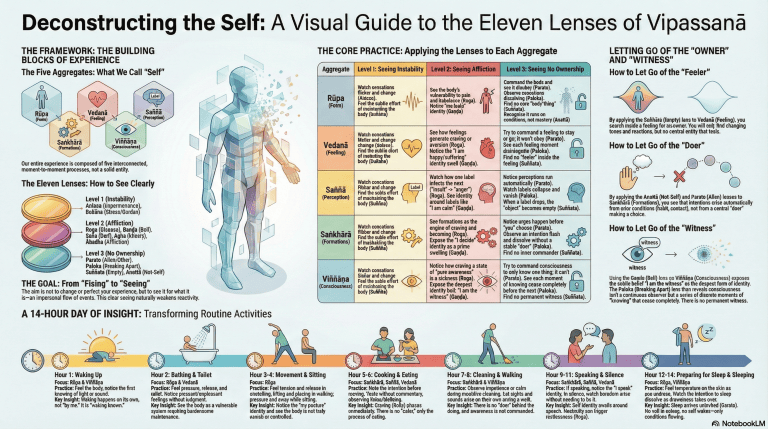
Turn the Five Khandhas Like a Jewel—Until “I” and “Mine” Cannot Be Found
This essay is about looking at five aggregates in 11 lenses when then makes one to experience "No I" or i'm" this or that. Worth trying to understand the depth of Dhamma

Paṭisambhidāmagga — Ānāpānassatikathā: The Tree and the Saw
Uses the tree-and-saw method to explain steady mindfulness at the breath-contact point without chasing past or future breaths, linking this stability with effort, jhāna and insight.
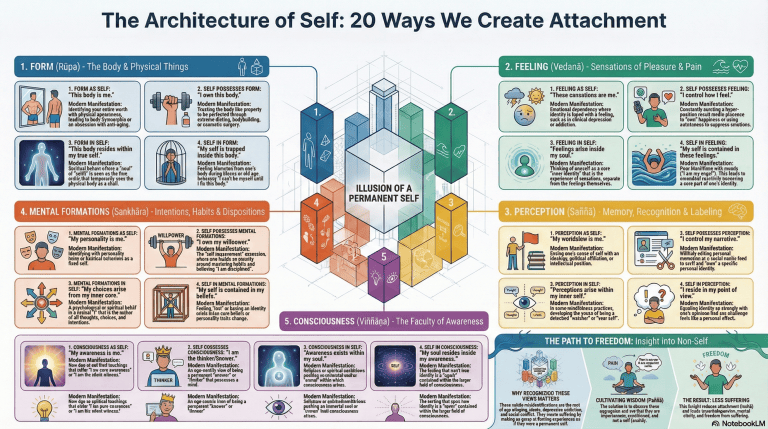
The Architecture of Ego: 20 Ways You Fake a “Self” (And How to Stop)
Maps twenty forms of mistaken self-view by applying four patterns of identification to each of the five aggregates, revealing how “I,” “me” and “mine” are constructed.

Paṭisambhidāmagga — Diṭṭhikathā: The Destruction of Wrong Views and Self-Clinging
Examines how diṭṭhi becomes self-clinging when ideas, experiences, attainments or doctrines are appropriated as “mine” or “self,” and how that grasping is dismantled.
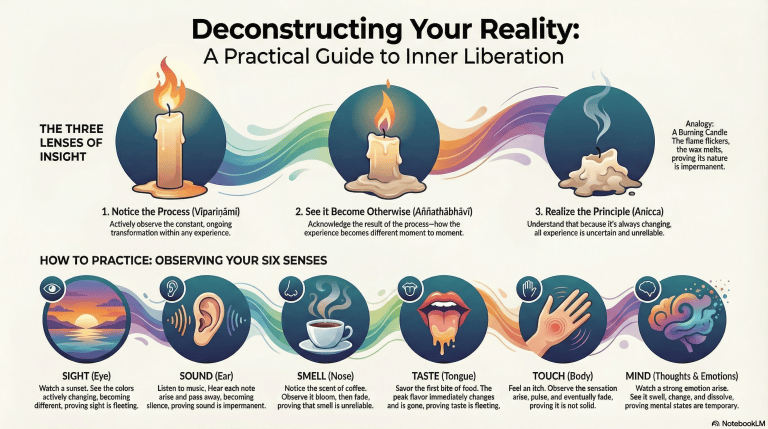
Constant practice for Sotapanna
What practice one who is aspiring for Sotapanna do is indicated in SN25.1 to SN25.10 and this discourse and essay just makes that happe
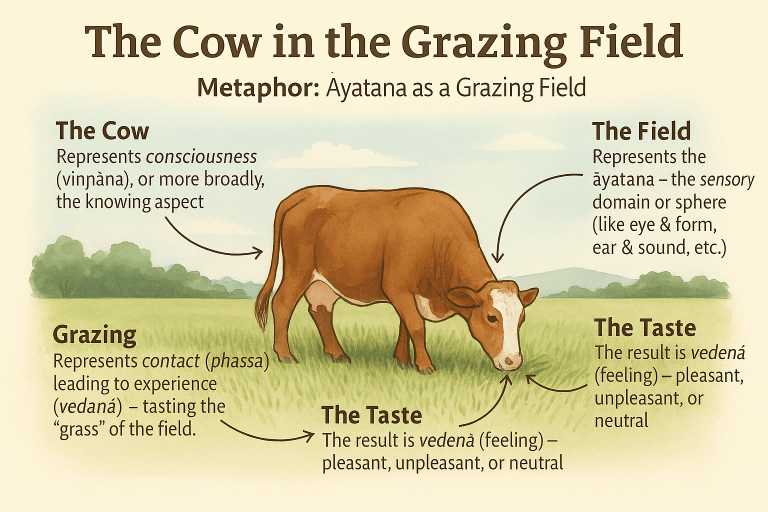
MN 137 — Saḷāyatanavibhaṅgasutta: Six Sense Field Experiences
Maps experience across the six sense bases from object, consciousness, contact and feeling through craving and mental responses, culminating in the refinement of upekkhā and atammayatā.

MN 152 — Indriyabhāvanāsutta
Presents MN 152 as active training of the sense faculties: not avoiding sights and sounds, but meeting all six sense contacts without being dominated by liking, disliking or indifference.

SN 25 — Okkantasaṁyutta (Cakkhuvagga): What You Love Will Change
Examines the six sense doors to show that what is loved, disliked or treated neutrally is unstable and changing, making clinging to experience inherently unreliable.

SN 35.245 — Kiṁsukopamasutta: The Parrot Tree Simile
Uses the Kiṁsuka tree simile to show how practitioners may describe purified vision differently while genuine insight converges on the same principle: whatever arises ceases.
Page 4 of 5