Vipassanā
Insight training through direct investigation of conditioned experience, including khandhas, sense bases, dependent arising, impermanence, suffering and not-self.
Showing 25–36 of 50 studies
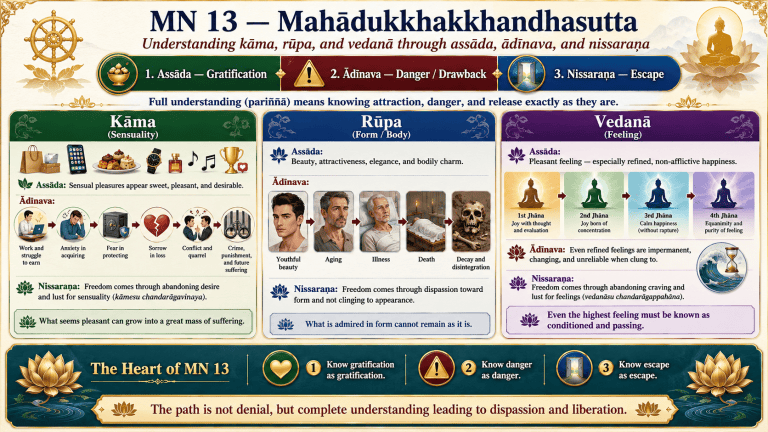
MN 13 — Mahādukkhakkhandhasutta
Explains full understanding of sensuality, form and feeling through three aspects—gratification, danger and escape—rather than through abstract belief or partial analysis.
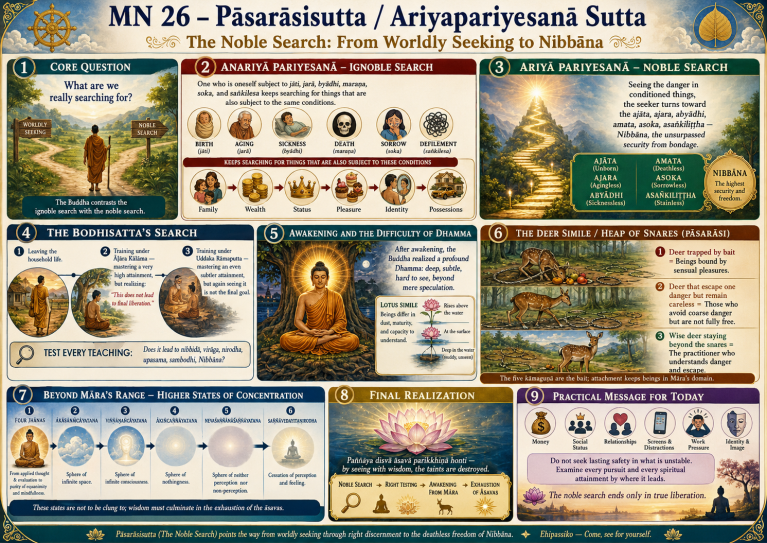
MN 26 — Pāsarāsisutta
Contrasts the ignoble search for security within what is itself subject to birth, aging and death with the noble search for the unborn, unaging and deathless.
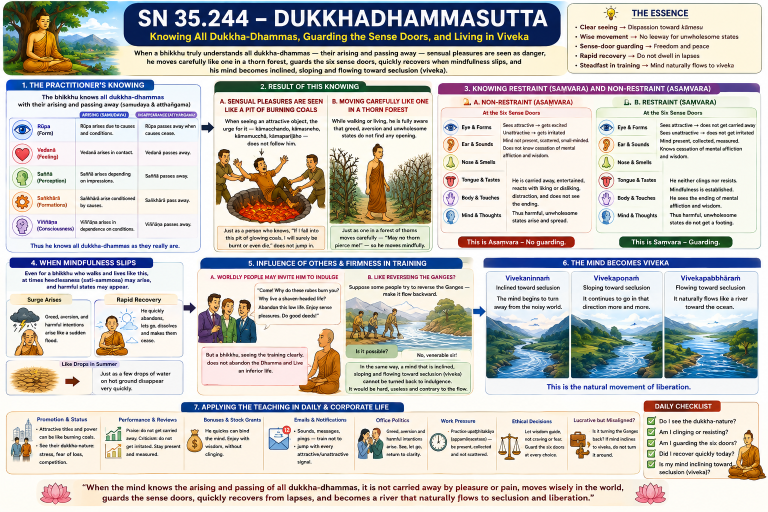
SN 35.244 — Dukkhadhammasutta
Shows how insight into the five aggregates and the six sense doors changes one’s relationship to sensuality, exposing danger and supporting dispassion and release.
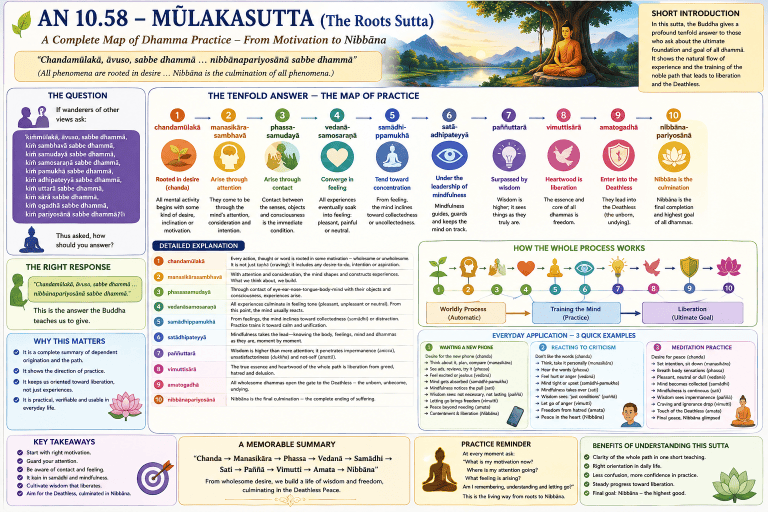
AN 10.58 — Mūlakasutta
Maps the movement of dhammas from chanda through attention, contact and feeling, then through samādhi, sati and paññā toward release and Nibbāna.
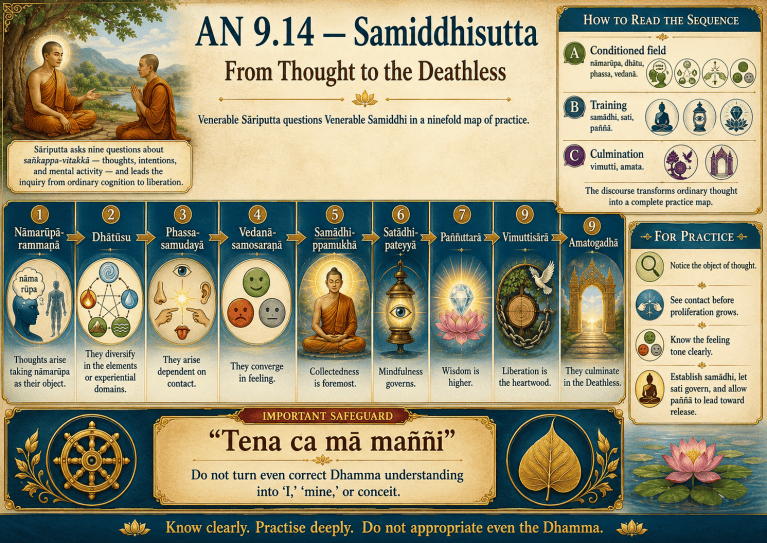
AN 9.14 — Samiddhisutta
Uses nine questions to map experience from nāmarūpa, contact and feeling through samādhi, sati and paññā to liberation and the Deathless.
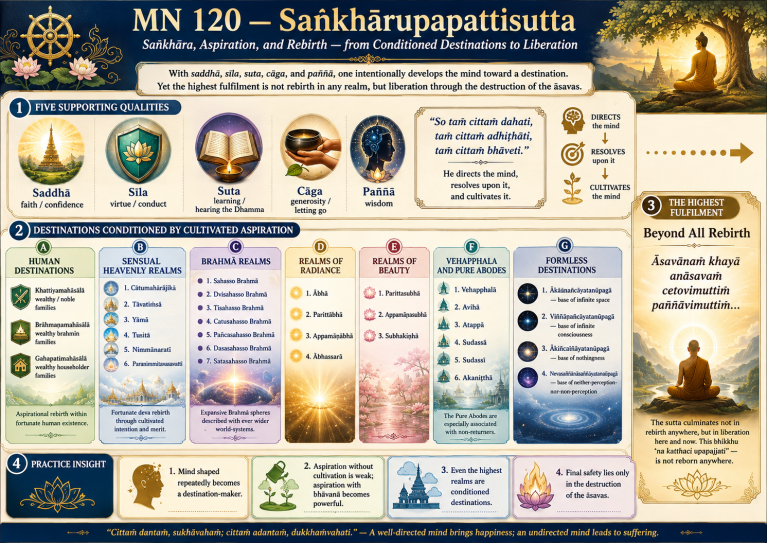
MN 120 — Saṅkhārupapattisutta: From Cultivated Intention to Rebirth—and Beyond Every Rebirth
Explains how intention, determination and repeated cultivation—supported by saddhā, sīla, suta, cāga and paññā—can condition rebirth, while the highest aim is ending rebirth entirely.
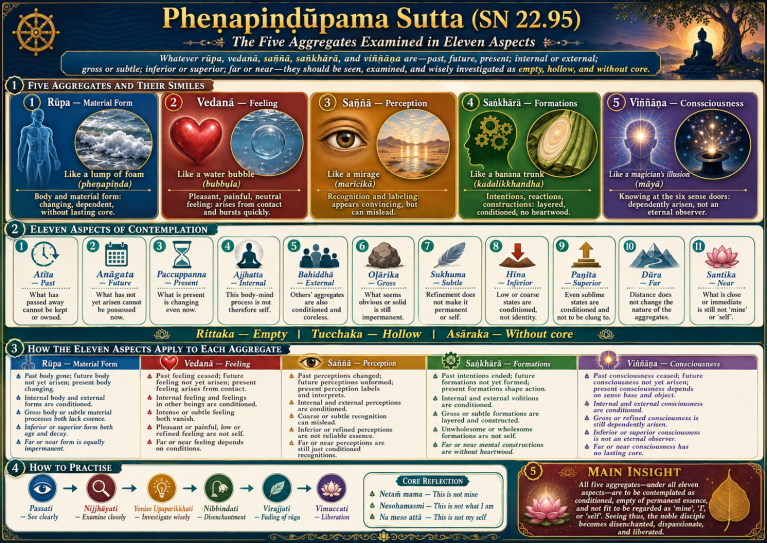
SN 22.95 — Pheṇapiṇḍūpamasutta: A Lump of Foam
Uses five vivid similes—foam, bubble, mirage, plantain trunk and illusion—to show how the five aggregates are empty of anything stable, substantial or fit to be taken as self.
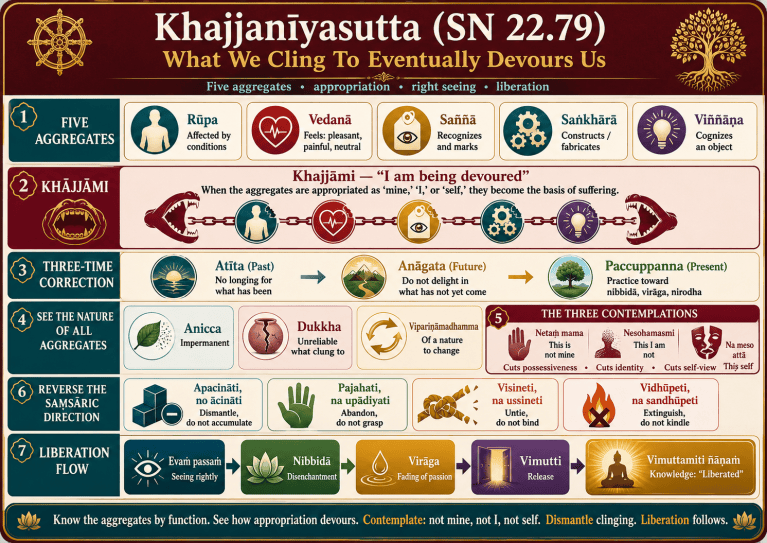
SN 22.79 — Khajjanīyasutta
Shows how the five aggregates consume the practitioner when grasped as “mine,” “I” or “self,” and how seeing their impermanence and change supports relinquishment.

How to Practice Cittānupassanā?
Explains cittānupassanā as directly knowing what citta has become—whether colored by rāga, dosa or moha, contracted or scattered, collected or released.
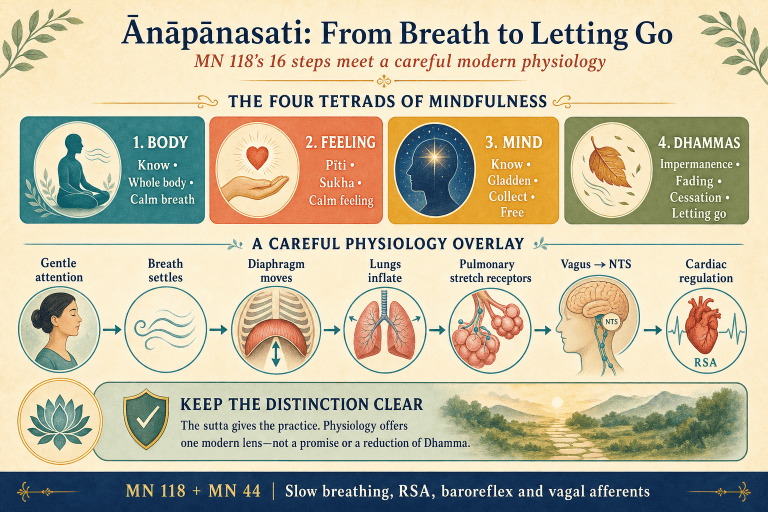
Ānāpānasati: The Architecture of MN 118, Breath, and Vagal Afferent Pathways
Explains the sixteen steps of MN 118 across body, feeling, mind and dhammas, alongside a cautious account of breathing physiology and vagal afferent pathways.
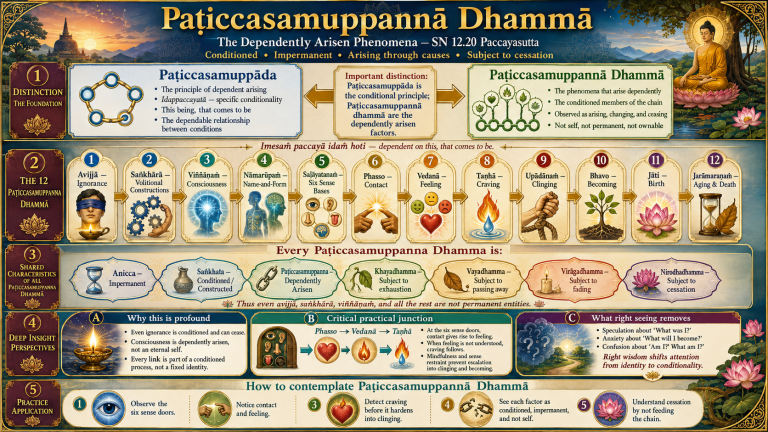
SN 12.20 — Paccayasutta
Clarifies dependent arising by distinguishing specific conditions from the dependently arisen phenomena they support, and draws out the implications for direct understanding and release.
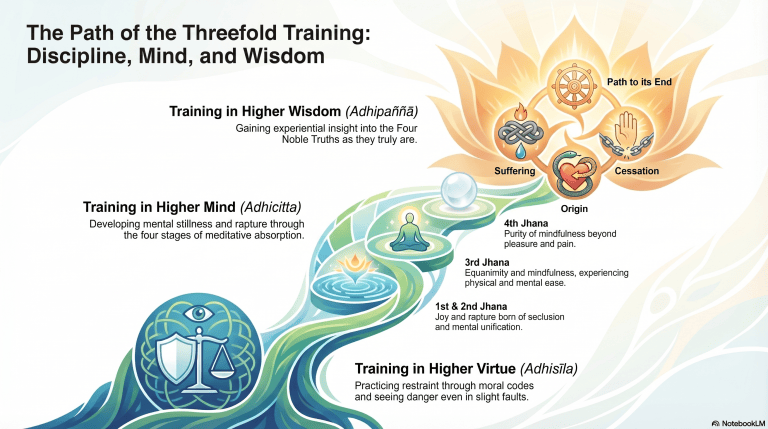
AN 3.89 — Paṭhamasikkhattayasutta: The Threefold Training for Discipline and Wisdom
Presents the Buddha’s training as adhisīla, adhicitta and adhipaññā, showing how higher discipline, collected mind and wisdom develop as one integrated path.
Page 3 of 5