These suttas and studies have been selected for close examination during retreat. Rather than reading many teachings quickly, use them slowly: understand the instruction, test it in practice, observe its result and return to the text with greater clarity.
Suttas for Retreat Practice
Selected suttas and essays intended for careful study and practical application during retreat.
Showing 13–23 of 23 studies
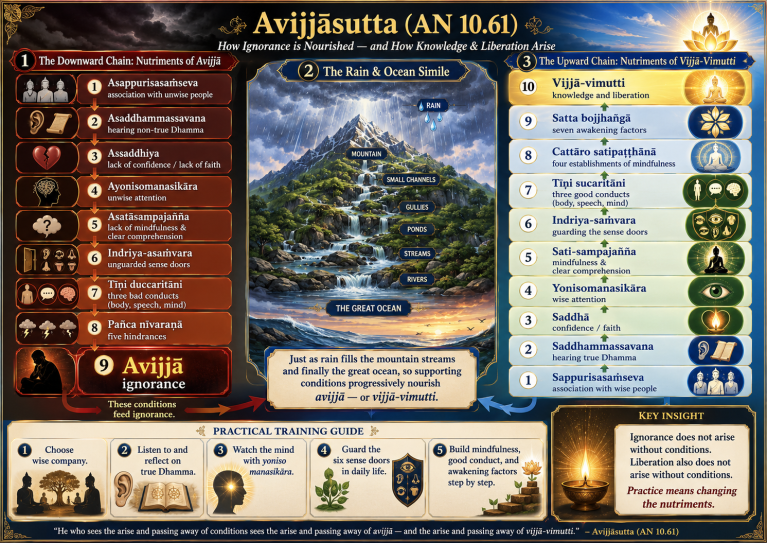
AN 10.61 — Avijjāsutta
Shows that ignorance has nutriment and grows through supporting conditions, while a contrasting sequence of wholesome conditions progressively nourishes knowledge and liberation.
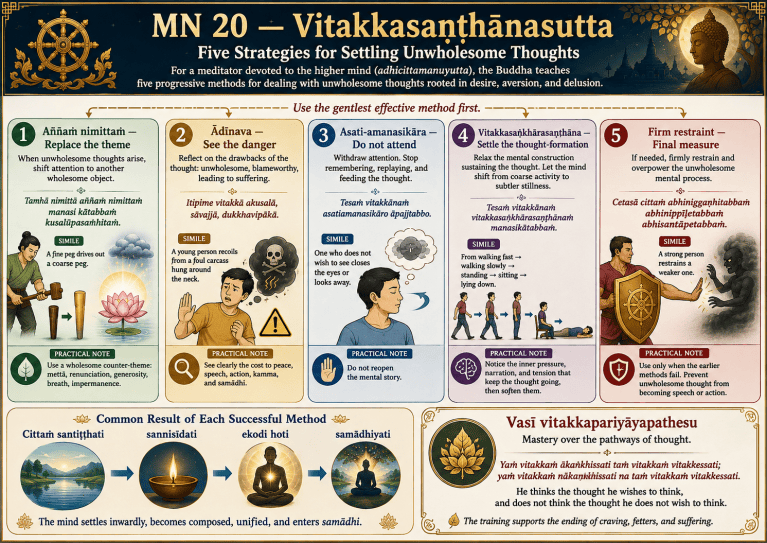
MN 20 — Vitakkasaṇṭhānasutta
Presents five progressively stronger methods for abandoning persistent unwholesome thoughts, from replacing the theme to withdrawing attention, calming formations and applying firm restraint.
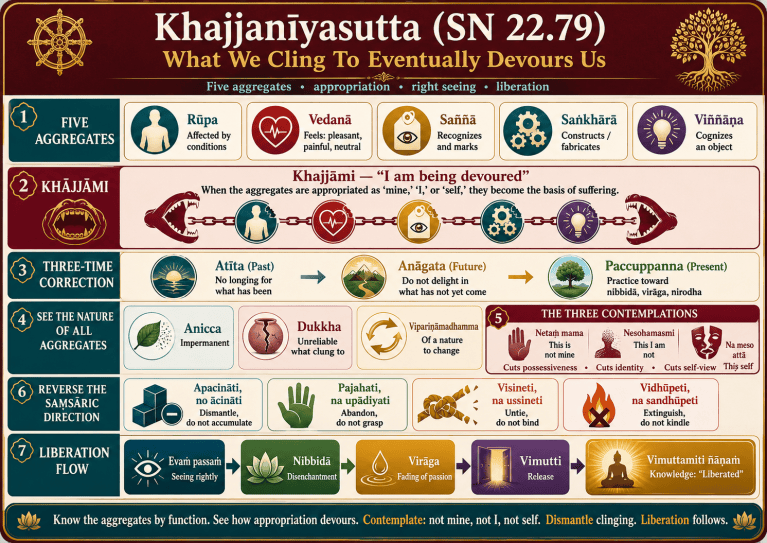
SN 22.79 — Khajjanīyasutta
Shows how the five aggregates consume the practitioner when grasped as “mine,” “I” or “self,” and how seeing their impermanence and change supports relinquishment.
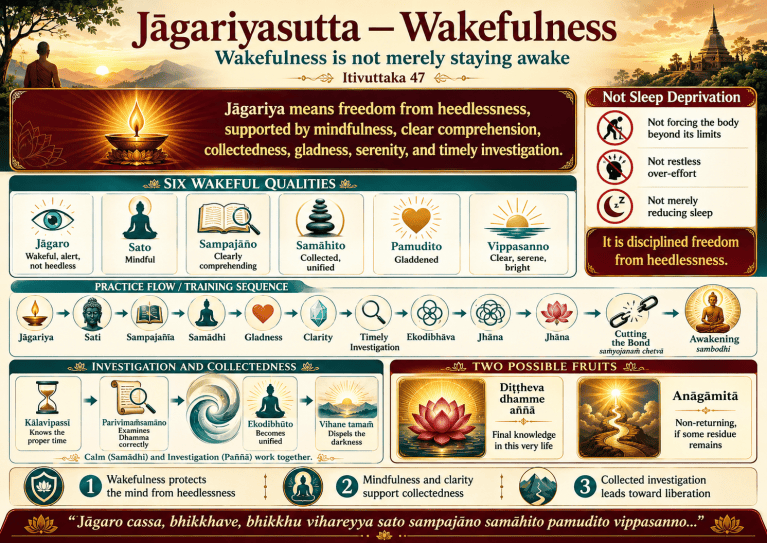
Iti 47 — Jāgariyasutta
Defines jāgariya as more than staying awake: true wakefulness combines sati, sampajañña, samādhi, gladness, investigation and jhāna to dispel ignorance.
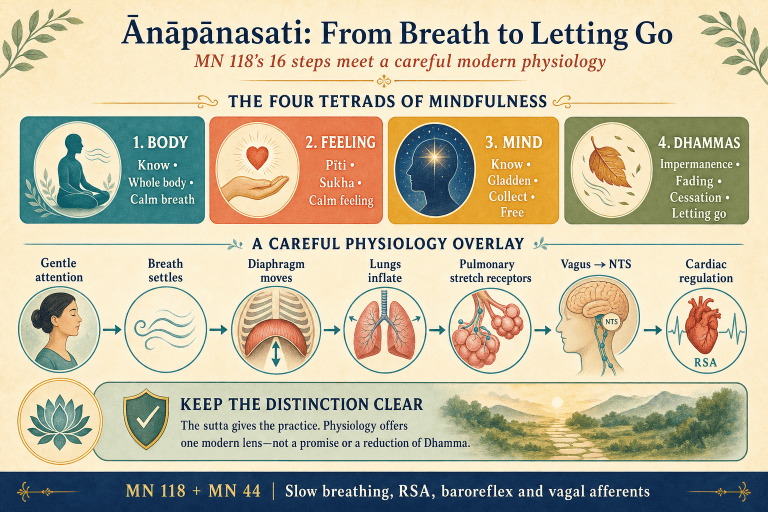
Ānāpānasati: The Architecture of MN 118, Breath, and Vagal Afferent Pathways
Explains the sixteen steps of MN 118 across body, feeling, mind and dhammas, alongside a cautious account of breathing physiology and vagal afferent pathways.
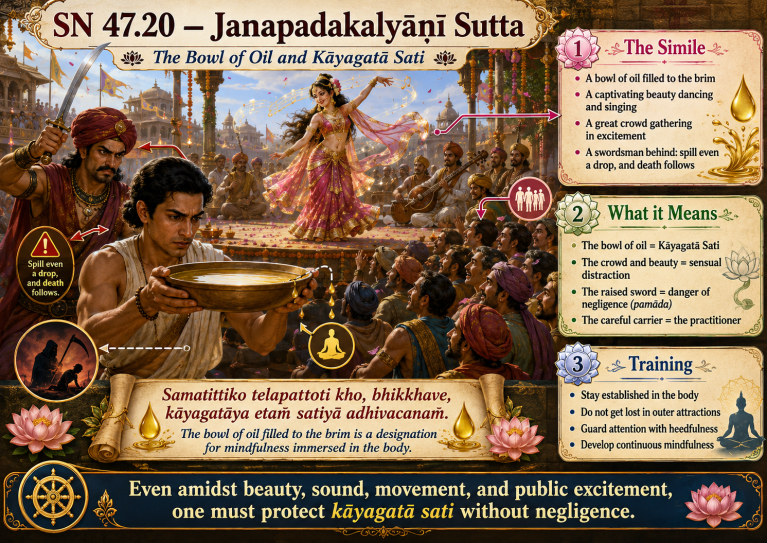
SN 47.20 — Janapadakalyāṇīsutta: The Simile of the Beautiful Sensual Girl
The Buddha’s bowl-of-oil simile shows how kāyagatā sati must remain continuously established amid beauty, sound, crowds and every outward pull.
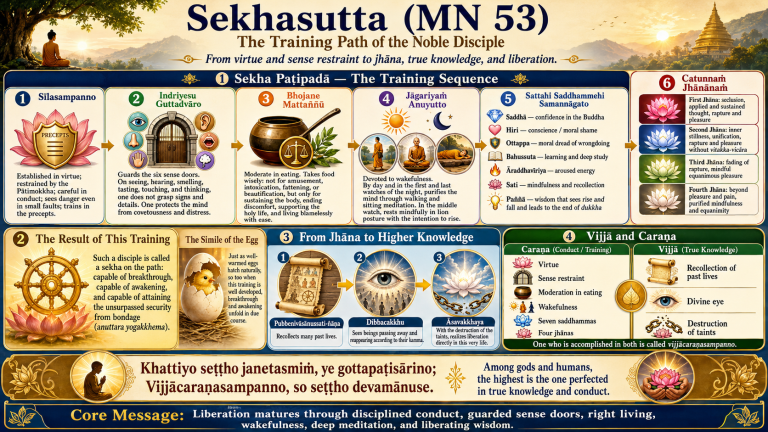
MN 53 — Sekhasutta
Presents the trainee’s development through conduct and knowledge, including sīla, sense restraint, moderation, wakefulness, seven good qualities, jhāna and the three higher knowledges.
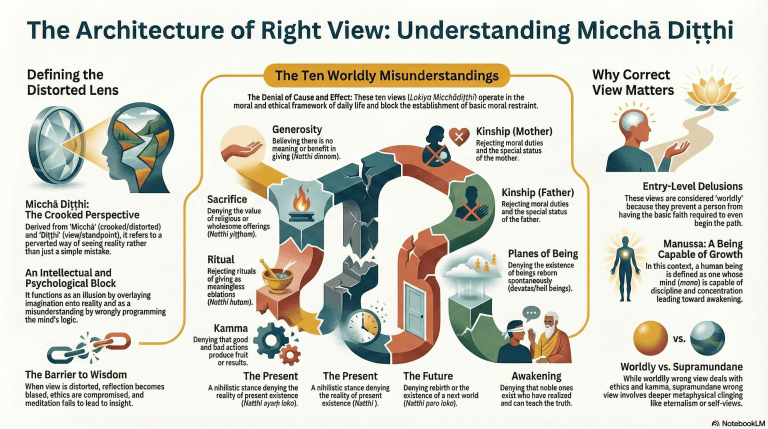
10 improper views
In the Buddha’s teaching, liberation does not begin with rituals, beliefs, or external practices. It begins with seeing rightly. When our way of seeing reality is distorted, even sincere effort becomes misdirected.

Can I meditate for an hour?
When we want to do sitting meditation with closed eyes, there would be lot of obstacles that comes. Do we really understand the Dhamma?
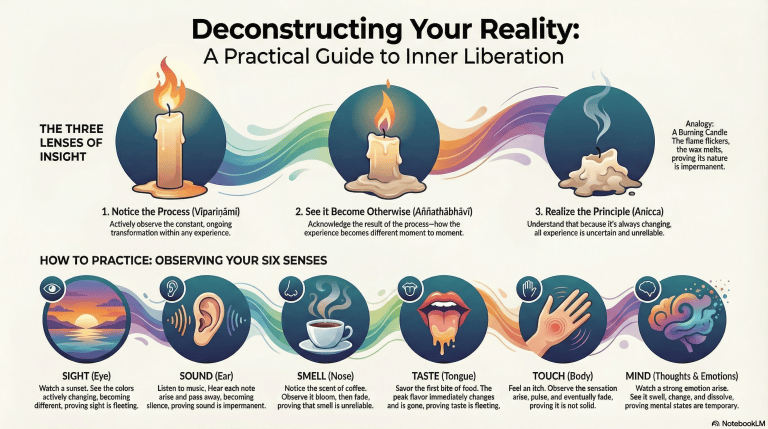
Constant practice for Sotapanna
What practice one who is aspiring for Sotapanna do is indicated in SN25.1 to SN25.10 and this discourse and essay just makes that happe

MN 152 — Indriyabhāvanāsutta
Presents MN 152 as active training of the sense faculties: not avoiding sights and sounds, but meeting all six sense contacts without being dominated by liking, disliking or indifference.
Page 2 of 2