Nibbāna & Noble Attainments
Teachings on cessation, fetters and the noble attainments from Sotāpanna through Arahant, with the ending of birth and death as the goal.
Showing 13–24 of 41 studies
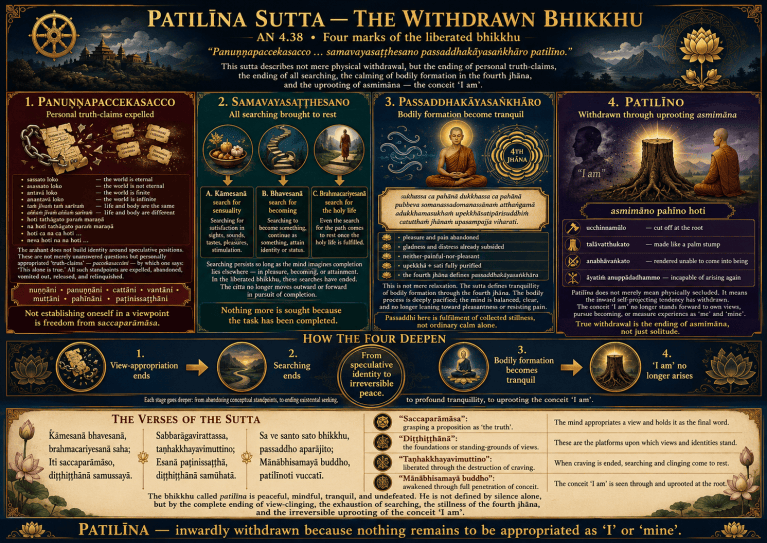
AN 4.38 — Patilīnasutta
Defines true withdrawal not as physical seclusion but as the ending of speculative truth-claims, all searching, bodily disturbance in fourth jhāna, and the conceit “I am.”
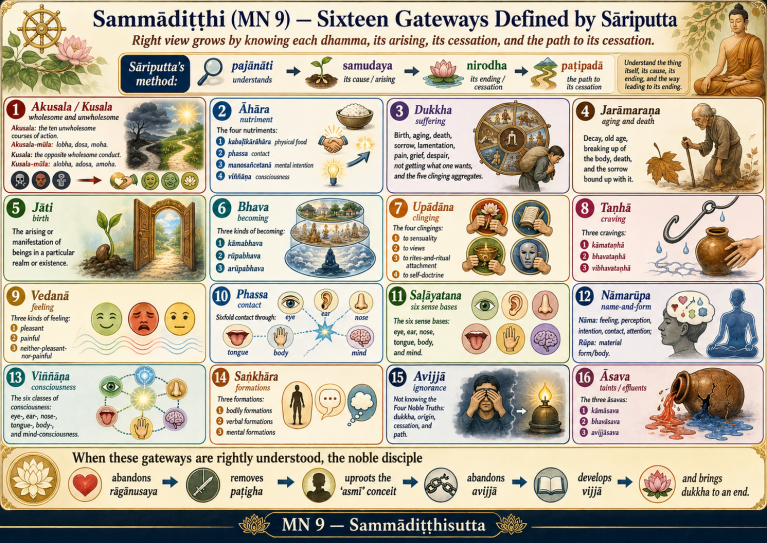
MN 9 — Sammādiṭṭhisutta
Explains sammādiṭṭhi as direct understanding of a dhamma together with its arising, cessation and the path leading to cessation, rather than merely holding correct beliefs.
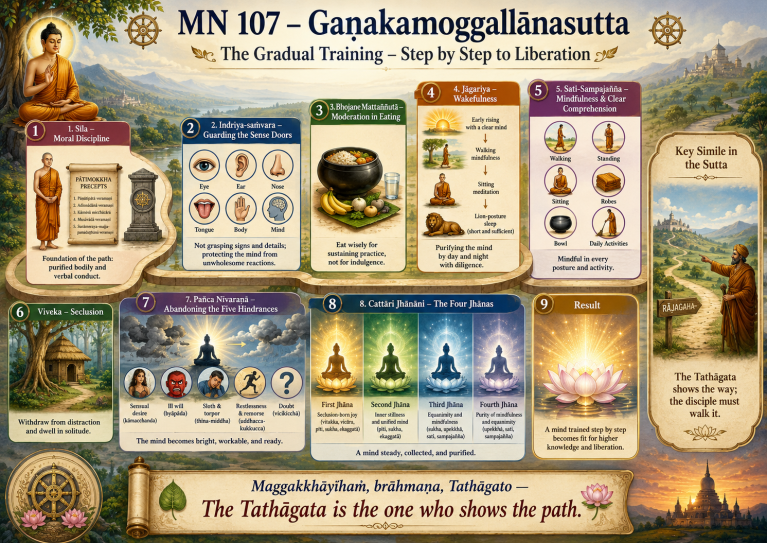
MN 107 — Gaṇakamoggallānasutta
Presents the Buddha’s gradual training step by step, from sīla and sense restraint through moderation, wakefulness, hindrance abandonment and jhāna toward liberation.
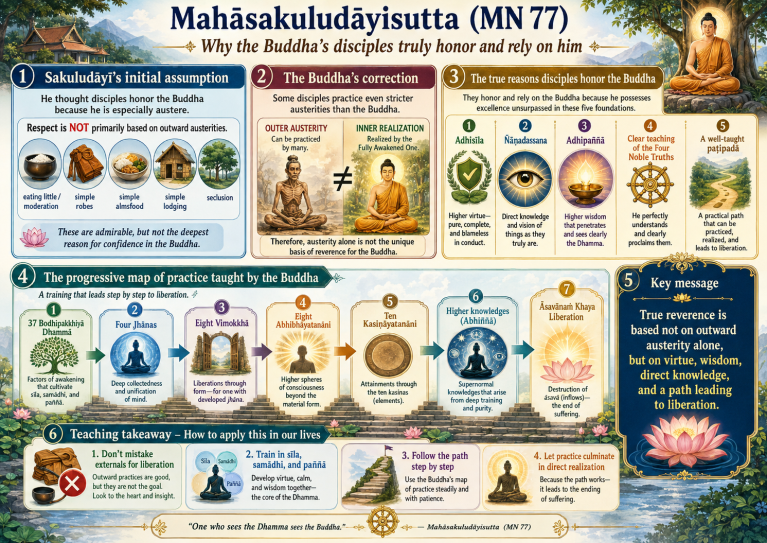
MN 77 — Mahāsakuludāyisutta
Explains why the Buddha’s disciples respect and rely upon him, moving beyond outward austerity to the depth of training, realization and liberating knowledge he teaches.
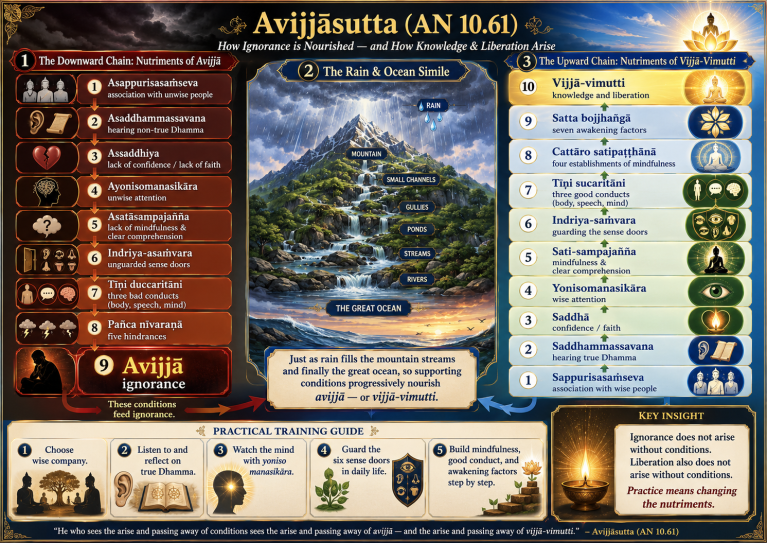
AN 10.61 — Avijjāsutta
Shows that ignorance has nutriment and grows through supporting conditions, while a contrasting sequence of wholesome conditions progressively nourishes knowledge and liberation.
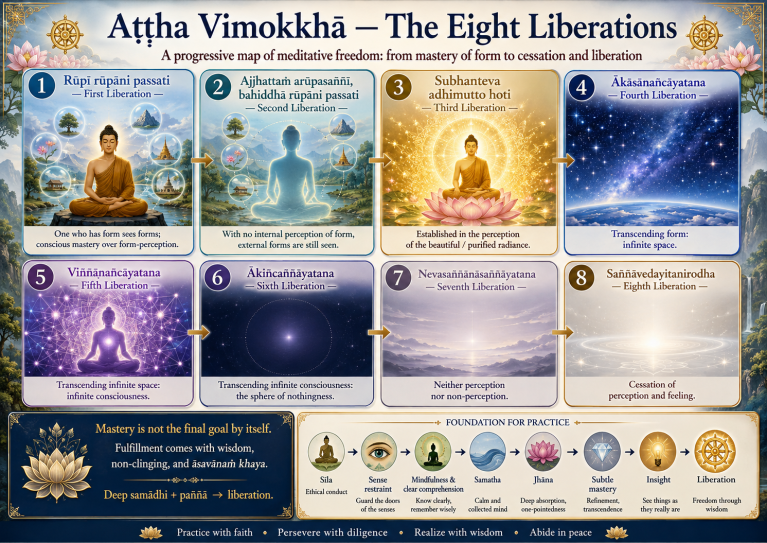
Aṭṭha Vimokkhā
Maps the Eight Liberations from mastery in relation to form through the formless attainments and culminates in saññāvedayitanirodha, the cessation of perception and feeling.
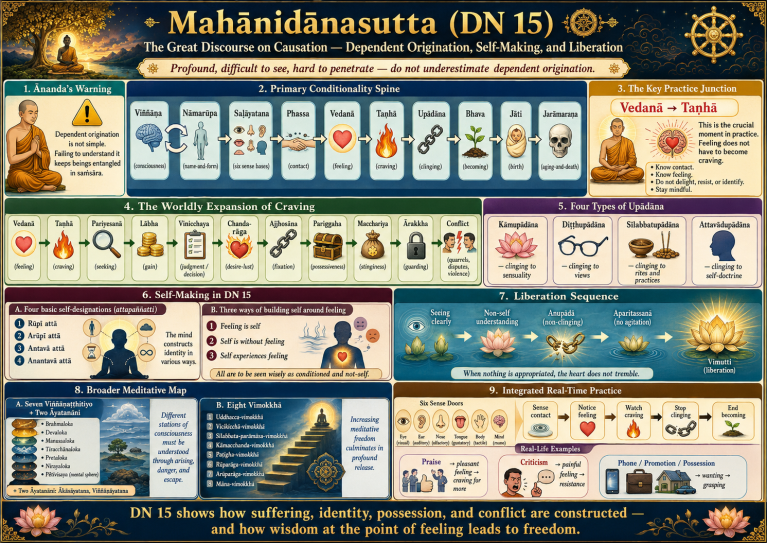
DN 15 — Mahānidānasutta
Explores the profound structure of paṭiccasamuppāda, showing why dependent origination is difficult to penetrate and how misunderstanding it keeps beings entangled in saṁsāra.
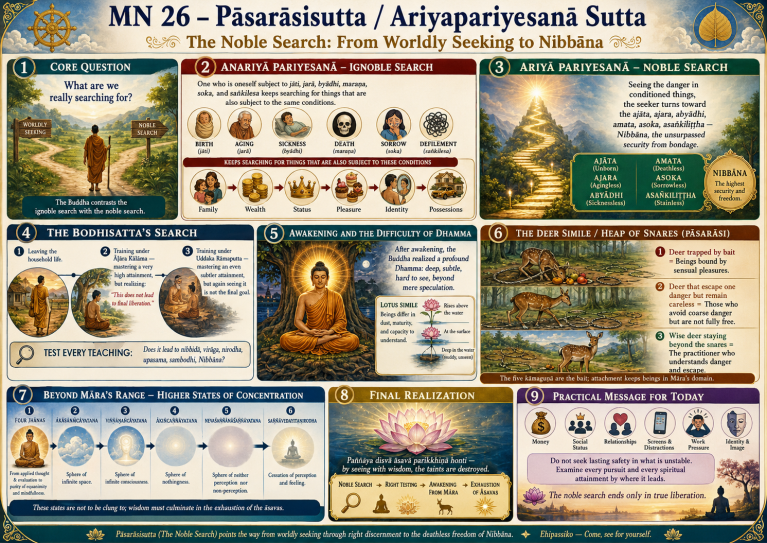
MN 26 — Pāsarāsisutta
Contrasts the ignoble search for security within what is itself subject to birth, aging and death with the noble search for the unborn, unaging and deathless.
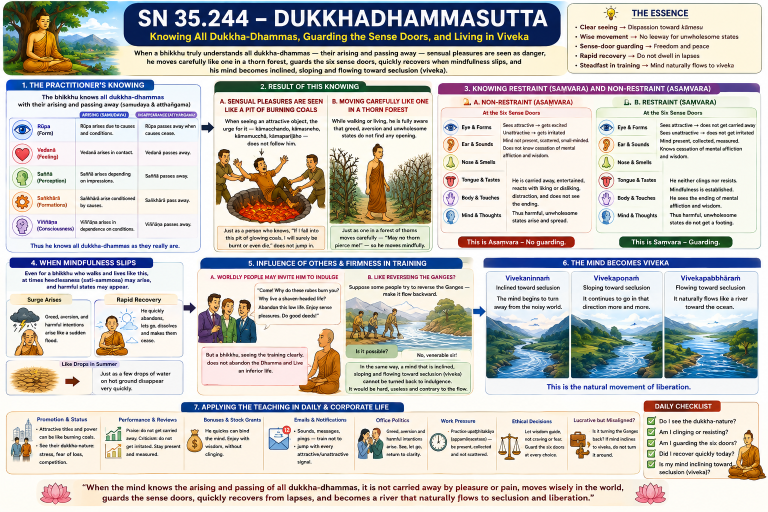
SN 35.244 — Dukkhadhammasutta
Shows how insight into the five aggregates and the six sense doors changes one’s relationship to sensuality, exposing danger and supporting dispassion and release.
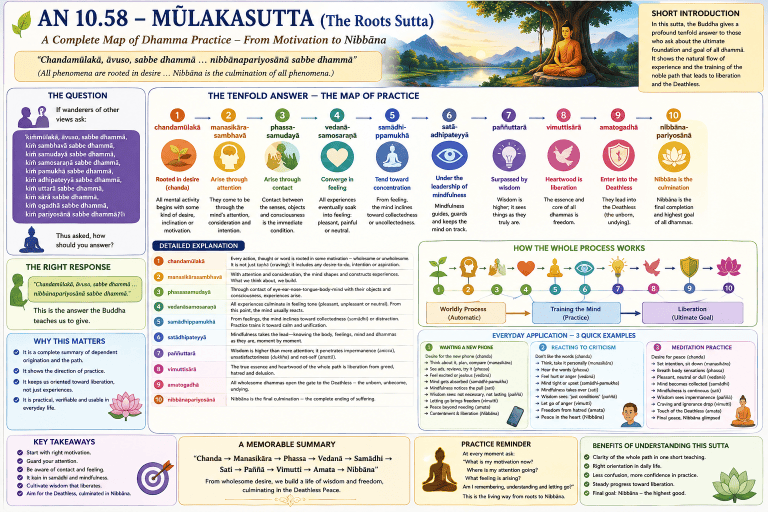
AN 10.58 — Mūlakasutta
Maps the movement of dhammas from chanda through attention, contact and feeling, then through samādhi, sati and paññā toward release and Nibbāna.
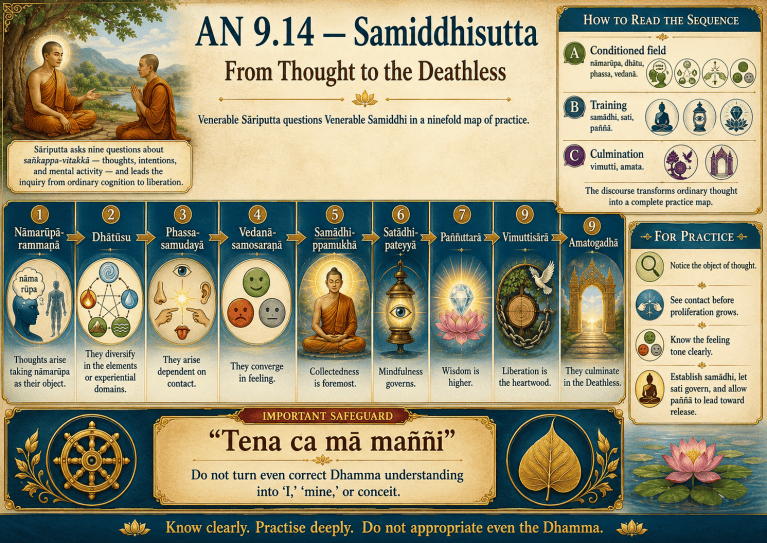
AN 9.14 — Samiddhisutta
Uses nine questions to map experience from nāmarūpa, contact and feeling through samādhi, sati and paññā to liberation and the Deathless.
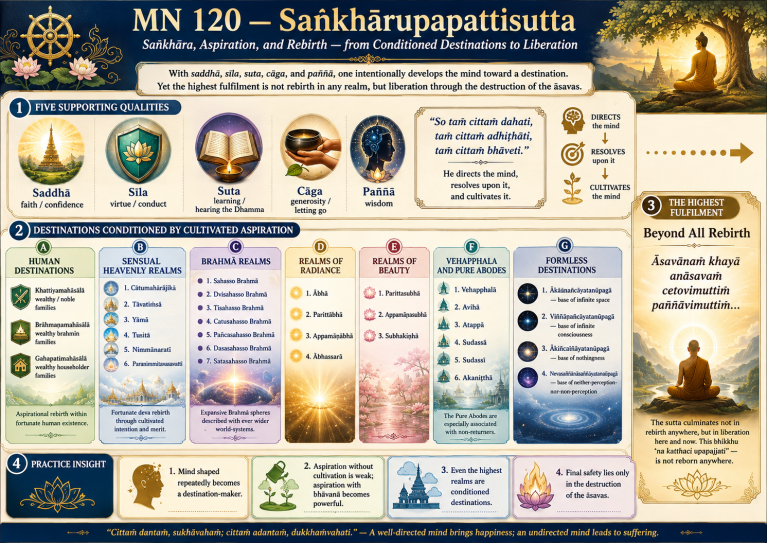
MN 120 — Saṅkhārupapattisutta: From Cultivated Intention to Rebirth—and Beyond Every Rebirth
Explains how intention, determination and repeated cultivation—supported by saddhā, sīla, suta, cāga and paññā—can condition rebirth, while the highest aim is ending rebirth entirely.
Page 2 of 4