Nibbāna & Noble Attainments
Teachings on cessation, fetters and the noble attainments from Sotāpanna through Arahant, with the ending of birth and death as the goal.
Showing 25–36 of 41 studies
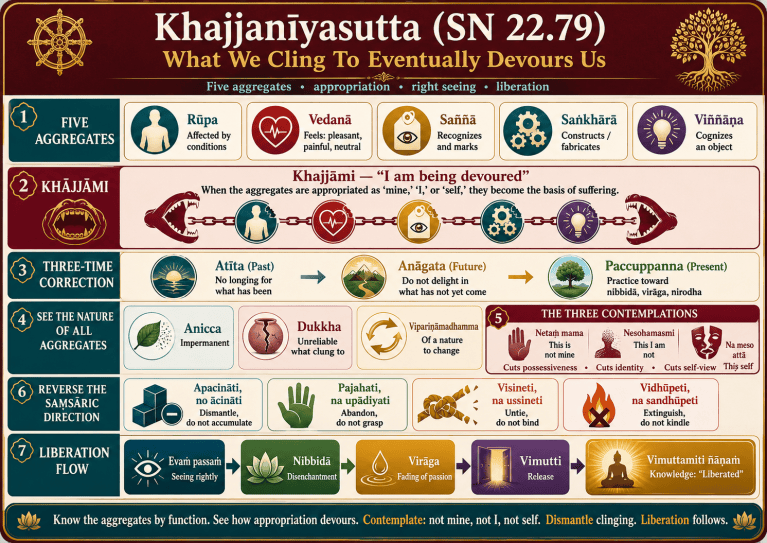
SN 22.79 — Khajjanīyasutta
Shows how the five aggregates consume the practitioner when grasped as “mine,” “I” or “self,” and how seeing their impermanence and change supports relinquishment.

SN55.5 Sotapattiphala
Introduction In SN 55.5, the Buddha asks Venerable Sāriputta to explain three important aspects of stream-entry: who is called a Sotāpanna, what is meant by the “stream” (sota), and what are the…

AN 6.94 — Tatiyaabhabbaṭṭhānasutta: The Six Impossible Actions of One Accomplished in View
Shows diṭṭhisampatti through six actions that a person accomplished in right view has become incapable of performing, making attainment visible in transformed conduct.
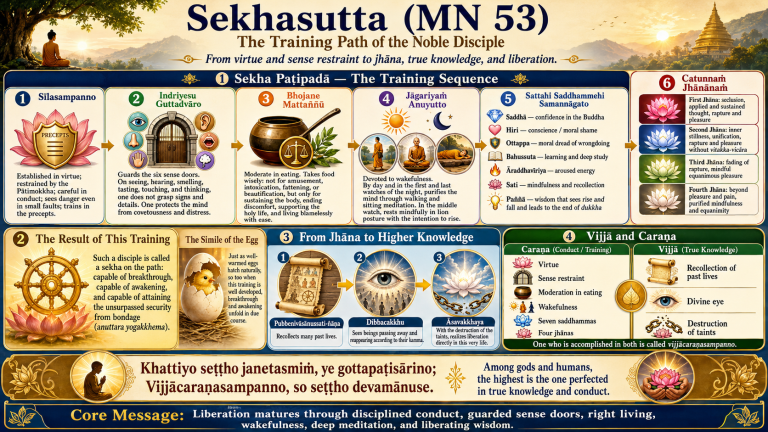
MN 53 — Sekhasutta
Presents the trainee’s development through conduct and knowledge, including sīla, sense restraint, moderation, wakefulness, seven good qualities, jhāna and the three higher knowledges.
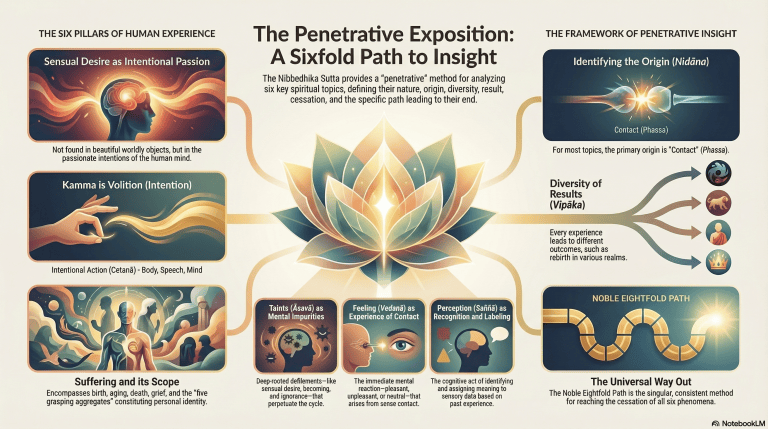
AN 6.63 — Nibbedhikasutta: Penetrative Exposition of the Dhamma
Presents the penetrative exposition of Dhamma through six core subjects—sensuality, feelings, perceptions, āsavas, kamma and suffering—each examined through arising, diversity, result, cessation and path.

Day 7 – Vipassana Insight: The Five Elements and the Seizing Mind
Brisbane Retreat day 7 – Practical VipassnaWelcome to the Vipassana day !!!So today, what we are going to do is that in the next 2 hours almost 2 hours it'll be continuous…
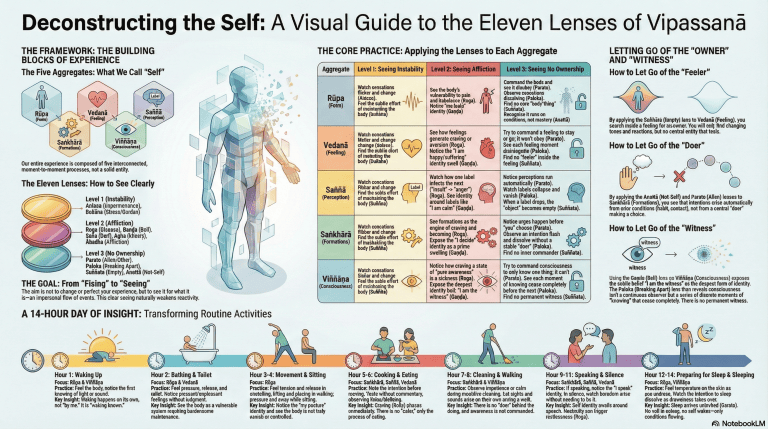
Turn the Five Khandhas Like a Jewel—Until “I” and “Mine” Cannot Be Found
This essay is about looking at five aggregates in 11 lenses when then makes one to experience "No I" or i'm" this or that. Worth trying to understand the depth of Dhamma
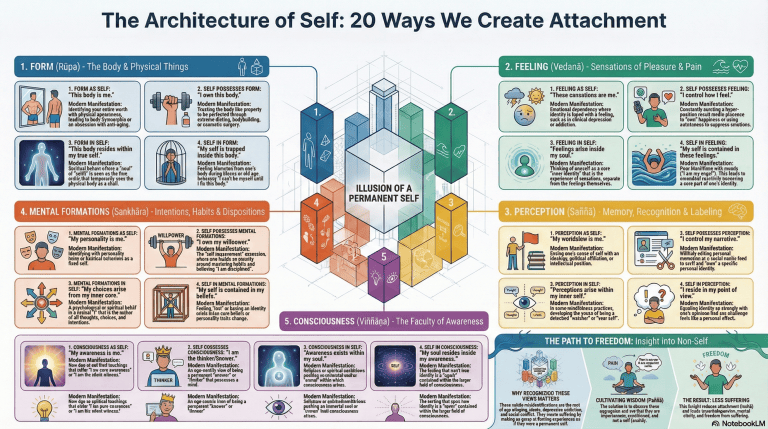
The Architecture of Ego: 20 Ways You Fake a “Self” (And How to Stop)
Maps twenty forms of mistaken self-view by applying four patterns of identification to each of the five aggregates, revealing how “I,” “me” and “mine” are constructed.

Paṭisambhidāmagga — Diṭṭhikathā: The Destruction of Wrong Views and Self-Clinging
Examines how diṭṭhi becomes self-clinging when ideas, experiences, attainments or doctrines are appropriated as “mine” or “self,” and how that grasping is dismantled.
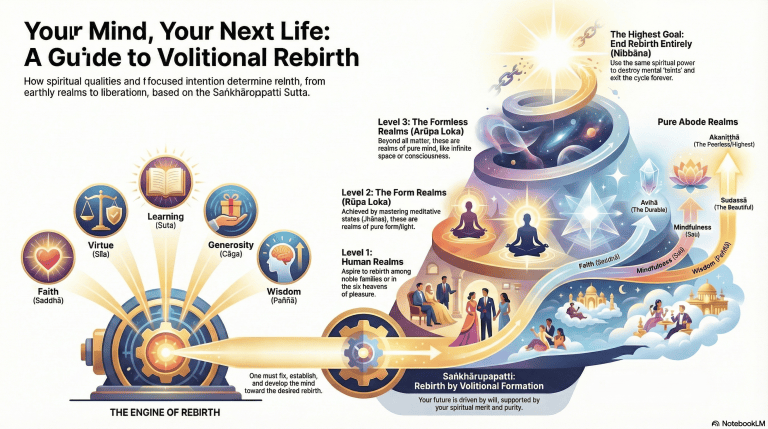
MN 120 — Saṅkhārupapattisutta: Directing Rebirth—or Ending Rebirth Entirely
Explains how faith, virtue, learning, generosity, wisdom and repeated aspiration can condition rebirth in chosen realms, while their highest use is ending rebirth altogether.
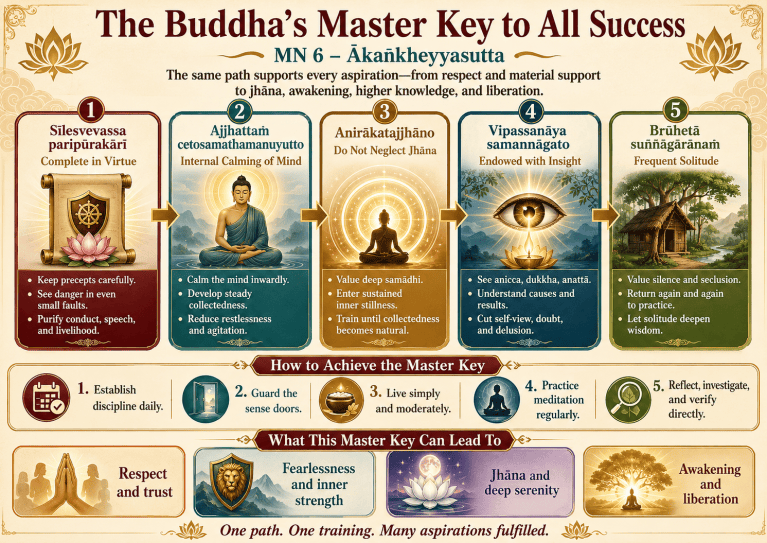
MN 6 — Ākaṅkheyyasutta
Shows how one unified training—sīla, internal calming, non-neglect of jhāna, vipassanā and solitude—supports aspirations ranging from respect and happiness to awakening and liberation.
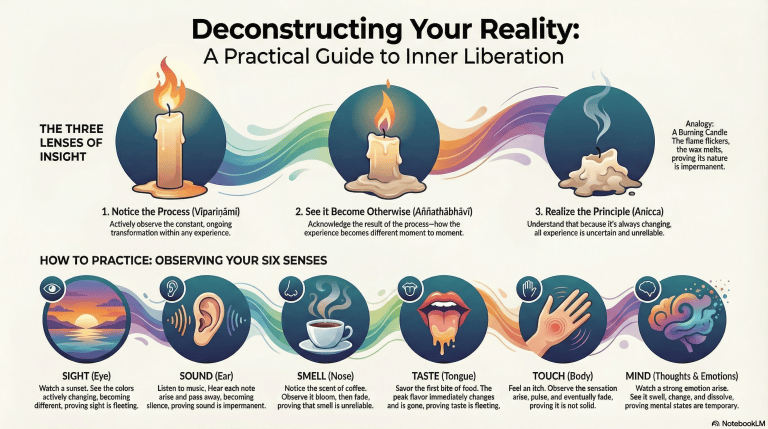
Constant practice for Sotapanna
What practice one who is aspiring for Sotapanna do is indicated in SN25.1 to SN25.10 and this discourse and essay just makes that happe
Page 3 of 4