Sati-Sampajañña
Training in sati and clear comprehension throughout the four postures and the ordinary activities of daily life.
Showing 13–24 of 30 studies
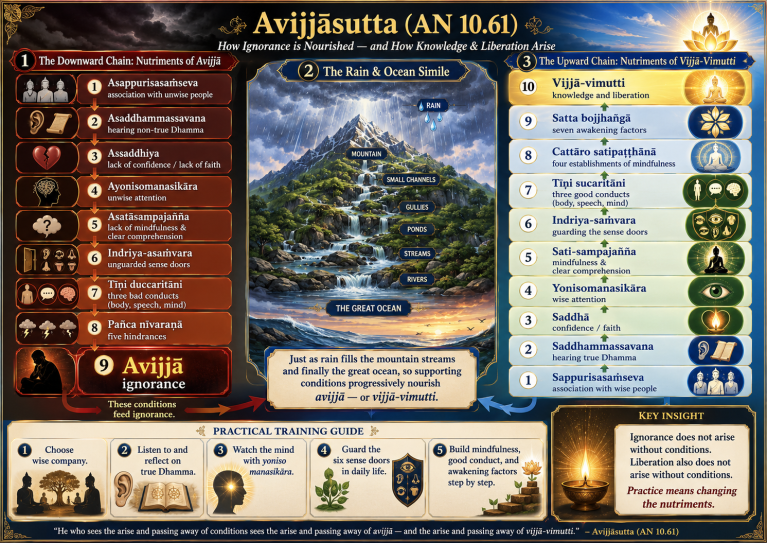
AN 10.61 — Avijjāsutta
Shows that ignorance has nutriment and grows through supporting conditions, while a contrasting sequence of wholesome conditions progressively nourishes knowledge and liberation.
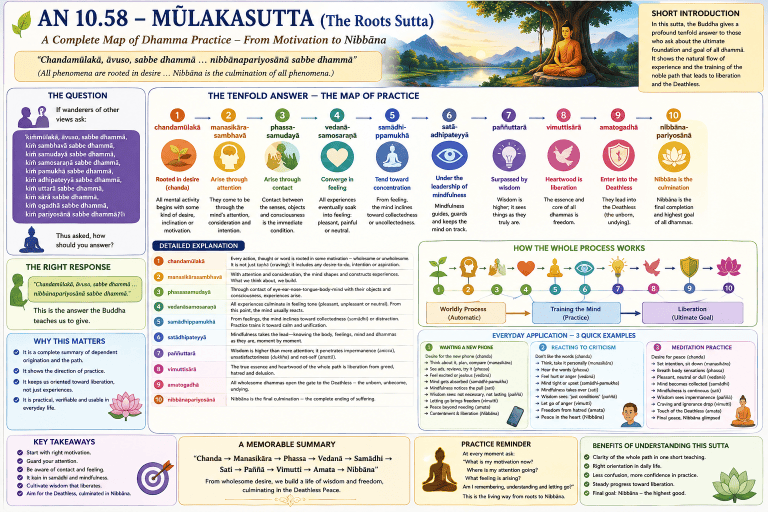
AN 10.58 — Mūlakasutta
Maps the movement of dhammas from chanda through attention, contact and feeling, then through samādhi, sati and paññā toward release and Nibbāna.
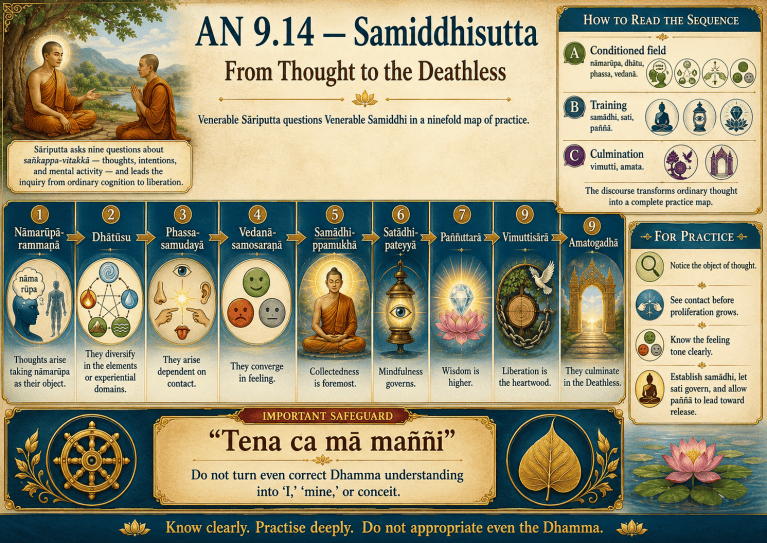
AN 9.14 — Samiddhisutta
Uses nine questions to map experience from nāmarūpa, contact and feeling through samādhi, sati and paññā to liberation and the Deathless.
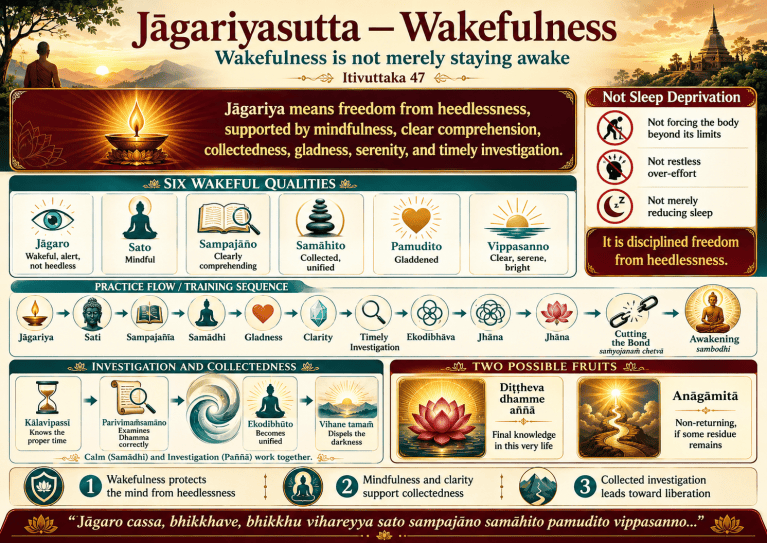
Iti 47 — Jāgariyasutta
Defines jāgariya as more than staying awake: true wakefulness combines sati, sampajañña, samādhi, gladness, investigation and jhāna to dispel ignorance.

How to Practice Cittānupassanā?
Explains cittānupassanā as directly knowing what citta has become—whether colored by rāga, dosa or moha, contracted or scattered, collected or released.
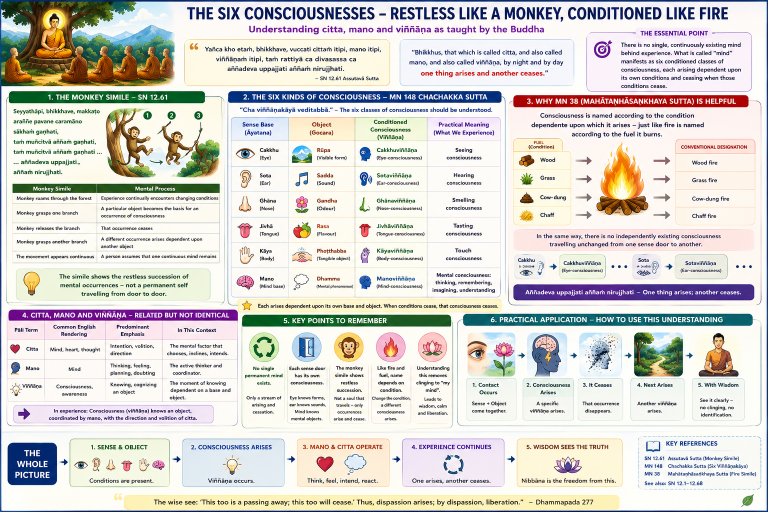
Sense Doors – How to understand?
Introduction There are 6 consciousness depending upon the type of the senses. The Buddha does not present a single permanent “mind” that remains unchanged while merely looking through six different windows. What…
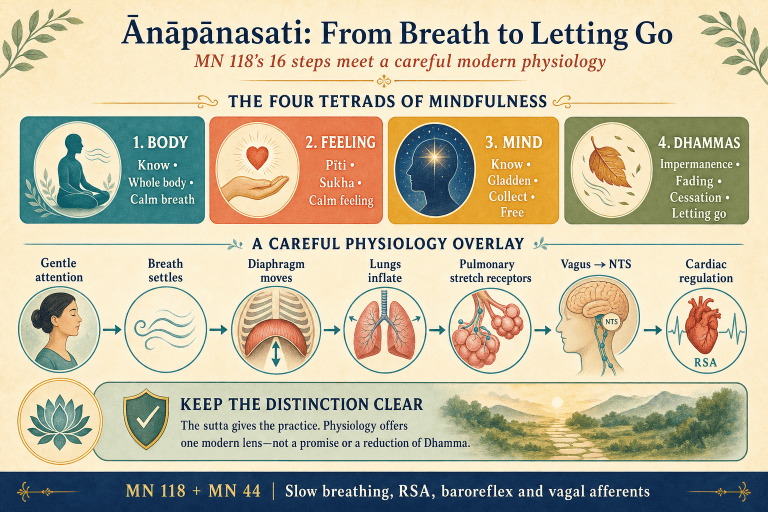
Ānāpānasati: The Architecture of MN 118, Breath, and Vagal Afferent Pathways
Explains the sixteen steps of MN 118 across body, feeling, mind and dhammas, alongside a cautious account of breathing physiology and vagal afferent pathways.
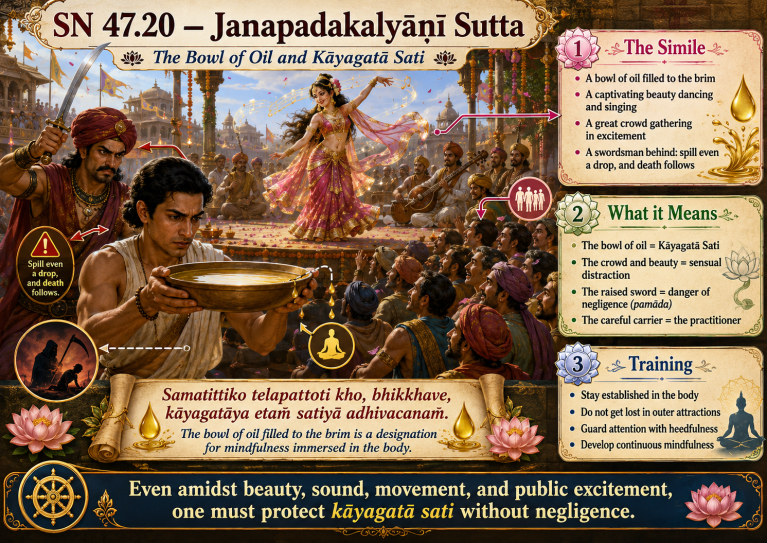
SN 47.20 — Janapadakalyāṇīsutta: The Simile of the Beautiful Sensual Girl
The Buddha’s bowl-of-oil simile shows how kāyagatā sati must remain continuously established amid beauty, sound, crowds and every outward pull.
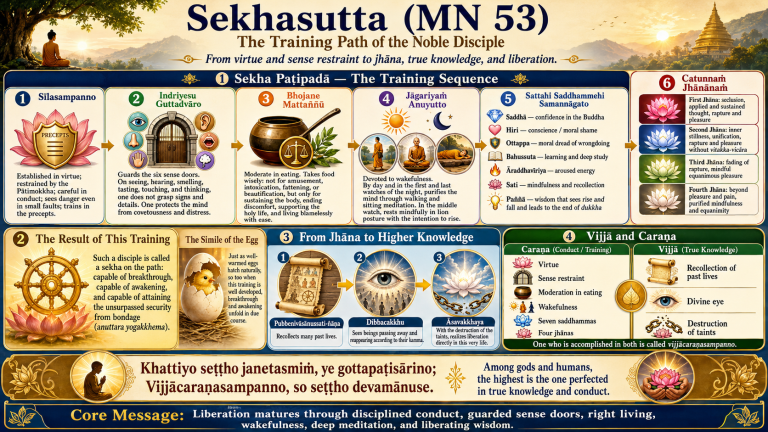
MN 53 — Sekhasutta
Presents the trainee’s development through conduct and knowledge, including sīla, sense restraint, moderation, wakefulness, seven good qualities, jhāna and the three higher knowledges.
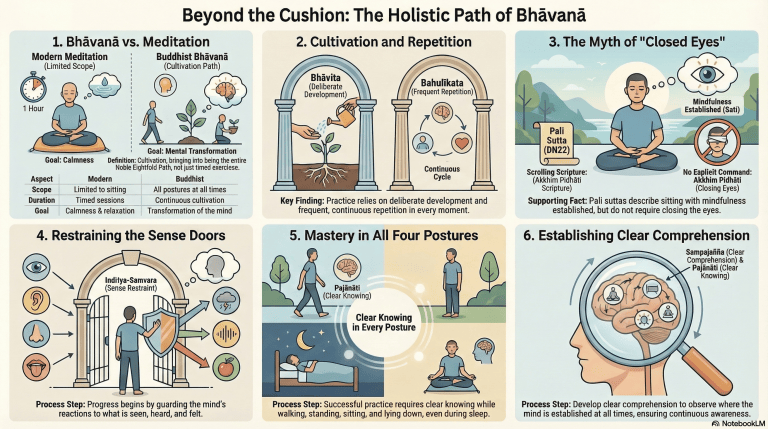
Did the Buddha Teach “Closed-Eyes Meditation”?
This study invites a deeper reconsideration of what bhāvanā actually means in the Buddha’s teaching. Instead of defining practice by a particular posture, a timer, or whether the physical eyes are open…
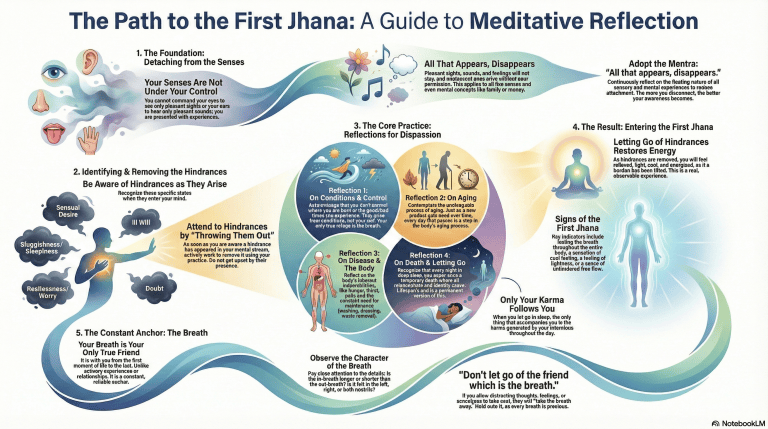
Day 4 – Mindfulness of the Breath and the Path to Jhana
Brisbane Retreat – Day 4: Morning Practice Entering into 1st JhānaLet us continue working on the defilements and the hindrances as we looked in the morning. Reflect upon the five senses and…

Paṭisambhidāmagga — Ānāpānassatikathā: The Tree and the Saw
Uses the tree-and-saw method to explain steady mindfulness at the breath-contact point without chasing past or future breaths, linking this stability with effort, jhāna and insight.
Page 2 of 3