Indriya-saṁvara
Teachings on guarding the six sense doors and understanding how contact with sights, sounds, smells, tastes, touches and thoughts conditions reaction.
Showing 13–20 of 20 studies
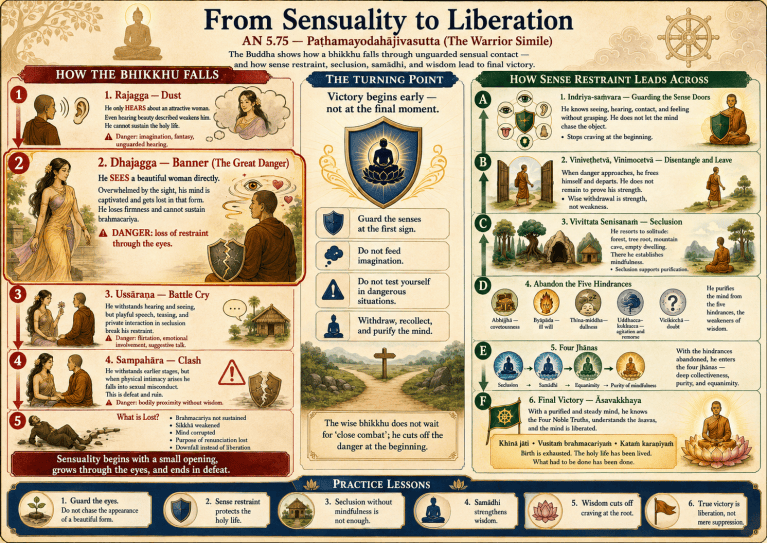
AN 5.75 Paṭhamayodhājīvasutta
Uses five kinds of warriors as a practical mirror for effort, courage and steadiness, showing how practitioners differ in their response to pressure, temptation and difficulty.
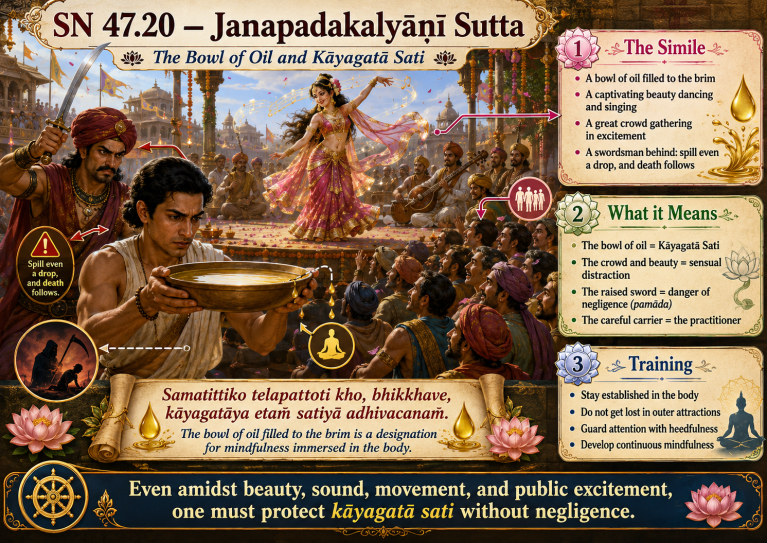
SN 47.20 — Janapadakalyāṇīsutta: The Simile of the Beautiful Sensual Girl
The Buddha’s bowl-of-oil simile shows how kāyagatā sati must remain continuously established amid beauty, sound, crowds and every outward pull.
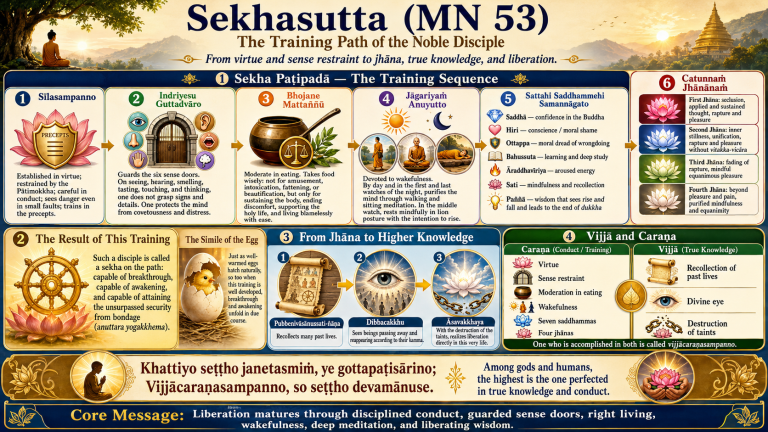
MN 53 — Sekhasutta
Presents the trainee’s development through conduct and knowledge, including sīla, sense restraint, moderation, wakefulness, seven good qualities, jhāna and the three higher knowledges.
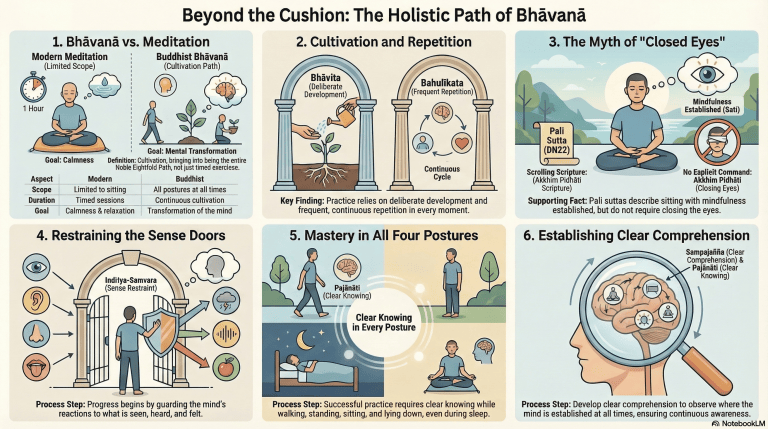
Did the Buddha Teach “Closed-Eyes Meditation”?
This study invites a deeper reconsideration of what bhāvanā actually means in the Buddha’s teaching. Instead of defining practice by a particular posture, a timer, or whether the physical eyes are open…

SN 35.247 — Chappāṇakopamasutta: The Simile of the Six Animals
Uses six wild animals tied to a strong stake to show how the six senses pull toward their own fields, and how mindfulness of the body establishes restraint and stability.
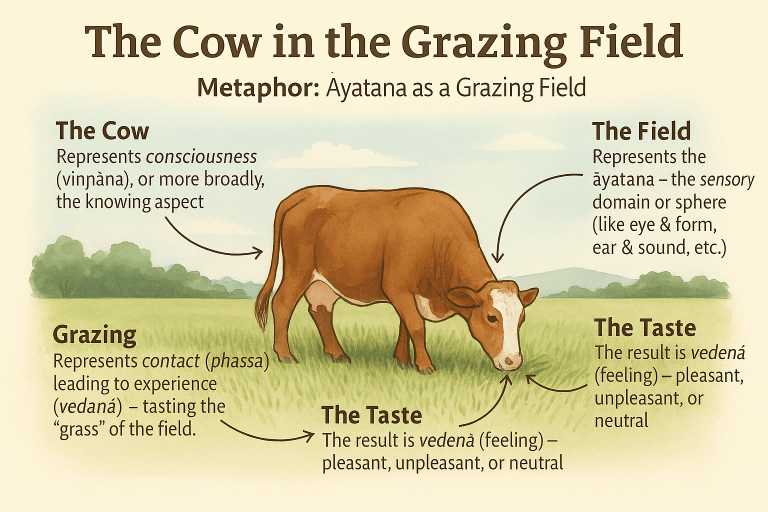
MN 137 — Saḷāyatanavibhaṅgasutta: Six Sense Field Experiences
Maps experience across the six sense bases from object, consciousness, contact and feeling through craving and mental responses, culminating in the refinement of upekkhā and atammayatā.

MN 152 — Indriyabhāvanāsutta
Presents MN 152 as active training of the sense faculties: not avoiding sights and sounds, but meeting all six sense contacts without being dominated by liking, disliking or indifference.

Snp 4.16 — Sāriputtasutta: Like a Silversmith Refining Silver
Uses Snp 4.16 as a practical guide for householders, showing how silence, restraint, careful speech, moderation and gradual refinement can turn daily life into training.
Page 2 of 2