Many Doors of Investigation—One Purified Vision
A monk receives four different answers to one question: “When is vision well purified?” The Buddha does not force them into one verbal formula. Through the changing appearance of the Kiṁsuka tree, he shows that purified vision may be described according to the domain in which it became clear. He then turns the teaching into a practical city-map of the body, six sense bases, sati, samatha-vipassanā, consciousness, Nibbāna and the Noble Eightfold Path.
Yaṁ kiñci samudayadhammaṁ, sabbaṁ taṁ nirodhadhammaṁ.
Whatever is subject to origination is subject to cessation.
 VISUAL SUMMARYSee this sutta in a pictureOpen the complete infographic for a visual overview before or after reading the full study.View infographic →
Four Answers Describe Purified Vision through Four Different Fields of Investigation
The first three answers name specific domains. The fourth gives the broad conditional principle. The Buddha’s Kiṁsuka simile then explains why the answers need not cancel one another.
Numbering note: this discourse is SN 35.245 in the Connected Discourses numbering used by Bhikkhu Bodhi and appears as SN 35.204 in some older English indexes. It is the same Kiṁsuka discourse.
The Simile Corrects the Demand That Only One Description Can Be True
The Buddha says the good persons answered according to how they were focused when their vision became purified.
The Frontier City Gives One of the Nikāyas’ Clearest Maps of Sati, Samatha-Vipassanā and the Path
| Simile | The Buddha’s Explicit Correspondence | Do Not Add More Than the Simile Says |
|---|---|---|
| City | The four-element body born of parents and sustained by food. | Not nāma-rūpa as a whole. |
| Six gates | Six internal sense bases. | The sutta does not say that mindfulness prevents the senses from functioning. |
| Gatekeeper | Sati. | The gatekeeper analogy supports discernment and guarding; it is not a command to suppress seeing, hearing, smelling, tasting or touching. |
| Swift pair of messengers | Samatha and vipassanā. | The sutta does not define them here as two separate competing meditation systems. |
| City lord | Viññāṇa. | The word ‘lord’ is part of the simile, not proof of an inner controller or eternal consciousness. |
| Central square | Four great elements. | Do not force every detail of the story into an additional metaphysical doctrine. |
| Truthful message | Nibbāna. | The sutta does not further define Nibbāna in this sentence. |
| Route taken | Noble Eightfold Path. | This is the explicit path named by the Buddha. |
Read the Whole Movement before Interpreting the Similes
The complete core discourse is kept together first. Related practice material from MN 119 and SN 47.20 follows afterward so that the architecture of SN 35.245 remains clear.
The Four Answers — Purified Vision through Different Domains
Atha kho aññataro bhikkhu yenaññataro bhikkhu tenupasaṅkami; upasaṅkamitvā taṁ bhikkhuṁ etadavoca: “kittāvatā nu kho, āvuso, bhikkhuno dassanaṁ suvisuddhaṁ hotī”ti?
“Yato kho, āvuso, bhikkhu channaṁ phassāyatanānaṁ samudayañca atthaṅgamañca yathābhūtaṁ pajānāti, ettāvatā kho, āvuso, bhikkhuno dassanaṁ suvisuddhaṁ hotī”ti.
A certain monk approached another monk and asked, “Friend, to what extent is a monk’s vision well purified?” The other replied, “When a monk understands as it really is the origination and passing away of the six bases for contact, to that extent his vision is well purified.”
Atha kho so bhikkhu asantuṭṭho tassa bhikkhussa pañhaveyyākaraṇena, yenaññataro bhikkhu tenupasaṅkami; upasaṅkamitvā taṁ bhikkhuṁ etadavoca: “kittāvatā nu kho, āvuso, bhikkhuno dassanaṁ suvisuddhaṁ hotī”ti?
“Yato kho, āvuso, bhikkhu pañcannaṁ upādānakkhandhānaṁ samudayañca atthaṅgamañca yathābhūtaṁ pajānāti, ettāvatā kho, āvuso, bhikkhuno dassanaṁ suvisuddhaṁ hotī”ti.
Dissatisfied, he asked another monk. The answer was: “When a monk understands as it really is the origination and passing away of the five aggregates subject to clinging, to that extent his vision is well purified.”
Atha kho so bhikkhu asantuṭṭho tassa bhikkhussa pañhaveyyākaraṇena, yenaññataro bhikkhu tenupasaṅkami; upasaṅkamitvā taṁ bhikkhuṁ etadavoca: “kittāvatā nu kho, āvuso, bhikkhuno dassanaṁ suvisuddhaṁ hotī”ti?
“Yato kho, āvuso, bhikkhu catunnaṁ mahābhūtānaṁ samudayañca atthaṅgamañca yathābhūtaṁ pajānāti, ettāvatā kho, āvuso, bhikkhuno dassanaṁ suvisuddhaṁ hotī”ti.
Another monk answered: “When a monk understands as it really is the origination and passing away of the four great elements, to that extent his vision is well purified.”
Atha kho so bhikkhu asantuṭṭho tassa bhikkhussa pañhaveyyākaraṇena, yenaññataro bhikkhu tenupasaṅkami; upasaṅkamitvā taṁ bhikkhuṁ etadavoca: “kittāvatā nu kho, āvuso, bhikkhuno dassanaṁ suvisuddhaṁ hotī”ti?
“Yato kho, āvuso, bhikkhu yaṁ kiñci samudayadhammaṁ, sabbaṁ taṁ nirodhadhammanti yathābhūtaṁ pajānāti, ettāvatā kho, āvuso, bhikkhuno dassanaṁ suvisuddhaṁ hotī”ti.
A fourth monk answered: “When a monk understands as it really is that whatever is subject to origination is all subject to cessation, to that extent his vision is well purified.”
The four answers should not be turned into a ranking of four levels of realization. The Buddha’s later explanation is that the monks answered according to the aspect on which they were focused when their vision became purified. The fourth answer states the widest principle, but the Buddha does not dismiss the first three.
The Monk Reports All Four Answers to the Buddha
Atha kho so bhikkhu asantuṭṭho tassa bhikkhussa pañhaveyyākaraṇena, yena bhagavā tenupasaṅkami; upasaṅkamitvā bhagavantaṁ etadavoca: “idhāhaṁ, bhante, yenaññataro bhikkhu tenupasaṅkamiṁ; upasaṅkamitvā taṁ bhikkhuṁ etadavocaṁ: ‘kittāvatā nu kho, āvuso, bhikkhuno dassanaṁ suvisuddhaṁ hotī’ti? Evaṁ vutte, bhante, so bhikkhu maṁ etadavoca: ‘yato kho, āvuso, bhikkhu channaṁ phassāyatanānaṁ samudayañca atthaṅgamañca yathābhūtaṁ pajānāti, ettāvatā kho, āvuso, bhikkhuno dassanaṁ suvisuddhaṁ hotī’ti. Atha khvāhaṁ, bhante, asantuṭṭho tassa bhikkhussa pañhaveyyākaraṇena, yenaññataro bhikkhu tenupasaṅkamiṁ; upasaṅkamitvā taṁ bhikkhuṁ etadavocaṁ: ‘kittāvatā nu kho, āvuso, bhikkhuno dassanaṁ suvisuddhaṁ hotī’ti? Evaṁ vutte, bhante, so bhikkhu maṁ etadavoca: ‘yato kho, āvuso, bhikkhu pañcannaṁ upādānakkhandhānaṁ samudayañca atthaṅgamañca yathābhūtaṁ pajānāti, ettāvatā kho, āvuso, bhikkhuno dassanaṁ suvisuddhaṁ hotī’ti. Atha khvāhaṁ, bhante, asantuṭṭho tassa bhikkhussa pañhaveyyākaraṇena, yenaññataro bhikkhu tenupasaṅkamiṁ; upasaṅkamitvā taṁ bhikkhuṁ etadavocaṁ: ‘kittāvatā nu kho, āvuso, bhikkhuno dassanaṁ suvisuddhaṁ hotī’ti? Evaṁ vutte, bhante, so bhikkhu maṁ etadavoca: ‘yato kho, āvuso, bhikkhu catunnaṁ mahābhūtānaṁ samudayañca atthaṅgamañca yathābhūtaṁ pajānāti, ettāvatā kho, āvuso, bhikkhuno dassanaṁ suvisuddhaṁ hotī’ti. Atha khvāhaṁ, bhante, asantuṭṭho tassa bhikkhussa pañhaveyyākaraṇena, yenaññataro bhikkhu tenupasaṅkamiṁ; upasaṅkamitvā taṁ bhikkhuṁ etadavocaṁ: ‘kittāvatā nu kho, āvuso, bhikkhuno dassanaṁ suvisuddhaṁ hotī’ti? Evaṁ vutte, bhante, so bhikkhu maṁ etadavoca: ‘yato kho, āvuso, bhikkhu yaṁ kiñci samudayadhammaṁ sabbaṁ taṁ nirodhadhammanti yathābhūtaṁ pajānāti, ettāvatā kho, āvuso, bhikkhuno dassanaṁ suvisuddhaṁ hotī’ti. Atha khvāhaṁ, bhante, asantuṭṭho tassa bhikkhussa pañhaveyyākaraṇena yena bhagavā tenupasaṅkamiṁ; upasaṅkamitvā bhagavantaṁ etadavocaṁ: “kittāvatā nu kho, bhante, bhikkhuno dassanaṁ suvisuddhaṁ hotī”ti?
The monk then went to the Buddha and recounted all four answers: the six bases for contact, the five aggregates subject to clinging, the four great elements, and the principle that whatever is subject to origination is subject to cessation. Still dissatisfied, he asked the Buddha how vision is well purified.
The Kiṁsuka Tree — Different Appearances, One Tree
Seyyathāpi, bhikkhu, purisassa kiṁsuko adiṭṭhapubbo assa. So yenaññataro puriso kiṁsukassa dassāvī tenupasaṅkameyya. Upasaṅkamitvā taṁ purisaṁ evaṁ vadeyya: ‘kīdiso, bho purisa, kiṁsuko’ti? So evaṁ vadeyya: ‘kāḷako kho, ambho purisa, kiṁsuko—seyyathāpi jhāmakhāṇū’ti. Tena kho pana, bhikkhu, samayena tādisovassa kiṁsuko yathāpi tassa purisassa dassanaṁ.
Suppose a man had never seen a Kiṁsuka tree. He asked someone who had seen it, “What is it like?” The answer was, “Black, like a burnt stump,” because that was how the tree appeared when that person saw it.
Atha kho so, bhikkhu, puriso asantuṭṭho tassa purisassa pañhaveyyākaraṇena, yenaññataro puriso kiṁsukassa dassāvī tenupasaṅkameyya; upasaṅkamitvā taṁ purisaṁ evaṁ vadeyya: ‘kīdiso, bho purisa, kiṁsuko’ti? So evaṁ vadeyya: ‘lohitako kho, ambho purisa, kiṁsuko—seyyathāpi maṁsapesī’ti. Tena kho pana, bhikkhu, samayena tādisovassa kiṁsuko yathāpi tassa purisassa dassanaṁ.
Another person said it was red like a lump of meat, because that was the appearance he had seen.
Atha kho so bhikkhu puriso asantuṭṭho tassa purisassa pañhaveyyākaraṇena, yenaññataro puriso kiṁsukassa dassāvī tenupasaṅkameyya; upasaṅkamitvā taṁ purisaṁ evaṁ vadeyya: ‘kīdiso, bho purisa, kiṁsuko’ti? So evaṁ vadeyya: ‘ocīrakajāto kho, ambho purisa, kiṁsuko ādinnasipāṭiko—seyyathāpi sirīso’ti. Tena kho pana, bhikkhu, samayena tādisovassa kiṁsuko yathāpi tassa purisassa dassanaṁ.
Another described a tree with flaking or stripped bark and burst pods, like a sirīsa or lebbeck tree.
Atha kho so bhikkhu puriso asantuṭṭho tassa purisassa pañhaveyyākaraṇena, yenaññataro puriso kiṁsukassa dassāvī tenupasaṅkameyya; upasaṅkamitvā taṁ purisaṁ evaṁ vadeyya: ‘kīdiso, bho purisa, kiṁsuko’ti? So evaṁ vadeyya: ‘bahalapattapalāso sandacchāyo kho, ambho purisa, kiṁsuko—seyyathāpi nigrodho’ti. Tena kho pana, bhikkhu, samayena tādisovassa kiṁsuko, yathāpi tassa purisassa dassanaṁ.
Another described it as thick with foliage and giving dense shade, like a banyan.
Evameva kho, bhikkhu, yathā yathā adhimuttānaṁ tesaṁ sappurisānaṁ dassanaṁ suvisuddhaṁ hoti tathā tathā kho tehi sappurisehi byākataṁ.
“In the same way, monk, however those good persons were focused when their vision became well purified, in just that way they answered.”
The teaching is subtle. The witnesses are not simply “wrong but partly right,” nor does the Buddha explicitly rank them from shallow to deep. Each saw a real appearance of the same tree under different conditions. In the same way, the practitioners spoke from the domain in which purified vision had become established.
The Frontier City — Six Gates and the Swift Messengers
Seyyathāpi, bhikkhu, rañño paccantimaṁ nagaraṁ daḷhuddhāpaṁ daḷhapākāratoraṇaṁ chadvāraṁ. Tatrassa dovāriko paṇḍito byatto medhāvī, aññātānaṁ nivāretā, ñātānaṁ pavesetā.
Suppose there were a royal frontier city with strong ramparts, walls and gateways, and six gates. There would be a wise, competent, intelligent gatekeeper who keeps out those unknown to him and lets in those he knows.
Puratthimāya disāya āgantvā sīghaṁ dūtayugaṁ taṁ dovārikaṁ evaṁ vadeyya: ‘kahaṁ, bho purisa, imassa nagarassa nagarassāmī’ti? So evaṁ vadeyya: ‘eso, bhante, majjhe siṅghāṭake nisinno’ti.
Atha kho taṁ sīghaṁ dūtayugaṁ nagarassāmikassa yathābhūtaṁ vacanaṁ niyyātetvā yathāgatamaggaṁ paṭipajjeyya.
A swift pair of messengers coming from the east asks where the lord of the city is. The gatekeeper points to the central square. The messengers deliver the truthful message and return by the route by which they came.
Pacchimāya disāya āgantvā sīghaṁ dūtayugaṁ taṁ dovārikaṁ evaṁ vadeyya: ‘kahaṁ, bho purisa, imassa nagarassa nagarassāmī’ti? So evaṁ vadeyya: ‘eso, bhante, majjhe siṅghāṭake nisinno’ti. Atha kho taṁ sīghaṁ dūtayugaṁ nagarassāmikassa yathābhūtaṁ vacanaṁ niyyātetvā yathāgatamaggaṁ paṭipajjeyya.
Uttarāya disāya āgantvā sīghaṁ dūtayugaṁ taṁ dovārikaṁ evaṁ vadeyya: ‘kahaṁ, bho purisa, imassa nagarassa nagarassāmī’ti? So evaṁ vadeyya: ‘eso, bhante, majjhe siṅghāṭake nisinno’ti. Atha kho taṁ sīghaṁ dūtayugaṁ nagarassāmikassa yathābhūtaṁ vacanaṁ niyyātetvā yathāgatamaggaṁ paṭipajjeyya.
Dakkhiṇāya disāya āgantvā sīghaṁ dūtayugaṁ taṁ dovārikaṁ evaṁ vadeyya: ‘kahaṁ, bho purisa, imassa nagarassa nagarassāmī’ti? So evaṁ vadeyya: ‘eso, bhante, majjhe siṅghāṭake nisinno’ti. Atha kho taṁ sīghaṁ dūtayugaṁ nagarassāmikassa yathābhūtaṁ vacanaṁ niyyātetvā yathāgatamaggaṁ paṭipajjeyya.
The same pattern is repeated for messengers arriving from the west, north and south.
The city simile shifts the discourse from the problem of apparently different descriptions to a practical map. The six gates, sati, samatha-vipassanā, viññāṇa, the four elements, Nibbāna and the Noble Eightfold Path are not modern additions; the Buddha explicitly assigns these correspondences.
The Buddha Explains Every Part of the City Simile
‘Nagaraṁ’ti kho, bhikkhu, imassetaṁ cātumahābhūtikassa kāyassa adhivacanaṁ mātāpettikasambhavassa odanakummāsūpacayassa aniccucchādanaparimaddanabhedanaviddhaṁsanadhammassa.
“The city” is a designation for this body composed of the four great elements, born of mother and father, nourished by food, and subject to impermanence, wearing away, rubbing, breaking and dissolution.
‘Cha dvārā’ti kho, bhikkhu, channetaṁ ajjhattikānaṁ āyatanānaṁ adhivacanaṁ.
“The six gates” designate the six internal sense bases.
‘Dovāriko’ti kho, bhikkhu, satiyā etaṁ adhivacanaṁ.
“The gatekeeper” designates mindfulness.
‘Sīghaṁ dūtayugan’ti kho, bhikkhu, samathavipassanānetaṁ adhivacanaṁ.
“The swift pair of messengers” designate tranquility and insight.
‘Nagarassāmī’ti kho, bhikkhu, viññāṇassetaṁ adhivacanaṁ.
“The lord of the city” designates consciousness.
‘Majjhe siṅghāṭako’ti kho, bhikkhu, catunnetaṁ mahābhūtānaṁ adhivacanaṁ—pathavīdhātuyā, āpodhātuyā, tejodhātuyā, vāyodhātuyā.
“The central square” designates the four great elements: earth, water, fire and air.
‘Yathābhūtaṁ vacanan’ti kho, bhikkhu, nibbānassetaṁ adhivacanaṁ.
“The truthful message” designates Nibbāna.
‘Yathāgatamaggo’ti kho, bhikkhu, ariyassetaṁ aṭṭhaṅgikassa maggassa adhivacanaṁ, seyyathidaṁ—sammādiṭṭhiyā, sammāsaṅkappena, sammāvācāya, sammākammantena, sammāājīvena, sammāvāyāmena, sammāsatiyā, sammāsamādhiyā.
“The route by which they came” designates the Noble Eightfold Path: right view, right intention, right speech, right action, right livelihood, right effort, right mindfulness and right samādhi.
| Simile | The Buddha’s Explicit Correspondence | Do Not Add More Than the Simile Says |
|---|---|---|
| City | The four-element body born of parents and sustained by food. | Not nāma-rūpa as a whole. |
| Six gates | Six internal sense bases. | The sutta does not say that mindfulness prevents the senses from functioning. |
| Gatekeeper | Sati. | The gatekeeper analogy supports discernment and guarding; it is not a command to suppress seeing, hearing, smelling, tasting or touching. |
| Swift pair of messengers | Samatha and vipassanā. | The sutta does not define them here as two separate competing meditation systems. |
| City lord | Viññāṇa. | The word ‘lord’ is part of the simile, not proof of an inner controller or eternal consciousness. |
| Central square | Four great elements. | Do not force every detail of the story into an additional metaphysical doctrine. |
| Truthful message | Nibbāna. | The sutta does not further define Nibbāna in this sentence. |
| Route taken | Noble Eightfold Path. | This is the explicit path named by the Buddha. |
The city is the four-element body—not nāma-rūpa. This is an important correction to the older summary table. Likewise, “city lord” should not be over-decoded as proof of an inner controller, and the central square should not be used to manufacture a further claim that the simile itself does not state.
MN 119 and SN 47.20 Show How Mindfulness of the Body Is Cultivated and Guarded
MN 119 — Breathing and the Meaning of Kāyagatāsati
Idha, bhikkhave, bhikkhu araññagato vā rukkhamūlagato vā suññāgāragato vā nisīdati pallaṅkaṁ ābhujitvā ujuṁ kāyaṁ paṇidhāya parimukhaṁ satiṁ upaṭṭhapetvā.
A monk, having gone to the forest, the root of a tree, or an empty dwelling, sits down cross-legged, holds the body erect, and establishes mindfulness to the fore.
So satova assasati satova passasati; dīghaṁ vā assasanto ‘dīghaṁ assasāmī’ti pajānāti, dīghaṁ vā passasanto ‘dīghaṁ passasāmī’ti pajānāti; rassaṁ vā assasanto ‘rassaṁ assasāmī’ti pajānāti, rassaṁ vā passasanto ‘rassaṁ passasāmī’ti pajānāti; ‘sabbakāyapaṭisaṁvedī assasissāmī’ti sikkhati, ‘sabbakāyapaṭisaṁvedī passasissāmī’ti sikkhati; ‘passambhayaṁ kāyasaṅkhāraṁ assasissāmī’ti sikkhati, ‘passambhayaṁ kāyasaṅkhāraṁ passasissāmī’ti sikkhati.
Mindfully he breathes in and out. He knows long breathing as long and short breathing as short. He trains to breathe experiencing the whole body and to calm the bodily fabrication.
Tassa evaṁ appamattassa ātāpino pahitattassa viharato ye gehasitā sarasaṅkappā te pahīyanti. Tesaṁ pahānā ajjhattameva cittaṁ santiṭṭhati sannisīdati ekodi hoti samādhiyati. Evaṁ, bhikkhave, bhikkhu kāyagatāsatiṁ bhāveti.
As he remains heedful, ardent and resolute, household-related memories and intentions are abandoned. The mind settles inwardly, becomes unified and enters samādhi. This is how mindfulness immersed in the body is developed.
| Expression | Careful Reading |
|---|---|
| Araññagato • rukkhamūlagato • suññāgāragato | Forest, root of a tree, and empty dwelling are literal places of seclusion in the standard formula. They need not be converted into metaphors such as ‘go to the root cause’ or ‘empty the mind’. |
| Ujuṁ kāyaṁ paṇidhāya | Hold the body erect/upright. A lived bodily dimension can be discussed in practice, but the phrase should not be translated as ‘hold the entire experiential field upright’. |
| Parimukhaṁ satiṁ upaṭṭhapetvā | Establish mindfulness to the fore. Its exact idiomatic nuance is debated; the text does not require the meaning ‘mindfulness of immediate unmediated experience’. |
| Sabbakāyapaṭisaṁvedī | Often translated ‘experiencing the whole body’. Some traditions read ‘whole breath-body’. MN 118 itself classifies in-and-out breathing as ‘a body among bodies’, so the phrase should not be made into one uncontested modern theory. |
| Kāyasaṅkhāra | MN 44 explicitly identifies in-and-out breathing as bodily fabrication. It is not merely ‘mental activity around the breath’. |
MN 119 is a useful companion because it shows how mindfulness immersed in the body is cultivated across breathing, posture, activity, parts, elements and jhāna. But it should remain a related practice context, not be presented as though it were part of SN 35.245 itself.
MN 119 — Knowing the Four Postures
Puna caparaṁ, bhikkhave, bhikkhu gacchanto vā ‘gacchāmī’ti pajānāti, ṭhito vā ‘ṭhitomhī’ti pajānāti, nisinno vā ‘nisinnomhī’ti pajānāti, sayāno vā ‘sayānomhī’ti pajānāti. Yathā yathā vā panassa kāyo paṇihito hoti tathā tathā naṁ pajānāti.
When walking, he knows “I am walking”; when standing, “I am standing”; when sitting, “I am sitting”; when lying down, “I am lying down.” However the body is disposed, he knows it accordingly.
Tassa evaṁ appamattassa ātāpino pahitattassa viharato ye gehasitā sarasaṅkappā te pahīyanti. Tesaṁ pahānā ajjhattameva cittaṁ santiṭṭhati sannisīdati ekodi hoti samādhiyati. Evampi, bhikkhave, bhikkhu kāyagatāsatiṁ bhāveti.
Practised heedfully, this too leads the mind to settle inwardly, become unified and enter samādhi.
The passage is already experiential without redefining kāya as a separate “subjective experiencer.” Walking is known as walking; standing as standing. Felt pressure, balance, movement and stillness can certainly be observed, but these are practice descriptions rather than replacements for the word “body.”
MN 119 — Sampajañña through Ordinary Activities
Puna caparaṁ, bhikkhave, bhikkhu abhikkante paṭikkante sampajānakārī hoti, ālokite vilokite sampajānakārī hoti, samiñjite pasārite sampajānakārī hoti, saṅghāṭipattacīvaradhāraṇe sampajānakārī hoti, asite pīte khāyite sāyite sampajānakārī hoti, uccārapassāvakamme sampajānakārī hoti, gate ṭhite nisinne sutte jāgarite bhāsite tuṇhībhāve sampajānakārī hoti.
He acts with clear comprehension when going forward and returning, looking ahead and looking away, bending and stretching, wearing robes and carrying bowl and robe, eating, drinking, chewing and tasting, relieving himself, walking, standing, sitting, sleeping, waking, speaking and remaining silent.
Tassa evaṁ appamattassa ātāpino pahitattassa viharato ye gehasitā sarasaṅkappā te pahīyanti. Tesaṁ pahānā ajjhattameva cittaṁ santiṭṭhati sannisīdati ekodi hoti samādhiyati. Evampi, bhikkhave, bhikkhu kāyagatāsatiṁ bhāveti.
With heedful cultivation, household-related thoughts are abandoned and the mind settles, unifies and enters samādhi.
This section strongly supports continuous training during ordinary life. Yet “sampajañña” need not be expanded into the claim that the practitioner is literally never lost in thought. The training is to act with clear comprehension in the full range of ordinary activities.
MN 119 — The Body as Parts
Puna caparaṁ, bhikkhave, bhikkhu imameva kāyaṁ uddhaṁ pādatalā adho kesamatthakā tacapariyantaṁ pūraṁ nānappakārassa asucino paccavekkhati: ‘atthi imasmiṁ kāye kesā lomā nakhā dantā taco maṁsaṁ nhāru aṭṭhi aṭṭhimiñjaṁ vakkaṁ hadayaṁ yakanaṁ kilomakaṁ pihakaṁ papphāsaṁ antaṁ antaguṇaṁ udariyaṁ karīsaṁ pittaṁ semhaṁ pubbo lohitaṁ sedo medo assu vasā kheḷo siṅghāṇikā lasikā muttan’ti.
He reviews this very body from the soles of the feet upward and from the crown of the head downward, enclosed by skin and full of many kinds of unattractive things: head hair, body hair, nails, teeth, skin, flesh, sinews, bones, marrow, kidneys, heart, liver, membranes, spleen, lungs, intestines, mesentery, stomach contents, feces, bile, phlegm, pus, blood, sweat, fat, tears, skin-oil, saliva, mucus, joint fluid and urine.
Seyyathāpi, bhikkhave, ubhatomukhā putoḷi pūrā nānāvihitassa dhaññassa, seyyathidaṁ—sālīnaṁ vīhīnaṁ muggānaṁ māsānaṁ tilānaṁ taṇḍulānaṁ, tamenaṁ cakkhumā puriso muñcitvā paccavekkheyya: ‘ime sālī ime vīhī ime muggā ime māsā ime tilā ime taṇḍulā’ti; evameva kho, bhikkhave, bhikkhu imameva kāyaṁ uddhaṁ pādatalā adho kesamatthakā tacapariyantaṁ pūraṁ nānappakārassa asucino paccavekkhati.
Just as a person with good eyesight could open a sack filled with different grains and distinguish each kind, the practitioner reviews this very body as a collection of distinct parts.
Tassa evaṁ appamattassa ātāpino pahitattassa viharato ye gehasitā sarasaṅkappā te pahīyanti. Tesaṁ pahānā ajjhattameva cittaṁ santiṭṭhati sannisīdati ekodi hoti samādhiyati. Evampi, bhikkhave, bhikkhu kāyagatāsatiṁ bhāveti.
Practised heedfully, this contemplation supports inward settling, unification and samādhi.
The purpose is not hostility toward the body. The contemplation counteracts fascination, lust and identification by replacing the compact perception “person” with a direct review of constituent parts.
MN 119 — The Four Elements
Puna caparaṁ, bhikkhave, bhikkhu imameva kāyaṁ yathāṭhitaṁ yathāpaṇihitaṁ dhātuso paccavekkhati: ‘atthi imasmiṁ kāye pathavīdhātu āpodhātu tejodhātu vāyodhātū’ti.
He reviews this very body, however it stands and is disposed, in terms of elements: “In this body there are the earth element, water element, fire element and air element.”
The practical force is deconstruction: solidity, cohesion, temperature and movement can be known as qualities rather than immediately appropriated as “I” or “mine.”
This is the clearest bridge back to SN 35.245. One of the four answers about purified vision is knowing the origination and passing away of the four great elements; MN 119 supplies a practical body contemplation in terms of those same elements.
SN 47.20 — The Bowl of Oil and Undistracted Kāyagatāsati
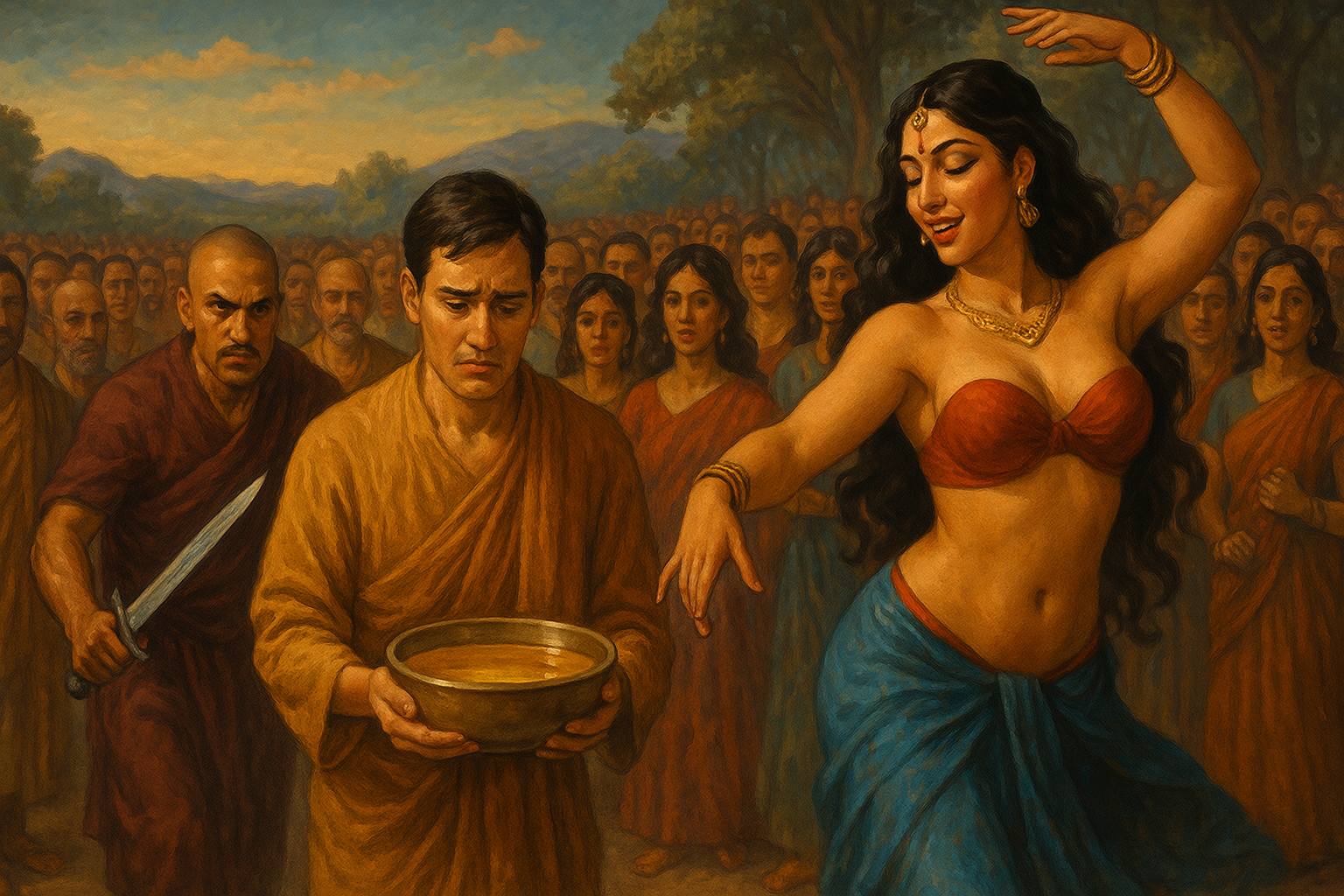
SN 47.20 tells of a man carrying a bowl filled to the brim with oil through a crowd while a celebrated dancer performs nearby. A man with a raised sword follows him, ready to strike if even a drop is spilled.
The Buddha explains the simile directly: the bowl filled with oil stands for mindfulness immersed in the body.
This is an important correction to the earlier reading. The man is not instructed to become incapable of seeing, hearing or sensing the world. The point is that compelling external stimulation must not pull him away from the object he is charged to guard. The discourse illustrates the intensity and continuity of kāyagatāsati, not sensory shutdown.
Click image to enlarge ↗
What the Sutta Teaches When Its Core and Its Companion Practices Are Kept Distinct
The Buddha Does Not Ask Us to Choose One of the Four Answers
The dissatisfied monk assumes that only one formulation can be correct. The Kiṁsuka simile dissolves that assumption. Purified vision can be expressed through different domains: contact-bases, clinging-aggregates, elements, or the universal conditional principle of origination and cessation.
The practical question therefore becomes: what domain of experience is being known yathābhūtaṁ? The descriptions differ, but their liberating force lies in seeing arising and passing away without mistaking the conditioned for something stable and ownable.
The Fourth Answer Is Broader, but the Sutta Does Not Create a Four-Level Ladder
“Whatever is subject to origination is subject to cessation” is the most general formulation among the four answers. It is natural to see it as encompassing the other three. But the Buddha’s own explanation does not say that the fourth monk was more advanced than the first three.
That distinction matters. The sutta teaches plurality of valid focus, not a hierarchy that the text itself never states.
Sati Is the Gatekeeper, Not a Wall That Shuts the Senses
The city has six gates because experience remains open through the six internal sense bases. Mindfulness does not remove the gates. It functions like a wise gatekeeper who knows what is appropriate to admit and what should be kept out.
This is a better model of sense restraint than trying to become visually, audibly or bodily unaware. Guarding is intelligent relationship to contact, not sensory anaesthesia.
Samatha and Vipassanā Arrive as a Pair
The sutta does something especially important by naming samatha-vipassanā together as the swift pair of messengers. Their task is not to compete for ownership of the path. Together they convey the truthful message and travel by the Noble Eightfold Path.
This makes SN 35.245 particularly useful when modern systems try to separate tranquility and insight into mutually exclusive approaches.
Viññāṇa Is the City Lord Only within the Simile
The explicit correspondence is simple: nagarassāmī = viññāṇa. The metaphor should not be stretched into an eternal witness or hidden controller. Nor is it necessary to say the Buddha chose “lord” ironically; the discourse does not say that.
The safest approach is to let the simile do the work it was designed to do and bring other teachings on conditioned consciousness when that question is being studied directly.
MN 119 and SN 47.20 Deepen the Practice without Replacing SN 35.245
MN 119 shows how mindfulness immersed in the body can be cultivated through breathing, posture, activity, body-parts and elements. SN 47.20 shows the intensity with which that mindfulness can be guarded amid distraction.
These are excellent companion teachings. Keeping them clearly secondary preserves the architecture of SN 35.245: first purified vision, then the Kiṁsuka simile, then the city map whose truthful message is Nibbāna and whose route is the Noble Eightfold Path.