Practice deepens when sights, sounds, smells, tastes, touches and thoughts no longer carry the mind away. These studies show how indriya-saṁvara is developed in daily life so that contact at the six sense doors becomes a field for restraint, sati and wisdom rather than craving and aversion.
Guarding the Sense Doors
Sutta studies and practical guidance for indriya-saṁvara across the six sense doors.
Showing 1–12 of 20 studies

AN 5.55 Mātāputtasutta
This important sutta explains in detail on how a man gets involved with woman and how a woman gets involved with man irrespective of whatever designations they create and how the lust…
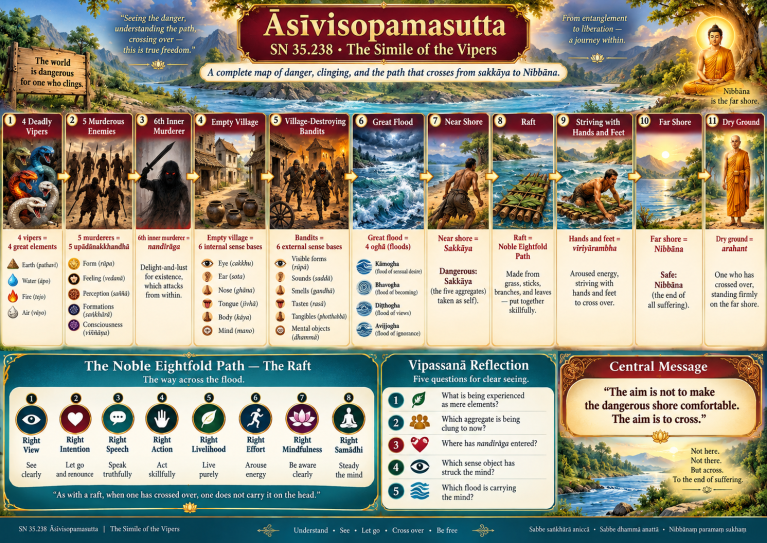
SN 35.238 Āsīvisopamasutta
This sutta provies strong Vipassanā treatment of: body as four elements, why the Buddha specifies upādānakkhandha, nandīrāga as the danger carried within, the six bases as suñña, sense objects as continual impact,…
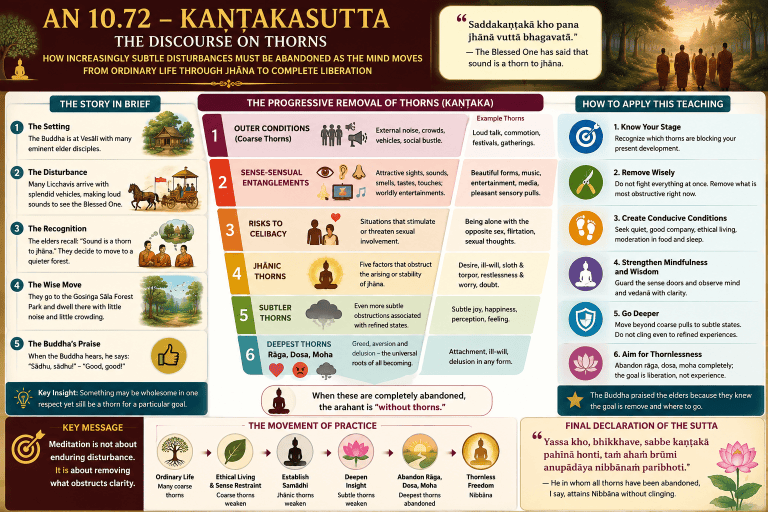
AN 10.72 — Kaṇṭakasutta
Presents practice as the progressive removal of increasingly subtle “thorns,” from external disturbance and social entanglement through deeper meditative development.
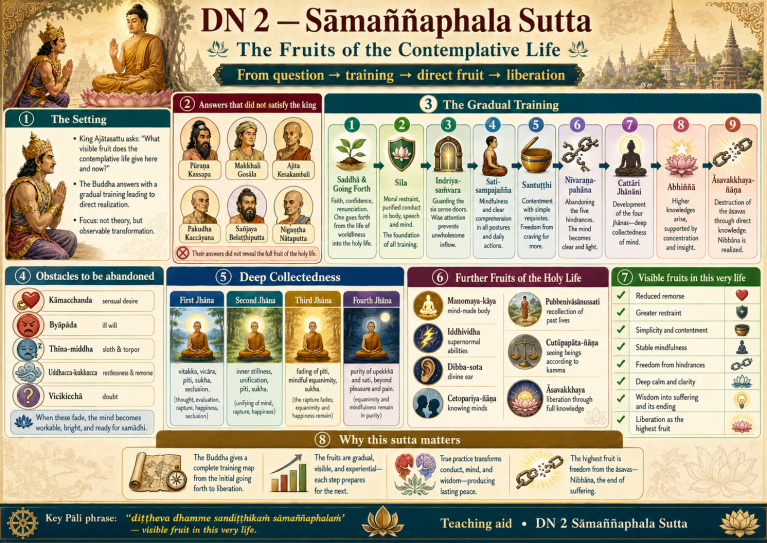
DN 2 — Sāmaññaphalasutta
Maps the gradual training from sīla and sense restraint through sati-sampajañña, abandonment of the hindrances and jhāna to the destruction of the āsavas.
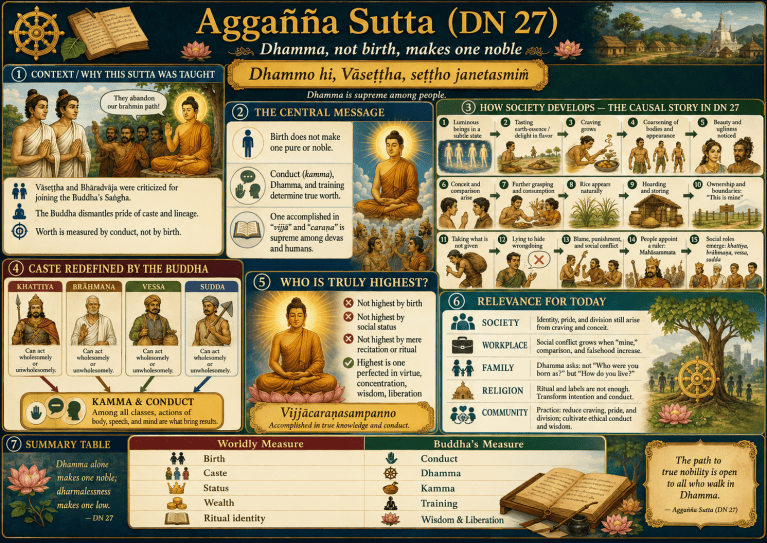
DN 27 — Aggaññasutta
Dismantles claims of superiority based on birth, caste or lineage and shows conduct and Dhamma, rather than social identity, as the true measure of worth.
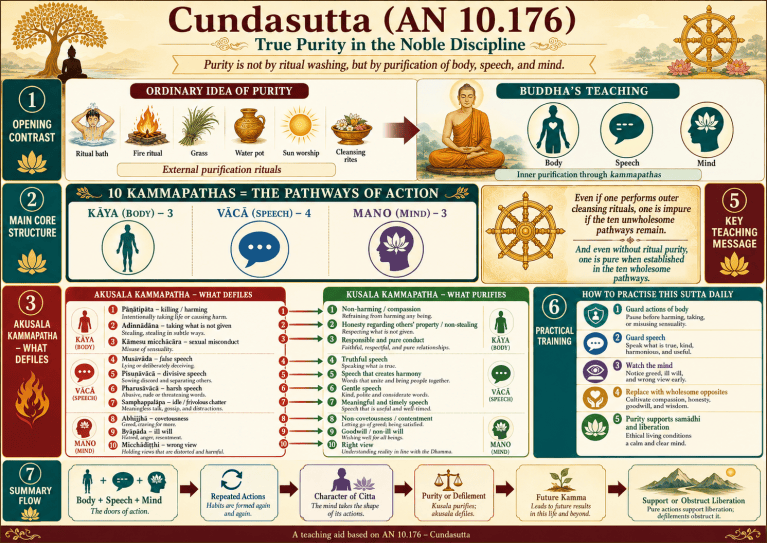
AN 10.176 — Cundasutta
Redefines purification away from external rites and toward wholesome conduct of body, speech and mind through the ten courses of kusala kamma.
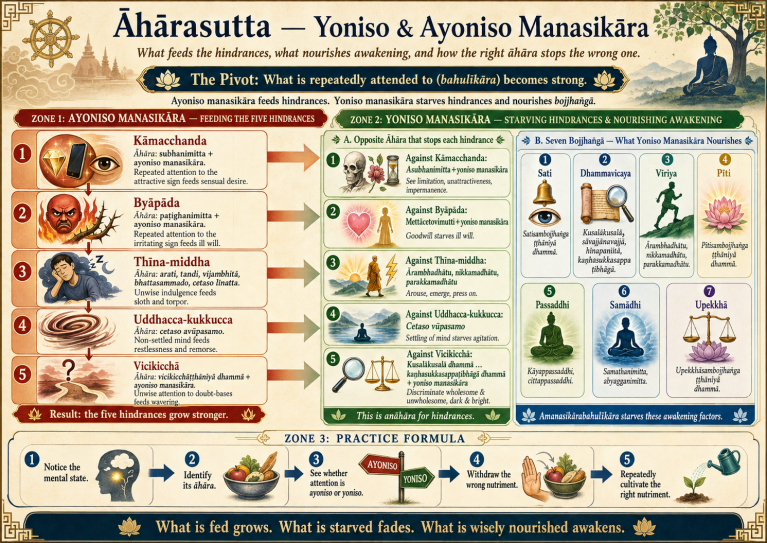
SN 46.51 — Āhārasutta: Detailed Continuation on Hindrances and Awakening Factors
Shows that the five hindrances and seven awakening factors depend on nutriment: what is repeatedly fed grows, while what is deprived of support weakens and fades.
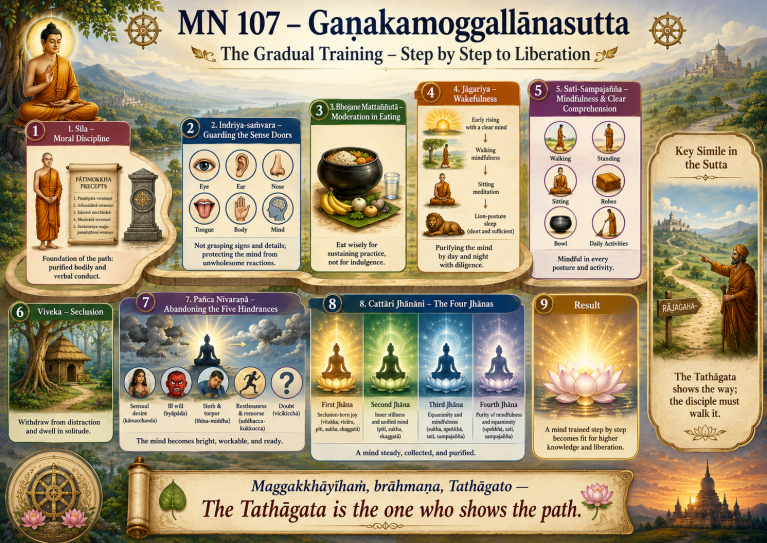
MN 107 — Gaṇakamoggallānasutta
Presents the Buddha’s gradual training step by step, from sīla and sense restraint through moderation, wakefulness, hindrance abandonment and jhāna toward liberation.
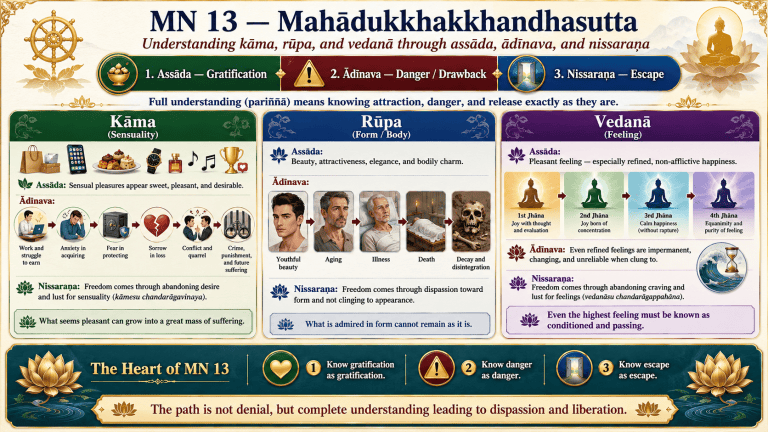
MN 13 — Mahādukkhakkhandhasutta
Explains full understanding of sensuality, form and feeling through three aspects—gratification, danger and escape—rather than through abstract belief or partial analysis.
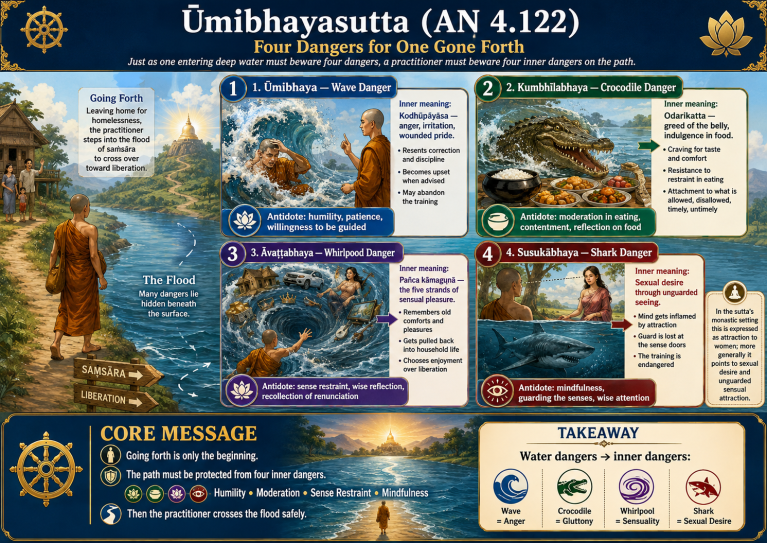
AN 4.122 — Ūmibhayasutta
Uses waves, crocodiles, whirlpools and sharks to represent four dangers that can overturn a practitioner: wounded pride, attachment to food, sensuality and attraction to the opposite sex.
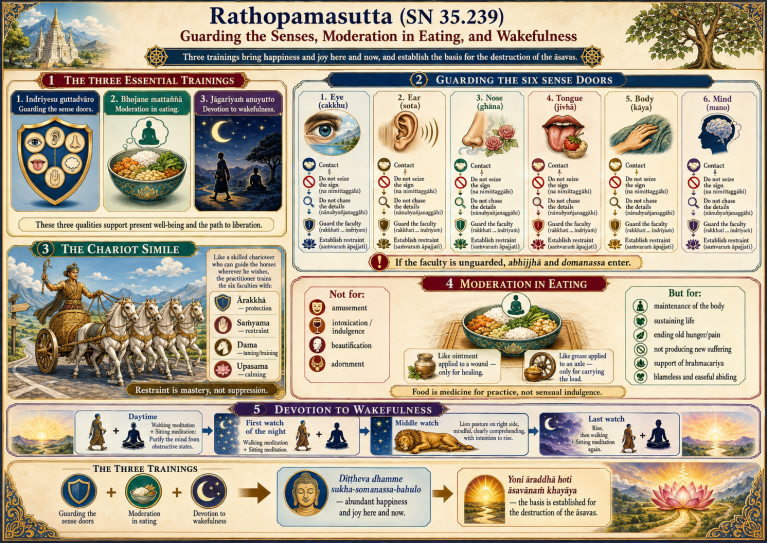
SN 35.239 — Rathopamasutta
Uses the chariot simile to emphasize three foundations of serious practice: guarding the sense doors, moderation in eating and devotion to wakefulness.
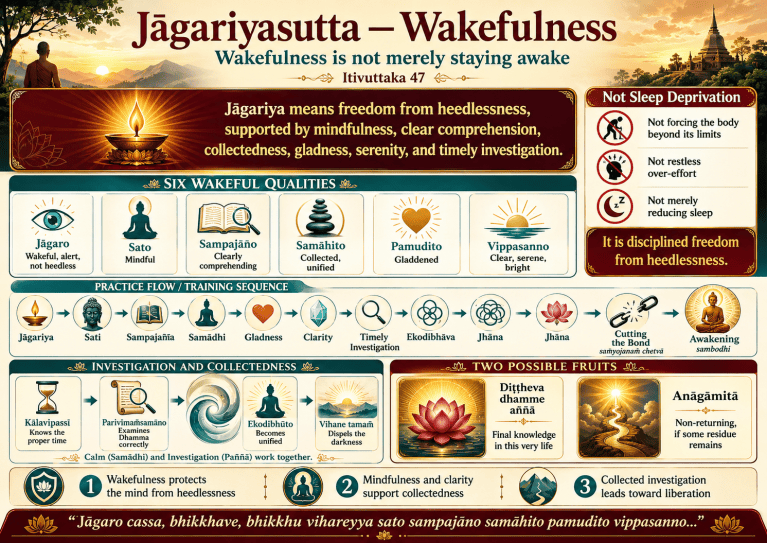
Iti 47 — Jāgariyasutta
Defines jāgariya as more than staying awake: true wakefulness combines sati, sampajañña, samādhi, gladness, investigation and jhāna to dispel ignorance.
Page 1 of 2