Practice deepens when sights, sounds, smells, tastes, touches and thoughts no longer carry the mind away. These studies show how indriya-saṁvara is developed in daily life so that contact at the six sense doors becomes a field for restraint, sati and wisdom rather than craving and aversion.
Guarding the Sense Doors
Sutta studies and practical guidance for indriya-saṁvara across the six sense doors.
Showing 13–20 of 20 studies
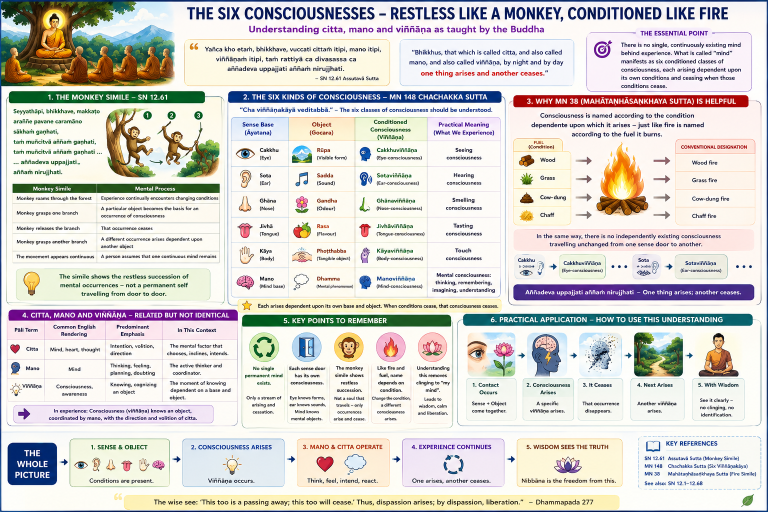
Sense Doors – How to understand?
Introduction There are 6 consciousness depending upon the type of the senses. The Buddha does not present a single permanent “mind” that remains unchanged while merely looking through six different windows. What…

AN 5.75 Paṭhamayodhājīvasutta
Uses five kinds of warriors as a practical mirror for effort, courage and steadiness, showing how practitioners differ in their response to pressure, temptation and difficulty.

SN 47.20 — Janapadakalyāṇīsutta: The Simile of the Beautiful Sensual Girl
The Buddha’s bowl-of-oil simile shows how kāyagatā sati must remain continuously established amid beauty, sound, crowds and every outward pull.
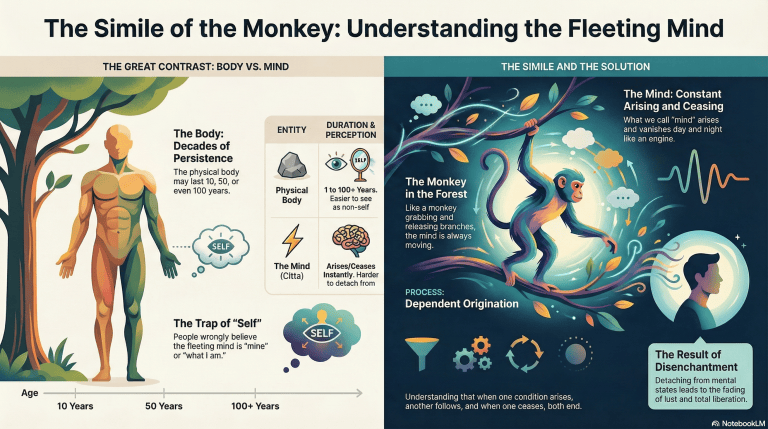
SN 12.61 — Assutavāsutta: The Simile of the Monkey and the Fleeting Mind
Uses the monkey simile of SN 12.61 to show the rapid instability of consciousness and mind, contrasting their constant change with the body’s slower visible continuity.

SN 35.247 — Chappāṇakopamasutta: The Simile of the Six Animals
Uses six wild animals tied to a strong stake to show how the six senses pull toward their own fields, and how mindfulness of the body establishes restraint and stability.
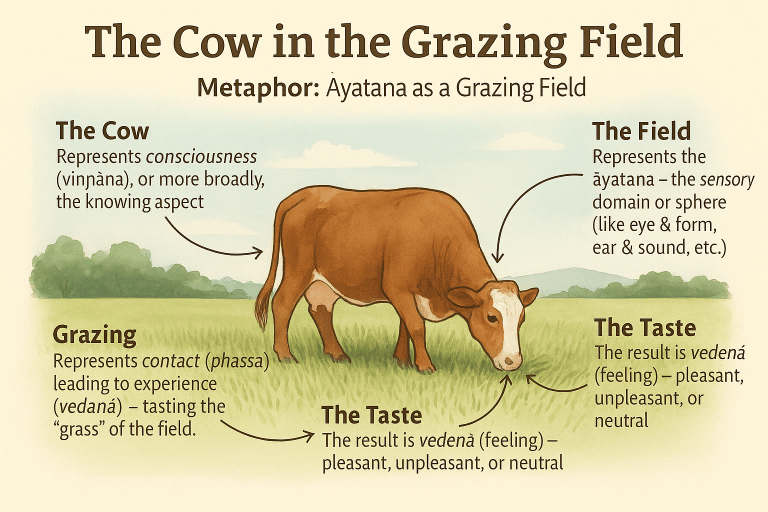
MN 137 — Saḷāyatanavibhaṅgasutta: Six Sense Field Experiences
Maps experience across the six sense bases from object, consciousness, contact and feeling through craving and mental responses, culminating in the refinement of upekkhā and atammayatā.

MN 152 — Indriyabhāvanāsutta
Presents MN 152 as active training of the sense faculties: not avoiding sights and sounds, but meeting all six sense contacts without being dominated by liking, disliking or indifference.

SN 22.53 — Upayasutta: Conscious Clinging
Explains how consciousness becomes established and grows when supported by attachment to the other aggregates, and how release follows when that supporting rāga is abandoned.
Page 2 of 2