These essays connect the Buddha’s teachings with the questions that arise during actual practice. Use them to examine experience more carefully, clarify difficult points and bring Dhamma understanding from intellectual study into direct observation.
Practice Notes and Essays
Practical reflections, meditation notes and essays supporting deeper understanding and development.
Showing 37–48 of 65 studies

Mandala and Gong Meditation: Form, Sound, and Cessation
This practice uses the gong as a direct contemplation of arising, changing and ceasing. A single strike produces a rich field of vibration and overtones that cannot be held still; the sound…
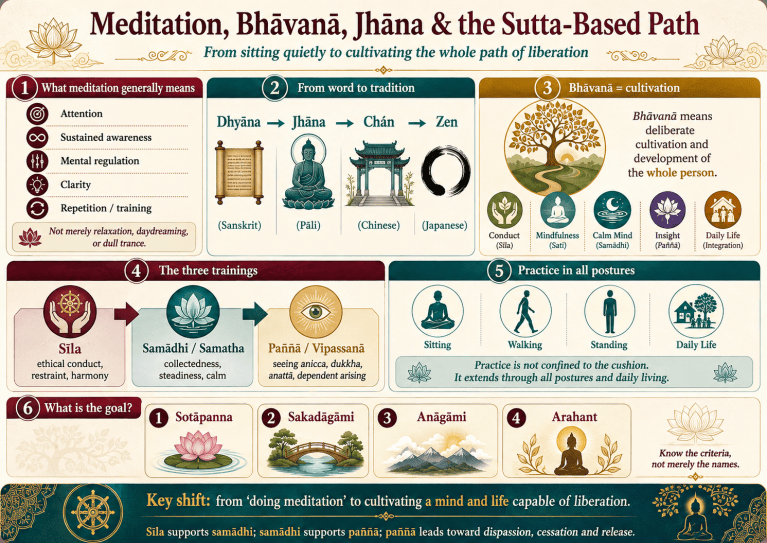
Meditation: Definition, Evolution, and Liberation Practice
DHAMMA ESSENCE — V3 DEEP SCRUTINY & REARRANGEMENT Meditation Is More Than Sitting Quietly WORDPRESS EXCERPT RECOMMENDATION: Meditation in the Buddha’s training is broader than a sitting technique: bhāvanā develops conduct, sense…
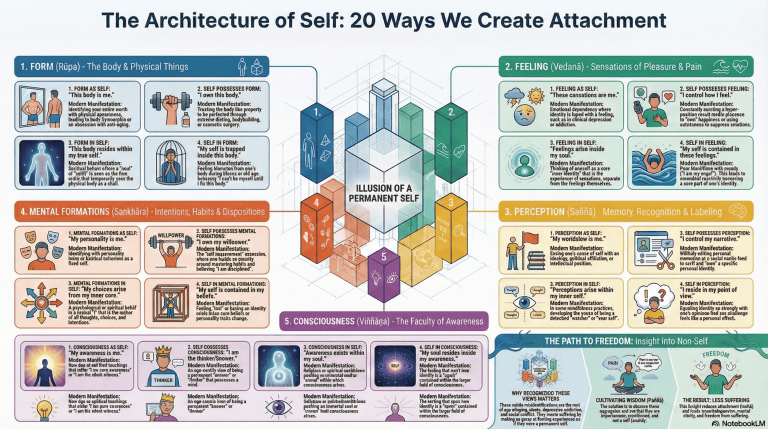
The Architecture of Ego: 20 Ways You Fake a “Self” (And How to Stop)
Maps twenty forms of mistaken self-view by applying four patterns of identification to each of the five aggregates, revealing how “I,” “me” and “mine” are constructed.
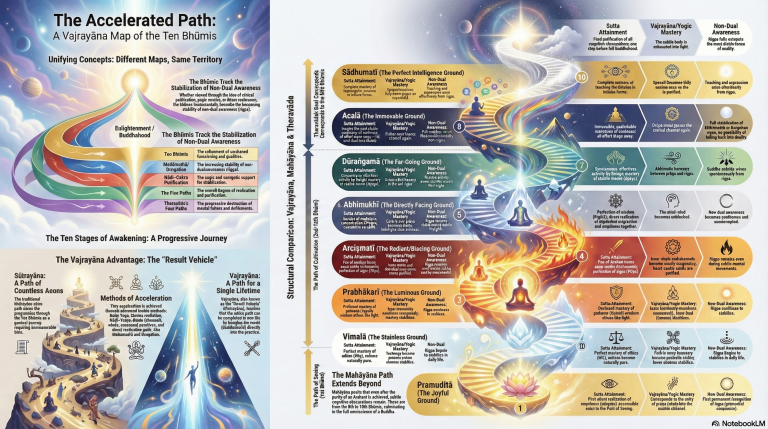
The Ten Bodhisattva Bhūmis in Vajrayāna
There are 10 bhumis which is spoken in Vajrayana and it is time to understand in deeper sense
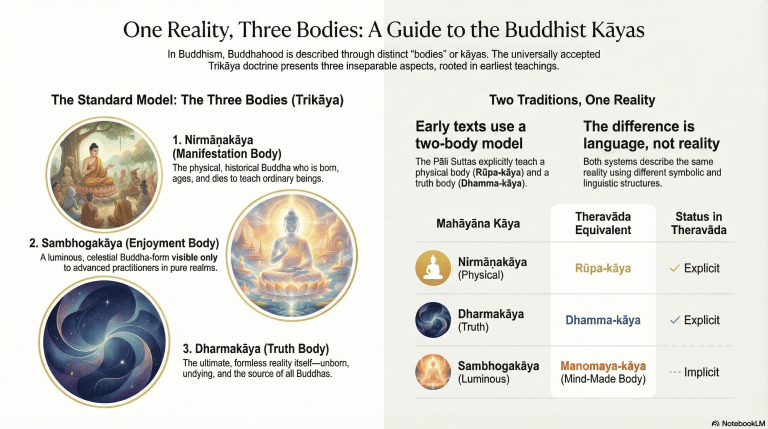
The Doctrine of Buddhist Kāyas: Three Bodies and Their Realization
DHAMMA ESSENCE — V3 FORMATTING & DOCTRINAL-LAYER REBUILD Three Kāyas — Three Ways of Speaking About Buddhahood WORDPRESS EXCERPT RECOMMENDATION: A careful study of the Mahāyāna Trikāya doctrine—Nirmāṇakāya, Sambhogakāya and Dharmakāya—followed by…

Paṭisambhidāmagga — Diṭṭhikathā: The Destruction of Wrong Views and Self-Clinging
Examines how diṭṭhi becomes self-clinging when ideas, experiences, attainments or doctrines are appropriated as “mine” or “self,” and how that grasping is dismantled.
Leading on to liberation
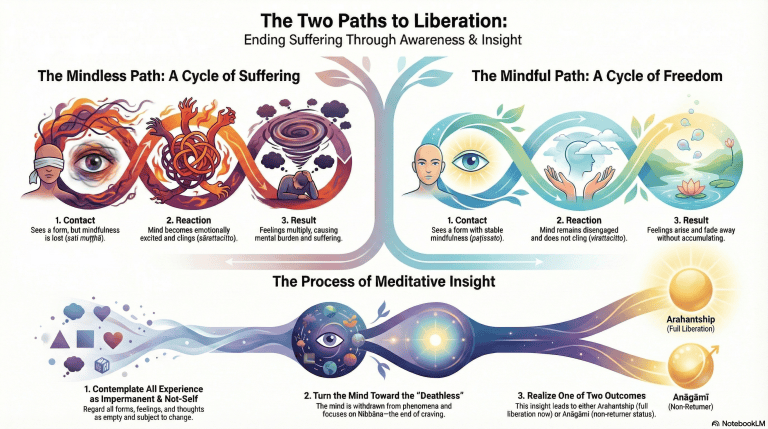
Brings together Mālukyaputta teachings from SN 35.95 and MN 64 to examine how practice at the six sense doors leads beyond subtle clinging toward final liberation.
What is Pāramī
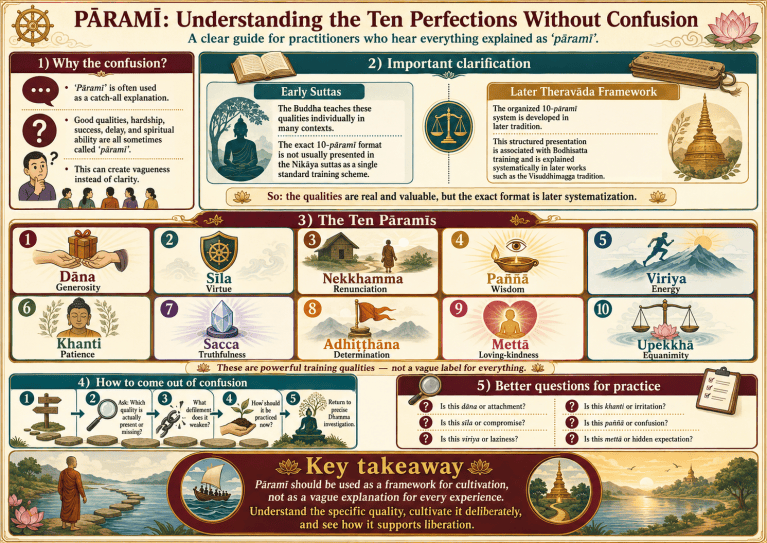
Pāramī • Bodhisatta Training • Dāna to Upekkhā • From Character to Liberation The Ten Pāramīs: Training the Qualities That Carry Practice Beyond Self-Clinging This teaching page explores ten pāramīs through a…
Manasikāra- Making up the mind
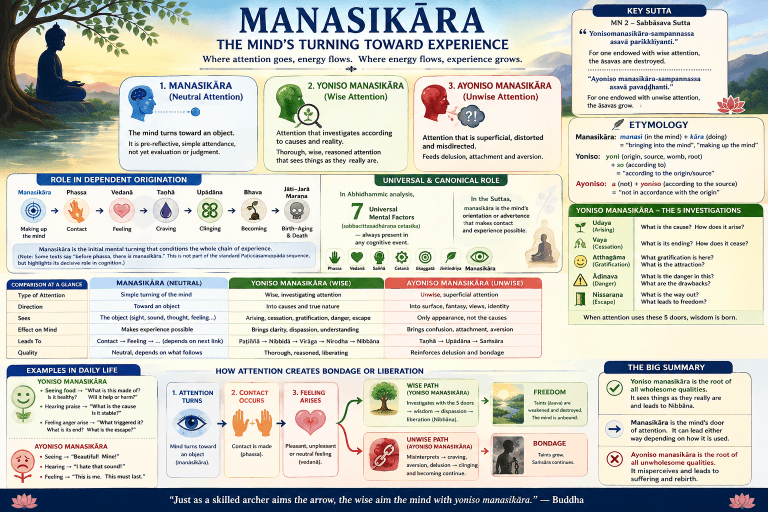
Manasikāra is a crucial but often overlooked part of practice because it concerns how the mind turns toward experience. The same sight, sound, feeling, thought, or memory can become a cause for…
4C’s, Jhāna and Neural networks
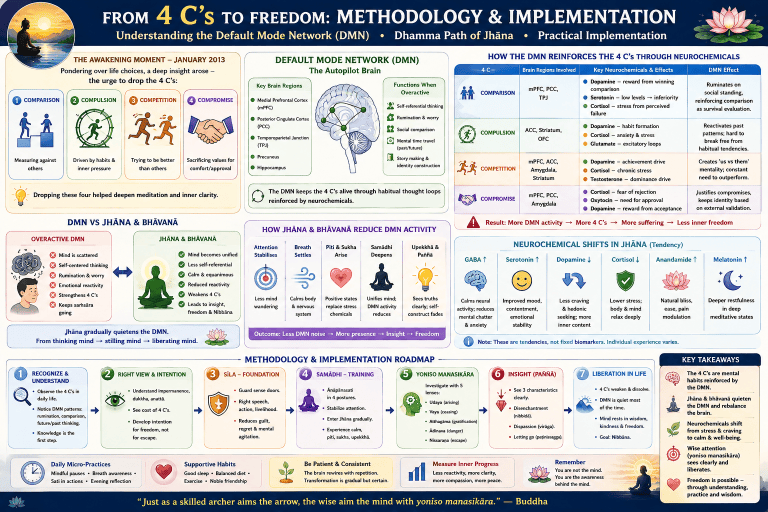
Personal Reflection • Four C’s • Bhāvanā • Jhāna From Autopilot to Freedom: The Four C’s, the Default Mode Network and Jhāna A personal reflection on Comparison, Compulsion, Competition and Compromise, and…
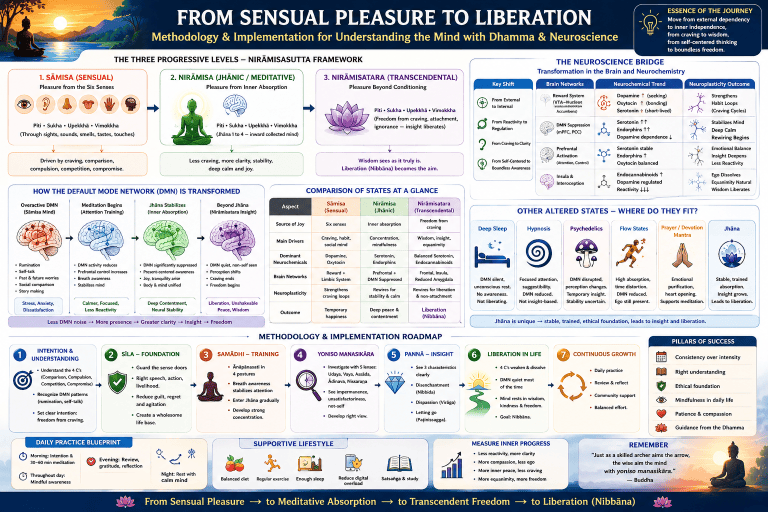
Neural Networks & Jhānic happiness
Nirāmisasutta • Sāmisa → Nirāmisa → Nirāmisatara • Jhāna • DMN From Sensual Reward to Meditative Independence — What Neuroscience Can and Cannot Tell Us The inquiry begins with the Nirāmisasutta’s distinctions…
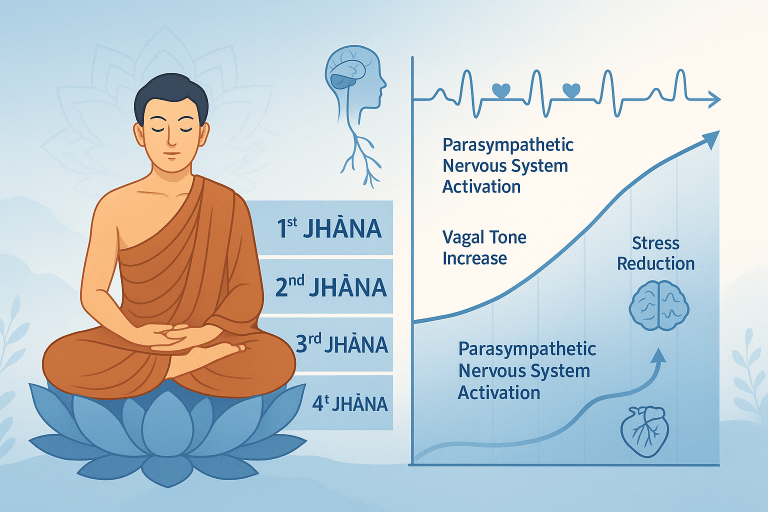
Effect of Jhānas on HRV
This essay explores an intriguing meeting point between modern physiology and Buddha training on how to understand breath and its impact on mind
Page 4 of 6