These essays connect the Buddha’s teachings with the questions that arise during actual practice. Use them to examine experience more carefully, clarify difficult points and bring Dhamma understanding from intellectual study into direct observation.
Practice Notes and Essays
Practical reflections, meditation notes and essays supporting deeper understanding and development.
Showing 13–24 of 65 studies
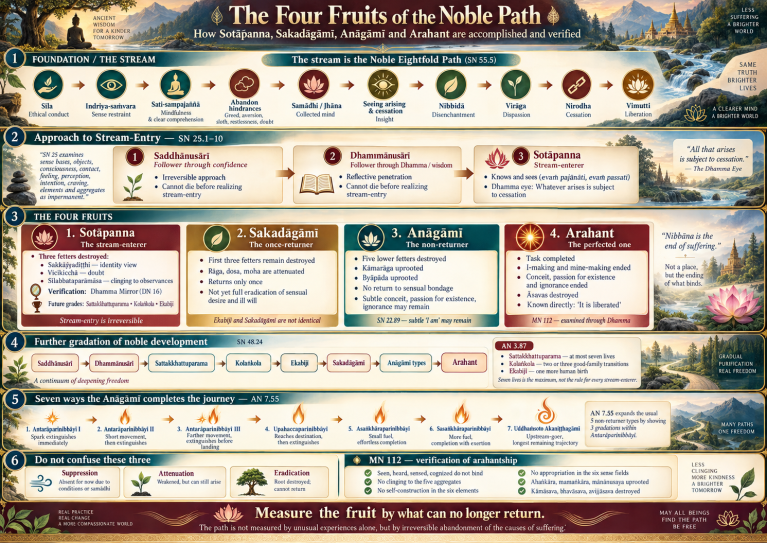
The Four Fruits of the Noble Path
This essay focuses upon four fruits as in Sotapanna, Sakadagami, Anāgami and Arahat on how to know where one has reached including the sutta references
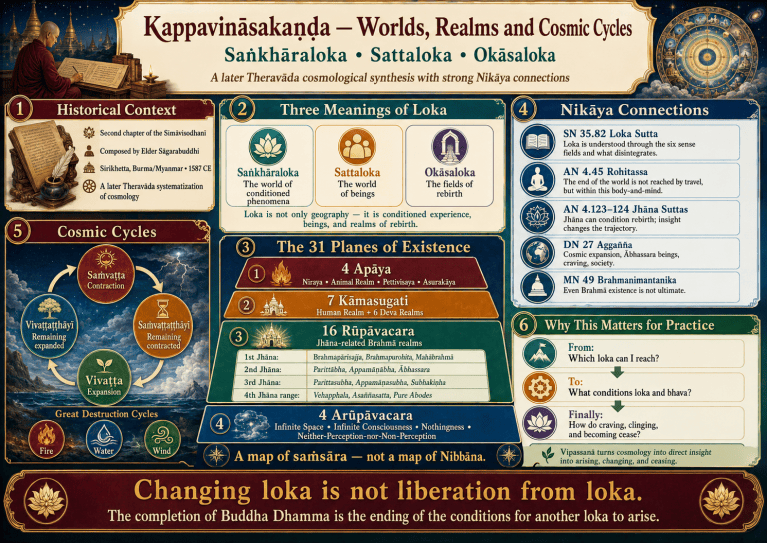
Treaties on Kappavināsakaṇḍa
Kappavināsakaṇḍa of the Sīmavisodhana, and it presents a later systematic cosmology. It begins by distinguishing three meanings of loka—saṅkhāraloka, sattaloka and okāsaloka—and then gives the detailed hierarchy of rebirth planes.

What is Sati?
Sati is one of the most frequently used—and frequently oversimplified—terms in the Buddha’s teaching. Often translated merely as “mindfulness” or “present-moment awareness,” its meaning becomes much richer when SN 48.10, MN 118,…
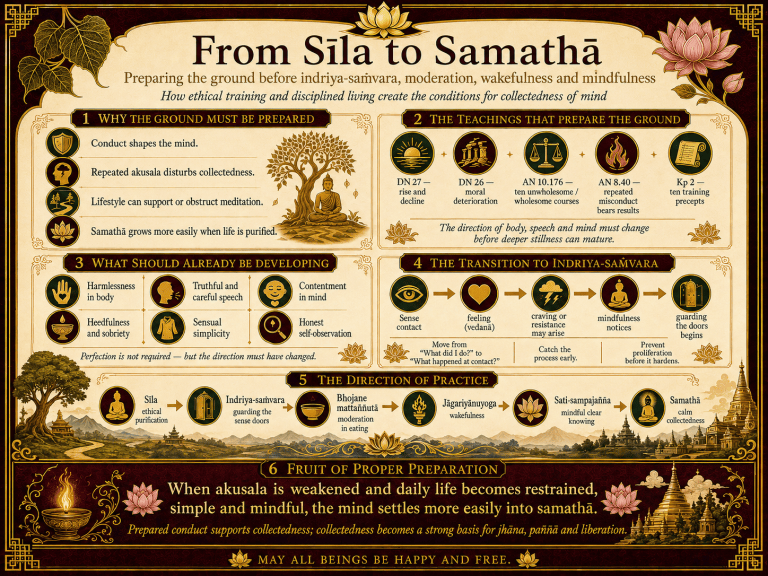
From Sīla to Samathā
From Sīla to Samathā presents the Buddha’s training as one continuous progression rather than a collection of separate practices. Before guarding the sense doors or trying to establish samathā, the practitioner must…
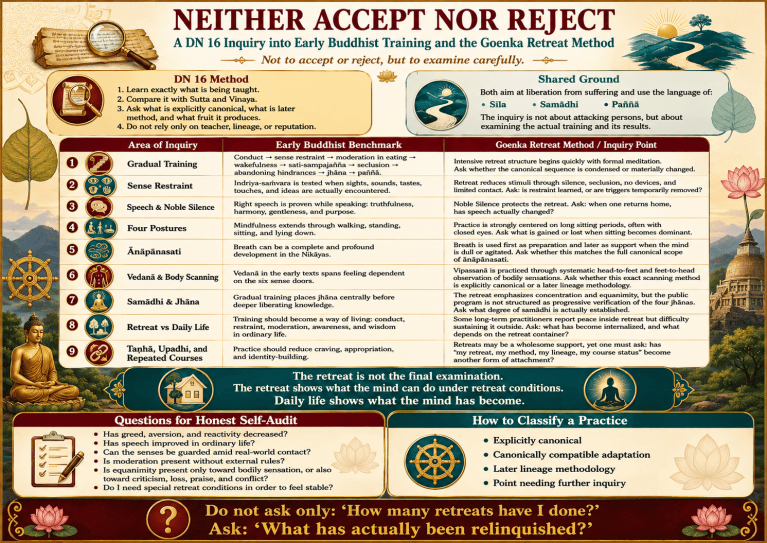
Neither Accept Nor Reject
Neither Accept Nor Reject examines the Goenka Vipassanā system through two complementary standards found in the early discourses: the Buddha’s method of verification through the Cattāro Mahāpadesā in DN 16, and the…
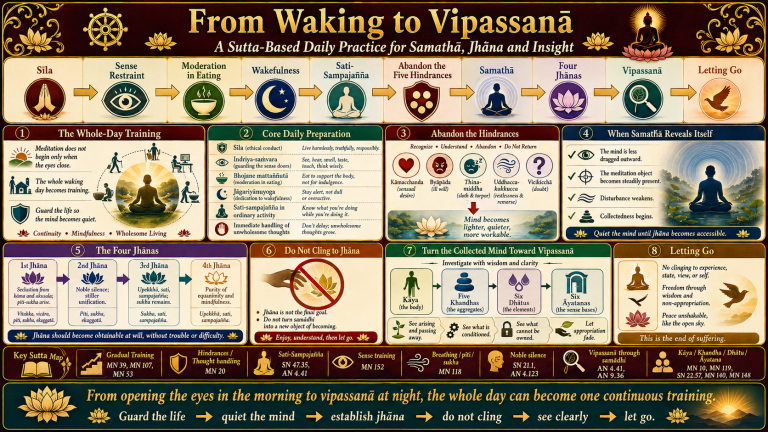
From Daily Discipline to Samathā, Jhāna and Vipassanā
From Waking to Vipassanā presents meditation as a continuous training rather than an isolated sitting practice. Drawing especially on MN 39, MN 107 and MN 53, it shows how sīla, guarding the…
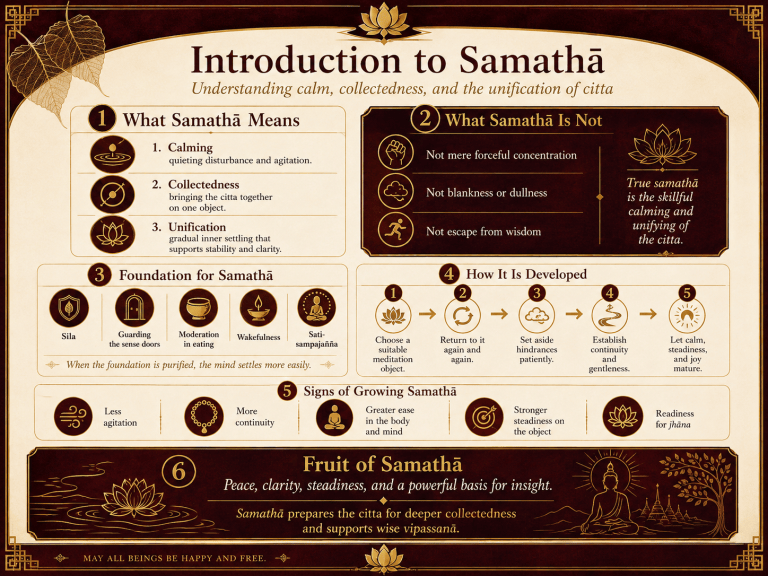
Introduction to Samathā
It is very important to understand on what is Samathā in proper sense and this essay just covers that by introducing what is Samathā
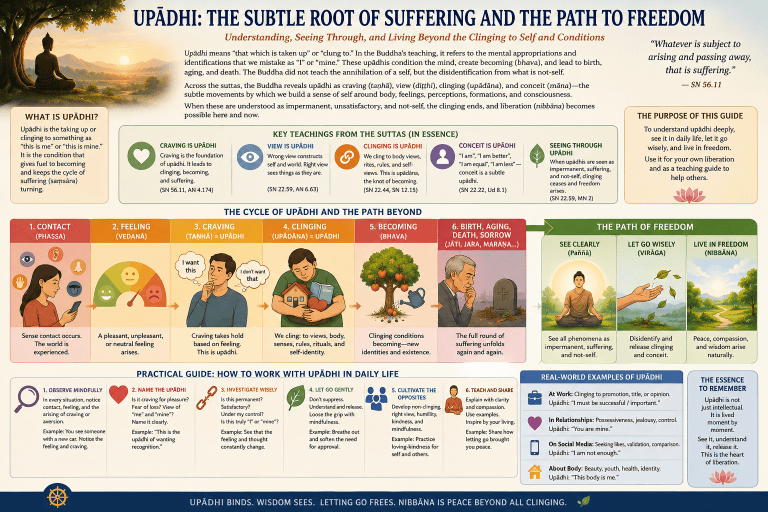
What is Upadhi?
Upadhi reveals how the mind turns conditioned experiences into “mine,” then builds identity, security and dependence around them. Through craving, appropriation and delight, possessions, relationships, views, status, memories and even refined meditative…
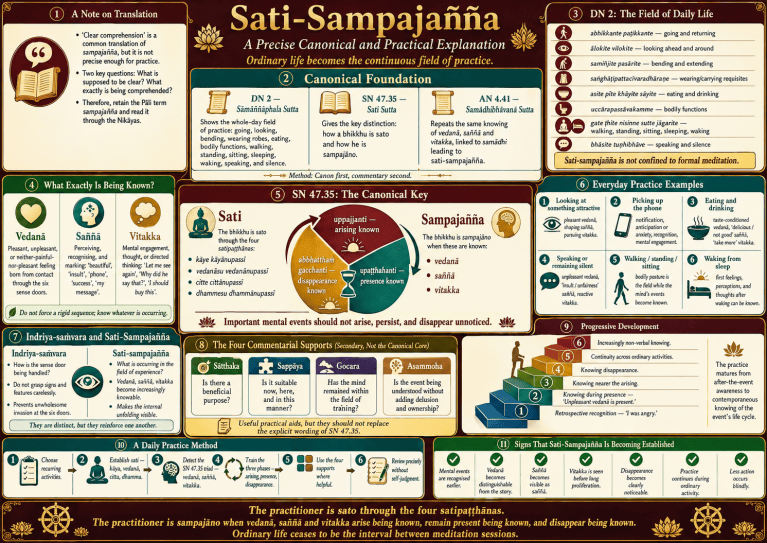
Sati-Sampajañña
Complete listening edition Listen to the full Sati-Sampajañña explanation A continuous reading of this entire page, including the canonical foundation, daily-life examples, practical development, and conclusion. Your browser does not support audio…
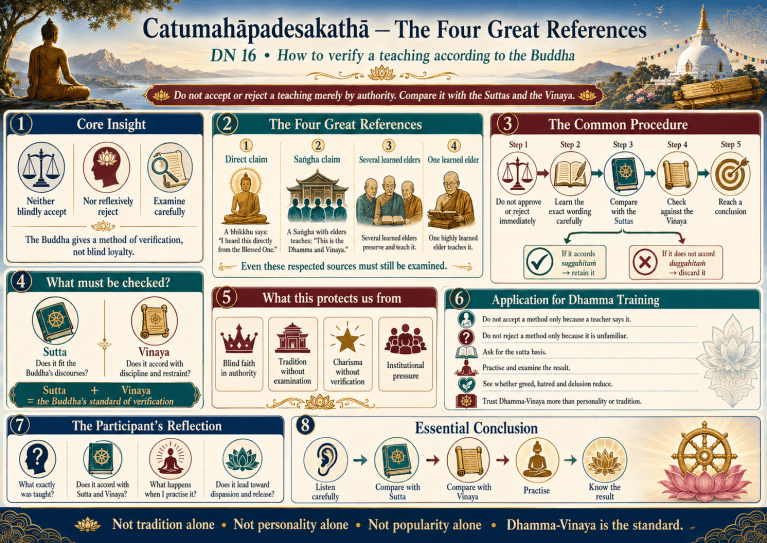
Catumahāpadesakathā
The Catumahāpadesakathā in DN 16 gives the Buddha’s own method for verifying whether a teaching should truly be accepted as Dhamma, Vinaya, and the Teacher’s instruction.Even if a teaching is attributed directly…
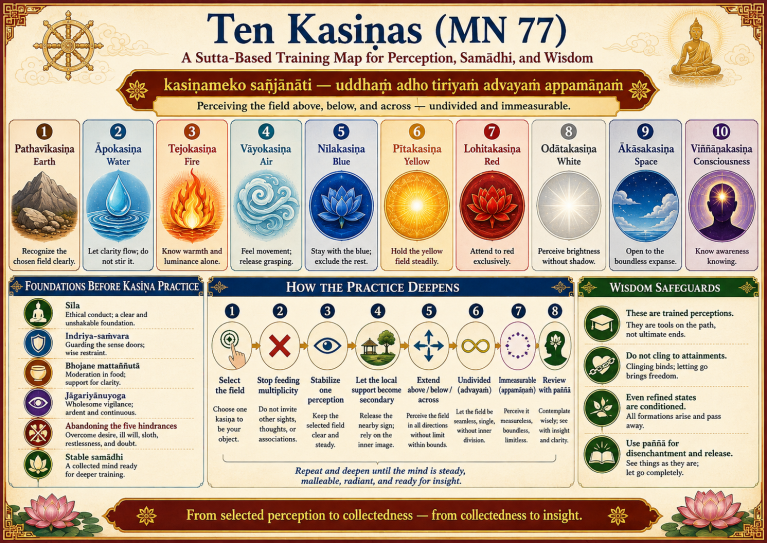
Ten Kasiṇas
The Ten Kasiṇas in MN 77 present a profound training in saññā — perception. The Buddha describes ten totalities—earth, water, fire, air, blue, yellow, red, white, space, and consciousness—and applies the same…
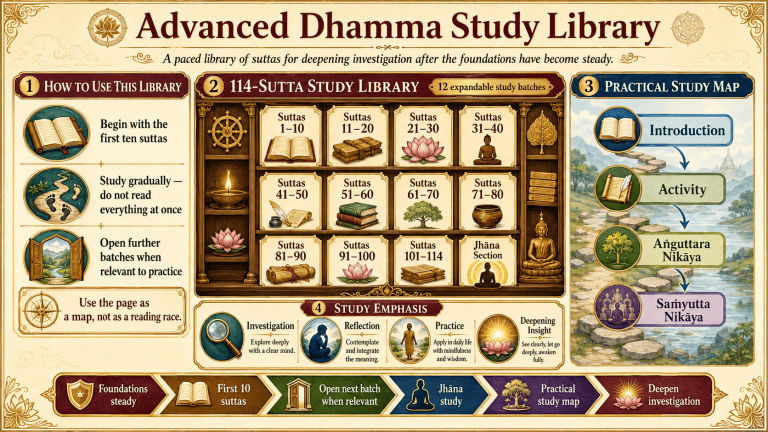
Advanced Dhamma Study: Sutta Library
Provides a paced advanced-study library for practitioners, organizing selected suttas into a gradual sequence so deeper teachings are approached when they become relevant to practice.
Page 2 of 6