Sīla
Training in wholesome conduct, restraint, precepts, hiri-ottappa, careful conduct and abandoning bodily, verbal and mental misconduct.
Showing 13–22 of 22 studies
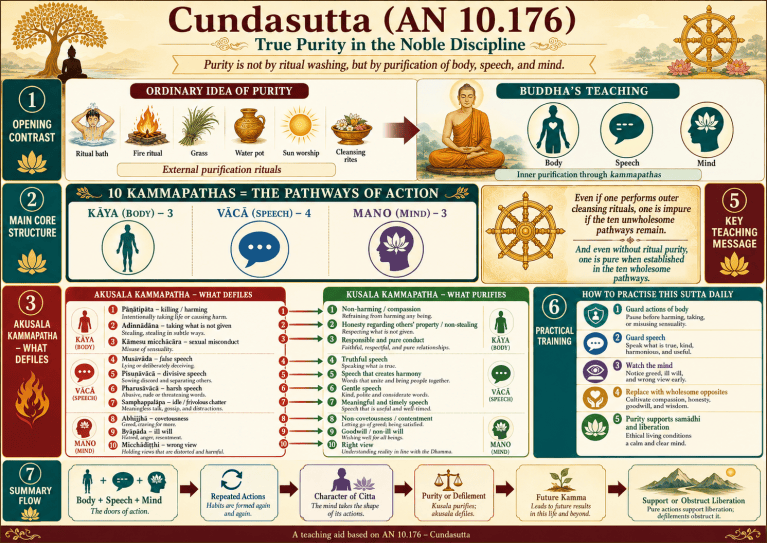
AN 10.176 — Cundasutta
Redefines purification away from external rites and toward wholesome conduct of body, speech and mind through the ten courses of kusala kamma.
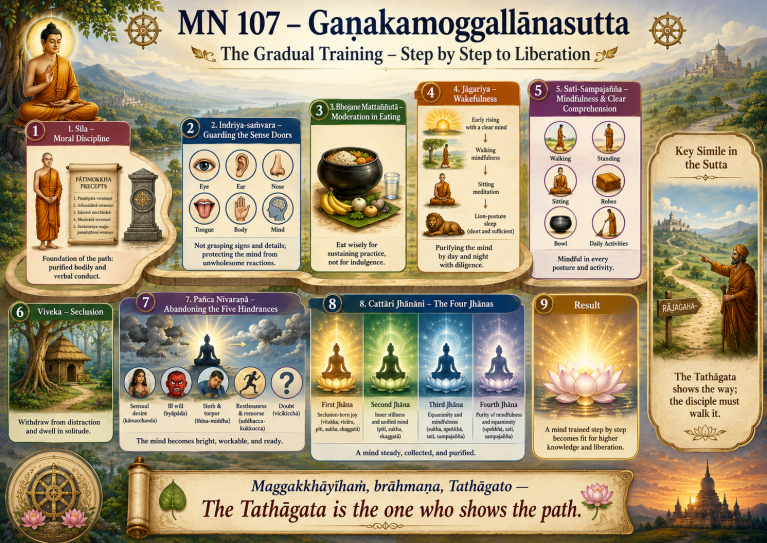
MN 107 — Gaṇakamoggallānasutta
Presents the Buddha’s gradual training step by step, from sīla and sense restraint through moderation, wakefulness, hindrance abandonment and jhāna toward liberation.
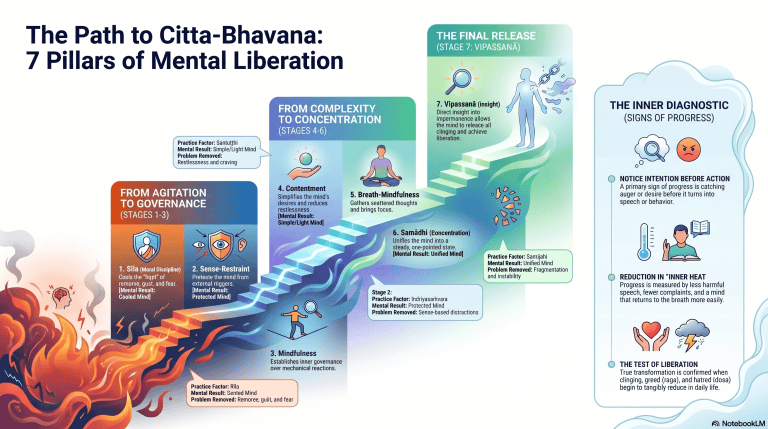
Adhisila-Higher Morality
Introduction: Adhisila or Higher MoralityHigher morality is not limited to social goodness or merely observing precepts. In the Buddha’s teaching, it is the full training of the mind through purified conduct, sense…
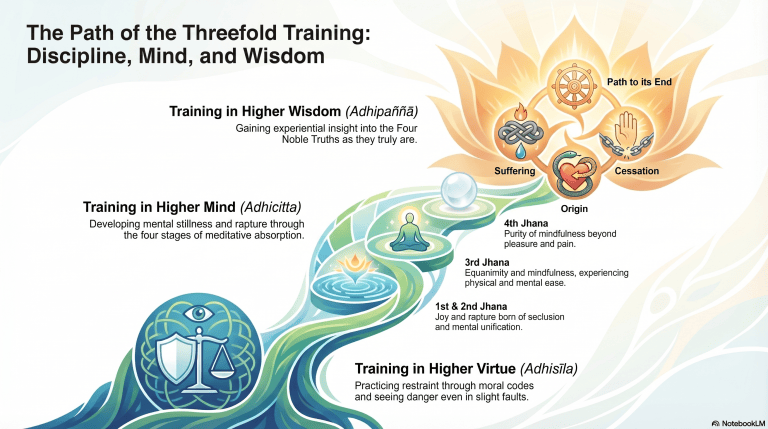
AN 3.89 — Paṭhamasikkhattayasutta: The Threefold Training for Discipline and Wisdom
Presents the Buddha’s training as adhisīla, adhicitta and adhipaññā, showing how higher discipline, collected mind and wisdom develop as one integrated path.
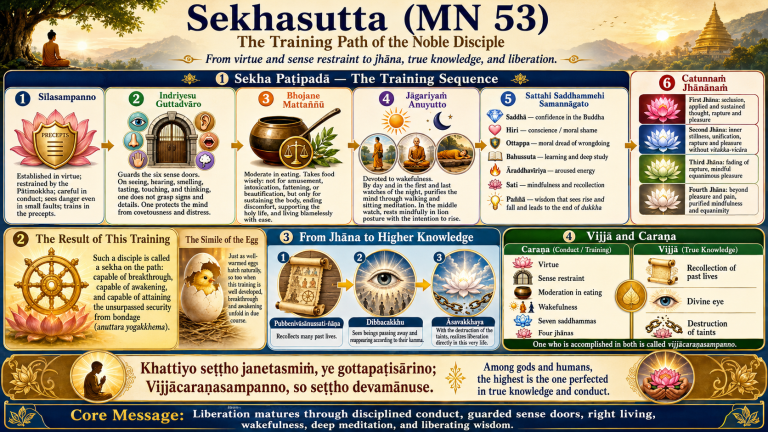
MN 53 — Sekhasutta
Presents the trainee’s development through conduct and knowledge, including sīla, sense restraint, moderation, wakefulness, seven good qualities, jhāna and the three higher knowledges.

MN 120 — Saṅkhārupapattisutta: Directing Rebirth—or Ending Rebirth Entirely
Explains how faith, virtue, learning, generosity, wisdom and repeated aspiration can condition rebirth in chosen realms, while their highest use is ending rebirth altogether.
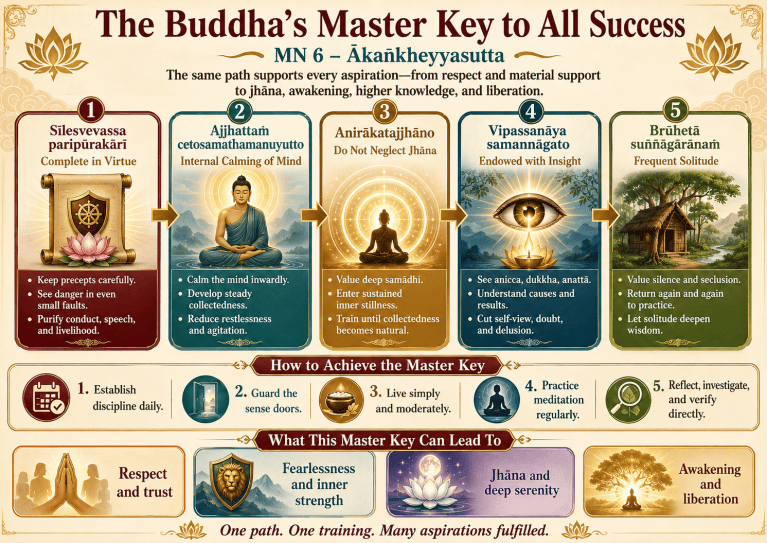
MN 6 — Ākaṅkheyyasutta
Shows how one unified training—sīla, internal calming, non-neglect of jhāna, vipassanā and solitude—supports aspirations ranging from respect and happiness to awakening and liberation.
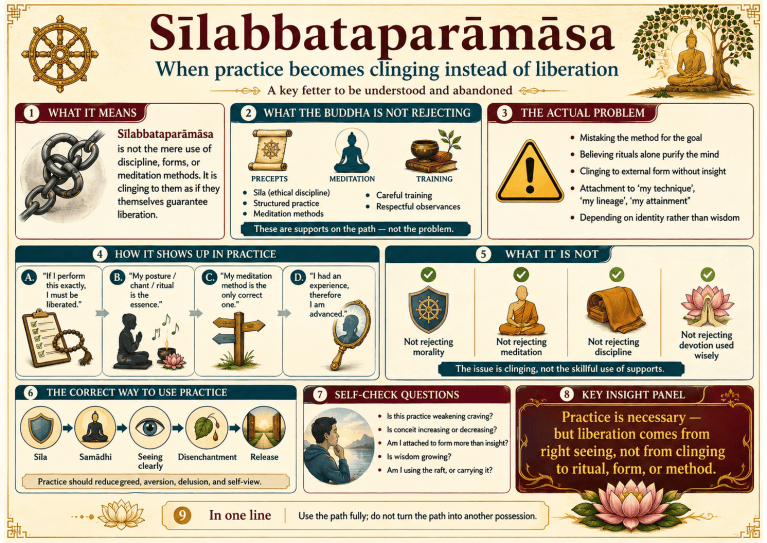
What is Sīlabbataparāmāsa?
Sīlabbataparāmāsa is often translated as “clinging to rites and rituals. However, it goes much deeper than that since Buddha does not reject that there is no place for that, but that itself…
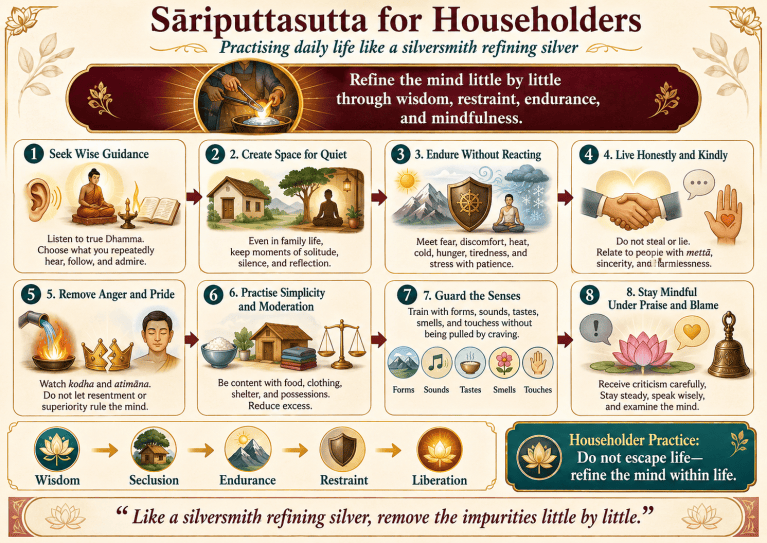
Snp 4.16 — Sāriputtasutta: Like a Silversmith Refining Silver
Uses Snp 4.16 as a practical guide for householders, showing how silence, restraint, careful speech, moderation and gradual refinement can turn daily life into training.
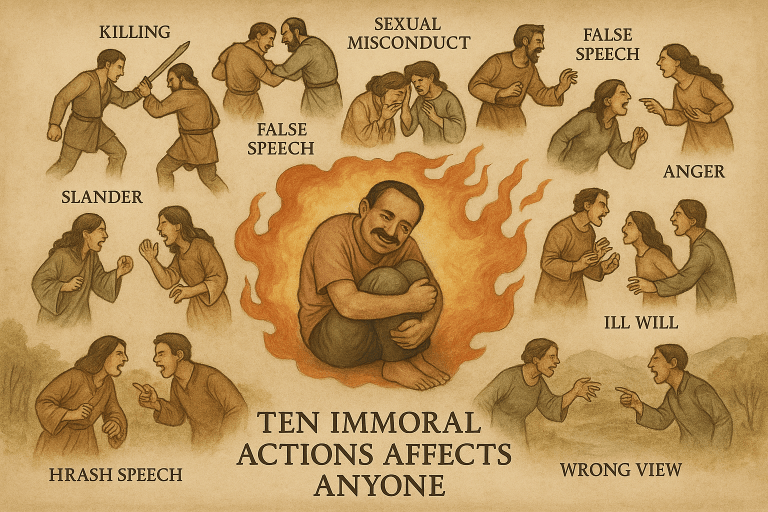
Ten Unwholesome Actions — AN 4.264–273
Examines the ten unwholesome courses of conduct and how responsibility extends beyond personally acting to encouraging, approving and praising unwholesome deeds.
Page 2 of 2