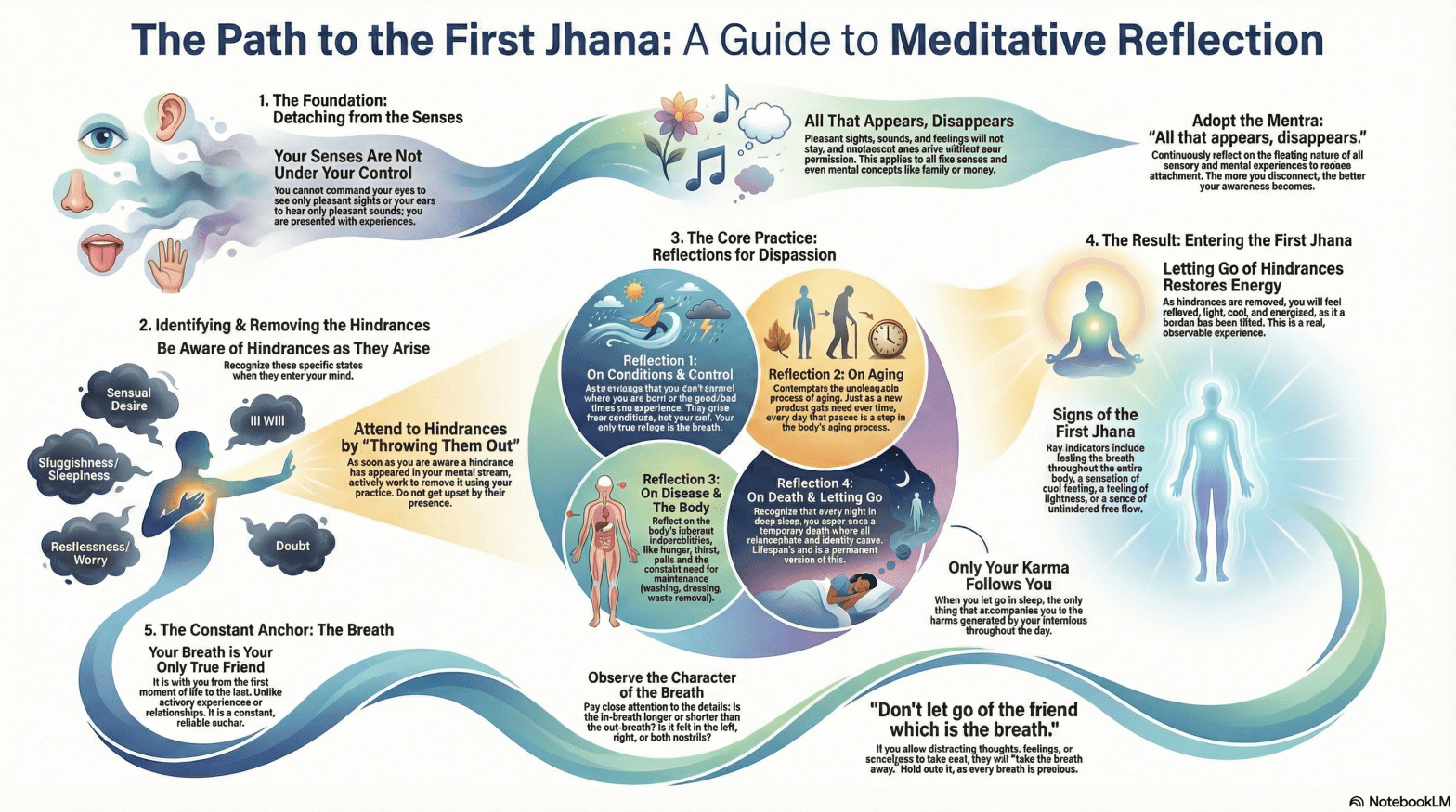
Brisbane Retreat – Day 4: Morning Practice Entering into 1st Jhāna Let us continue working on the defilements and the hindrances as we looked in the morning. Reflect upon the five senses and mind as not yours. The sight will not be as per what you want. Sometimes it can be, sometimes it won’t be.Continue reading “Day 4 – Mindfulness of the Breath and the Path to Jhana”
Category Archives: Essays
Eleven Lenses for Deconstructing the Five Aggregates
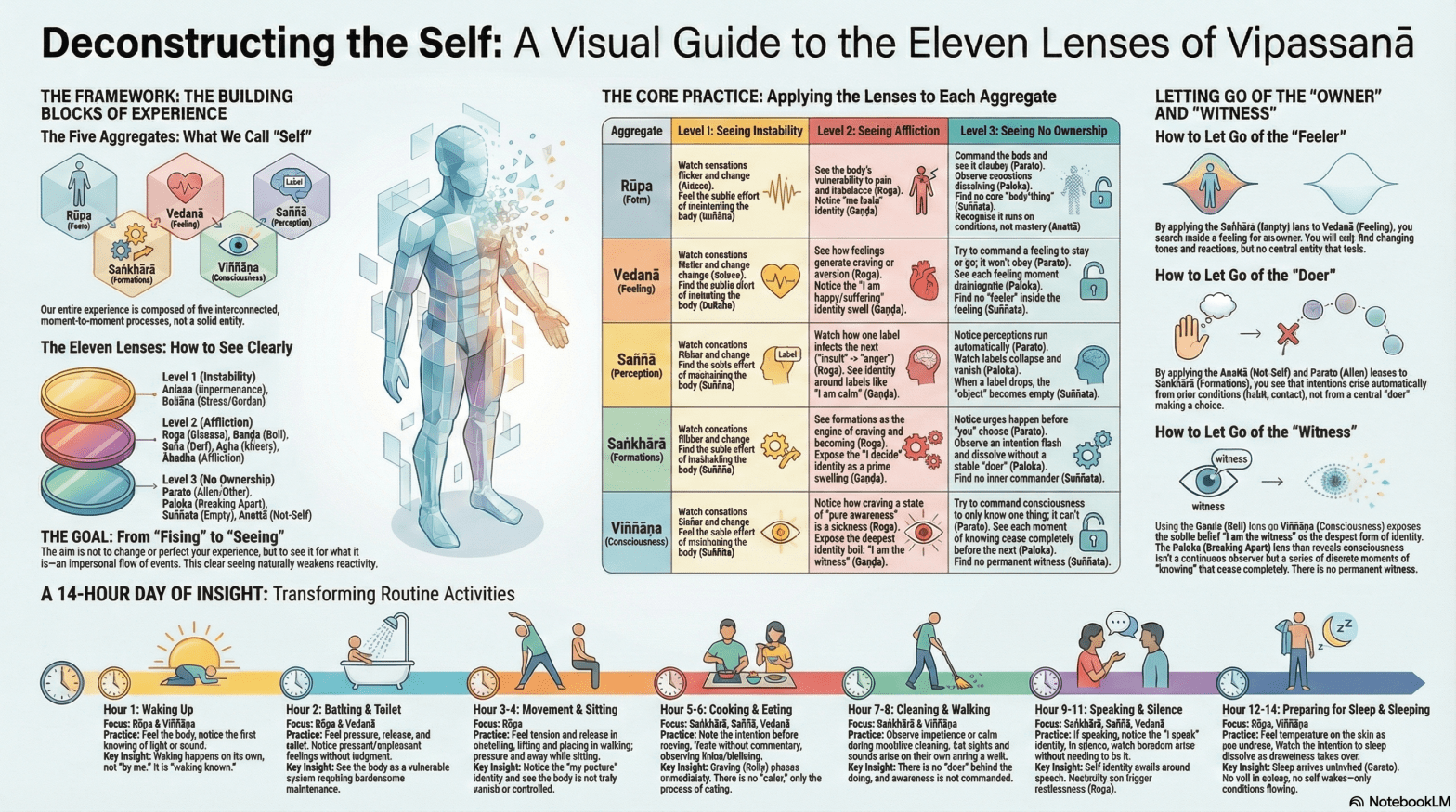
This guide details a Vipassanā meditation technique that uses eleven analytical lenses to deconstruct the five aggregates of human experience. By examining aspects like form, feeling, and consciousness through descriptors such as impermanence, affliction, and non-self, practitioners can dismantle the illusion of a central identity. The text provides a structured daily schedule for applying these insights to routine activities, ranging from eating to sleeping. This systematicContinue reading “Eleven Lenses for Deconstructing the Five Aggregates”
The Buddha’s Roadmap to Non-Dual Liberation
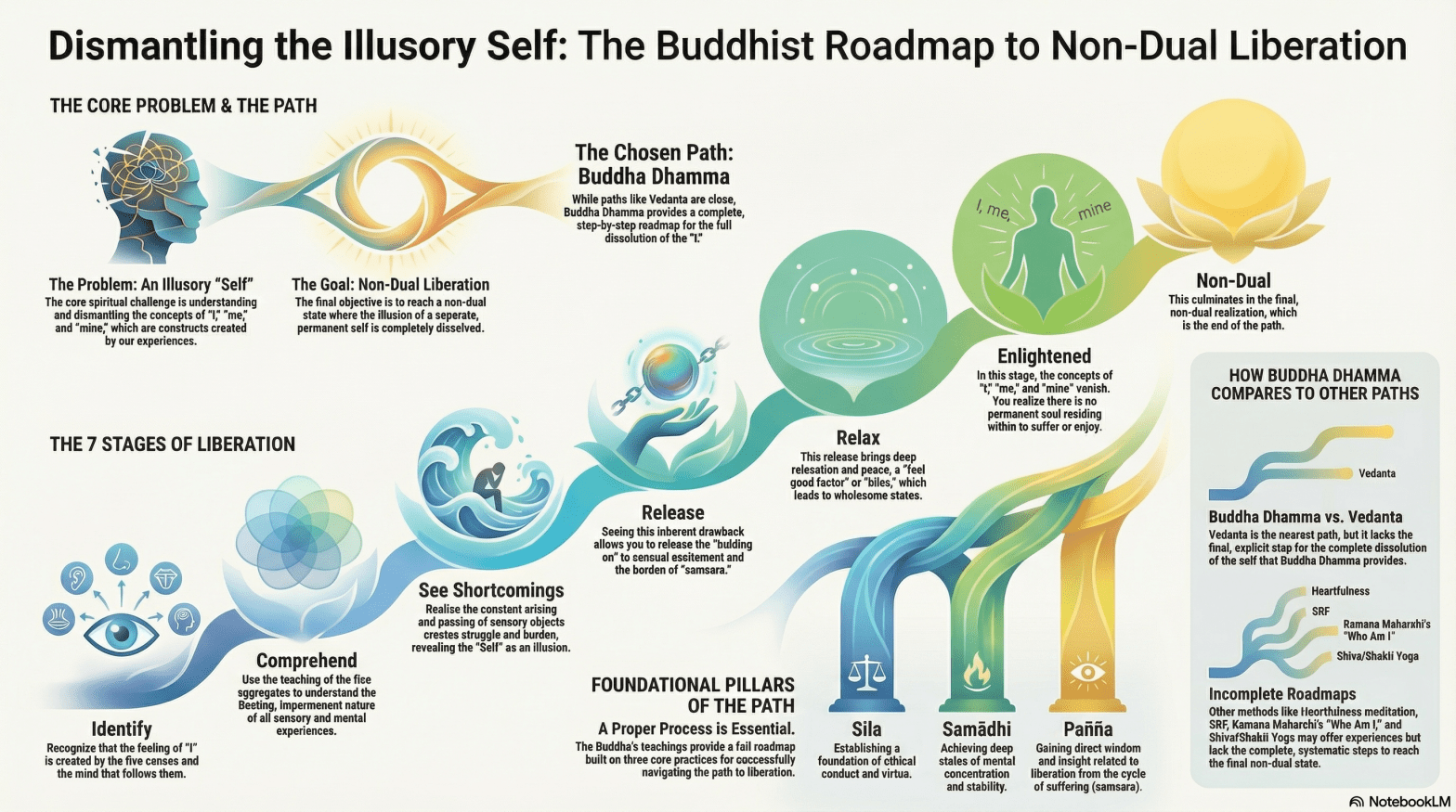
This essay outlines a systematic progression toward spiritual liberation by transitioning from a self-centered ego to a state of non-dual realization. The author argues that while various traditions like Vedanta or Yoga offer glimpses of enlightenment, Buddha Dhamma provides the most comprehensive, step-by-step roadmap for total dissolution of the “I.” This journey involves identifying and comprehending how the five senses and the mind create a falseContinue reading “The Buddha’s Roadmap to Non-Dual Liberation”
Struggling to Meditate? The Buddha’s 7-Step Diagnostic Toolkit
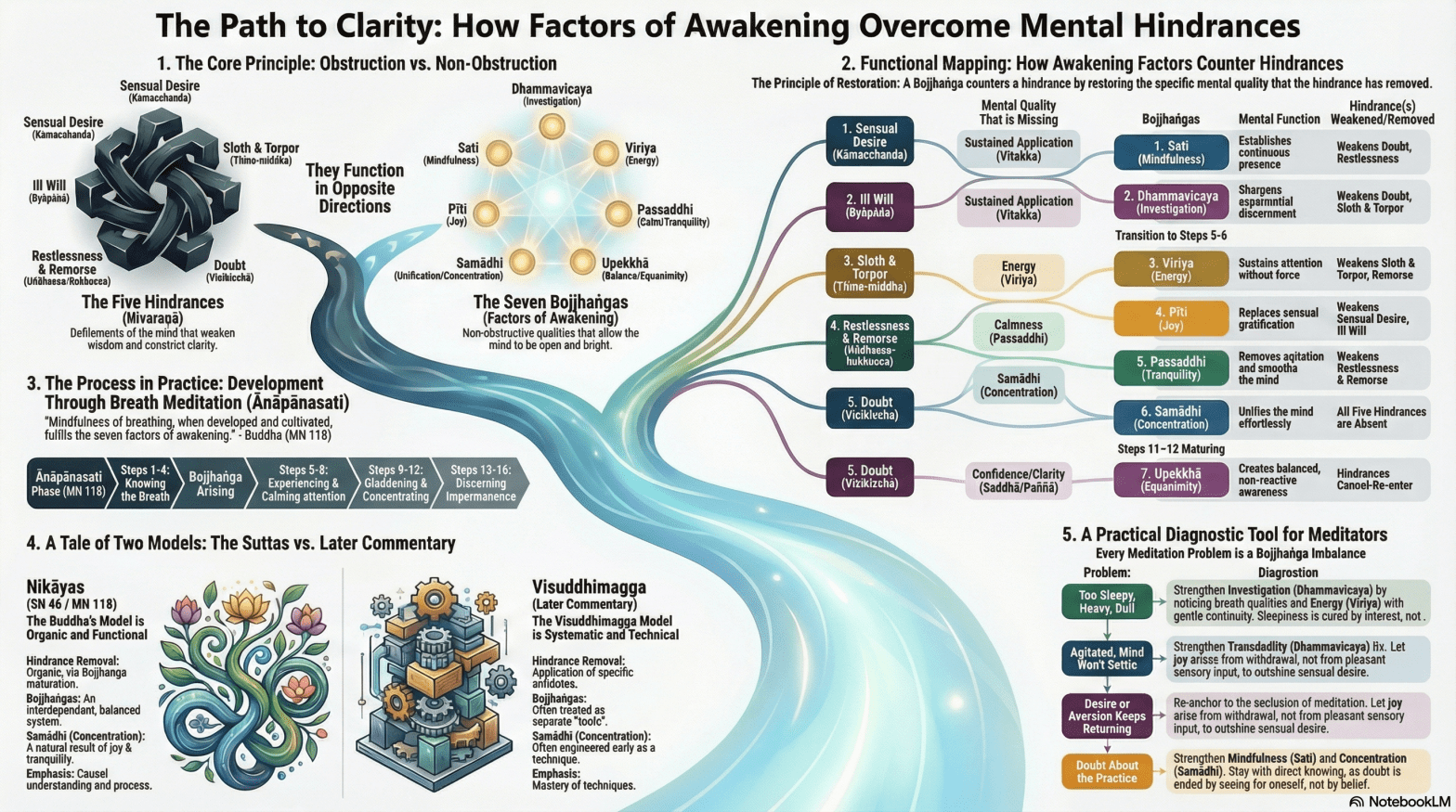
This essay explains the relationship between the Five Hindrances and the Seven Factors of Awakening as taught in the Samyutta Nikaya 46. Rather than being a literal slogan found in the scriptures, the concept that cultivating awakening factors abandons mental obstructions is a doctrinal summary of the Buddha’s functional logic. The essay highlight that hindrances like sensual desire and ill will act as mental pollutants thatContinue reading “Struggling to Meditate? The Buddha’s 7-Step Diagnostic Toolkit”
Mandala and Gong Meditation: Form, Sound, and Cessation
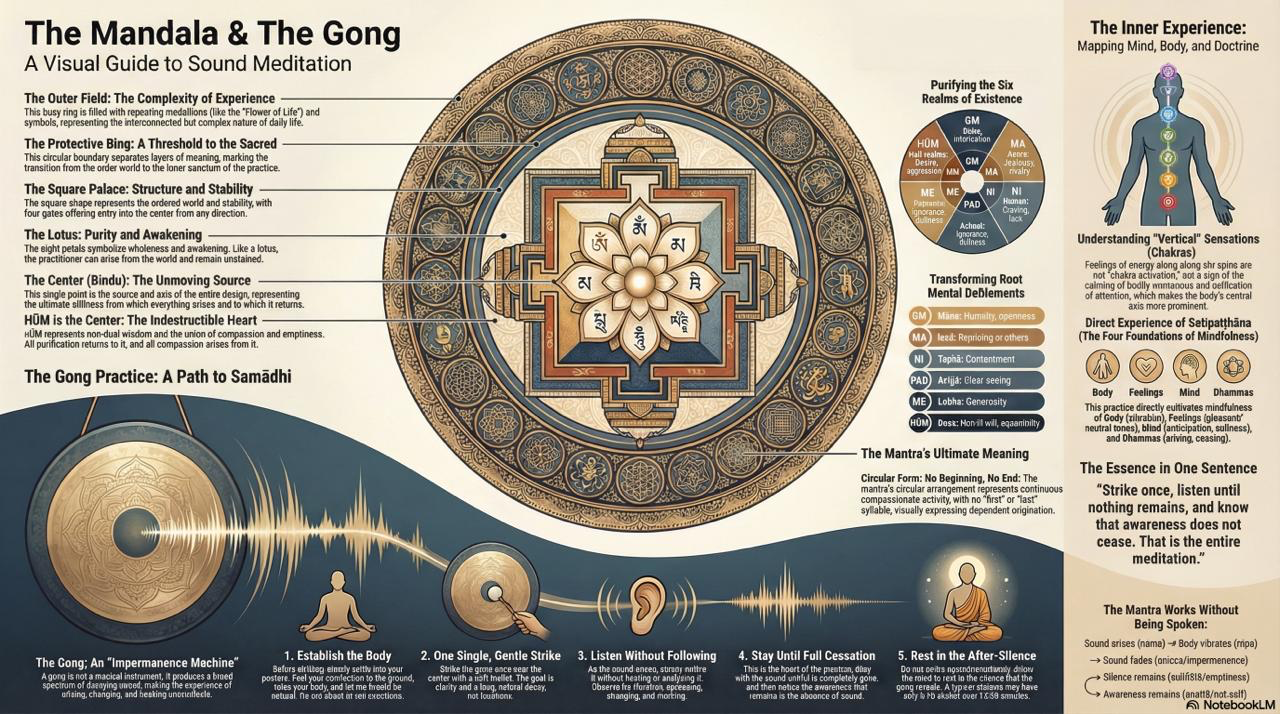
I was introduced to this fascinating gong at my dhamma friend home at Brisbane and we started using it for practice of stillness meditation – from sound to silence. Here is a short essay on how to use this wonderful Tibetan tool. The enclosed video provides you with instructions and so also the pdf file.Continue reading “Mandala and Gong Meditation: Form, Sound, and Cessation”
Meditation: Definition, Evolution, and Liberation Practice
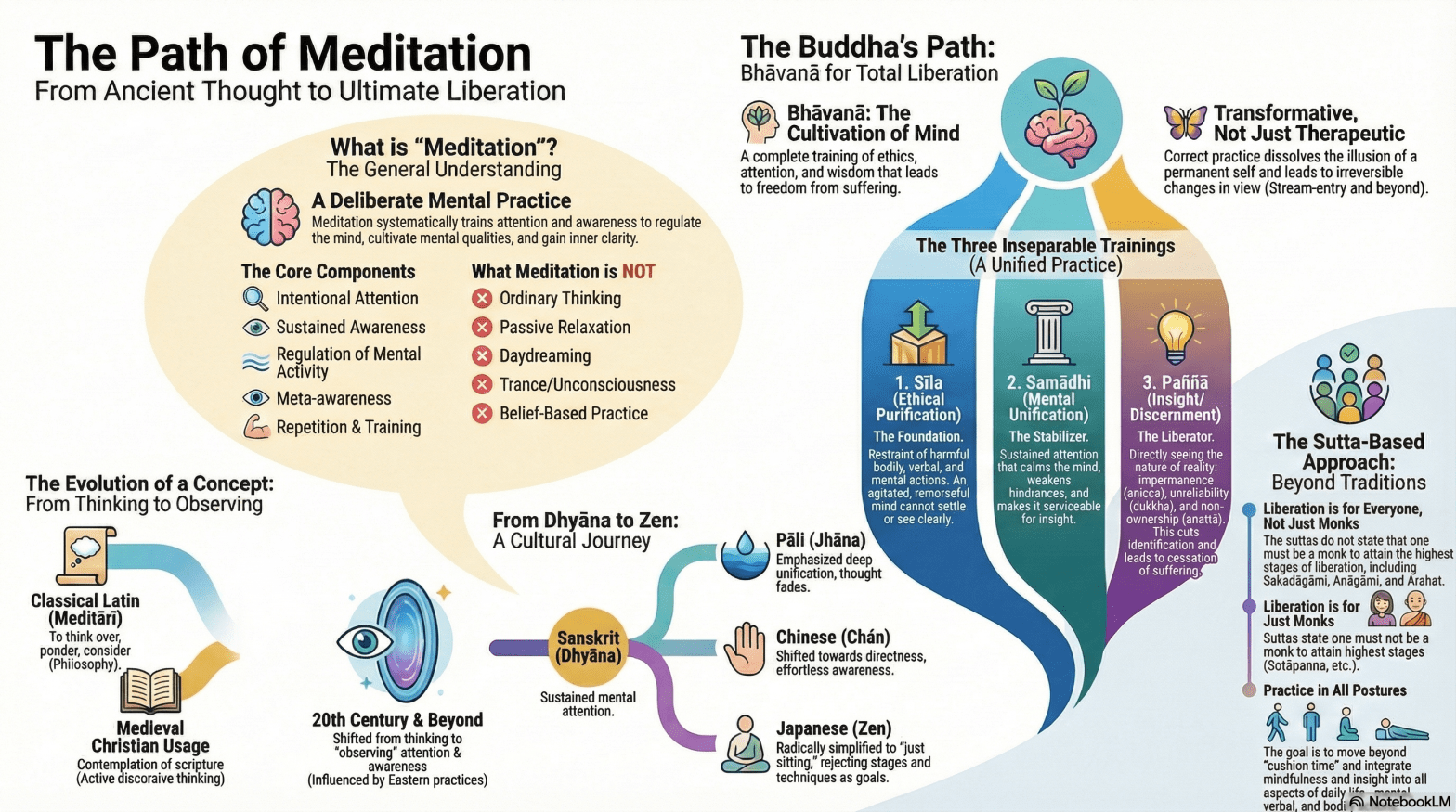
When we talk of meditation, we get various opinions and answers. Let us go over the definition and what it includes. Then, we can get into what the teachers at Anumodana Sankalpa provides and how similar or different it is, From a general and worldly definition context What is meditation? Meditation (from meditārī) originally meantContinue reading “Meditation: Definition, Evolution, and Liberation Practice”
The Tree and the Saw: Sāriputta’s Surgical Method for “Starving” the Ego
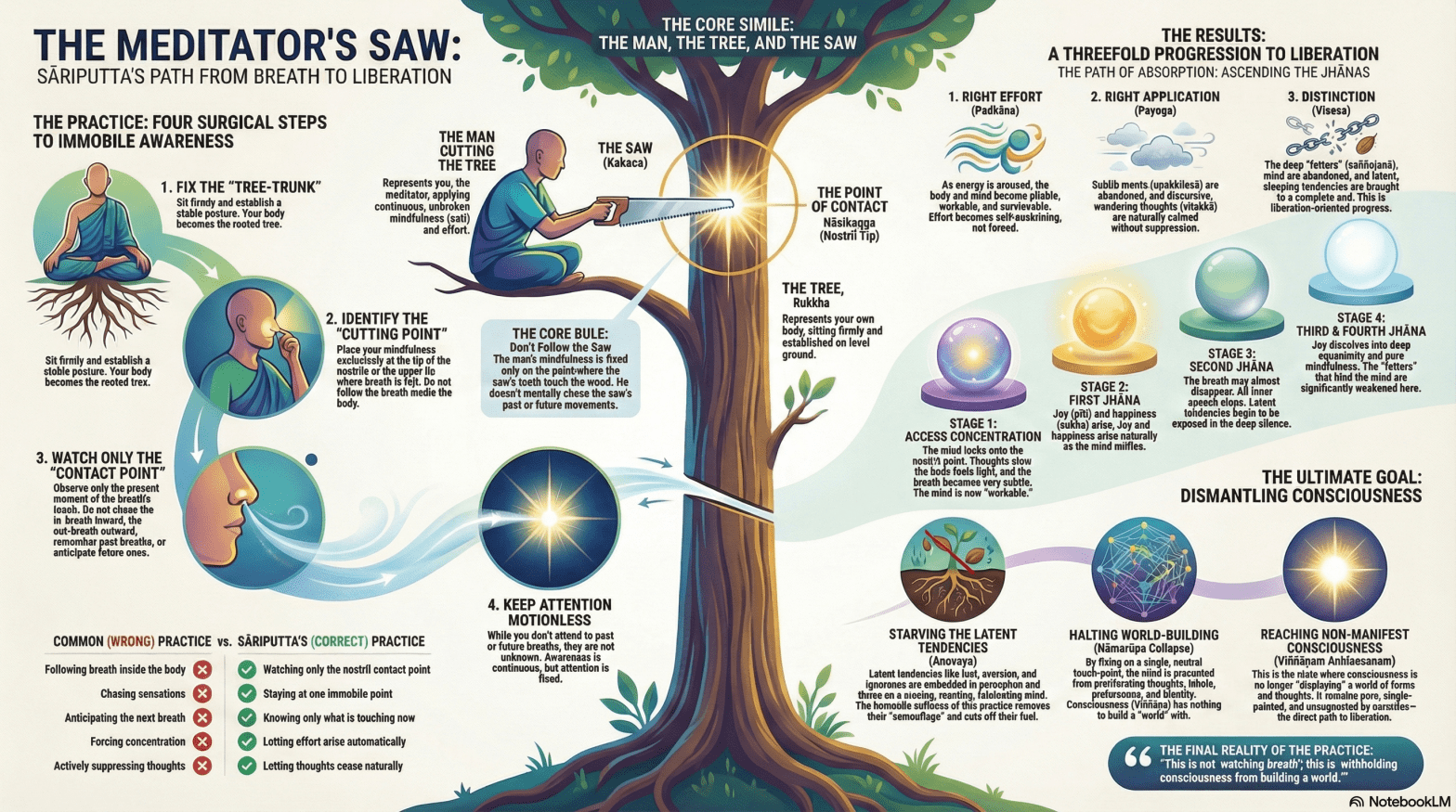
Most meditators make a fundamental mistake when practicing breath meditation (Ānāpānasati): they chase the breath. They track it as it moves into the chest, follow it as it leaves the body, and in doing so, they inadvertently keep the mind moving, reacting, and building a sense of “self” in time.But according to the precise technicalContinue reading “The Tree and the Saw: Sāriputta’s Surgical Method for “Starving” the Ego”
The Architecture of Ego: 20 Ways You Fake a “Self” (And How to Stop)

Why do we take things so personally? Why does a bad selfie or a negative emotion feel like an attack on our very existence?In this essay, we break down the complex psychology of Self-View (Sakkāyadiṭṭhi). Based on the 18 forms of “Mine” and the detailed analysis of the Five Aggregates, we explore exactly how theContinue reading “The Architecture of Ego: 20 Ways You Fake a “Self” (And How to Stop)”
The Ten Bodhisattva Bhūmis in Vajrayāna
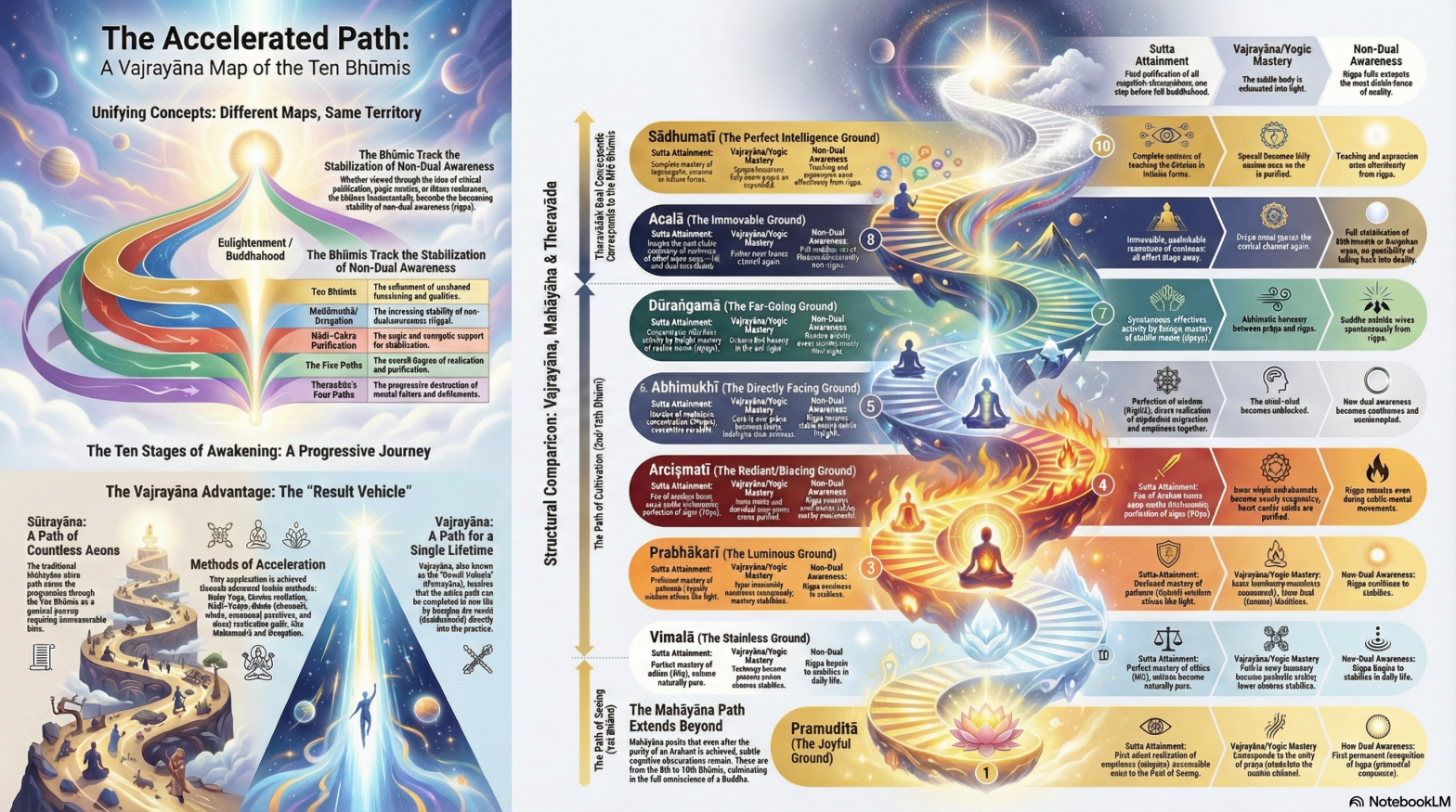
This essay portrays the ten Bodhisattva Bhūmis, which are the progressive stages of realization a Bodhisattva achieves on the path to Buddhahood, drawing primarily from the Vajrayāna Buddhist perspective. It defines each of the ten stages, detailing their Key Attainments and results, such as the first direct realization of emptiness at the Pramuditā Bhūmi (StageContinue reading “The Ten Bodhisattva Bhūmis in Vajrayāna”
The Doctrine of Buddhist Kāyas: Three Bodies and Their Realization
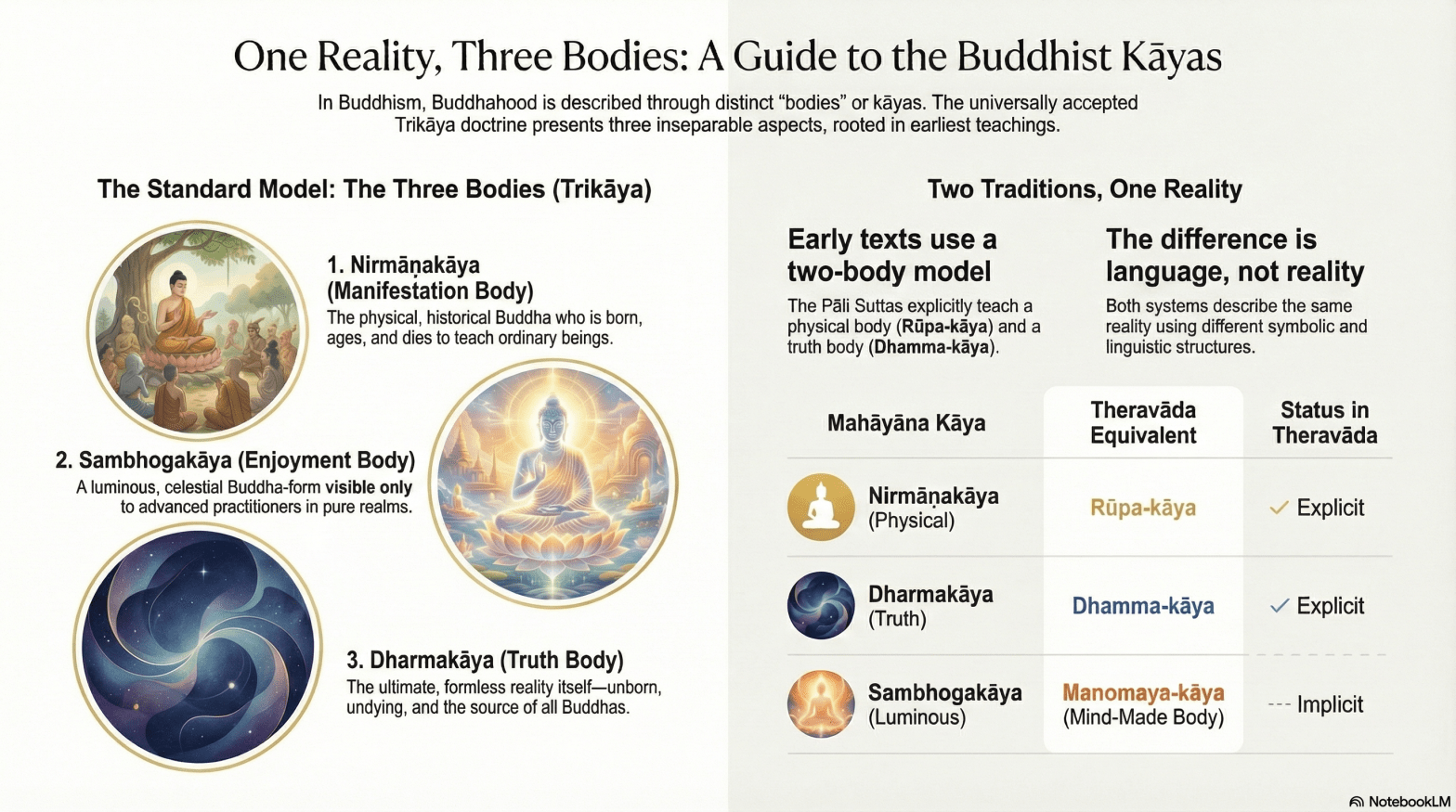
In Buddhism, the question “How many Kāyas (Bodies of a Buddha) are there?” has two answers depending on the tradition and depth of analysis. In this essay, we take detailed view of both Theravada and Mahayana including Vajrayana on how it is represented differently, but experienced the same way. Classical & universally accepted: 3 KāyasContinue reading “The Doctrine of Buddhist Kāyas: Three Bodies and Their Realization”