
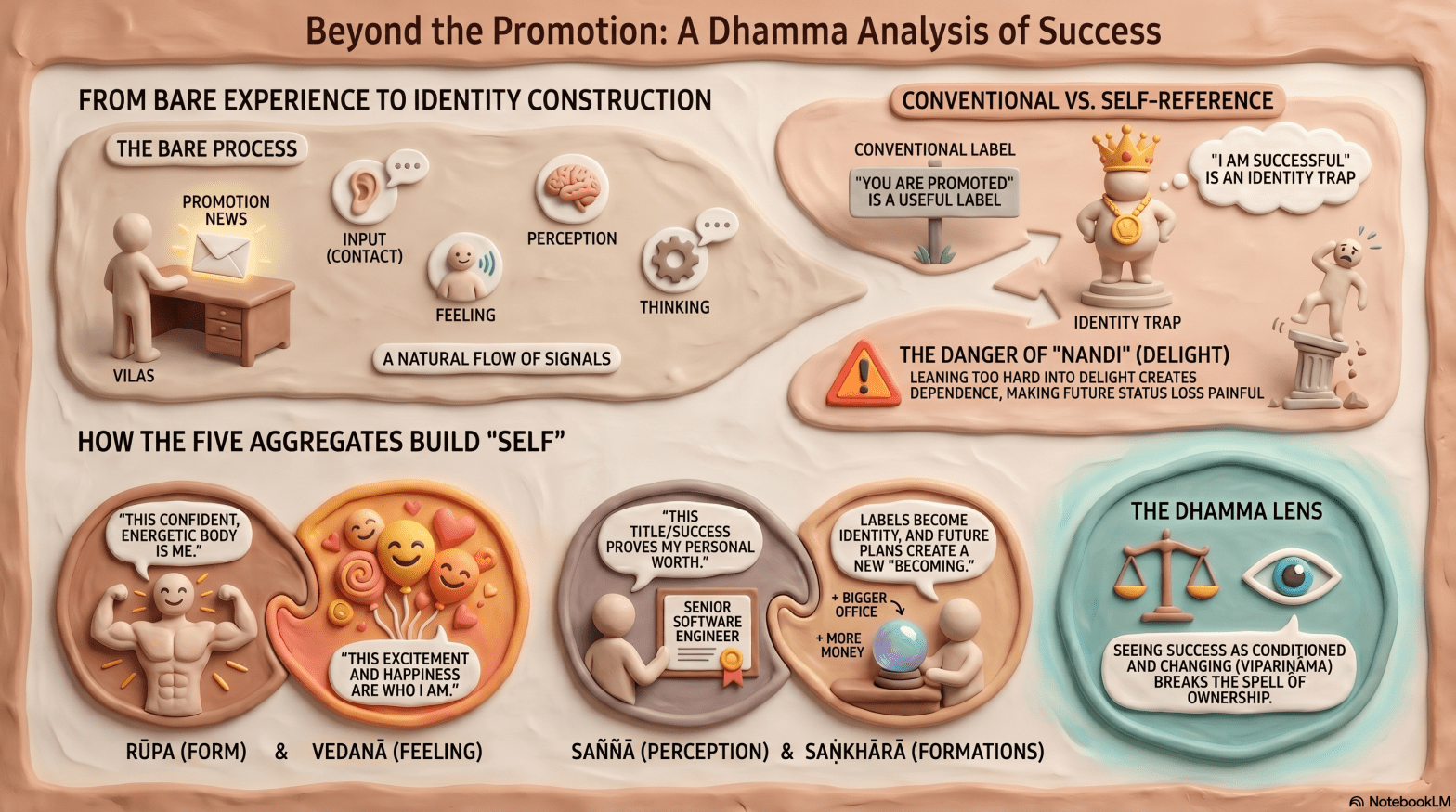
Let us take a practical example of promotion where the self gets constructed. This self is actually just the 6 senses as in āyatana which means – the sense door viewed as a base or field in the arising of contact and experience. In this article, we understand through practical example on how a normalContinue reading “The Dhamma of Promotion: Deconstructing the Successful Self”
Category Archives: Very Important
The Root-Pattern of Bondage – Self Construction

Higher Morality

Why do I follow Buddha only?

This is the most intriguing question of all in terms of why I follow the Buddha eventhough I’m from a different belief system or say a religion. There should be some rationality in following the Buddha and here are the strong reasons why I follow Buddha, Dhamma and Sangha. 1. Rational thinking: I’m not aContinue reading “Why do I follow Buddha only?”
The Threefold Training for Discipline and Wisdom
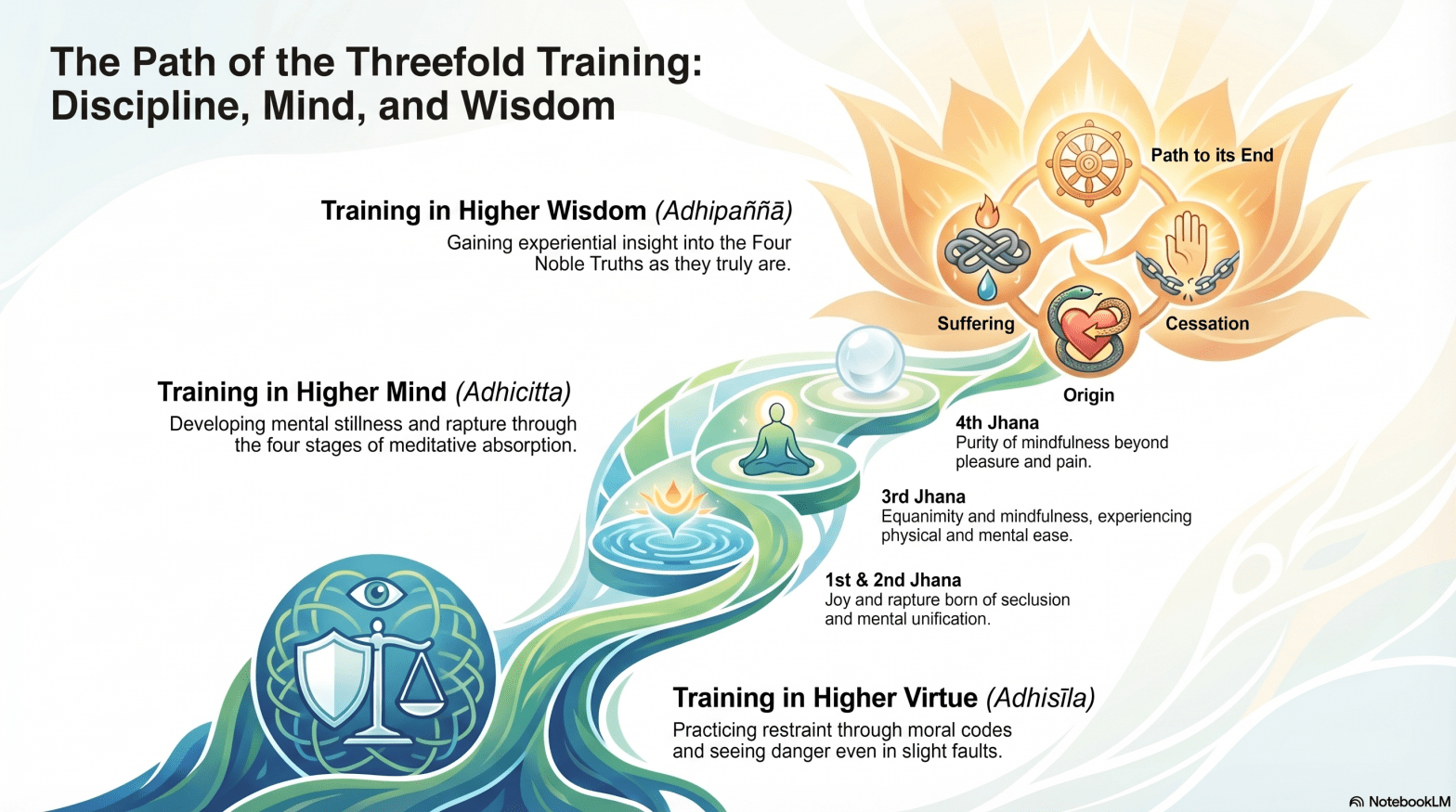
The relationship between discipline, meditation, and wisdom forms the core of the Buddha “Threefold Training” (tisso sikkhā). They act as a sequential, interdependent path: discipline provides the moral foundation necessary to purify one’s actions, which clears the way for the mind to seclude itself and achieve deep meditation, and this concentrated meditative mind ultimately allowsContinue reading “The Threefold Training for Discipline and Wisdom”
🐒 The Simile of the Monkey and the Fleeting Mind

SN12.61 – AssutavāsuttaSummaryThis sutta highlights the instability of the human mind by comparing it to a monkey swinging through trees, constantly grabbing and releasing branches. While the physical body possesses a visible, lasting form that persists for decades, the consciousness and intellect change incessantly from one moment to the next. The text warns that peopleContinue reading “🐒 The Simile of the Monkey and the Fleeting Mind”
Six Pillars of Impossibility for Sotapanna
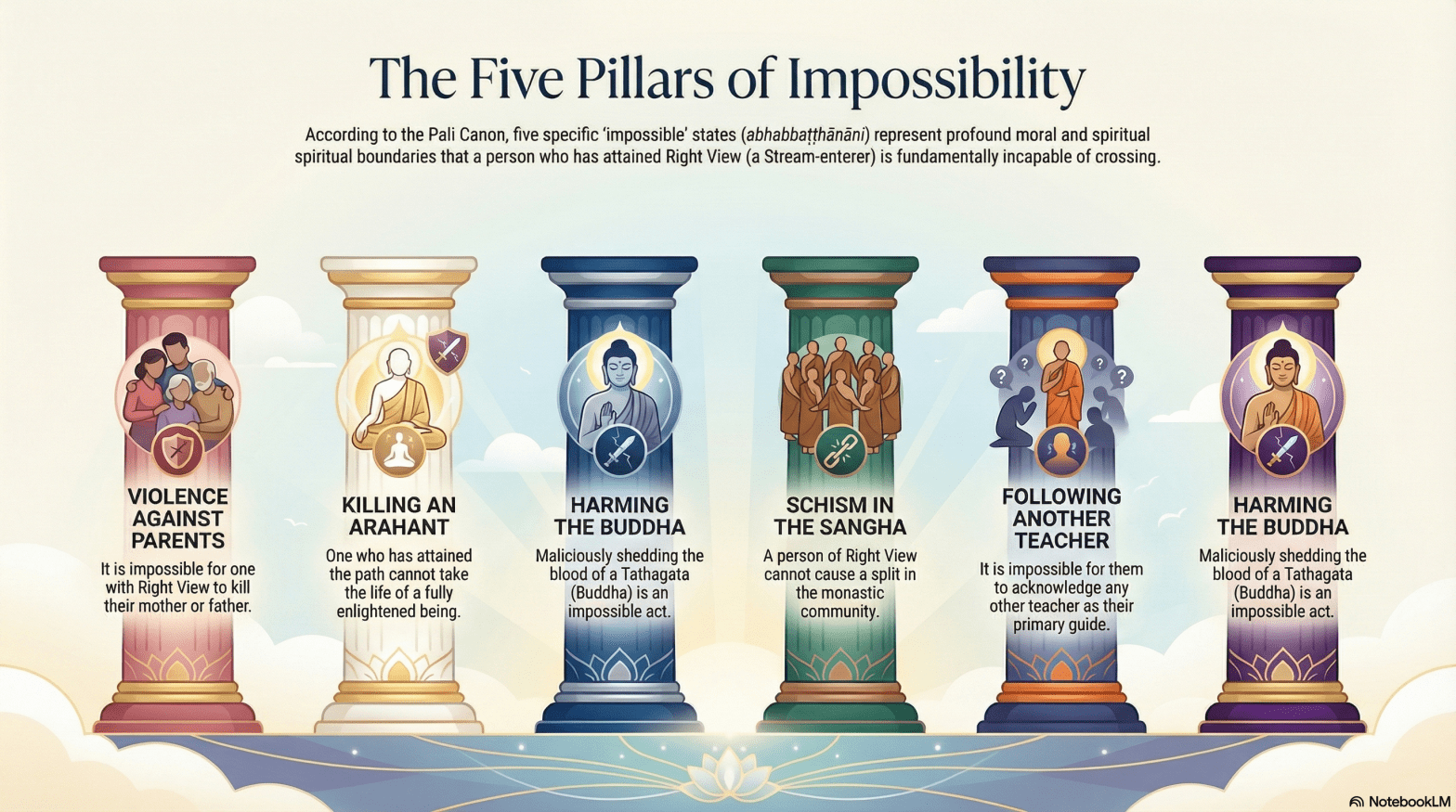
Based on this sutta, a person with ‘right view’ (referred to in the Pali text as a diṭṭhisampanno puggalo, meaning a person accomplished in view) is defined by six specific actions that they are completely incapable of performing.These six impossible actions (abhabbaṭṭhānāni) are:1. Depriving their mother of life (mātaraṁ jīvitā voropetuṁ).2. Depriving their father ofContinue reading “Six Pillars of Impossibility for Sotapanna”
The Practice for One in Training

The steps for a disciple in training, as taught by Venerable Ananda at the Buddha’s request, are divided into two main categories: Conduct (caraṇa) and Knowledge (vijjā).1. The Foundation of Conduct (Caraṇa)The training begins with developing a strong foundation in behavior and mental discipline:Accomplishment in Virtue: The disciple lives restrained by the moral codes (Patimokkha)Continue reading “The Practice for One in Training”
Nibbedhika Sutta: Penetrative Exposition of the Dhamma
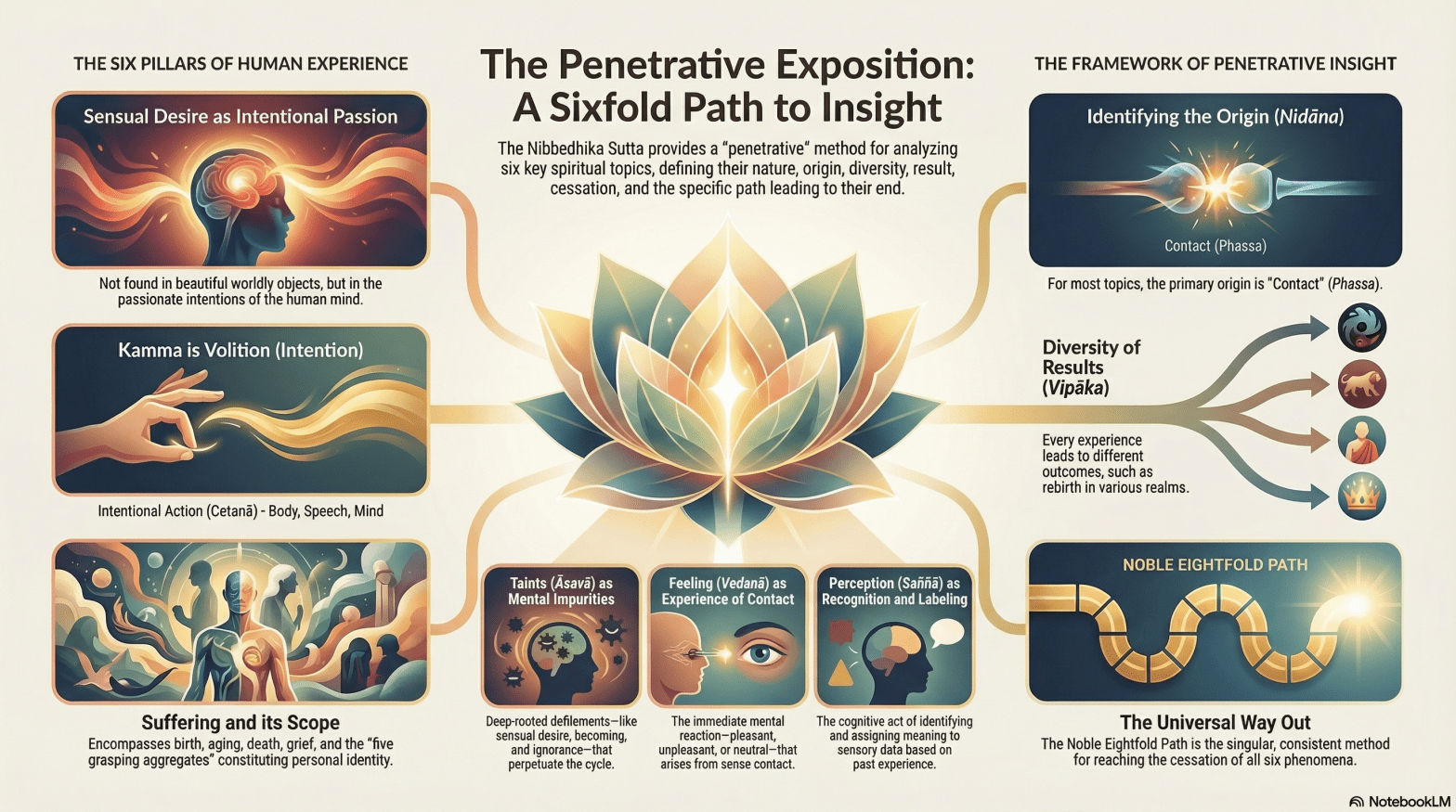
The “Nibbedhika Sutta” presents a systematic framework known as the penetrative exposition of the Dhamma (nibbedhikapariyāyo dhammapariyāyo). It outlines six core phenomena that a practitioner must deeply understand: sensuality, feelings, perceptions, taints, kamma, and suffering.To achieve a penetrative understanding, the text instructs the practitioner to analyze six specific aspects for each of these phenomena: theContinue reading “Nibbedhika Sutta: Penetrative Exposition of the Dhamma”
Practice of Samathā and Vipassanā

Search Previous Next Clear Within the Majjhima Nikāya, two discourses—Dīghanakha Sutta and Mahāsakuludāyi Sutta—offer a particularly insightful foundation for understanding the integrated practice of Samathā (calming) and Vipassanā (insight).A close examination of a key passage found within these suttas reveals a profound framework that can be directly applied to practice. Rather than treating calm andContinue reading “Practice of Samathā and Vipassanā”