
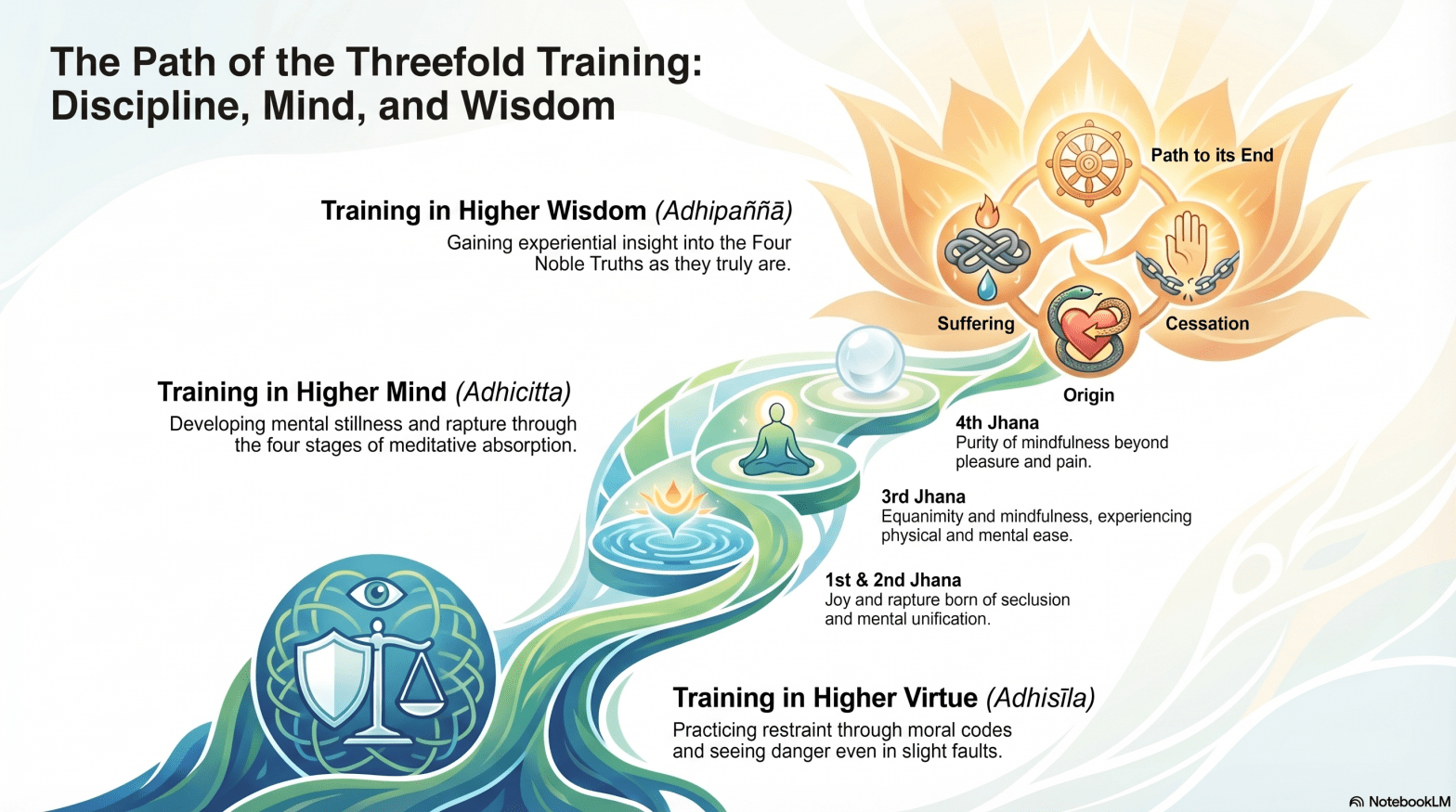
The relationship between discipline, meditation, and wisdom forms the core of the Buddha “Threefold Training” (tisso sikkhā). They act as a sequential, interdependent path: discipline provides the moral foundation necessary to purify one’s actions, which clears the way for the mind to seclude itself and achieve deep meditation, and this concentrated meditative mind ultimately allowsContinue reading “The Threefold Training for Discipline and Wisdom”
Author Archives: Spiritual Essence
🐒 The Simile of the Monkey and the Fleeting Mind

SN12.61 – AssutavāsuttaSummaryThis sutta highlights the instability of the human mind by comparing it to a monkey swinging through trees, constantly grabbing and releasing branches. While the physical body possesses a visible, lasting form that persists for decades, the consciousness and intellect change incessantly from one moment to the next. The text warns that peopleContinue reading “🐒 The Simile of the Monkey and the Fleeting Mind”
Six Pillars of Impossibility for Sotapanna
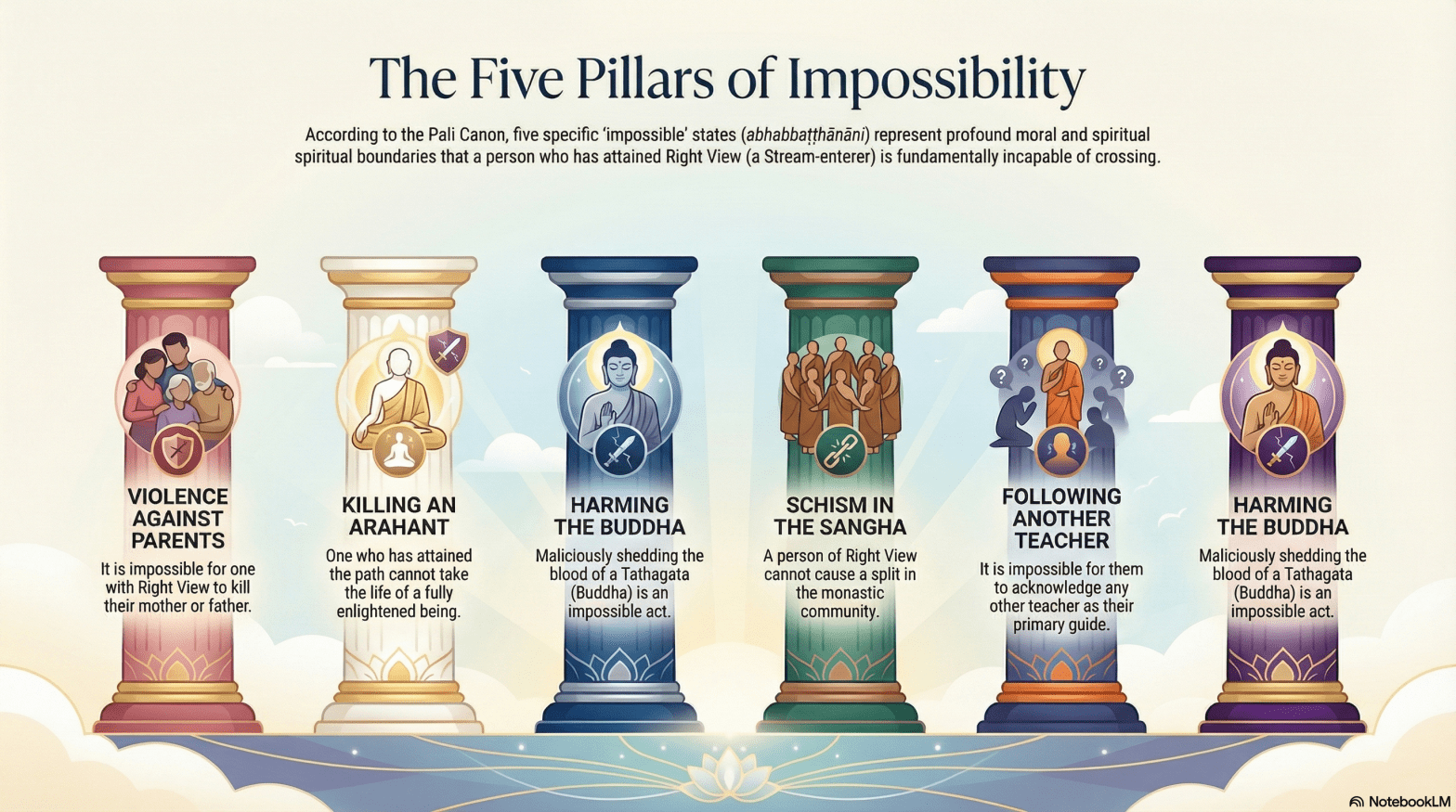
Based on this sutta, a person with ‘right view’ (referred to in the Pali text as a diṭṭhisampanno puggalo, meaning a person accomplished in view) is defined by six specific actions that they are completely incapable of performing.These six impossible actions (abhabbaṭṭhānāni) are:1. Depriving their mother of life (mātaraṁ jīvitā voropetuṁ).2. Depriving their father ofContinue reading “Six Pillars of Impossibility for Sotapanna”
The Practice for One in Training

The steps for a disciple in training, as taught by Venerable Ananda at the Buddha’s request, are divided into two main categories: Conduct (caraṇa) and Knowledge (vijjā).1. The Foundation of Conduct (Caraṇa)The training begins with developing a strong foundation in behavior and mental discipline:Accomplishment in Virtue: The disciple lives restrained by the moral codes (Patimokkha)Continue reading “The Practice for One in Training”
Nibbedhika Sutta: Penetrative Exposition of the Dhamma
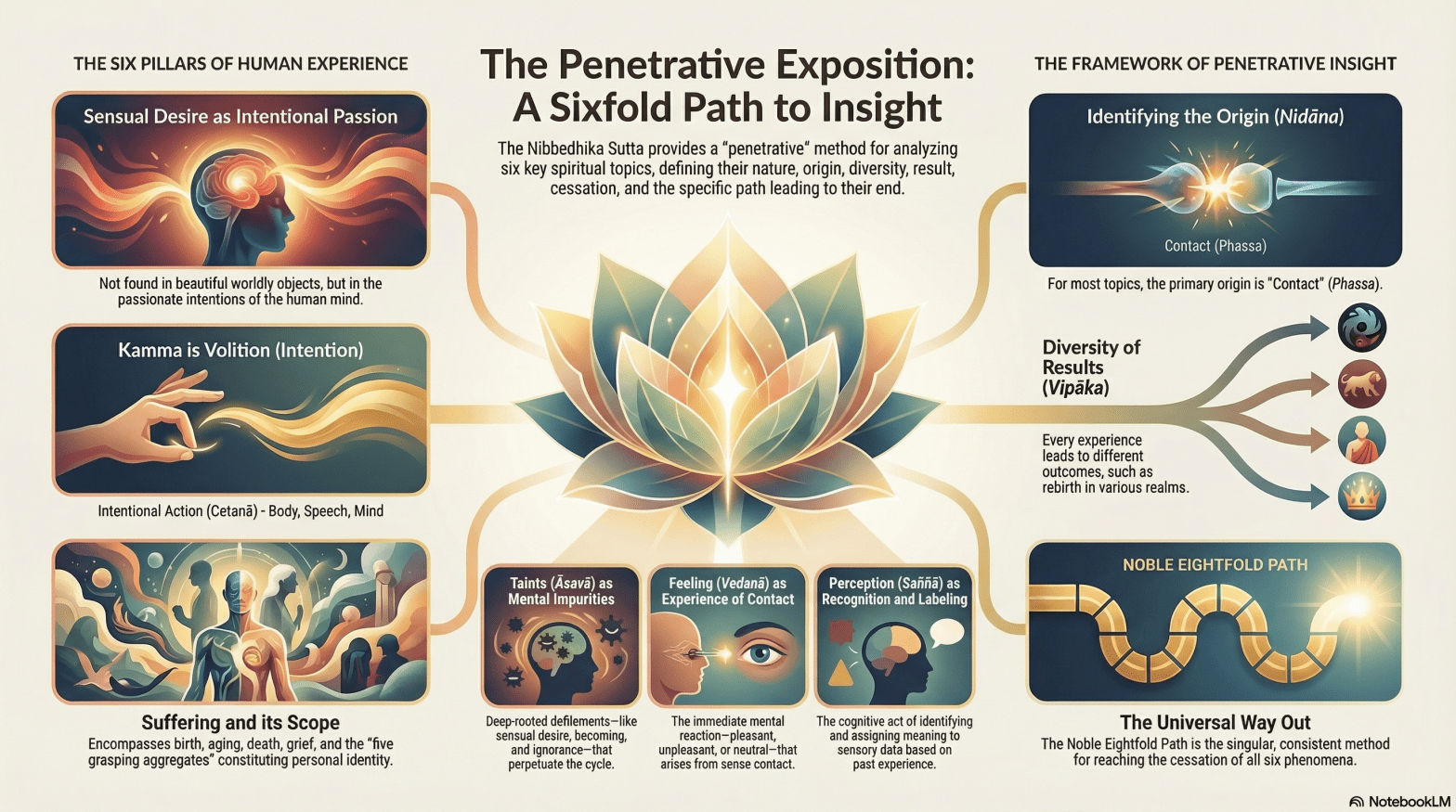
The “Nibbedhika Sutta” presents a systematic framework known as the penetrative exposition of the Dhamma (nibbedhikapariyāyo dhammapariyāyo). It outlines six core phenomena that a practitioner must deeply understand: sensuality, feelings, perceptions, taints, kamma, and suffering.To achieve a penetrative understanding, the text instructs the practitioner to analyze six specific aspects for each of these phenomena: theContinue reading “Nibbedhika Sutta: Penetrative Exposition of the Dhamma”
Practice of Samathā and Vipassanā

Search Previous Next Clear Within the Majjhima Nikāya, two discourses—Dīghanakha Sutta and Mahāsakuludāyi Sutta—offer a particularly insightful foundation for understanding the integrated practice of Samathā (calming) and Vipassanā (insight).A close examination of a key passage found within these suttas reveals a profound framework that can be directly applied to practice. Rather than treating calm andContinue reading “Practice of Samathā and Vipassanā”
What should I practice and preach?
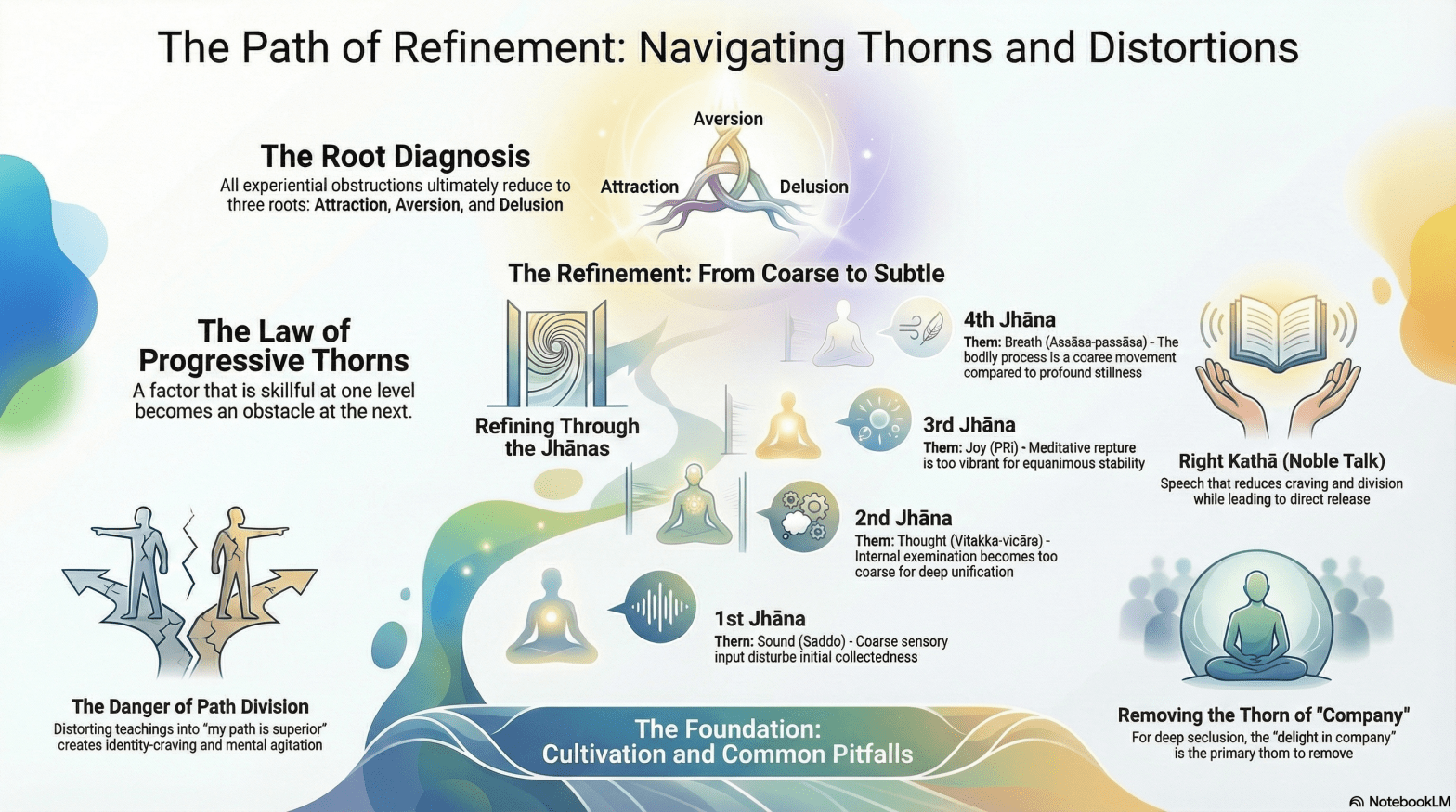
During my understanding of dhamma, found that there are two paths to perfection. One through saddha wherein one starts to do general meditation of any traditions and mainly watches the breath and another way is pañña or wisdom where you investigate into dhamma. Actually, we would require both samathā and vipassanā to develop the mindContinue reading “What should I practice and preach?”
Hindrances removal

Let us look at how to remove the five hindrances before establishing bhavana of being with the breath all eighteen hours or more Hindrance Name (Pali) English Translation Mental Effect/Obstruction Manifestation in Practice Prescribed Antidote Resulting Purified State abhijjhā Covetousness, longing, grasping desire Makes the mind sticky, outward-leaning, and adhesive; creates projection and a senseContinue reading “Hindrances removal”
What is Jhāna?
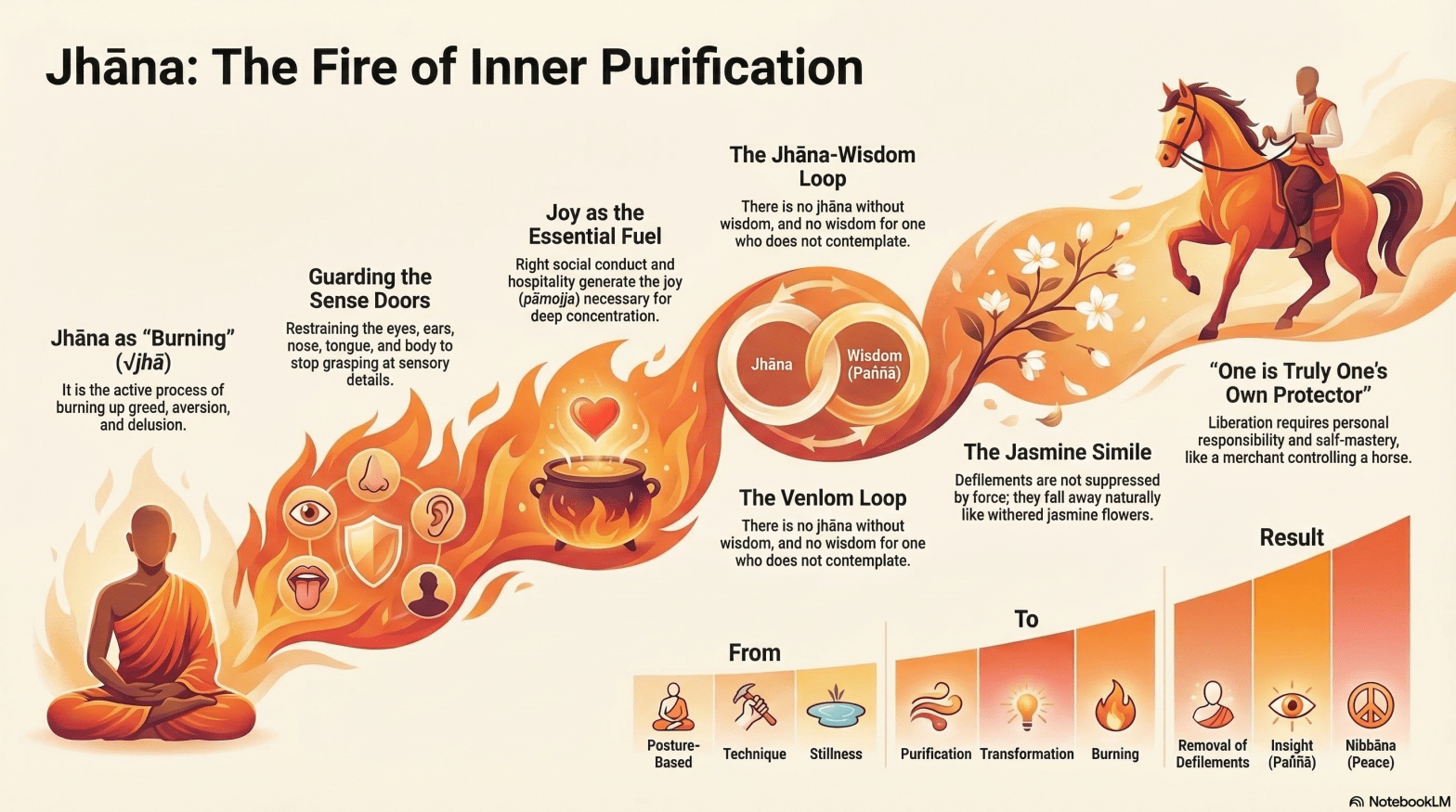
In contemporary understanding, jhāna is often interpreted as “meditation” or “deep contemplation,” typically associated with sitting on a cushion for long hours in stillness. However, this popular notion only scratches the surface and may even obscure its deeper meaning as taught in the Buddha’s Dhamma. To uncover the true significance of jhāna, we must returnContinue reading “What is Jhāna?”
Should you close eyes for meditation?
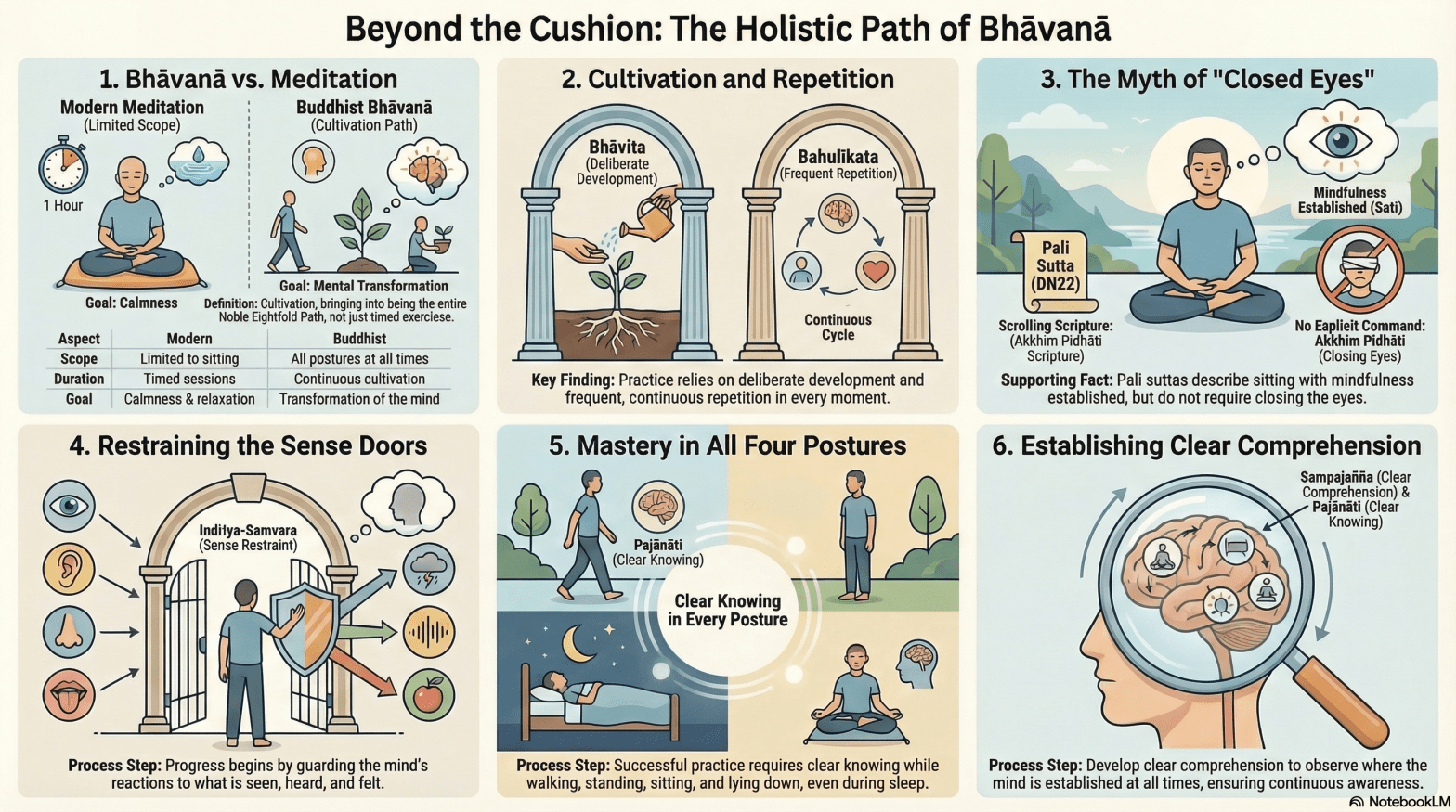
Did Buddha Teach “Closed-Eyes Meditation”?Today, the word meditation has come to evoke a very specific image in the minds of many people. We immediately think of a person sitting cross-legged on a cushion, setting a timer for one hour or more, closing the eyes, and focusing exclusively on the breath at the nostrils. If theContinue reading “Should you close eyes for meditation?”