

1.0 Mātikā What is Mātikā?The Pāli term “mātikā” (also spelled “mātikā”) has below broad meanings depending upon where and how it is used. They are: Below section is on 73 kinds of knowledge and wisdom one can get and hence named as Ñāṇakathā Imāni tesattati ñāṇāni. Imesaṁ tesattatiyā ñāṇānaṁ sattasaṭṭhi ñāṇāni sāvakasādhāraṇāni; cha ñāṇāni asādhāraṇāni sāvakehi.Continue reading “Mahāvagga – Ñāṇakathā”
Author Archives: Spiritual Essence
All about SIX Consciousness

With regard to the causes of mind and mental properties, three things are needed for the arising of Resultants; a past kamma, a basis to depend upon, and an object. The first is like the seed of the tree, the basis is like the earth, and the object is like the rain- water. Two things areContinue reading “All about SIX Consciousness”
Purification of Mind
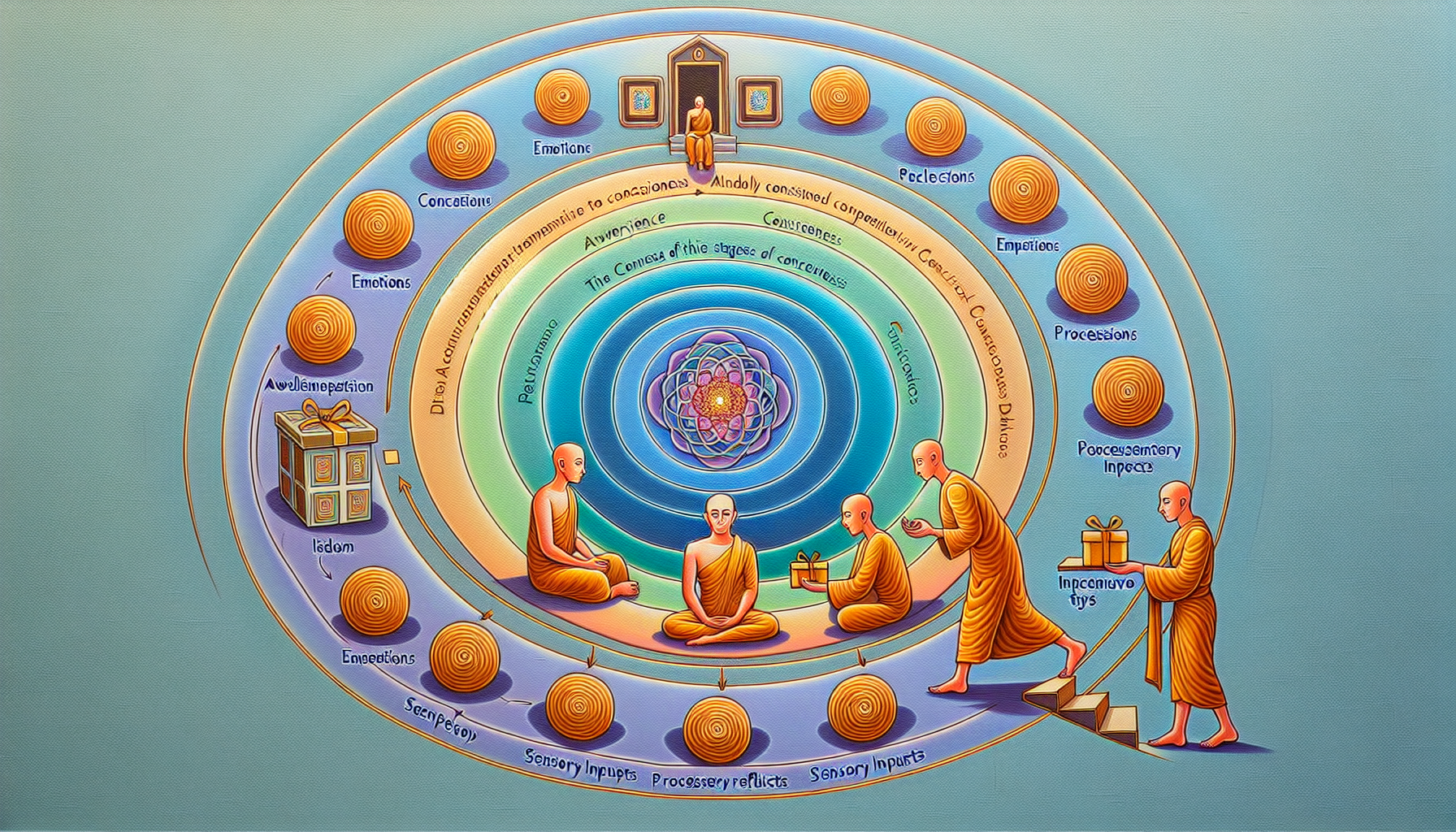
Before we start topic of purification of mind, let us understand the nine stages of consciousness and how the pure light is distorted with colour due to wrong feeling and perception Let’s take an example of a person gifting a friend something valuable to understand these nine stages of consciousness: These 9 stages of consciousnessContinue reading “Purification of Mind”
Understanding Khandhavibhaṅga

Rūpavibhatti 2.2.3.1. Ekakaniddesa Sabbaṁ rūpaṁ:na hetumeva: No root conditionahetukameva: Not related to root conditionhetuvippayuttameva: disconnected with root-condition sappaccayameva: just a dependent originationsaṅkhatameva: conditioned – (Arising, passing away, alteration while staying) [uppādo paññāyati, vayo paññāyati, ṭhitassa aññathattaṃ paññāyati]rūpameva: just the rūpalokiyameva: relating to the world (created and perceived out of 5 senses)sāsavameva: with fermentationssaññojaniyameva: with fetters ; san + yoContinue reading “Understanding Khandhavibhaṅga”
Retreat practice
Welcome to the dhamma retreat !!! It does not matter we are meeting face to face or online. After we have understood Buddha, Dhamma and Sangha and established faith in that, we should undertake to discipline the mind as indicated below.धम्म रिट्रीट में आपका स्वागत है !!!इससे कोई फर्क नहीं पड़ता कि हम आमने-सामने मिलContinue reading “Retreat practice”
Meditation – Step by Step
by anagārika Vilas Kadival
Ready for Retreat?
Expectations in a SEVEN / FOURTEEN / TWENTY ONE day retreat ONLINE and OFFLINE at a location Should have basic knowledge and understanding of Buddha Dhamma and not the tradition as in – Burmese, Sri Lankan, Thai, Indian, Tibetan etc., When we meet up, should not introduce ourselves as followers of a particular tradition eventhough,Continue reading “Ready for Retreat?”
Sutta study by types

Jhānavibhaṅga

Let us start our journey into Jhānavibhaṅga which is a key aspect to understand how to do Jhānas effectively. 1.Suttantabhājanīya Idha bhikkhu pātimokkhasaṁvarasaṁvuto viharati, ācāragocarasampanno, aṇumattesu vajjesu bhayadassāvī, samādāya sikkhati sikkhāpadesu indriyesu guttadvāro bhojane mattaññū pubbarattāpararattaṁ jāgariyānuyogamanuyutto sātaccaṁ nepakkaṁ bodhipakkhikānaṁ dhammānaṁ bhāvanānuyogamanuyutto. Herein, a bhikkhu dwells directed by monastic rules, endowed with appropriate attitude and behaviour, fearing even an minutest faults, observing (the precepts) he trains himself in the precepts, guarding theContinue reading “Jhānavibhaṅga”
Four types of Puggala
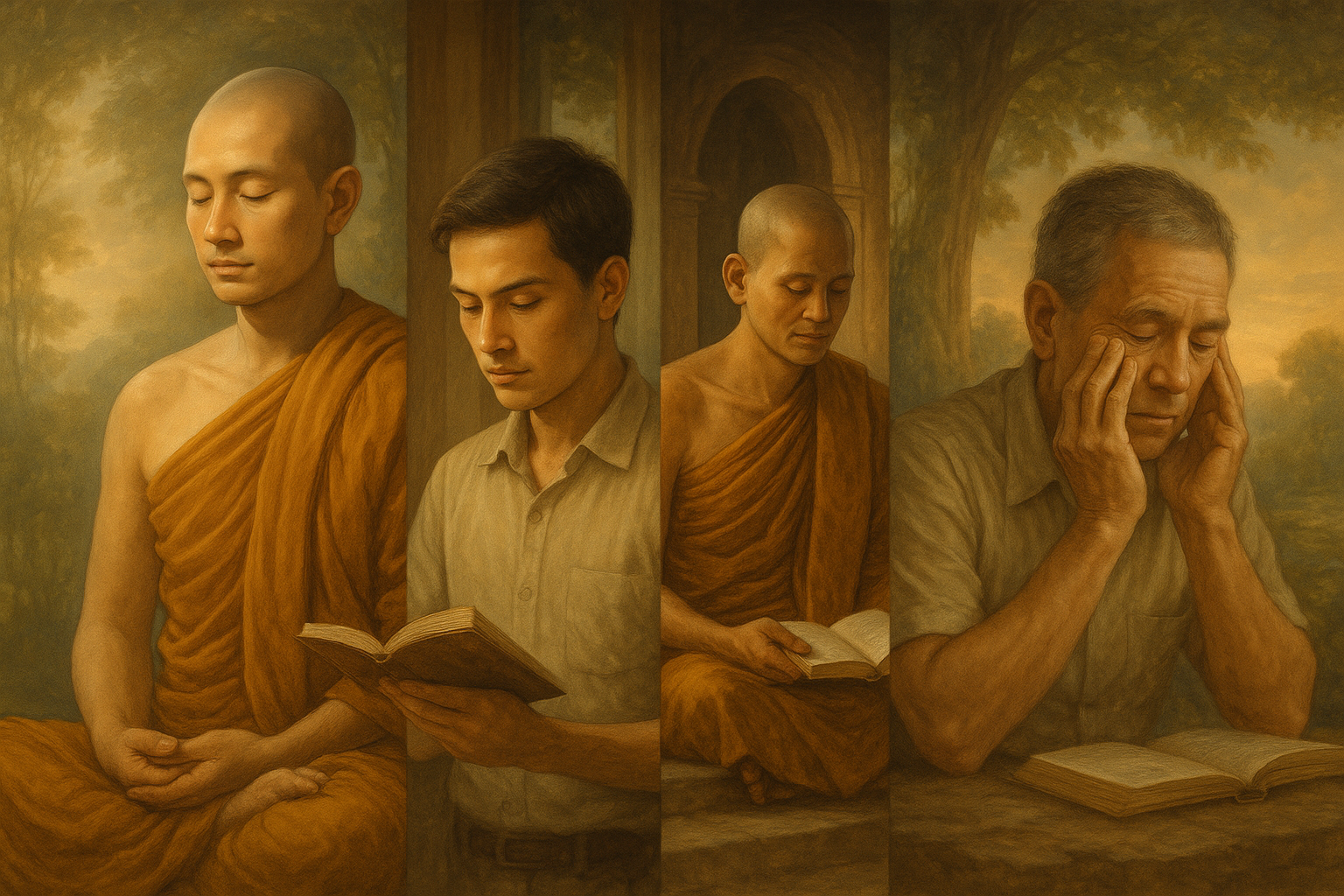
Before we take deeper dhamma subjects and penetrate which includes moving from a normal worldling to Arahat, one should check what is the level of understanding in terms of faster progress, slow progress, difficult progress and no progress. These are the four type of individuals indicated in Nayasamuṭṭhāna. In Ugghaṭitaññū sutta(AN4.133), Buddha explains on theseContinue reading “Four types of Puggala”