
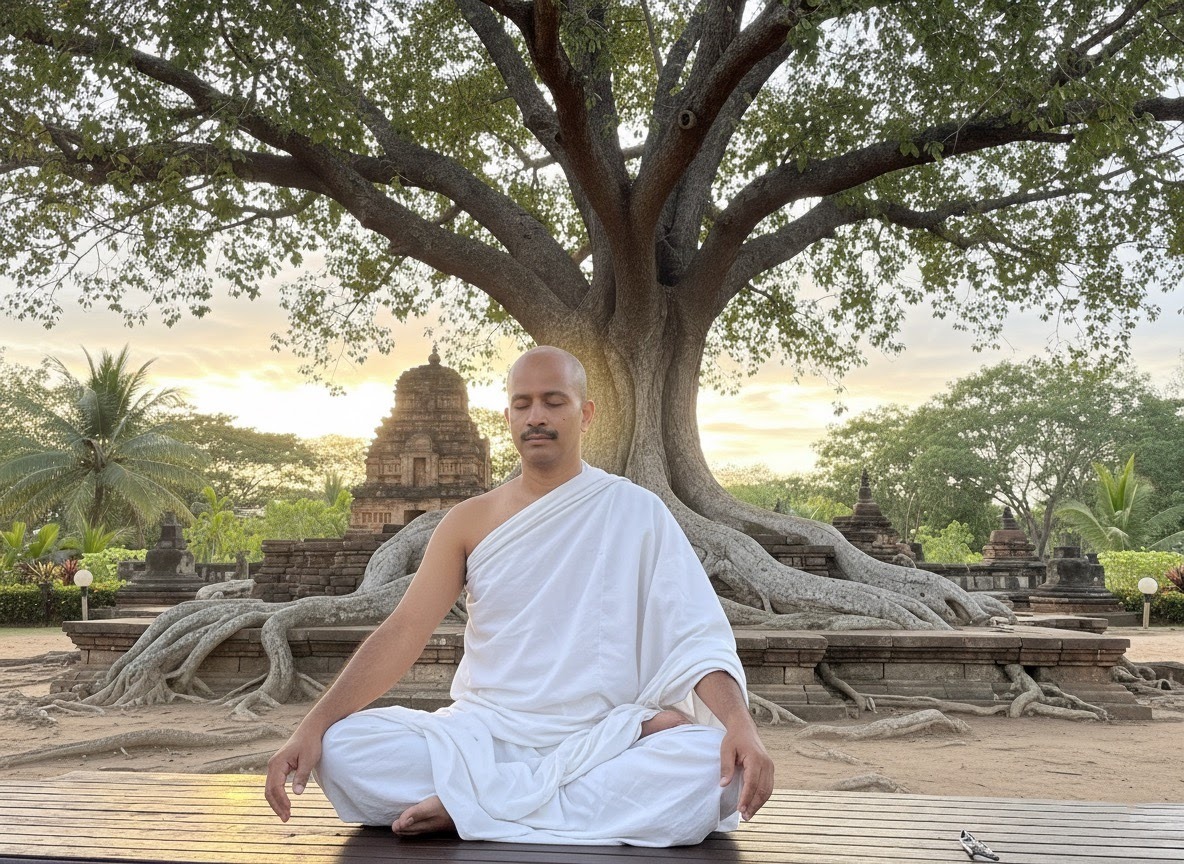
Welcome to the dhamma retreat !!!

It does not matter we are meeting face to face or online. After we have understood Buddha, Dhamma and Sangha and established faith in that, we should undertake to discipline the mind as indicated below.
धम्म रिट्रीट में आपका स्वागत है !!!
इससे कोई फर्क नहीं पड़ता कि हम आमने-सामने मिल रहे हैं या ऑनलाइन। बुद्ध, धम्म और संघ को समझने और उस पर विश्वास स्थापित करने के बाद, हमें नीचे बताए अनुसार मन को अनुशासित करने का कार्य करना चाहिए।
These steps are applicable for in-person or online session
ये चरण व्यक्तिगत या ऑनलाइन सत्र के लिए लागू हैं
4 am or 4:30 am – Arise and check the state of the mind.
Recite Buddha, Dhamma and Sangha Vandana along with Jinapanjara sutta in case you have any fear or not able to establish the mind with triple gem.
Also, take the five precepts in your mind and from that time, ensure that you are not breaking any of them for the whole day. If you are breaking it, take a notebook and keep writing the one you broke and just reflect upon it in the night before you sleep and make a mental note that you would not do it henceforth.
उठो और मन की स्थिति जांचो।
यदि आपको कोई भय है या मन को त्रिरत्न से स्थापित करने में असमर्थ हैं तो जिनपंजर सुत्त के साथ मानसिक रूप से बुद्ध, धम्म और संघ वंदना का पाठ करें।
इसके अलावा, पांच उपदेशों को अपने दिमाग में रखें और उस समय से यह सुनिश्चित करें कि आप पूरे दिन उनमें से किसी को भी नहीं तोड़ रहे हैं। यदि आप इसे तोड़ रहे हैं, तो एक नोटबुक लें और जो आपने तोड़ा है उसे लिखते रहें और रात को सोने से पहले उस पर विचार करें और मानसिक रूप से नोट कर लें कि अब से आप ऐसा नहीं करेंगे।
Once done, head to the bathroom with focus on breath – arising and passing away.
While brushing the teeth, feel the brush touching the teeth – observe pathavi, apo, tejo, vayo and akasa.
एक बार हो जाने पर, सांस – उठती और जाती – पर ध्यान केंद्रित करते हुए बाथरूम की ओर जाएं।
दांतों को ब्रश करते समय ब्रश को दांतों को छूते हुए महसूस करें। पथवी, जल, तेजो, वायु और आकाश का निरीक्षण करें
Drink water in order to clear the stomach. While doing so, observe all the dhatu and what is happening in the stomach region. Drink hot water for elimination of feces.
पेट साफ करने के लिए पानी पिएं. ऐसा करते समय सभी धातुओं और पेट क्षेत्र में क्या हो रहा है, इसका निरीक्षण करें। मल निष्कासन के लिए गरम पानी पियें।
While in toilet, watch both urine and feces. After completion of the above activities, one can see repetition everyday which is samsara. Consider them as “not yours” “does not belong to me” and “cannot be called as my personality”
शौचालय में रहते हुए मूत्र और मल दोनों पर नजर रखें। उपरोक्त गतिविधियों के पूरा होने के बाद प्रतिदिन पुनरावृत्ति देखी जा सकती है जो संसार है। इन्हें “तेरा नहीं” “मेरा नहीं” और “मेरी हस्ती नहीं कहा जा सकता” समझो
Make sure you make a mental note on the same
सुनिश्चित करें कि आप इस पर एक मानसिक नोट बना लें
4:50 am – After finishing the above activities, proceed to warm up the body by stretching and doing some yoga postures or just have some walking in the room itself. While doing it, one should be focussed on the body movements as “third party watching” and on the breath as much as one could do it. This will enhance samadhi state.
If you are the retreat outside the home, while walking, to the dhamma hall from your room, observe each of the body parts arising and passing away including the breath. Consider it as “not mine”
उपरोक्त गतिविधियों को पूरा करने के बाद, स्ट्रेचिंग और कुछ योग आसन करके शरीर को गर्म करने के लिए आगे बढ़ें या कमरे में ही कुछ देर टहलें।
इसे करते समय, किसी को “तीसरे पक्ष की निगरानी” के रूप में शरीर की गतिविधियों पर और जितना हो सके सांस पर ध्यान केंद्रित करना चाहिए।इससे समाधि अवस्था में वृद्धि होगी.
यदि आप घर से बाहर एकांतवास में हैं, तो अपने कमरे से धम्म हॉल की ओर चलते समय, श्वास सहित शरीर के प्रत्येक अंग को उठते और जाते हुए देखें। इसे “मेरा नहीं” समझो
5:00 am to 7:00 am – Start by focusing on breath and bring in awareness towards the hindrances as well as stopping mind from going towards immoral deeds (akusala kamma). It would take an hour or more to establish it and once done, proceed towards investigating the 5 aggregates (khandha) and then move to jhanas which is important at this time.
सांस पर ध्यान केंद्रित करके शुरुआत करें और बाधाओं के प्रति जागरूकता लाएं और साथ ही मन को अनैतिक कार्यों (अकुसल कम्म) की ओर जाने से रोकें। इसे स्थापित करने में एक घंटे या उससे अधिक का समय लगेगा और एक बार ऐसा हो जाने पर, 5 समुच्चय (खंड) की जांच की ओर आगे बढ़ें और फिर झानों की ओर बढ़ें जो इस समय महत्वपूर्ण है।
7:00 to 7:45 am – Take bath and head for the breakfast. While taking bath, ensure that you observe each body part and do 32 body part contemplation and as well as water falling on the body, see how the consciousness arise and pass away.
स्नान करें और नाश्ते के लिए निकलें।
स्नान करते समय यह सुनिश्चित करें कि आप शरीर के प्रत्येक अंग का निरीक्षण करें और शरीर के 32 अंगों का चिंतन करें और साथ ही शरीर पर गिरते पानी को देखें कि चेतना कैसे उत्पन्न होती है और समाप्त हो जाती है।
7:45 am to 8:45 am – Breakfast – While having the breakfast, observe how the food gets eliminated from the plate and how it is filled in the stomach. Consider them as replacement of four dhatu in the body and nothing else. Consciousness will provide you with taste and once the food is gulped inside, the conscious experience of taste vanishes that instant
नाश्ता करते समय देखें कि खाना प्लेट से कैसे निकलता है और पेट में कैसे भरता है।
इन्हें शरीर में चार धातुओं का प्रतिस्थापन ही समझें और कुछ नहीं।
चेतना या विज्ञान आपको स्वाद प्रदान करेगा और एक बार जब भोजन अंदर चला जाता है, तो स्वाद का सचेत अनुभव उसी क्षण गायब हो जाता है।
8:45 am to 10 am – Relaxation at your room by reflecting on five khandas based upon what we have learned. Washing of clothes, cleaning of the rooms and or toilets, table, sweeping the floors etc., or walking meditation. In all of these activities, maintain sampananya or awareness of arising and passing away. Don’t forget to keep track of the breath in each of these activities.
If you don’t have any work to be done, take a stroll in the room itself with focus on the moving body parts and breath
हमने जो सीखा है उसके आधार पर पाँच खंडों पर चिंतन करके अपने कमरे में आराम करें।
कपड़े धोना, कमरों और शौचालयों, टेबल की सफाई, फर्श आदि की सफाई करना, या पैदल ध्यान करना।
इन सभी गतिविधियों में, संपजन्य या उत्पन्न होने और समाप्त होने के बारे में जागरूकता बनाए रखें।
इनमें से प्रत्येक गतिविधि में सांसों पर नज़र रखना न भूलें।
यदि आपके पास करने के लिए कोई काम नहीं है, तो शरीर के हिलते अंगों और सांसों पर ध्यान केंद्रित करते हुए कमरे में ही टहलें।
10:00 am to 11:30 am (at the hall) – Vipassana on five khanda using anicca, dukkha and anatta while watching the breath and 32 body parts and guarding the sense doors as taught to you before the start of the session.
अनिच्च, दुक्ख और अनत्ता का उपयोग करके पांच खंडों पर विपश्यना। जैसा कि सत्र शुरू होने से पहले आपको सिखाया गया था, सांस और शरीर के 32 अंगों को देखना और इंद्रिय द्वारों की रक्षा करना। यहां, अनत्ता लक्खन सुट्टा बहुत मददगार होगा
11:30 am to 12:30 pm (at the hall) – Q&A session and individual meeting in case there are obstacles that require removal. If no questions, then we can continue on vipassana and guarding the sense doors of sight, sound, taste, touch, smell and mental concepts
यदि कोई बाधा है जिसे हटाने की आवश्यकता है तो प्रश्नोत्तर सत्र और व्यक्तिगत बैठक। यदि कोई प्रश्न नहीं है, तो हम विपश्यना जारी रख सकते हैं और दृष्टि, ध्वनि, स्वाद, स्पर्श, गंध और मानसिक अवधारणाओं के इंद्रिय द्वारों की रक्षा कर सकते हैं।
12:30 pm to 1:30 pm – Lunch
1:30 pm to 3:00 pm – walking meditation – by observing the moving parts and breath as “third party” or “witness” attitude. While at lunch, observe similar to breakfast session we did. After lunch, do light walking meditation in order to generate energy for sitting meditation later which helps in getting the free flow.
दोपहर का भोजन और उसके बाद चलने वाले अंगों और सांसों को “तीसरे पक्ष” या “साक्षी” भाव से देखते हुए पैदल ध्यान करें। दोपहर के भोजन के समय, नाश्ते के सत्र के समान ही निरीक्षण करें जो हमने किया था। दोपहर के भोजन के बाद, बाद में बैठकर ध्यान करने के लिए ऊर्जा उत्पन्न करने के लिए हल्का पैदल ध्यान करें।
3:00 pm to 4 pm – Sitting meditation session: Samatha, Vipassana and Anupassana. Samatha on breath arising and passing away, Vipassana and Anupassana on dhatu and ayatana
4:00 pm to 5 pm – Tea break
5:00 pm to 6:00 pm – After tea break, let us start on practice of jhāna to attain rupa and if possible on ārupa.
चाय के विश्राम के बाद, आइए रूपा प्राप्त करने के लिए झना का अभ्यास शुरू करें और यदि संभव हो तो अरूपा पर।
6:00 pm to 7:30 pm – Self study of the below sutta and reflecting on them on your own or we can do discussion on the sutta to understand it correctly.
नीचे दिए गए सुत्त का स्वयं अध्ययन करें और उन पर स्वयं चिंतन करें या हम इसे सही ढंग से समझने के लिए सुत्त पर चर्चा कर सकते हैं।
7:45 pm – 8:30 pm – Dinner and while at dinner, repeat what you did in terms of mindfulness for breakfast and lunch
रात का खाना और रात के खाने के दौरान, नाश्ते और दोपहर के भोजन के लिए सचेतनता के संदर्भ में आपने जो किया उसे दोहराएं
8:30 pm to 10 pm – Sutta exposition followed by Q&A session for the day and plan for the next day
सुत्त दर्शन के बाद दिन के लिए प्रश्नोत्तर सत्र और अगले दिन की योजना बनाएं
10:00 pm – Lights off with mental prayer of Jinapanjara sutta or Karaniyametta sutta or any other chanting of your choice and watching the breath till you get deep sleep. Ensure that the dreams are not coming to you which shows low progress and hence chanting before sleeping is good.
जिनपंजरा सुत्त या करणीयमेत्ता सुत्त या अपनी पसंद के किसी अन्य मंत्र की मानसिक प्रार्थना के साथ रोशनी बंद करें और गहरी नींद आने तक सांस को देखते रहें। सुनिश्चित करें कि आपको ऐसे सपने न आएं जो कम प्रगति दर्शाते हों और इसलिए सोने से पहले जप करना अच्छा है।
- Types of Dana
- Which Sutta is right for me?
- Four types of Puggala
- Sutta for retreat
- Sutta for wise reflection
- Some more sutta
- Recitals
- Summary
1. Dhamma Dana: This is the gift of the Dhamma, which refers to teaching, sharing, or spreading spiritual knowledge, wisdom, or the teachings of the Buddha. It is considered the highest form of giving because it contributes to the spiritual liberation of others.
2. Dhana Dana: This refers to the donation of wealth or material resources. It is the act of giving money or goods to support the needs of others, such as the poor, religious institutions, or charitable causes.
3. Kanchana Dana: Kanchana means “gold,” so Kanchana Dana is the donation of gold or other precious metals. This type of donation is often made to temples or for religious purposes.
4. Sampatti Dana: Sampatti refers to wealth or prosperity. Sampatti Dana is the act of giving one’s wealth or assets to benefit others, typically in a way that supports their well-being or spiritual growth.
5. Seva Dana: Seva means “service,” so Seva Dana is the gift of service. This involves dedicating time and effort to help others, whether through volunteering, performing community service, or assisting those in need.
6. Kaya Dana: Kaya refers to the body. Kaya Dana is the donation of physical labor or the use of one’s body to help others. It can include activities like building, carrying, or physically assisting others.
7. Gaha Dana: Gaha means “house” or “home.” Gaha Dana is the act of offering a place to stay or providing shelter to someone in need, such as a monk, traveler, or someone without a home.
8. Sayana Va Manca Dana: Sayana means “bed” or “resting place,” and Manca refers to a “seat” or “couch.” This type of donation involves giving beds, seating, or other furniture to those who need them, especially in monasteries or communal living spaces.
9. Chivara Dana: Chivara refers to the robes worn by Buddhist monks. Chivara Dana is the donation of robes or clothing to monks, which is a significant act of support for their monastic lifestyle.
10. Aahara Dana: Aahara means “food.” Aahara Dana is the donation of food to those in need, which can include feeding monks, the poor, or anyone in need of nourishment.
11. Gilana Bhessaja Dana: This refers to the donation of medicine or healthcare resources to those who are sick or in need of medical care.
12. Kutira Dana: Kutira means “hut” or “cottage.” Kutira Dana involves the donation of a small dwelling or shelter, typically for monks, hermits, or those in need of a place to live.
13. Bala Va Veerya Dana: Bala means “strength,” and Veerya refers to “energy” or “effort.” This type of donation is the giving of one’s strength or effort, often in the form of energetic support, encouragement, or the provision of resources that empower others.
14. Bhumi Dana: Bhumi means “land.” Bhumi Dana is the donation of land, which could be for building temples, schools, hospitals, or other community-beneficial purposes.
15. Sadhana Dana: Sadhana refers to spiritual practices or tools. Sadhana Dana involves donating items that aid in spiritual practices, such as prayer beads, scriptures, or other religious or meditative tools.
Before we start to. practice the sutta’s, one need to know what are sutta’s and how they are organised.
Each of the sutta is organised by Nikaya where in “NI” represent “nirukti“, in English would be etymology and “kaya” represents “body / collections”
Thus, Nikaya would mean collection of etymological sayings depending upon FIVE type of indriya and that represents FIVE kind of individuals or ariya-puggala.
Initially, everyone is just a normal worldling who has no contact with Buddha teachings and hence called as “puggala“. Once they understand the true meaning of the sutta by themselves, the person transforms into ariya-puggala.
There are 5 nikayas and they are:
1. Anguttara Nikaya for samādhi indriya types
2. Samyutta Nikaya for satī indiriya types
3. Majjhima Nikaya for viriya indriya types
4. Digha Nikaya for saddhā indriya types
5. Khuddaka Nikaya for pañña indriya types
Let’s elaborate further on this for practice. In general, the FIVE faculties are not developed in a normal worldling who has not come in contact with Buddha, Dhamma and Sangha and with those who have come in contact, would be having their faculties developed to various levels.
One need to check which level their faculties have been developed based upon the understanding on the sutta and that helps that “ariya puggala” to have experiences as per the sutta since those set of sutta are for that kind of mindset.
The 5 faculties are:
1. Saddha Indirya: A person starts with Buddha dhamma through listening or reading or someone motivating him to watch certain discourses or gatha or something related to Buddha which then creates faith in that person. If he is of that type, then Saddha Indriya is getting developed and hence should get a detailed exposition through Digha Nikaya.
Dhiga is pronounced as “dheega” which means long. This word is in all Indian languages which includes pali, prakrit and sanskrit. Apart from Indian languages, it is present in sinhala as well.
Thus, one who has started to develop faith in Buddha, Dhamma and Sangha should read and familiarize Digha Nikaya.
2. Sati Indriya: Taking the same way of how the person started to know about Buddha, Dhamma and Sangha, if he would be able to understand samyutta nikaya as his faculty is getting developed in awareness / mindfulness by listening to discourses / reading and he can be completely “absorbed” in it. Samyutta is from two words “sam + yutta” which can be interpreted as:
“sam or san” = in accordance to / being with
“yutta” = association
Thus, samyutta can be said to be “being with a particular state” which requires awareness/ mindfulness
3. Samādhi Indriya: One who is able to keep his mind focussed on a particular topic of dhamma (able to get into samādhi) with little effort required to understand deeper meanings of it, then Anguttara Nikaya would be most suitable for this kind of ariya-puggala.
Anguttara comes “anga” + “uttara” where “anga” means parts or components and “uttara” literally means towards north, which can be interpreted as superior or proficient.
Therefore, the suttas in the Anguttara Nikaya are focused on key aspects of dhamma and are hence relatively short. These suttas are more suitable for people who can easily get to samādhi
4. Viriya Indriya: One who is able to put good amount of effort in understanding Buddha, Dhamma and Sangha and his faculty is growing in that direction, then Majjima Nikaya would suit that person. Majjima Nikaya has “middle length” suttas that provide instructions at a level in between those in the Diga Nikaya and the Kuddhaka Nikaya.
Note: Majjima means “middle”, but Majjimā — as in Majjimā patipadā means “abstaining from getting intoxicated” through name & fame, wealth, vanity on health, drugs, alcohol etc.,
5. Pañña Indriya: One whose wisdom faculty is developing faster and is able to experience dhamma through sutta, then Kuddhaka Nikaya would be ideal for such an individual. Kuddhaka is from two words “ku” + “uddaka” where “ku” is kelesa or defilements / impurities and “udda” means to remove and hence they are very deep dhamma but pretty concise. Many of these sutta are very short even to a one or two liner and provide condensed instructions for those with high wisdom.
Before concluding, wanted to state that it would be better for one to go through the explanations provided by Bhikkhu Sujato in Sutta Central website on each one of these Nikaya and how these sutta’s are placed.  . This would help you to have a roadmap for practising based upon your faculty type.
Let us now see what is our level of understanding on Buddha, Dhamma and Sangha by clicking each one of these links and then decide on which one suits us the most in terms of developed faculty.
Sutta’s that would be taken up in the retreat or you should do it yourself are;
Phenapinduppama sutta
Anattalakkhana sutta.
Dhatuvibhanga sutta
Mahasatipatthana sutta
Maharahulovadasutta
Salaitanavibhangasutta
Anåpanasatisutta
Saccavibhangasutta
Pañcaverabhayasutta – A person can confidently declare himself to be sotapanna when he has for himself seen the PS cycle along with guarding the moral values
Sotāpattiphalasutta – A short sutta on how to understand sotapattiphala and what brings him there.
Paṭhamasaraṇānisakkasutta In this sutta, Buddha explains that if sal tree can become sotapanna by hearing, why don’t Sarakāni who do not have much faith in Buddha, Dhamma and Sangha cannot? In the next sutta, Buddha explains about bad and good field for the seed to grow. Which means, formerly whatever bad things have happened with the person, if this person were to get Buddha, Dhamma and Sangha at the right moment, he will stop doing bad deeds thus becoming Sotapanna.
Samanupassanāsutta – A short sutta which explains on how one regards these 5 aggregates as self due to ignorance. Once the ignorance is there, the feelings it provides makes one to keep on saying as “I’m”, “I’m this”, “I’ve become that”, “I don’t want to become that or this” and many other variants of I’m.
Khandhasutta This sutta provides clarity on what are 5 aggregates and grasping aggregates. Eventhough, the difference is subtle, but still one can see how defilements come on the surface to make them as grasping instead of seeing as they are.
Khandhasutta An important sutta relating to saddhānusārī and dhammānusārī. Buddha explains that one who has experienced five aggregates would get fruit of stream entry in this life itself
Khajjanīyasutta 5 khandas are afflictions which is very important to understand the five grasping aggregates or khandas.
Upayasutta A very good sutta to see how consciousness or viññāṇaṁ is involved with 5 aggregates, one cannot get release from the suffering or misery. When there is a sprinkle of relishing in consciousness, it would grow, increase, and mature (nandūpasecanaṁ vuddhiṁ
virūḷhiṁ vepullaṁ āpajjeyya)
Atthirāgasutta The Buddha defines the four kinds of “food” or “nutriment”, which include edible food, contact, intention, and consciousness, showing how they lead to suffering according to dependent origination.
Samudayasutta A very good sutta that defines four kind of samudaya – kāya, vedana, citta and dhammā.
Bījasutta Consciousness is like a seed that is planted in the soil of the other four aggregates and watered with craving.
Jīvakasutta This sutta is discussion on whether meat eating is allowed in Buddha sasana or not. Whether the killing of animals is done for the sake of giving to Buddha and his Sangha and knowingly they partake in eating meat which breaks the precepts taken? Then, Buddha explains 3 cases when meat eating is forbidden and when meat eating is allowed
Jhānasutta How to enter jhānas through etan santan, etan panitan
Yamakasutta Venerable Yamaka had the wrong view that one whose defilements have ended is annihilated at death. The monks ask Sāriputta to help, and he asks Yamaka whether a realized one in this very life may be identified as one of the aggregates, or apart from them. Convinced, Yamaka lets go of his view and sees the Dhamma.
Māgaṇḍiyasutta Accused by pleasure-seeking person that the teachings are negative, Buddha recounts the luxury of his upbringing, and his realization of how little value there was in such things. Through renunciation he found a far greater pleasure.
Anupubbavihārasamāpattisutta Nine progressive meditation states are explained in detail on how to achieve them which far exceeds sensual experiences and hence mind gives up sensual.
Mahādukkhakkhandhasutta Challenged to show the difference between his teaching and that of other ascetics, the Buddha points out that they speak of letting go, but do not really understand why. He then explains in great detail the suffering that arises from attachment to sensual stimulation.
Cūḷasuññatasutta Buddha explains on how to achieve amanisikara or removal of whatever is there in the mind and establishing that state which is empty of what was present
Mahātaṇhāsaṅkhayasutta To counter the wrong view that a self-identical consciousness transmigrates from one life to the next, the Buddha teaches dependent origination, showing that consciousness invariably arises dependent on conditions.
Mahāhatthipadopamasutta Everything one should know
Mahāvedallasutta
Cūḷavedallasutta
Āneñjasappāyasutta Beginning with profound meditation absorption, the Buddha goes on to deeper and deeper levels, showing how insight on this basis leads to the detaching of consciousness from any form of rebirth.
Chandasutta – what should one be interested in?
Daṭṭhabbasutta – Each of the five faculties should be seen in a particular set of teachings.
Nibbānasukhasutta – Sāriputta declares that extinguishment is bliss, precisely because nothing is felt there. He explains this apparent paradox with reference to the nine progressive meditations.
Pañcakaṅgasutta – pleasures from senses to 8th jhana and how each one gives much better pleasure than earlier one
Bodhirājakumārasuttaṁ – total journey of Buddha on how he started working till his enlightenment and teachings
Dutiyavibhaṅgasutta – Buddha gives a detailed explanation of each of the five faculties.
Vāseṭṭhasuttaṁ – An important discourse to Vāseṭṭha on what it takes to be a Brahmin and who is not a Brahmin which then traces back to the root word of Brahmin which got lost in transition over the period of time
Paṭhamakathāvatthusuttaṁ – A short and concise sutta on what should be spoken and what should not be spoken
Dīghajāṇusutta – A good sutta to understand on how a lay follower should lead his lay life in terms of accomplishment in initiative, protection, good friendship, and balanced finances
Kassakasutta – Always see the five grasping aggregates along with its consciousness and six sense bases as mara ready to hold the viññana into wrong direction
Paṭiccasamuppādavibhaṅga (Vibh. 6) – A complete exposition of dependent origination which is included in Vibhanga section of Abhidhamma
Satipaṭṭhānavibhaṅgo (Vibh. 7) – A complete exposition of satipatthana which lays down foundation on how one should understand each terms used there
Girimānandasuttaṁ – A practical guide on how to heal oneself through Girimananda sutta while reflecting on ten perceptions or sañña correctly
Pāyāsisutta – An important sutta which explains on wrong view relating to next life, heavenly existences, hell existences etc., which Pāyāsi has.
Siṅgālasutta – A good sutta which explains on what a lay follower should do in respecting his dead parents, how to establish morality etc.,
Kammanirodhasutta – This sutta explain on old action, new action, coming out of action and method used to come out of it as in four noble truth
Aṭṭhasatasutta – This sutta talks of 108 feelings which has to be properly understood
Cūḷakammavibhaṅgasutta – A good sutta to understand on why a person is born in good environment while another is born in bad environment, how one is out of diseases and why another is with diseases etc.,
paccayasutta – Very important sutta to understand dependent origination and things that are dependent upon
Pattakammasuttaṁ – An important sutta which explains on how a householder should do his kamma for the entire life in order to get whatever he is wishing for now and for future
Meghiyasutta – in this sutta, Buddha explains about having good friends, companions, and associates. (kalyāṇamitto hoti kalyāṇasahāyo kalyāṇasampavaṅko). And like that he explains in steps each one of the aspect that has to be cultivated in order to stay aloof in a place and making the place fit for meditation
Indriyabhāvanāsutta – in this sutta, Buddha explains on how to meditate on guarding the senses, how a Sotapanna would do and how an Arahat would do. The message we can see is that all the 3 accomplishments ie., Sotapanna, Sakadagami and Anāgami has same state as in Sotapanna with reference to guarding the sense doors
Kīṭāgirisutta In this sutta, Buddha explains on why one should not eat in the night or at wrong time, Buddha then explains on how each feelings has to be seen which makes either unskillful to grow or skillful to grow and what has to be discerned eventhough the person who is following Buddha advice has not seen it as Buddha did.
Then he explains about 7 people found in this world which is the key point of this sutta which inturn helps in becoming an Arahat in this life or an Anāgami for sure.
Tamotamasutta A very nice sutta that explains four type of people found in this world. They are:
1. The dark bound for darkness
2. the dark bound for light
3. the light bound for darkness, and
4. the light bound for light
Sampasādanīyasutta Another important sutta that is explained by Sariputta on why one should have confidence in Buddha teachings. These are divided into below categories:
Kusaladhammadesanā, Āyatanapaṇṇattidesanā, Gabbhāvakkantidesanā, Ādesanavidhādesanā, Dassanasamāpattidesanā, Puggalapaṇṇattidesanā, Padhānadesanā, Paṭipadādesanā, Bhassasamācārādidesanā, Anusāsanavidhādesanā, Parapuggalavimuttiñāṇadesanā, Sassatavādadesanā, Pubbenivāsānussatiñāṇadesanā, Cutūpapātañāṇadesanā, Iddhividhadesanā, Aññathāsatthuguṇadassana, Anuyogadānappakāra,
Dutiyayodhājīvasutta A very nice sutta which explains sensual pleasures in 10 drawback ways as in:
1. Sense-desires are likened to a bone because of scanty yield of pleasure;
2. sense-desires are likened to a piece of flesh because they are followed by many (sufferings);
3. sense-desires are likened to a (flaming) torch carried against the wind because they burn;
4. sense-desires are likened to a pit of glowing embers because of the great and the small fit fires ready to burn
5. sense-desires are likened to a dream because they vanish quickly;
6. sense-desires are likened to borrowed goods because they cannot be enjoyed long;
7. sense-desires are likened to a fruit tree because they are chopped down by others;
8. sense-desires are likened to a sword because they cut;
9. sense-desires are likened to a pointed stake because they impale as a sharp instrument with deep pain
10. sense-desires are likened to the head of a venomous snake because they are fearful;
11. sense-desirs are likened to a flock of cotton blown by the wind because they are unresisting by nature;
12. sense-desires are likened to a mirage because they bewilder the fool;
13. sense-desires are likened to darkness because they are blinding;
14. sense-desires are likened to hindrances because they obstruct the way of good;
15. sense-desires are likened to infatuation because they cause the loss of right mindfulness;
16. sense-desires are likened to ripening because they are subject to decay; 17. sense-desires are likened to fetters because they bind one to another;
18. sense-desires are likened (to thieves) because they rob the value of merit;
19. sense-desires are likened to a house of hate because they provoke quarrels;
20. and sense-desires are pain-laden because they cause trials innumerable. Having considered the tribulations of sense-desires, in this manner, he should consider the benefits of renunciation.
Cūḷakammavibhaṅgasutta A good sutta for reflection on how good or bad deeds give rise to short life and long life, sickly and healthy, ugly and beautiful, insignificant and illustrious, poor and rich, from low and eminent families, witless and wise and inferior or superior
Samiddhisutta This sutta is a discussion between Ven.Samiddhi and Ven.Sariputta on how does thoughts come to be and what is it’s basis
Manasikārasutta In this sutta Ananda asks a question to Buddha whether below mentioned would not be perceived and yet not perceived?
Siyā nu kho, bhante, bhikkhuno tathārūpo samādhipaṭilābho yathā na cakkhuṁ manasi kareyya, na rūpaṁ manasi kareyya, na sotaṁ manasi kareyya, na saddaṁ manasi kareyya, na ghānaṁ manasi kareyya, na gandhaṁ manasi kareyya, na jivhaṁ manasi kareyya, na rasaṁ manasi kareyya, na kāyaṁ manasi kareyya, na phoṭṭhabbaṁ manasi kareyya, na pathaviṁ manasi kareyya, na āpaṁ manasi kareyya, na tejaṁ manasi kareyya, na vāyaṁ manasi kareyya, na ākāsānañcāyatanaṁ manasi kareyya, na viññāṇañcāyatanaṁ manasi kareyya, na ākiñcaññāyatanaṁ manasi kareyya, na nevasaññānāsaññāyatanaṁ manasi kareyya, na idhalokaṁ manasi kareyya, na paralokaṁ manasi kareyya, yampidaṁ diṭṭhaṁ sutaṁ mutaṁ viññātaṁ pattaṁ pariyesitaṁ anuvicaritaṁ manasā, tampi na manasi kareyya
Buddha answers in affirmative that this stage is possible and when then happens, one experiences etaṁ santaṁ etaṁ paṇītaṁ, yadidaṁ
sabbasaṅkhārasamatho sabbūpadhipaṭinissaggo taṇhākkhayo virāgo
nirodho nibbānan’ti.
Saññāsutta This sutta is previous to Manasikarasutta indicated above wherein Ananda poses the same question through ways of perception and Buddha answers in the affirmative. After taking leave from Buddha, Ānanda visits Sariputta with the same question and Sariputta answers in the same manner which makes Ānanda thrilled that there is no difference between teacher and student in terms of grammar, prose and style of explanation.
Dakkhiṇāvibhaṅgasutta A very nice sutta explaining in detail about how the donation or offering has to be given from a normal worldling to an Arhat and to a Samma Sambuddha. This details out every aspect of religious donation that is suitable and how it should be done.
Sīhasutta A very good sutta which explains Buddha’s doctrine in following ways:
1. Akiriyavāda – immoral deeds
2. Kiriyavāda – moral deeds
3. ucchedavāda – raga, dvesha, moha
4. jeguccha – kāyaduccaritena vacīduccaritena manoduccaritena;
5. venayika – vinayāya dhammaṁ desemi rāgassa dosassa mohassa;
6. tapassī – pāpake akusale dhamme vadāmi
kāyaduccaritaṁ vacīduccaritaṁ manoduccaritaṁ.
7. apagabbha – āyatiṁ gabbhaseyyā punabbhavābhinibbatti pahīnā
ucchinnamūlā tālāvatthukatā anabhāvaṅkatā āyatiṁ anuppādadhammā, tamahaṁ ‘apagabbho’ti vadāmi.
8. assāsaka – ssāsako paramena assāsena, assāsāya dhammaṁ
desemi, tena ca sāvake vinemi.
Pāthikasutta In this sutta, Buddha explains about the psychic power, the origin (agañña = foremost) of the world where an empty Brahma mansion appears and the being enters there who considers himself to be all knower, all creator and isvara or overlord and maker of all beings. How each beings start to worship the one who came first and then each one in their appearance and how the concept of God appears first. This is also covered in Brahmajala sutta (DN1)
Siṅgālasutta In this sutta, Buddha explains about how one should revere in each direction, then about selecting friends and companions, corrupt deeds, four grounds of doing bad deeds, what drains off wealth, drawback of drinking, roaming streets in night hours, drawbacks of celebrating festivals, drawbacks of gambling, drawbacks of bad friendship, drawback of laziness, who are the good friends and what are the six directions,
Rathopamasutta In this sutta, Buddha covers 3 important points
1. Closing the sense doors from outside influence
2. What is meant by moderate in eating
3. What is meant by moderation in sleeping
A very important sutta for lay and monks
1.Dasuttara Sutta – https://suttacentral.net/dn34/en/sujato
2. Chachakkasutta https://suttacentral.net/mn148/en/sujato
3. Girimānandasutta https://suttacentral.net/an10.60/en/sujato
4. Cūḷavedallasutta – https://suttacentral.net/mn44/en/sujato
5. Mahāvedallasutta – https://suttacentral.net/mn43/en/sujato
6. Sāmaññaphalasutta Sutta – https://suttacentral.net/dn2/en/sujato
7. Pheṇapiṇḍūpamasutta – https://suttacentral.net/sn22.95/en/sujato
8. Sammādiṭṭhisutta – https://suttacentral.net/mn9/en/sujato
9. Mahānidānasutta – https://suttacentral.net/dn15/en/sujato
10.Cūḷasuññatasutta – https://suttacentral.net/mn121/en/sujato
11.Mahātaṇhāsaṅkhayasutta – https://suttacentral.net/mn38/en/sujato
12.Rūpavibhatti – https://suttacentral.net/ds2.2.3/pli/ms
13.Pāsarāsisutta – https://suttacentral.net/mn26/en/sujato (relating to noble and ignoble search with birth, decay, death and also about 7 indicators of nibbidaya, viragaya, upasamaya…)
14.Alagaddūpamasutta – https://suttacentral.net/mn22/en/sujato (relating to 5 aggregates and how one can liberate and how obstructions come and how they block and how one need to clear them up)
15.Abhiṇhapaccavekkhitabbaṭhānasutta – https://suttacentral.net/an5.57/en/sujato (reflecting upon old age, diseases, death, sorrow, lamentation etc., which is there in all living beings)
16.Lakkhaṇasutta – https://suttacentral.net/dn30/en/sujato (32 symbols on the body of a Cakkavatti or Buddha)
17.https://www.ancient-buddhist-texts.net/Texts-and-Translations/Mahaparinibbanasuttam/Mahaparinibbanasuttam.pdf
18.Cakkavattisutta – https://suttacentral.net/dn26/en/sujato
19.Saṅgītisutta (on similar lines of Dasuttara Sutta which is too good to read and practice) https://suttacentral.net/dn33/en/sujato
20.Kandarakasutta – https://suttacentral.net/mn51/en/sujato (talks about 3 kinds of mortification and how Buddha dhamma helps in non mortification)
21. Tikaṇṇasutta – https://suttacentral.net/an3.58/en/sujato (for knowing who is a Brahmin and who is not and what is Veda)
22. Mahāparinibbānasutta – https://suttacentral.net/dn16/en/sujato
23. Kāmāvacarakusala – https://suttacentral.net/ds2.1.1/pli/ms
24. Devadahasutta – https://suttacentral.net/sn22.2/en/sujato (relating to teaching to western place and what should be replied)
25. Mettāsutta https://suttacentral.net/kp9/en/sujato
26. Dvedhāvitakkasutta – https://suttacentral.net/mn19/en/sujato
27. Refer to Dhammasaṅgaṇī for all definitions
28. Cundasutta https://suttacentral.net/an10.176/en/sujato
29. Aniccasutta https://suttacentral.net/sn22.45/en/sujato
30. Daṭṭhabbasutta – https://suttacentral.net/sn36.5/en/sujato (what should be seen)
31. Aṭṭhasatasutta – https://suttacentral.net/sn36.22/en/sujato
32. Āneñjasappāyasutta – https://suttacentral.net/mn106/en/sujato
33. Mahādukkhakkhandhasutta – https://suttacentral.net/mn13/en/sujato (for how to know between Buddha teachings and other sects about sensual pleasures, enjoyment through eyes and feelings. Ko assado, Ko adinavo, Ko nissarano)
34. Paṭhamabhavasutta https://suttacentral.net/an3.76/en/sujato (for knowing continued existence as in kamma – khetta, vinnana – beeja and tanha – sineho)
35. http://milindapanha.blogspot.com/2014/10/milinda-panhamahavaggalakkhana-panha-in.html
36. Daṭṭhabbasutta – https://suttacentral.net/sn36.5/en/sujato : What should be seen in everything. Pleasure feeling = Pain; Painful feeling = arrow; neutral feeling = anicca
37. Puttamaṁsasutta – https://suttacentral.net/sn12.63/en/sujato: For understanding and contemplating on 4 kind of food
38. Atthirāgasutta – https://suttacentral.net/sn12.64/en/sujato – if there is fuel
39. Dhātuvibhaṅgasutta – https://suttacentral.net/mn140/en/sujato
40. Madhupiṇḍikasutta – https://suttacentral.net/mn18/en/sujato – How the world gets created thorough 5 senses and how one proliferates with concepts and fights to end
41. Pāyāsisutta – https://suttacentral.net/dn23/en/sujato (Relating to there’s no afterlife, no beings are reborn spontaneously. There’s no fruit or result of good and bad deeds and how Ven.Kassapa releases him from such wrong views
42. Susimaparibbājakasutta: https://suttacentral.net/sn12.70/en/sujato (relating to panna vimutti and yet an arahat without any siddhi’s as mentioned in Sammanaphala sutta)
43. Bahudhātukasutta: https://suttacentral.net/mn115/en/sujato ( A very nice sutta that explains different dhatu’s and also what is possible and what is impossible)
44. buddhuppādadullabhakathā https://www.tipitaka.org/romn/cscd/e1102n.nrf2.xml ( A discourse that indicates what are 3 loka and complete details relating to it)
45. Susimaparibbājakasutta – https://suttacentral.net/sn12.70/en/sujato (good sutta to see about paribbājaka Susima not accepting on Buddha’s accomplishments and then fails completely)
46. Vekhanasasutta – https://suttacentral.net/mn80/en/sujato (what is the best colour or vaṇṇā)
47. Nirāmisasutta – https://suttacentral.net/sn36.31/en/sujato (Niramisa sukha and how to attain that)
48. Māgaṇḍiyasutta – https://suttacentral.net/mn75/en/sujato (all about how 5 senses gets the consciousness into trouble)
49. Doṇabrāhmaṇasutta – https://suttacentral.net/an5.192/en/sujato (who is a Brahmin and how does one become Brahmin and how does one attain the state of Brahma. Plus this talks about 5 kinds of Brahmin)
50. Nibbānasukhasutta https://suttacentral.net/an9.34/en/sujato (how 5 senses and jhanas are different and provides nibbana when one gets rid of sensual pleasures)
51. Pañcakaṅgasutta https://suttacentral.net/sn36.19/en/sujato (different grades of pleasure starting from sensual to final one. Very important Sutta)
52. Sakkanāmasutta https://suttacentral.net/sn36.19/en/sujato (why Indira or Sakka has so many names)
53. Sakkapañhasutta- https://suttacentral.net/dn21/en/sujato (questions by Sakka or Inda – yaṁ kiñci samudayadhammaṁ sabbaṁ taṁ nirodhadhamman”ti
54. Gihisutta: https://suttacentral.net/an5.179/en/sujato – A lay follower can declare to be a Sotapanna
55.Bhayasutta: https://suttacentral.net/an10.92/en/sujato – Removing 5 dangers to reach Sotapanna and declaring that achievement
56. Cittasutta: https://suttacentral.net/sn1.62/en/sujato – What leads the world on? What drags it around? What is the one thing that has everything under its sway?
57. Titthāyatanasutta: https://suttacentral.net/an3.61/en/sujato – A very good sutta to understand the gist of Buddha teachings and how each person either throws it on God, Karma or just random causes.
58. Kevaṭṭasutta: https://suttacentral.net/dn11/en/sujato – In this sutta, Buddha explains about viññana as in unestablished consciousness. Along with that he explains about Psychic powers, Demonstration of Revealing, Demonstration of Instruction, Cessation of Being.
59. Pāthikasutta: https://suttacentral.net/dn24/en/sujato – In this sutta, Buddha explains about all the psychic powers he has performed and how Sunakkhatta keeps on saying that Buddha does not show pyschic powers.
60. Gilānasutta: https://suttacentral.net/an3.22/en/sujato – In this sutta, Buddha explains three kind of individuals based upon their diseases. First of kind will not get into the sure path irrespective they get Buddha or not, second kind gets into path irrespective of whether Buddha is there or not third only get into the path if they find the Buddha or his teachings otherwise not. The Dhamma is only for this third kind of person and not otherwise.
Very important for vimutti
https://buddhistuniversity.net/exclusive_01/Types%20of%20Vimutti%20-%20Lily%20DeSilva.pdf
How does assada comes to be?
iṭṭhehi kantehi manāpehi piyarūpehi kāmūpasaṁhitehi rajanīyehi
37 factors of Awakening
The Four Ways of Attending to Mindfulness: MN 10
The Four Right Strivings: AN 4.13, AN 4.14
The Four Paths to Power: SN 51.15, SN 51.20
The Five Faculties: AN 4.162, AN 4.163
The Five Strengths: AN 5.14
The Seven Factors of Awakening: SN 46.5
The Noble Eight-Fold Path: SN 45.8
Road map:
Steps:
Development: By hearing the Dhamma from an Ariya (SN 46.3).
(Sīlasutta https://suttacentral.net/sn46.3/en/sujato)
From restraint of the sense faculties (SN 46.6).
(Kuṇḍaliyasutta – https://suttacentral.net/sn46.6/en/sujato)
By good friendship (SN 46.12, SN 46.48).
(Paṭhamasūriyūpamasutta – https://suttacentral.net/sn46.12/en/sujato)
(Ādiccasutta – https://suttacentral.net/sn46.48/en/sujato)
By careful attention (SN 46.13, SN 46.24, SN 46.35).
(Dutiyasūriyūpamasutta – https://suttacentral.net/sn46.13/en/sujato)
(Ayonisomanasikārasutta – https://suttacentral.net/sn46.24/en/sujato)
(Yonisomanasikārasutta – https://suttacentral.net/sn46.35/en/sujato)
By giving attention to the appropriate basis (SN 46.23).
(Ṭhāniyasutta – https://suttacentral.net/sn46.23/en/sujato)
By listening intently to the Dhamma (SN 46.38).
Anīvaraṇasutta – https://suttacentral.net/sn46.38/en/sujato)
Accompanied by: Metta (SN 46.54, SN 46.62).
Mettāsahagatasutta – (https://suttacentral.net/sn46.54/en/sujato)
Compassion (SN 46.63).
Sympathetic joy (SN 46.64).
Equanimity (SN 46.65).
A skeleton (SN 46.57).
(Aṭṭhikamahapphalasutta – https://suttacentral.net/sn46.57/en/sujato)
A corpse (SN 46.58, SN 46.59, SN 46.60, SN 46.61).
The breath (SN 46.66).
(Ānāpānassatisutta – https://suttacentral.net/mn118/en/sujato)
The foul (SN 46.67).
Death (SN 46.68).
The repulsiveness of food (SN 46.69).
Distaste for all the world (SN 46.70).
(Dutiyasaññāsutta – https://suttacentral.net/an7.49/en/sujato) for all of the above
Anicca (SN 46.71). Dukkha (SN 46.72).Anatta (SN 46.73).
Abandoning (SN 46.74).
(Pahānasutta – https://suttacentral.net/sn35.24/en/sujato)
Dispassion (SN 46.75). https://suttacentral.net/sn46.75/en/woodward
Cessation (SN 46.76).https://suttacentral.net/sn46.76/en/woodward
Paṭhamamahāpañhāsutta – https://suttacentral.net/an10.27/en/sujato (10 things just like Dasuttara sutta, but said by Buddha)
Āsavā ti katame te āsavā? Kāmāsavo, bhavāsavo, diṭṭhāsavo, avijjāsavo. Katthete āsavā khīyanti? Sotāpattimaggena anavaseso diṭṭhāsavo khīyati, apāyagamanīyo kāmāsavo khīyati, apāyagamanīyo bhavāsavo khīyati, apāyagamanīyo avijjāsavo khīyati. Etthete āsavā khīyanti. Sakadāgāmimaggena oḷāriko kāmāsavo khīyati, tadekaṭṭho bhavāsavo khīyati, tadekaṭṭho avijjāsavo khīyati. Etthete āsavā khīyanti. Anāgāmimaggena anavaseso kāmāsavo khīyati, tadekaṭṭho bhavāsavo khīyati, tadekaṭṭho avijjāsavo khīyati. Etthete āsavā khīyanti. Arahattamaggena anavaseso bhavāsavo khīyati, anavaseso avijjāsavo khīyati. Etthete āsavā khīyanti. Taṁ ñātaṭṭhena ñāṇaṁ, pajānanaṭṭhena paññā. Tena vuccati— “avikkhepaparisuddhattā āsavasamucchede paññā ānantarikasamādhimhi ñāṇaṁ”.
Jinapañjaraṁ
Mahāmaṅgalasuttaṁ
Ratanasuttaṁ
Karaṇīyamettasuttaṁ
Paccavekkhaṇā
Sāmaṇerapañhaṁ
What should you get out of this practice?
We should acheive nibbidāya, virāgāya, nirodhāya, upasamāya, abhiññāya, sambodhāya, nibbānāya saṁvattati which can be seen in all the 3 stages mentioned below:
To achieve Sotapanna, one should get rid of sakkhayaditti or grasping to five aggregates or khandas. When this is done, other two fetters of doubt and ritualistic living are also gone
To achieve Sakadagami, one should reduce kamachanda and byapada or attachment to sensual enjoyment and getting into anger/rage/wishing death to others
To achieve Anāgami, one should remove fetters of kamachanda and byapada
For more sutta reading, please
KHAMĀ YĀCANĀ
Kayena vaca cittena pamadena maya katarn Accayam khama me bhante
Bhuripanna Tathagata
Kayena vaca cittena pamadena maya katarn Accayam khama me dhamma Sanditthika akalika
Kayena vaca cittena pamadena maya katarn Accayam khama me sarigha
supatipanna anuttara
Anumodana Sankalpa
Sabbesu cakkavalesu
yakkha, deva ca brahmuno;
yam amehi katam puññyam
sabba sampatti sadhakam
Sabbe tam anumoditva,
samagga sasane rata;
pamada-rahita hontu,
arakkhasu visesato
puññabhāgamdam c’aññam
samam dadāma kāritam;
anumodantu te sabbe
medini țhātu sakkhike
Akasattha ca bhummattha – Deva nãgã mahiddhika
puññam tam anumoditva – ciram rakkhantu loka sasanam
Akasattha ca bhummattha – Deva nagã mahiddhika
puññam tam anumoditva – ciram rakkhantu desanam
Akasattha ca bhummattha – Deva nagã mahiddhika
puññam tam anumoditva – ciram rakkhantu mam param
Sadhu! Sadhu! Sadhu
Deep interpretation by Dhamma organisers. We feeling deep Gratitude towards Ana.Vikash and all Dhammacharis. Sadhu Sadhu Sadhu !!
Gratitude and appreciation. Sadhu Sadhu Sadhu