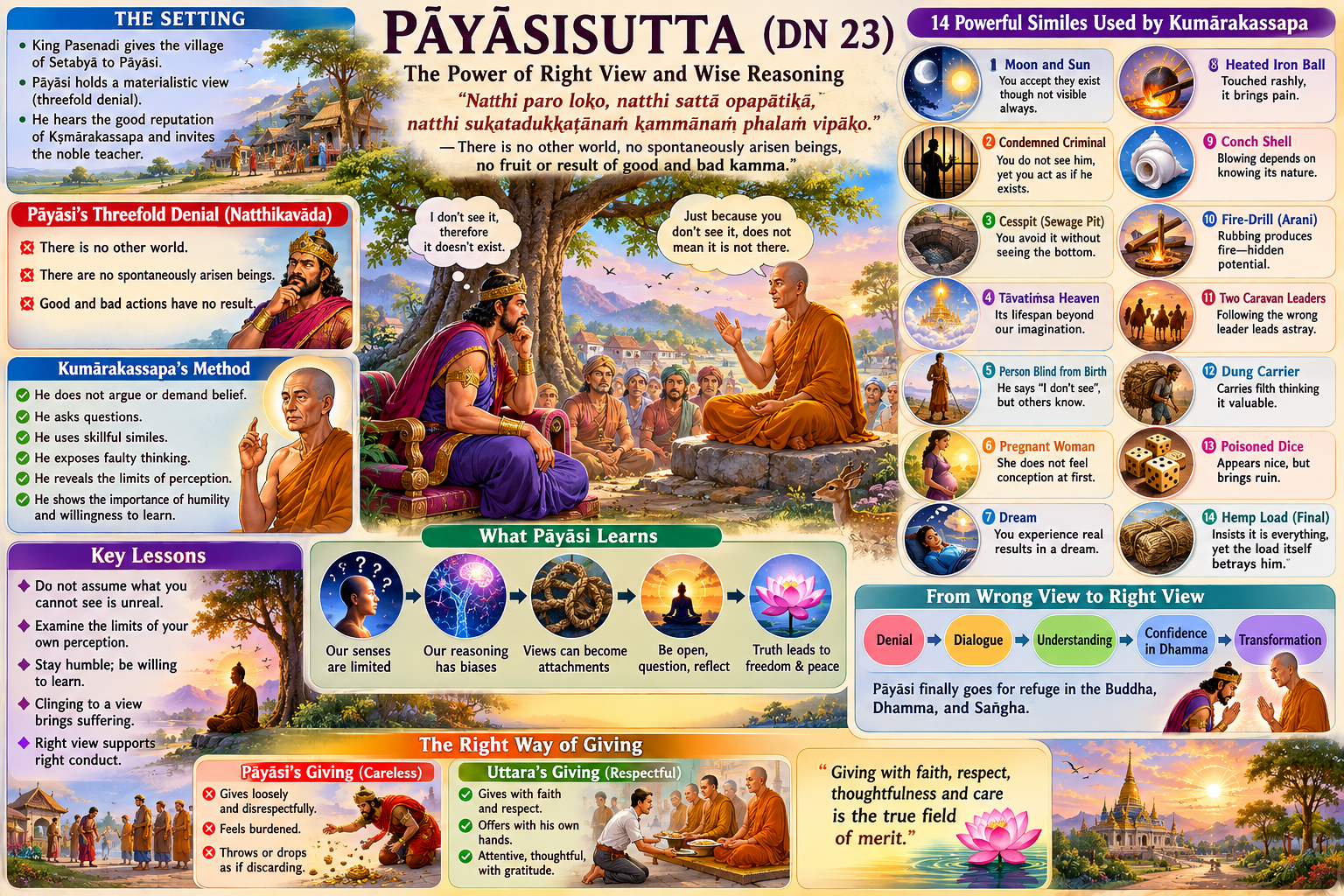
 VISUAL SUMMARYSee this sutta in a pictureOpen the complete infographic for a visual overview before or after reading the full study.View infographic →
The Pāyāsisutta (DN 23) is an extraordinary dialogue between the sceptical chieftain Pāyāsi and the wise Venerable Kumārakassapa. Pāyāsi begins with a firm materialistic position: “natthi paro loko, natthi sattā opapātikā, natthi sukatadukkaṭānaṁ kammānaṁ phalaṁ vipāko”—there is no other world, no spontaneously arisen beings, and no fruit or result of good and bad kamma. Rather than simply demanding belief, Kumārakassapa patiently challenges Pāyāsi’s reasoning through a remarkable series of questions and vivid similes, examining the limits of ordinary observation, faulty assumptions, inappropriate methods of investigation, and eventually the deeper problem of clinging to a view because of pride and reputation.
The discourse therefore becomes much more than a discussion about life after death. It is a sustained lesson in how to examine evidence, recognize the limitations of one’s viewpoint, remain willing to correct wrong understanding, and allow right view to transform conduct. Kumārakassapa does not force one proof upon Pāyāsi; he repeatedly asks whether Pāyāsi’s own expectations, methods and conclusions are justified.
The final movement is equally important. Pāyāsi goes for refuge and wishes to give, yet the discourse distinguishes careless giving from giving done respectfully, personally, thoughtfully and not as discarded refuse. DN 23 thus moves from view to method, from method to identity, and from corrected understanding to ethical conduct.
Reading caution: the discourse argues within its own Buddhist cosmological framework. Modern analogies used in this study illustrate the logic of particular similes; they should not be treated as independent scientific proof of rebirth, devas or other-worldly realms.
01 1. Opening — Kumārakassapa Arrives at Setabyā
Evaṁ me sutaṁ— ekaṁ samayaṁ āyasmā kumārakassapo kosalesu cārikaṁ caramāno mahatā bhikkhusaṅghena saddhiṁ pañcamattehi bhikkhusatehi yena setabyā nāma kosalānaṁ nagaraṁ tadavasari. Tatra sudaṁ āyasmā kumārakassapo setabyāyaṁ viharati uttarena setabyaṁ siṁsapāvane.
Variant: siṁsapāvane → sīsapāvane (sya-all, km)
Tena kho pana samayena pāyāsi rājañño setabyaṁ ajjhāvasati sattussadaṁ satiṇakaṭṭhodakaṁ sadhaññaṁ rājabhoggaṁ raññā pasenadinā kosalena dinnaṁ rājadāyaṁ brahmadeyyaṁ.
Venerable Kumārakassapa is travelling through Kosala with about five hundred bhikkhus and stays in the siṁsapā grove north of Setabyā. Pāyāsi, a chieftain living on a royal grant from King Pasenadi, is introduced as the central interlocutor.
02 2. Pāyāsirājaññavatthu
Tena kho pana samayena pāyāsissa rājaññassa evarūpaṁ pāpakaṁ diṭṭhigataṁ uppannaṁ hoti: “itipi natthi paro loko, natthi sattā opapātikā, natthi sukatadukkaṭānaṁ kammānaṁ phalaṁ vipāko”ti.
Assosuṁ kho setabyakā brāhmaṇagahapatikā: “samaṇo khalu bho kumārakassapo samaṇassa gotamassa sāvako kosalesu cārikaṁ caramāno mahatā bhikkhusaṅghena saddhiṁ pañcamattehi bhikkhusatehi setabyaṁ anuppatto setabyāyaṁ viharati uttarena setabyaṁ siṁsapāvane. Taṁ kho pana bhavantaṁ kumārakassapaṁ evaṁ kalyāṇo kittisaddo abbhuggato: ‘paṇḍito byatto medhāvī bahussuto cittakathī kalyāṇapaṭibhāno vuddho ceva arahā ca.
Variant: vuddho → vudho (bj); buddho (sya-all, km, mr); vuḍḍho (pts1ed) Sādhu kho pana tathārūpānaṁ arahataṁ dassanaṁ hotī’”ti. Atha kho setabyakā brāhmaṇagahapatikā setabyāya nikkhamitvā saṅghasaṅghī gaṇībhūtā uttarenamukhā gacchanti yena siṁsapāvanaṁ. Variant: yena siṁsapāvanaṁ → yena sīsapāvanaṁ (sya-all, km); tenupasaṅkamanti (pts1ed)
Tena kho pana samayena pāyāsi rājañño uparipāsāde divāseyyaṁ upagato hoti. Addasā kho pāyāsi rājañño setabyake brāhmaṇagahapatike setabyāya nikkhamitvā saṅghasaṅghī gaṇībhūte uttarenamukhe gacchante yena siṁsapāvanaṁ,
Variant: yena siṁsapāvanaṁ → tenupasaṅkamante (pts1ed) disvā khattaṁ āmantesi: “kiṁ nu kho, bho khatte, setabyakā brāhmaṇagahapatikā setabyāya nikkhamitvā saṅghasaṅghī gaṇībhūtā uttarenamukhā gacchanti yena siṁsapāvanan”ti?
“Atthi kho, bho, samaṇo kumārakassapo, samaṇassa gotamassa sāvako kosalesu cārikaṁ caramāno mahatā bhikkhusaṅghena saddhiṁ pañcamattehi bhikkhusatehi setabyaṁ anuppatto setabyāyaṁ viharati uttarena setabyaṁ siṁsapāvane. Taṁ kho pana bhavantaṁ kumārakassapaṁ evaṁ kalyāṇo kittisaddo abbhuggato: ‘paṇḍito byatto medhāvī bahussuto cittakathī kalyāṇapaṭibhāno vuddho ceva arahā cā’ti.
Variant: arahā cā’ti → arahā ca (sya-all, km, mr) Tamete bhavantaṁ kumārakassapaṁ dassanāya upasaṅkamantī”ti. Variant: Tamete → tamenaṁ te (bj, mr); tamenaṁ (pts1ed)
“Tena hi, bho khatte, yena setabyakā brāhmaṇagahapatikā tenupasaṅkama; upasaṅkamitvā setabyake brāhmaṇagahapatike evaṁ vadehi: ‘pāyāsi, bho, rājañño evamāha— āgamentu kira bhavanto, pāyāsipi rājañño samaṇaṁ kumārakassapaṁ dassanāya upasaṅkamissatī’ti. Purā samaṇo kumārakassapo setabyake brāhmaṇagahapatike bāle abyatte saññāpeti: ‘itipi atthi paro loko, atthi sattā opapātikā, atthi sukatadukkaṭānaṁ kammānaṁ phalaṁ vipāko’ti. Natthi hi, bho khatte, paro loko, natthi sattā opapātikā, natthi sukatadukkaṭānaṁ kammānaṁ phalaṁ vipāko”ti.
“Evaṁ, bho”ti kho so khattā pāyāsissa rājaññassa paṭissutvā yena setabyakā brāhmaṇagahapatikā tenupasaṅkami; upasaṅkamitvā setabyake brāhmaṇagahapatike etadavoca: “pāyāsi, bho, rājañño evamāha, āgamentu kira bhavanto, pāyāsipi rājañño samaṇaṁ kumārakassapaṁ dassanāya upasaṅkamissatī”ti.
Atha kho pāyāsi rājañño setabyakehi brāhmaṇagahapatikehi parivuto yena siṁsapāvanaṁ yenāyasmā kumārakassapo tenupasaṅkami; upasaṅkamitvā āyasmatā kumārakassapena saddhiṁ sammodi, sammodanīyaṁ kathaṁ sāraṇīyaṁ vītisāretvā ekamantaṁ nisīdi. Setabyakāpi kho brāhmaṇagahapatikā appekacce āyasmantaṁ kumārakassapaṁ abhivādetvā ekamantaṁ nisīdiṁsu; appekacce āyasmatā kumārakassapena saddhiṁ sammodiṁsu; sammodanīyaṁ kathaṁ sāraṇīyaṁ vītisāretvā ekamantaṁ nisīdiṁsu. Appekacce yenāyasmā kumārakassapo tenañjaliṁ paṇāmetvā ekamantaṁ nisīdiṁsu. Appekacce nāmagottaṁ sāvetvā ekamantaṁ nisīdiṁsu. Appekacce tuṇhībhūtā ekamantaṁ nisīdiṁsu.
Pāyāsi has adopted a harmful view: there is no other world, there are no spontaneously arisen beings, and there is no fruit or result of good and bad kamma.
The householders of Setabyā hear of Kumārakassapa’s reputation for wisdom, learning, eloquence, and penetrating speech and go to see him. Pāyāsi, worried that they may be persuaded away from his own position, joins them and approaches Kumārakassapa.
03 3. Natthikavāda
Ekamantaṁ nisinno kho pāyāsi rājañño āyasmantaṁ kumārakassapaṁ etadavoca: “ahañhi, bho kassapa, evaṁvādī evaṁdiṭṭhī: ‘itipi natthi paro loko, natthi sattā opapātikā, natthi sukatadukkaṭānaṁ kammānaṁ phalaṁ vipāko’”ti.
“Nāhaṁ, rājañña, evaṁvādiṁ evaṁdiṭṭhiṁ addasaṁ vā assosiṁ vā. Kathañhi nāma evaṁ vadeyya: ‘itipi natthi paro loko, natthi sattā opapātikā, natthi sukatadukkaṭānaṁ kammānaṁ phalaṁ vipāko’ti?
Pāyāsi states his position directly: “There is no other world; there are no spontaneously arisen beings; there is no fruit or result of good and bad kamma.”
Kumārakassapa does not merely contradict him. He asks for the grounds on which Pāyāsi has formed this conclusion and then examines those grounds one by one through questions, counterexamples, and similes.
04 4. Candimasūriyaupamā
Tena hi, rājañña, taññevettha paṭipucchissāmi, yathā te khameyya, tathā naṁ byākareyyāsi. Taṁ kiṁ maññasi, rājañña, ime candimasūriyā imasmiṁ vā loke parasmiṁ vā, devā vā te manussā vā”ti?
“Ime, bho kassapa, candimasūriyā parasmiṁ loke, na imasmiṁ; devā te na manussā”ti.
“Imināpi kho te, rājañña, pariyāyena evaṁ hotu— itipi atthi paro loko, atthi sattā opapātikā, atthi sukatadukkaṭānaṁ kammānaṁ phalaṁ vipāko”ti.
“Kiñcāpi bhavaṁ kassapo evamāha, atha kho evaṁ me ettha hoti: ‘itipi natthi paro loko, natthi sattā opapātikā, natthi sukatadukkaṭānaṁ kammānaṁ phalaṁ vipāko’”ti.
“Atthi pana, rājañña, pariyāyo, yena te pariyāyena evaṁ hoti: ‘itipi natthi paro loko, natthi sattā opapātikā, natthi sukatadukkaṭānaṁ kammānaṁ phalaṁ vipāko’”ti?
“Atthi, bho kassapa, pariyāyo, yena me pariyāyena evaṁ hoti: ‘itipi natthi paro loko, natthi sattā opapātikā, natthi sukatadukkaṭānaṁ kammānaṁ phalaṁ vipāko’”ti.
“Yathā kathaṁ viya, rājaññā”ti?
“Idha me, bho kassapa, mittāmaccā ñātisālohitā pāṇātipātī adinnādāyī kāmesumicchācārī musāvādī pisuṇavācā pharusavācā samphappalāpī abhijjhālū byāpannacittā micchādiṭṭhī. Te aparena samayena ābādhikā honti dukkhitā bāḷhagilānā. Yadāhaṁ jānāmi: ‘na dānime imamhā ābādhā vuṭṭhahissantī’ti tyāhaṁ upasaṅkamitvā evaṁ vadāmi: ‘santi kho, bho, eke samaṇabrāhmaṇā evaṁvādino evaṁdiṭṭhino: “ye te pāṇātipātī adinnādāyī kāmesumicchācārī musāvādī pisuṇavācā pharusavācā samphappalāpī abhijjhālū byāpannacittā micchādiṭṭhī, te kāyassa bhedā paraṁ maraṇā apāyaṁ duggatiṁ vinipātaṁ nirayaṁ upapajjantī”ti. Bhavanto kho pāṇātipātī adinnādāyī kāmesumicchācārī musāvādī pisuṇavācā pharusavācā samphappalāpī abhijjhālū byāpannacittā micchādiṭṭhī. Sace tesaṁ bhavataṁ samaṇabrāhmaṇānaṁ saccaṁ vacanaṁ, bhavanto kāyassa bhedā paraṁ maraṇā apāyaṁ duggatiṁ vinipātaṁ nirayaṁ upapajjissanti. Sace, bho, kāyassa bhedā paraṁ maraṇā apāyaṁ duggatiṁ vinipātaṁ nirayaṁ upapajjeyyātha, yena me āgantvā āroceyyātha: “itipi atthi paro loko, atthi sattā opapātikā, atthi sukatadukkaṭānaṁ kammānaṁ phalaṁ vipāko”ti. Bhavanto kho pana me saddhāyikā paccayikā, yaṁ bhavantehi diṭṭhaṁ, yathā sāmaṁ diṭṭhaṁ evametaṁ bhavissatī’ti. Te me ‘sādhū’ti paṭissutvā neva āgantvā ārocenti, na pana dūtaṁ pahiṇanti. Ayampi kho, bho kassapa, pariyāyo, yena me pariyāyena evaṁ hoti: ‘itipi natthi paro loko, natthi sattā opapātikā, natthi sukatadukkaṭānaṁ kammānaṁ phalaṁ vipāko’”ti.
Kumārakassapa begins with the moon and sun. Pāyāsi himself accepts that they belong to a realm beyond the ordinary human world and are associated with devas rather than humans.
Kumārakassapa uses Pāyāsi’s own admission to show that his blanket denial of any “other world” is already inconsistent with assumptions he accepts elsewhere.
05 5. Coraupamā
“Tena hi, rājañña, taññevettha paṭipucchissāmi. Yathā te khameyya tathā naṁ byākareyyāsi. Taṁ kiṁ maññasi, rājañña, idha te purisā coraṁ āgucāriṁ gahetvā dasseyyuṁ: ‘ayaṁ te, bhante, coro āgucārī; imassa yaṁ icchasi, taṁ daṇḍaṁ paṇehī’ti. Te tvaṁ evaṁ vadeyyāsi: ‘tena hi, bho, imaṁ purisaṁ daḷhāya rajjuyā pacchābāhaṁ gāḷhabandhanaṁ bandhitvā khuramuṇḍaṁ karitvā kharassarena paṇavena rathikāya rathikaṁ siṅghāṭakena siṅghāṭakaṁ parinetvā dakkhiṇena dvārena nikkhamitvā dakkhiṇato nagarassa āghātane sīsaṁ chindathā’ti.
Variant: rathikāya rathikaṁ → rathiyāya rathiyaṁ (bahūsu) | karitvā → kāretvā (bj, sya-all, km, mr) Te ‘sādhū’ti paṭissutvā taṁ purisaṁ daḷhāya rajjuyā pacchābāhaṁ gāḷhabandhanaṁ bandhitvā khuramuṇḍaṁ karitvā kharassarena paṇavena rathikāya rathikaṁ siṅghāṭakena siṅghāṭakaṁ parinetvā dakkhiṇena dvārena nikkhamitvā dakkhiṇato nagarassa āghātane nisīdāpeyyuṁ. Labheyya nu kho so coro coraghātesu: ‘āgamentu tāva bhavanto coraghātā, amukasmiṁ me gāme vā nigame vā mittāmaccā ñātisālohitā, yāvāhaṁ tesaṁ uddisitvā āgacchāmī’ti, udāhu vippalapantasseva coraghātā sīsaṁ chindeyyun”ti?
“Na hi so, bho kassapa, coro labheyya coraghātesu: ‘āgamentu tāva bhavanto coraghātā amukasmiṁ me gāme vā nigame vā mittāmaccā ñātisālohitā, yāvāhaṁ tesaṁ uddisitvā āgacchāmī’ti.
Atha kho naṁ vippalapantasseva coraghātā sīsaṁ chindeyyun”ti.
“So hi nāma, rājañña, coro manusso manussabhūtesu coraghātesu na labhissati: ‘āgamentu tāva bhavanto coraghātā, amukasmiṁ me gāme vā nigame vā mittāmaccā ñātisālohitā, yāvāhaṁ tesaṁ uddisitvā āgacchāmī’ti. Kiṁ pana te mittāmaccā ñātisālohitā pāṇātipātī adinnādāyī kāmesumicchācārī musāvādī pisuṇavācā pharusavācā samphappalāpī abhijjhālū byāpannacittā micchādiṭṭhī, te kāyassa bhedā paraṁ maraṇā apāyaṁ duggatiṁ vinipātaṁ nirayaṁ upapannā labhissanti nirayapālesu: ‘āgamentu tāva bhavanto nirayapālā, yāva mayaṁ pāyāsissa rājaññassa gantvā ārocema: “itipi atthi paro loko, atthi sattā opapātikā, atthi sukatadukkaṭānaṁ kammānaṁ phalaṁ vipāko”’ti? Imināpi kho te, rājañña, pariyāyena evaṁ hotu: ‘itipi atthi paro loko, atthi sattā opapātikā, atthi sukatadukkaṭānaṁ kammānaṁ phalaṁ vipāko’”ti.
“Kiñcāpi bhavaṁ kassapo evamāha, atha kho evaṁ me ettha hoti: ‘itipi natthi paro loko, natthi sattā opapātikā, natthi sukatadukkaṭānaṁ kammānaṁ phalaṁ vipāko’”ti.
“Atthi pana, rājañña, pariyāyo yena te pariyāyena evaṁ hoti: ‘itipi natthi paro loko, natthi sattā opapātikā, natthi sukatadukkaṭānaṁ kammānaṁ phalaṁ vipāko’”ti?
“Atthi, bho kassapa, pariyāyo, yena me pariyāyena evaṁ hoti: ‘itipi natthi paro loko, natthi sattā opapātikā, natthi sukatadukkaṭānaṁ kammānaṁ phalaṁ vipāko’”ti.
“Yathā kathaṁ viya, rājaññā”ti?
“Idha me, bho kassapa, mittāmaccā ñātisālohitā pāṇātipātā paṭiviratā adinnādānā paṭiviratā kāmesumicchācārā paṭiviratā musāvādā paṭiviratā pisuṇāya vācāya paṭiviratā pharusāya vācāya paṭiviratā samphappalāpā paṭiviratā anabhijjhālū abyāpannacittā sammādiṭṭhī. Te aparena samayena ābādhikā honti dukkhitā bāḷhagilānā. Yadāhaṁ jānāmi: ‘na dānime imamhā ābādhā vuṭṭhahissantī’ti tyāhaṁ upasaṅkamitvā evaṁ vadāmi: ‘santi kho, bho, eke samaṇabrāhmaṇā evaṁvādino evaṁdiṭṭhino: “ye te pāṇātipātā paṭiviratā adinnādānā paṭiviratā kāmesumicchācārā paṭiviratā musāvādā paṭiviratā pisuṇāya vācāya paṭiviratā pharusāya vācāya paṭiviratā samphappalāpā paṭiviratā anabhijjhālū abyāpannacittā sammādiṭṭhī te kāyassa bhedā paraṁ maraṇā sugatiṁ saggaṁ lokaṁ upapajjantī”ti. Bhavanto kho pāṇātipātā paṭiviratā adinnādānā paṭiviratā kāmesumicchācārā paṭiviratā musāvādā paṭiviratā pisuṇāya vācāya paṭiviratā pharusāya vācāya paṭiviratā samphappalāpā paṭiviratā anabhijjhālū abyāpannacittā sammādiṭṭhī. Sace tesaṁ bhavataṁ samaṇabrāhmaṇānaṁ saccaṁ vacanaṁ, bhavanto kāyassa bhedā paraṁ maraṇā sugatiṁ saggaṁ lokaṁ upapajjissanti. Sace, bho, kāyassa bhedā paraṁ maraṇā sugatiṁ saggaṁ lokaṁ upapajjeyyātha, yena me āgantvā āroceyyātha: “itipi atthi paro loko, atthi sattā opapātikā, atthi sukatadukkaṭānaṁ kammānaṁ phalaṁ vipāko”ti. Bhavanto kho pana me saddhāyikā paccayikā, yaṁ bhavantehi diṭṭhaṁ, yathā sāmaṁ diṭṭhaṁ evametaṁ bhavissatī’ti. Te me ‘sādhū’ti paṭissutvā neva āgantvā ārocenti, na pana dūtaṁ pahiṇanti. Ayampi kho, bho kassapa, pariyāyo, yena me pariyāyena evaṁ hoti: ‘itipi natthi paro loko, natthi sattā opapātikā, natthi sukatadukkaṭānaṁ kammānaṁ phalaṁ vipāko’”ti.
Pāyāsi argues that dying relatives who lived unwholesomely promised to return and report if they reached a bad destination, but none returned.
Kumārakassapa answers with the simile of a condemned criminal. A prisoner being taken to execution cannot simply ask the executioners for leave to visit relatives first. Likewise, one reborn in a painful destination cannot be assumed to have the freedom to return and deliver a message.
The absence of a return visit therefore does not establish non-existence.
06 6. Gūthakūpapurisaupamā
“Tena hi, rājañña, upamaṁ te karissāmi. Upamāya m’idhekacce viññū purisā bhāsitassa atthaṁ ājānanti.
Variant: Upamāya m’idhekacce → upamāyapi idhekacce (bj, pts1ed); upamāyapidhekacce (cck); upamāyapīdhekacce (cck, sya1ed, km) Seyyathāpi, rājañña, puriso gūthakūpe sasīsakaṁ nimuggo assa. Variant: sasīsakaṁ → sasīsako (sya-all, km, pts1ed) Atha tvaṁ purise āṇāpeyyāsi: ‘tena hi, bho, taṁ purisaṁ tamhā gūthakūpā uddharathā’ti. Te ‘sādhū’ti paṭissutvā taṁ purisaṁ tamhā gūthakūpā uddhareyyuṁ. Te tvaṁ evaṁ vadeyyāsi: ‘tena hi, bho, tassa purisassa kāyā veḷupesikāhi gūthaṁ sunimmajjitaṁ nimmajjathā’ti. Te ‘sādhū’ti paṭissutvā tassa purisassa kāyā veḷupesikāhi gūthaṁ sunimmajjitaṁ nimmajjeyyuṁ. Te tvaṁ evaṁ vadeyyāsi: ‘tena hi, bho, tassa purisassa kāyaṁ paṇḍumattikāya tikkhattuṁ subbaṭṭitaṁ ubbaṭṭethā’ti. Variant: subbaṭṭitaṁ ubbaṭṭethā’ti → ubbaṭitaṁ ubbaṭethāti (sya-all, km); suppaṭṭitaṁ uppaṭṭethāti (mr) Te tassa purisassa kāyaṁ paṇḍumattikāya tikkhattuṁ subbaṭṭitaṁ ubbaṭṭeyyuṁ. Te tvaṁ evaṁ vadeyyāsi: ‘tena hi, bho, taṁ purisaṁ telena abbhañjitvā sukhumena cuṇṇena tikkhattuṁ suppadhotaṁ karothā’ti. Te taṁ purisaṁ telena abbhañjitvā sukhumena cuṇṇena tikkhattuṁ suppadhotaṁ kareyyuṁ. Te tvaṁ evaṁ vadeyyāsi: ‘tena hi, bho, tassa purisassa kesamassuṁ kappethā’ti. Te tassa purisassa kesamassuṁ kappeyyuṁ. Te tvaṁ evaṁ vadeyyāsi: ‘tena hi, bho, tassa purisassa mahagghañca mālaṁ mahagghañca vilepanaṁ mahagghāni ca vatthāni upaharathā’ti. Te tassa purisassa mahagghañca mālaṁ mahagghañca vilepanaṁ mahagghāni ca vatthāni upahareyyuṁ. Te tvaṁ evaṁ vadeyyāsi: ‘tena hi, bho, taṁ purisaṁ pāsādaṁ āropetvā pañcakāmaguṇāni upaṭṭhāpethā’ti. Te taṁ purisaṁ pāsādaṁ āropetvā pañcakāmaguṇāni upaṭṭhāpeyyuṁ.
Taṁ kiṁ maññasi, rājañña, api nu tassa purisassa sunhātassa suvilittassa sukappitakesamassussa āmukkamālābharaṇassa odātavatthavasanassa uparipāsādavaragatassa pañcahi kāmaguṇehi samappitassa samaṅgībhūtassa paricārayamānassa punadeva tasmiṁ gūthakūpe nimujjitukāmatā assā”ti?
“No hidaṁ, bho kassapa”. “Taṁ kissa hetu”? “Asuci, bho kassapa, gūthakūpo asuci ceva asucisaṅkhāto ca duggandho ca duggandhasaṅkhāto ca jeguccho ca jegucchasaṅkhāto ca paṭikūlo ca paṭikūlasaṅkhāto cā”ti.
“Evameva kho, rājañña, manussā devānaṁ asucī ceva asucisaṅkhātā ca, duggandhā ca duggandhasaṅkhātā ca, jegucchā ca jegucchasaṅkhātā ca, paṭikūlā ca paṭikūlasaṅkhātā ca. Yojanasataṁ kho, rājañña, manussagandho deve ubbādhati. Kiṁ pana te mittāmaccā ñātisālohitā pāṇātipātā paṭiviratā adinnādānā paṭiviratā kāmesumicchācārā paṭiviratā musāvādā paṭiviratā pisuṇāya vācāya paṭiviratā pharusāya vācāya paṭiviratā samphappalāpā paṭiviratā anabhijjhālū abyāpannacittā sammādiṭṭhī, kāyassa bhedā paraṁ maraṇā sugatiṁ saggaṁ lokaṁ upapannā te āgantvā ārocessanti: ‘itipi atthi paro loko, atthi sattā opapātikā, atthi sukatadukkaṭānaṁ kammānaṁ phalaṁ vipāko’ti? Imināpi kho te, rājañña, pariyāyena evaṁ hotu: ‘itipi atthi paro loko, atthi sattā opapātikā, atthi sukatadukkaṭānaṁ kammānaṁ phalaṁ vipāko’”ti.
“Kiñcāpi bhavaṁ kassapo evamāha, atha kho evaṁ me ettha hoti: ‘itipi natthi paro loko, natthi sattā opapātikā, natthi sukatadukkaṭānaṁ kammānaṁ phalaṁ vipāko’”ti.
“Atthi pana, rājañña, pariyāyo, yena te pariyāyena evaṁ hoti: ‘itipi natthi paro loko, natthi sattā opapātikā, natthi sukatadukkaṭānaṁ kammānaṁ phalaṁ vipāko’”ti?
“Atthi, bho kassapa, pariyāyo, yena me pariyāyena evaṁ hoti: ‘itipi natthi paro loko, natthi sattā opapātikā, natthi sukatadukkaṭānaṁ kammānaṁ phalaṁ vipāko’”ti.
yathā kathaṁ viya, rājaññāti?
“Idha me, bho kassapa, mittāmaccā ñātisālohitā pāṇātipātā paṭiviratā adinnādānā paṭiviratā kāmesumicchācārā paṭiviratā musāvādā paṭiviratā surāmerayamajjapamādaṭṭhānā paṭiviratā, te aparena samayena ābādhikā honti dukkhitā bāḷhagilānā. Yadāhaṁ jānāmi: ‘na dānime imamhā ābādhā vuṭṭhahissantī’ti tyāhaṁ upasaṅkamitvā evaṁ vadāmi: ‘santi kho, bho, eke samaṇabrāhmaṇā evaṁvādino evaṁdiṭṭhino: “ye te pāṇātipātā paṭiviratā adinnādānā paṭiviratā kāmesumicchācārā paṭiviratā musāvādā paṭiviratā surāmerayamajjapamādaṭṭhānā paṭiviratā, te kāyassa bhedā paraṁ maraṇā sugatiṁ saggaṁ lokaṁ upapajjanti devānaṁ tāvatiṁsānaṁ sahabyatan”ti. Bhavanto kho pāṇātipātā paṭiviratā adinnādānā paṭiviratā kāmesumicchācārā paṭiviratā musāvādā paṭiviratā surāmerayamajjapamādaṭṭhānā paṭiviratā. Sace tesaṁ bhavataṁ samaṇabrāhmaṇānaṁ saccaṁ vacanaṁ, bhavanto kāyassa bhedā paraṁ maraṇā sugatiṁ saggaṁ lokaṁ upapajjissanti, devānaṁ tāvatiṁsānaṁ sahabyataṁ. Sace, bho, kāyassa bhedā paraṁ maraṇā sugatiṁ saggaṁ lokaṁ upapajjeyyātha devānaṁ tāvatiṁsānaṁ sahabyataṁ, yena me āgantvā āroceyyātha: “itipi atthi paro loko, atthi sattā opapātikā, atthi sukatadukkaṭānaṁ kammānaṁ phalaṁ vipāko”ti. Bhavanto kho pana me saddhāyikā paccayikā, yaṁ bhavantehi diṭṭhaṁ, yathā sāmaṁ diṭṭhaṁ evametaṁ bhavissatī’ti. Te me ‘sādhū’ti paṭissutvā neva āgantvā ārocenti, na pana dūtaṁ pahiṇanti. Ayampi kho, bho kassapa, pariyāyo, yena me pariyāyena evaṁ hoti: ‘itipi natthi paro loko, natthi sattā opapātikā, natthi sukatadukkaṭānaṁ kammānaṁ phalaṁ vipāko’”ti.
Pāyāsi raises the same problem using virtuous relatives: if they were reborn in heaven, why did they not return?
Kumārakassapa compares the human realm, from a deva perspective, to a filthy cesspit. A person thoroughly washed, perfumed, finely dressed, and enjoying a palace would have no wish to plunge back into the cesspit.
The point is not a modern empirical claim about smell; within the sutta’s cosmological argument, it explains why fortunate rebirth would not imply a desire to revisit the human realm.
07 7. Tāvatiṁsadevaupamā
“Tena hi, rājañña, taññevettha paṭipucchissāmi; yathā te khameyya, tathā naṁ byākareyyāsi. Yaṁ kho pana, rājañña, mānussakaṁ vassasataṁ, devānaṁ tāvatiṁsānaṁ eso eko rattindivo, tāya rattiyā tiṁsarattiyo māso, tena māsena dvādasamāsiyo saṁvaccharo, tena saṁvaccharena dibbaṁ vassasahassaṁ devānaṁ tāvatiṁsānaṁ āyuppamāṇaṁ.
Variant: rattindivo → rattidivo (mr) | mānussakaṁ → mānusakaṁ (bj, sya-all, km, pts1ed) Ye te mittāmaccā ñātisālohitā pāṇātipātā paṭiviratā adinnādānā paṭiviratā kāmesumicchācārā paṭiviratā musāvādā paṭiviratā surāmerayamajjapamādaṭṭhānā paṭiviratā, te kāyassa bhedā paraṁ maraṇā sugatiṁ saggaṁ lokaṁ upapannā devānaṁ tāvatiṁsānaṁ sahabyataṁ. Sace pana tesaṁ evaṁ bhavissati: ‘yāva mayaṁ dve vā tīṇi vā rattindivā dibbehi pañcahi kāmaguṇehi samappitā samaṅgībhūtā paricārema, atha mayaṁ pāyāsissa rājaññassa gantvā āroceyyāma: “itipi atthi paro loko, atthi sattā opapātikā, atthi sukatadukkaṭānaṁ kammānaṁ phalaṁ vipāko”ti. Api nu te āgantvā āroceyyuṁ— itipi atthi paro loko, atthi sattā opapātikā, atthi sukatadukkaṭānaṁ kammānaṁ phalaṁ vipāko’”ti?
“No hidaṁ, bho kassapa. Api hi mayaṁ, bho kassapa, ciraṁ kālaṅkatāpi bhaveyyāma. Ko panetaṁ bhoto kassapassa āroceti: ‘atthi devā tāvatiṁsā’ti vā ‘evaṁdīghāyukā devā tāvatiṁsā’ti vā. Na mayaṁ bhoto kassapassa saddahāma: ‘atthi devā tāvatiṁsā’ti vā ‘evaṁdīghāyukā devā tāvatiṁsā’ti vā”ti.
Pāyāsi then says virtuous relatives who supposedly reached the Tāvatiṁsa devas could still have come back later.
Kumārakassapa points to a radically different timescale: one Tāvatiṁsa day corresponds to one hundred human years. If such beings delayed for only two or three divine days before visiting, Pāyāsi and his generation would already be long dead.
Thus “they did not return during my lifetime” cannot function as decisive evidence.
08 8. Jaccandhaupamā
“Seyyathāpi, rājañña, jaccandho puriso na passeyya kaṇha—sukkāni rūpāni, na passeyya nīlakāni rūpāni, na passeyya pītakāni rūpāni, na passeyya lohitakāni rūpāni, na passeyya mañjiṭṭhakāni rūpāni, na passeyya samavisamaṁ, na passeyya tārakāni rūpāni, na passeyya candimasūriye.
Variant: mañjiṭṭhakāni → mañjeṭṭhikāni (bj); mañjeṭṭhakāni (sya-all, km); mañjiṭṭhikāni (pts1ed) So evaṁ vadeyya: ‘natthi kaṇhasukkāni rūpāni, natthi kaṇhasukkānaṁ rūpānaṁ dassāvī. Natthi nīlakāni rūpāni, natthi nīlakānaṁ rūpānaṁ dassāvī. Natthi pītakāni rūpāni, natthi pītakānaṁ rūpānaṁ dassāvī. Natthi lohitakāni rūpāni, natthi lohitakānaṁ rūpānaṁ dassāvī. Natthi mañjiṭṭhakāni rūpāni, natthi mañjiṭṭhakānaṁ rūpānaṁ dassāvī. Natthi samavisamaṁ, natthi samavisamassa dassāvī. Natthi tārakāni rūpāni, natthi tārakānaṁ rūpānaṁ dassāvī. Natthi candimasūriyā, natthi candimasūriyānaṁ dassāvī. Ahametaṁ na jānāmi, ahametaṁ na passāmi, tasmā taṁ natthī’ti. Sammā nu kho so, rājañña, vadamāno vadeyyā”ti?
“No hidaṁ, bho kassapa. Atthi kaṇhasukkāni rūpāni, atthi kaṇhasukkānaṁ rūpānaṁ dassāvī. Atthi nīlakāni rūpāni, atthi nīlakānaṁ rūpānaṁ dassāvī. Atthi pītakāni rūpāni, atthi pītakānaṁ rūpānaṁ dassāvī. Atthi lohitakāni rūpāni, atthi lohitakānaṁ rūpānaṁ dassāvī. Atthi mañjiṭṭhakāni rūpāni, atthi mañjiṭṭhakānaṁ rūpānaṁ dassāvī. Atthi samavisamaṁ, atthi samavisamassa dassāvī. Atthi tārakāni rūpāni, atthi tārakānaṁ rūpānaṁ dassāvī. Atthi candimasūriyā, atthi candimasūriyānaṁ dassāvī. ‘Ahametaṁ na jānāmi, ahametaṁ na passāmi, tasmā taṁ natthī’ti. Na hi so, bho kassapa, sammā vadamāno vadeyyā”ti.
“Evameva kho tvaṁ, rājañña, jaccandhūpamo maññe paṭibhāsi yaṁ maṁ tvaṁ evaṁ vadesi. Ko panetaṁ bhoto kassapassa āroceti: ‘atthi devā tāvatiṁsā’ti vā, ‘evaṁdīghāyukā devā tāvatiṁsā’ti vā? Na mayaṁ bhoto kassapassa saddahāma: ‘atthi devā tāvatiṁsā’ti vā ‘evaṁdīghāyukā devā tāvatiṁsā’ti vā”ti. “Na kho, rājañña, evaṁ paro loko daṭṭhabbo, yathā tvaṁ maññasi iminā maṁsacakkhunā. Ye kho te, rājañña, samaṇabrāhmaṇā araññavanapatthāni pantāni senāsanāni paṭisevanti, te tattha appamattā ātāpino pahitattā viharantā dibbacakkhuṁ visodhenti. Te dibbena cakkhunā visuddhena atikkantamānusakena imañceva lokaṁ passanti parañca satte ca opapātike. Evañca kho, rājañña, paro loko daṭṭhabbo; na tveva yathā tvaṁ maññasi iminā maṁsacakkhunā. Imināpi kho te, rājañña, pariyāyena evaṁ hotu: ‘itipi atthi paro loko, atthi sattā opapātikā, atthi sukatadukkaṭānaṁ kammānaṁ phalaṁ vipāko’”ti.
“Kiñcāpi bhavaṁ kassapo evamāha, atha kho evaṁ me ettha hoti: ‘itipi natthi paro loko, natthi sattā opapātikā, natthi sukatadukkaṭānaṁ kammānaṁ phalaṁ vipāko’”ti.
“Atthi pana, rājañña, pariyāyo, yena te pariyāyena evaṁ hoti: ‘itipi natthi paro loko, natthi sattā opapātikā, natthi sukatadukkaṭānaṁ kammānaṁ phalaṁ vipāko’”ti?
“Atthi, bho kassapa, pariyāyo, yena me pariyāyena evaṁ hoti: ‘itipi natthi paro loko, natthi sattā opapātikā, natthi sukatadukkaṭānaṁ kammānaṁ phalaṁ vipāko’”ti.
yathā kathaṁ viya, rājaññā”ti?
“Idhāhaṁ, bho kassapa, passāmi samaṇabrāhmaṇe sīlavante kalyāṇadhamme jīvitukāme amaritukāme sukhakāme dukkhapaṭikūle. Tassa mayhaṁ, bho kassapa, evaṁ hoti— sace kho ime bhonto samaṇabrāhmaṇā sīlavanto kalyāṇadhammā evaṁ jāneyyuṁ: ‘ito no matānaṁ seyyo bhavissatī’ti. Idānime bhonto samaṇabrāhmaṇā sīlavanto kalyāṇadhammā visaṁ vā khādeyyuṁ, satthaṁ vā āhareyyuṁ, ubbandhitvā vā kālaṁ kareyyuṁ, papāte vā papateyyuṁ. Yasmā ca kho ime bhonto samaṇabrāhmaṇā sīlavanto kalyāṇadhammā na evaṁ jānanti: ‘ito no matānaṁ seyyo bhavissatī’ti, tasmā ime bhonto samaṇabrāhmaṇā sīlavanto kalyāṇadhammā jīvitukāmā amaritukāmā sukhakāmā dukkhapaṭikūlā attānaṁ na mārenti.
Variant: attānaṁ na mārenti → etthantare pāṭho sya-all, km, pts1ed potthakesu natthi Ayampi kho, bho kassapa, pariyāyo, yena me pariyāyena evaṁ hoti: ‘itipi natthi paro loko, natthi sattā opapātikā, natthi sukatadukkaṭānaṁ kammānaṁ phalaṁ vipāko’”ti.
When Pāyāsi refuses to believe in devas he cannot see, Kumārakassapa compares him to a person blind from birth who denies colors, stars, the sun, and the moon because he personally cannot see them.
The methodological point is sharp: “I do not perceive X with my present faculty” does not entail “X does not exist.”
Kumārakassapa then says that contemplatives who develop the purified divine eye claim a mode of seeing that exceeds ordinary physical sight.
09 9. Gabbhinīupamā
“Tena hi, rājañña, upamaṁ te karissāmi. Upamāya m’idhekacce viññū purisā bhāsitassa atthaṁ ājānanti.
Bhūtapubbaṁ, rājañña, aññatarassa brāhmaṇassa dve pajāpatiyo ahesuṁ. Ekissā putto ahosi dasavassuddesiko vā dvādasavassuddesiko vā, ekā gabbhinī upavijaññā. Atha kho so brāhmaṇo kālamakāsi.
Atha kho so māṇavako mātusapattiṁ etadavoca:
Variant: mātusapattiṁ → mātusapatiṁ (sya-all) ‘yamidaṁ, bhoti, dhanaṁ vā dhaññaṁ vā rajataṁ vā jātarūpaṁ vā, sabbaṁ taṁ mayhaṁ; natthi tuyhettha kiñci. Pitu me, bhoti, dāyajjaṁ niyyādehī’ti. Variant: me → pitu me santako (sya-all, km) | niyyādehī’ti → niyyātehīti (bj); nīyyātehīti (pts1ed)
Evaṁ vutte, sā brāhmaṇī taṁ māṇavakaṁ etadavoca: ‘āgamehi tāva, tāta, yāva vijāyāmi. Sace kumārako bhavissati, tassapi ekadeso bhavissati; sace kumārikā bhavissati, sāpi te opabhoggā bhavissatī’ti.
Variant: opabhoggā → upabhoggā (sya-all, km)
Dutiyampi kho so māṇavako mātusapattiṁ etadavoca: ‘yamidaṁ, bhoti, dhanaṁ vā dhaññaṁ vā rajataṁ vā jātarūpaṁ vā, sabbaṁ taṁ mayhaṁ; natthi tuyhettha kiñci. Pitu me, bhoti, dāyajjaṁ niyyādehī’ti. Dutiyampi kho sā brāhmaṇī taṁ māṇavakaṁ etadavoca: ‘āgamehi tāva, tāta, yāva vijāyāmi. Sace kumārako bhavissati, tassapi ekadeso bhavissati; sace kumārikā bhavissati sāpi te opabhoggā bhavissatī’ti. Tatiyampi kho so māṇavako mātusapattiṁ etadavoca: ‘yamidaṁ, bhoti, dhanaṁ vā dhaññaṁ vā rajataṁ vā jātarūpaṁ vā, sabbaṁ taṁ mayhaṁ; natthi tuyhettha kiñci. Pitu me, bhoti, dāyajjaṁ niyyādehī’ti.
Atha kho sā brāhmaṇī satthaṁ gahetvā ovarakaṁ pavisitvā udaraṁ opādesi:
Variant: opādesi → opāṭesi (bj); uppātesi (sya-all, km) ‘yāva vijāyāmi yadi vā kumārako yadi vā kumārikā’ti. Sā attānañceva jīvitañca gabbhañca sāpateyyañca vināsesi.
Yathā taṁ bālā abyattā anayabyasanaṁ āpannā ayoniso dāyajjaṁ gavesantī, evameva kho tvaṁ, rājañña, bālo abyatto anayabyasanaṁ āpajjissasi ayoniso paralokaṁ gavesanto; seyyathāpi sā brāhmaṇī bālā abyattā anayabyasanaṁ āpannā ayoniso dāyajjaṁ gavesantī. Na kho, rājañña, samaṇabrāhmaṇā sīlavanto kalyāṇadhammā apakkaṁ paripācenti; api ca paripākaṁ āgamenti. Paṇḍitānaṁ attho hi, rājañña, samaṇabrāhmaṇānaṁ sīlavantānaṁ kalyāṇadhammānaṁ jīvitena. Yathā yathā kho, rājañña, samaṇabrāhmaṇā sīlavanto kalyāṇadhammā ciraṁ dīghamaddhānaṁ tiṭṭhanti tathā tathā bahuṁ puññaṁ pasavanti, bahujanahitāya ca paṭipajjanti bahujanasukhāya lokānukampāya atthāya hitāya sukhāya devamanussānaṁ. Imināpi kho te, rājañña, pariyāyena evaṁ hotu: ‘itipi atthi paro loko, atthi sattā opapātikā, atthi sukatadukkaṭānaṁ kammānaṁ phalaṁ vipāko’”ti.
“Kiñcāpi bhavaṁ kassapo evamāha, atha kho evaṁ me ettha hoti: ‘itipi natthi paro loko, natthi sattā opapātikā, natthi sukatadukkaṭānaṁ kammānaṁ phalaṁ vipāko’”ti.
“Atthi pana, rājañña, pariyāyo, yena te pariyāyena evaṁ hoti: ‘itipi natthi paro loko, natthi sattā opapātikā, natthi sukatadukkaṭānaṁ kammānaṁ phalaṁ vipāko’”ti?
“Atthi, bho kassapa, pariyāyo, yena me pariyāyena evaṁ hoti: ‘itipi natthi paro loko, natthi sattā opapātikā, natthi sukatadukkaṭānaṁ kammānaṁ phalaṁ vipāko’”ti.
yathā kathaṁ viya, rājaññā”ti?
“Idha me, bho kassapa, purisā coraṁ āgucāriṁ gahetvā dassenti: ‘ayaṁ te, bhante, coro āgucārī; imassa yaṁ icchasi, taṁ daṇḍaṁ paṇehī’ti. Tyāhaṁ evaṁ vadāmi: ‘tena hi, bho, imaṁ purisaṁ jīvantaṁyeva kumbhiyā pakkhipitvā mukhaṁ pidahitvā allena cammena onandhitvā allāya mattikāya bahalāvalepanaṁ karitvā uddhanaṁ āropetvā aggiṁ dethā’ti. Te me ‘sādhū’ti paṭissutvā taṁ purisaṁ jīvantaṁyeva kumbhiyā pakkhipitvā mukhaṁ pidahitvā allena cammena onandhitvā allāya mattikāya bahalāvalepanaṁ karitvā uddhanaṁ āropetvā aggiṁ denti. Yadā mayaṁ jānāma ‘kālaṅkato so puriso’ti, atha naṁ kumbhiṁ oropetvā ubbhinditvā mukhaṁ vivaritvā saṇikaṁ nillokema:
Variant: nillokema → vilokema (sya-all, km) ‘appeva nāmassa jīvaṁ nikkhamantaṁ passeyyāmā’ti. Nevassa mayaṁ jīvaṁ nikkhamantaṁ passāma. Ayampi kho, bho kassapa, pariyāyo, yena me pariyāyena evaṁ hoti: ‘itipi natthi paro loko, natthi sattā opapātikā, natthi sukatadukkaṭānaṁ kammānaṁ phalaṁ vipāko’”ti.
Pāyāsi argues that good ascetics do not kill themselves even if they claim a better existence after death, suggesting that they must not truly know it.
Kumārakassapa gives the simile of a pregnant woman who destroys herself, her unborn child, and her inheritance by cutting herself open prematurely to discover the child’s sex.
Wise practitioners do not “ripen what is unripe.” Their continued life allows further merit, practice, and benefit to many beings. Knowledge of a future good does not logically require premature death.
10 10. Supinakaupamā
“Tena hi, rājañña, taññevettha paṭipucchissāmi, yathā te khameyya, tathā naṁ byākareyyāsi. Abhijānāsi no tvaṁ, rājañña, divā seyyaṁ upagato supinakaṁ passitā ārāmarāmaṇeyyakaṁ vanarāmaṇeyyakaṁ bhūmirāmaṇeyyakaṁ pokkharaṇīrāmaṇeyyakan”ti?
“Abhijānāmahaṁ, bho kassapa, divāseyyaṁ upagato supinakaṁ passitā ārāmarāmaṇeyyakaṁ vanarāmaṇeyyakaṁ bhūmirāmaṇeyyakaṁ pokkharaṇīrāmaṇeyyakan”ti.
“Rakkhanti taṁ tamhi samaye khujjāpi vāmanakāpi velāsikāpi komārikāpī”ti?
Variant: velāsikāpi → keḷāyikā pi (bj); celāvikāpi (sya-all, km); velāmikā (pts1ed)
“Evaṁ, bho kassapa, rakkhanti maṁ tamhi samaye khujjāpi vāmanakāpi velāsikāpi komārikāpī”ti.
“Api nu tā tuyhaṁ jīvaṁ passanti pavisantaṁ vā nikkhamantaṁ vā”ti?
“No hidaṁ, bho kassapa”.
“Tā hi nāma, rājañña, tuyhaṁ jīvantassa jīvantiyo jīvaṁ na passissanti pavisantaṁ vā nikkhamantaṁ vā. Kiṁ pana tvaṁ kālaṅkatassa jīvaṁ passissasi pavisantaṁ vā nikkhamantaṁ vā. Imināpi kho te, rājañña, pariyāyena evaṁ hotu: ‘itipi atthi paro loko, atthi sattā opapātikā, atthi sukatadukkaṭānaṁ kammānaṁ phalaṁ vipāko’”ti.
“Kiñcāpi bhavaṁ kassapo evamāha, atha kho evaṁ me ettha hoti: ‘itipi natthi paro loko, natthi sattā opapātikā, natthi sukatadukkaṭānaṁ kammānaṁ phalaṁ vipāko’”ti.
“Atthi pana, rājañña, pariyāyo, yena te pariyāyena evaṁ hoti: ‘itipi natthi paro loko, natthi sattā opapātikā, natthi sukatadukkaṭānaṁ kammānaṁ phalaṁ vipāko’”ti?
“Atthi, bho kassapa, pariyāyo, yena me pariyāyena evaṁ hoti: ‘itipi natthi paro loko, natthi sattā opapātikā, natthi sukatadukkaṭānaṁ kammānaṁ phalaṁ vipāko’”ti.
yathā kathaṁ viya, rājaññā”ti?
“Idha me, bho kassapa, purisā coraṁ āgucāriṁ gahetvā dassenti: ‘ayaṁ te, bhante, coro āgucārī; imassa yaṁ icchasi, taṁ daṇḍaṁ paṇehī’ti. Tyāhaṁ evaṁ vadāmi: ‘tena hi, bho, imaṁ purisaṁ jīvantaṁyeva tulāya tuletvā jiyāya anassāsakaṁ māretvā punadeva tulāya tulethā’ti. Te me ‘sādhū’ti paṭissutvā taṁ purisaṁ jīvantaṁyeva tulāya tuletvā jiyāya anassāsakaṁ māretvā punadeva tulāya tulenti. Yadā so jīvati, tadā lahutaro ca hoti mudutaro ca kammaññataro ca. Yadā pana so kālaṅkato hoti tadā garutaro ca hoti patthinnataro ca akammaññataro ca. Ayampi kho, bho kassapa, pariyāyo, yena me pariyāyena evaṁ hoti: ‘itipi natthi paro loko, natthi sattā opapātikā, natthi sukatadukkaṭānaṁ kammānaṁ phalaṁ vipāko’”ti.
Pāyāsi reports experiments in which a condemned person is killed inside a sealed container, yet no departing “life” is seen.
Kumārakassapa asks about dreams: while Pāyāsi is alive and guarded by attendants, they still do not see a life-principle entering or leaving him as he dreams.
If something is not visibly entering or leaving even in the living person, failure to see it at death cannot prove that nothing relevant occurs.
11 11. Santattaayoguḷaupamā
“Tena hi, rājañña, upamaṁ te karissāmi. Upamāya m’idhekacce viññū purisā bhāsitassa atthaṁ ājānanti. Seyyathāpi, rājañña, puriso divasaṁ santattaṁ ayoguḷaṁ ādittaṁ sampajjalitaṁ sajotibhūtaṁ tulāya tuleyya. Tamenaṁ aparena samayena sītaṁ nibbutaṁ tulāya tuleyya. Kadā nu kho so ayoguḷo lahutaro vā hoti mudutaro vā kammaññataro vā, yadā vā āditto sampajjalito sajotibhūto, yadā vā sīto nibbuto”ti?
“Yadā so, bho kassapa, ayoguḷo tejosahagato ca hoti vāyosahagato ca āditto sampajjalito sajotibhūto, tadā lahutaro ca hoti mudutaro ca kammaññataro ca. Yadā pana so ayoguḷo neva tejosahagato hoti na vāyosahagato sīto nibbuto, tadā garutaro ca hoti patthinnataro ca akammaññataro cā”ti.
“Evameva kho, rājañña, yadāyaṁ kāyo āyusahagato ca hoti usmāsahagato ca viññāṇasahagato ca, tadā lahutaro ca hoti mudutaro ca kammaññataro ca. Yadā panāyaṁ kāyo neva āyusahagato hoti na usmāsahagato na viññāṇasahagato tadā garutaro ca hoti patthinnataro ca akammaññataro ca. Imināpi kho te, rājañña, pariyāyena evaṁ hotu: ‘itipi atthi paro loko, atthi sattā opapātikā, atthi sukatadukkaṭānaṁ kammānaṁ phalaṁ vipāko’”ti.
“Kiñcāpi bhavaṁ kassapo evamāha, atha kho evaṁ me ettha hoti: ‘itipi natthi paro loko, natthi sattā opapātikā, natthi sukatadukkaṭānaṁ kammānaṁ phalaṁ vipāko’”ti.
“Atthi pana, rājañña, pariyāyo, yena te pariyāyena evaṁ hoti: ‘itipi natthi paro loko, natthi sattā opapātikā, natthi sukatadukkaṭānaṁ kammānaṁ phalaṁ vipāko’”ti?
“Atthi, bho kassapa, pariyāyo, yena me pariyāyena evaṁ hoti: ‘itipi natthi paro loko, natthi sattā opapātikā, natthi sukatadukkaṭānaṁ kammānaṁ phalaṁ vipāko’”ti.
yathā kathaṁ viya, rājaññā”ti?
“Idha me, bho kassapa, purisā coraṁ āgucāriṁ gahetvā dassenti: ‘ayaṁ te, bhante, coro āgucārī; imassa yaṁ icchasi, taṁ daṇḍaṁ paṇehī’ti. Tyāhaṁ evaṁ vadāmi: ‘tena hi, bho, imaṁ purisaṁ anupahacca chaviñca cammañca maṁsañca nhāruñca aṭṭhiñca aṭṭhimiñjañca jīvitā voropetha, appeva nāmassa jīvaṁ nikkhamantaṁ passeyyāmā’ti. Te me ‘sādhū’ti paṭissutvā taṁ purisaṁ anupahacca chaviñca cammañca maṁsañca nhāruñca aṭṭhiñca aṭṭhimiñjañca jīvitā voropenti. Yadā so āmato hoti, tyāhaṁ evaṁ vadāmi: ‘tena hi, bho, imaṁ purisaṁ uttānaṁ nipātetha, appeva nāmassa jīvaṁ nikkhamantaṁ passeyyāmā’ti. Te taṁ purisaṁ uttānaṁ nipātenti. Nevassa mayaṁ jīvaṁ nikkhamantaṁ passāma. Tyāhaṁ evaṁ vadāmi: ‘tena hi, bho, imaṁ purisaṁ avakujjaṁ nipātetha … passena nipātetha … dutiyena passena nipātetha … uddhaṁ ṭhapetha … omuddhakaṁ ṭhapetha … pāṇinā ākoṭetha … leḍḍunā ākoṭetha … daṇḍena ākoṭetha … satthena ākoṭetha … odhunātha sandhunātha niddhunātha, appeva nāmassa jīvaṁ nikkhamantaṁ passeyyāmā’ti. Te taṁ purisaṁ odhunanti sandhunanti niddhunanti. Nevassa mayaṁ jīvaṁ nikkhamantaṁ passāma. Tassa tadeva cakkhu hoti te rūpā, tañcāyatanaṁ nappaṭisaṁvedeti. Tadeva sotaṁ hoti te saddā, tañcāyatanaṁ nappaṭisaṁvedeti. Tadeva ghānaṁ hoti te gandhā, tañcāyatanaṁ nappaṭisaṁvedeti. Sāva jivhā hoti te rasā, tañcāyatanaṁ nappaṭisaṁvedeti. Sveva kāyo hoti te phoṭṭhabbā, tañcāyatanaṁ nappaṭisaṁvedeti. Ayampi kho, bho kassapa, pariyāyo, yena me pariyāyena evaṁ hoti: ‘itipi natthi paro loko, natthi sattā opapātikā, natthi sukatadukkaṭānaṁ kammānaṁ phalaṁ vipāko’”ti.
Pāyāsi notes that a living body and a corpse differ in weight, softness, and workability and treats this as evidence against survival.
Kumārakassapa compares a glowing hot iron ball with the same ball when cold. While associated with heat and air it is lighter, softer, and more workable; when cold it is heavier and rigid.
He applies the analogy to the body: while associated with life, warmth, and consciousness it is flexible and responsive; when those conditions are absent it becomes heavy, stiff, and unresponsive.
12 12. Saṅkhadhamaupamā
“Tena hi, rājañña, upamaṁ te karissāmi. Upamāya m’idhekacce viññū purisā bhāsitassa atthaṁ ājānanti.
Bhūtapubbaṁ, rājañña, aññataro saṅkhadhamo saṅkhaṁ ādāya paccantimaṁ janapadaṁ agamāsi. So yena aññataro gāmo tenupasaṅkami; upasaṅkamitvā majjhe gāmassa ṭhito tikkhattuṁ saṅkhaṁ upalāpetvā saṅkhaṁ bhūmiyaṁ nikkhipitvā ekamantaṁ nisīdi.
Atha kho, rājañña, tesaṁ paccantajanapadānaṁ manussānaṁ etadahosi: ‘ambho kassa nu kho eso saddo evaṁrajanīyo evaṅkamanīyo evaṁmadanīyo evambandhanīyo evaṁmucchanīyo’ti.
Variant: ambho kassa nu kho → etadahosi Sannipatitvā taṁ saṅkhadhamaṁ etadavocuṁ: ‘ambho, kassa nu kho eso saddo evaṁrajanīyo evaṅkamanīyo evaṁmadanīyo evambandhanīyo evaṁmucchanīyo’ti.
‘Eso kho, bho, saṅkho nāma yasseso saddo evaṁrajanīyo evaṅkamanīyo evaṁmadanīyo evambandhanīyo evaṁmucchanīyo’ti.
Te taṁ saṅkhaṁ uttānaṁ nipātesuṁ: ‘vadehi, bho saṅkha, vadehi, bho saṅkhā’ti. Neva so saṅkho saddamakāsi.
Te taṁ saṅkhaṁ avakujjaṁ nipātesuṁ, passena nipātesuṁ, dutiyena passena nipātesuṁ, uddhaṁ ṭhapesuṁ, omuddhakaṁ ṭhapesuṁ, pāṇinā ākoṭesuṁ, leḍḍunā ākoṭesuṁ, daṇḍena ākoṭesuṁ, satthena ākoṭesuṁ, odhuniṁsu sandhuniṁsu niddhuniṁsu: ‘vadehi, bho saṅkha, vadehi, bho saṅkhā’ti. Neva so saṅkho saddamakāsi.
Atha kho, rājañña, tassa saṅkhadhamassa etadahosi: ‘yāva bālā ime paccantajanapadā manussā, kathañhi nāma ayoniso saṅkhasaddaṁ gavesissantī’ti. Tesaṁ pekkhamānānaṁ saṅkhaṁ gahetvā tikkhattuṁ saṅkhaṁ upalāpetvā saṅkhaṁ ādāya pakkāmi.
Atha kho, rājañña, tesaṁ paccantajanapadānaṁ manussānaṁ etadahosi: ‘yadā kira, bho, ayaṁ saṅkho nāma purisasahagato ca hoti vāyāmasahagato ca vāyusahagato ca, tadāyaṁ saṅkho saddaṁ karoti, yadā panāyaṁ saṅkho neva purisasahagato hoti na vāyāmasahagato na vāyusahagato, nāyaṁ saṅkho saddaṁ karotī’ti.
Variant: vāyāmasahagato → vāyosahagato (sya-all, km)
Evameva kho, rājañña, yadāyaṁ kāyo āyusahagato ca hoti usmāsahagato ca viññāṇasahagato ca, tadā abhikkamatipi paṭikkamatipi tiṭṭhatipi nisīdatipi seyyampi kappeti, cakkhunāpi rūpaṁ passati, sotenapi saddaṁ suṇāti, ghānenapi gandhaṁ ghāyati, jivhāyapi rasaṁ sāyati, kāyenapi phoṭṭhabbaṁ phusati, manasāpi dhammaṁ vijānāti. Yadā panāyaṁ kāyo neva āyusahagato hoti, na usmāsahagato, na viññāṇasahagato, tadā neva abhikkamati na paṭikkamati na tiṭṭhati na nisīdati na seyyaṁ kappeti, cakkhunāpi rūpaṁ na passati, sotenapi saddaṁ na suṇāti, ghānenapi gandhaṁ na ghāyati, jivhāyapi rasaṁ na sāyati, kāyenapi phoṭṭhabbaṁ na phusati, manasāpi dhammaṁ na vijānāti. Imināpi kho te, rājañña, pariyāyena evaṁ hotu: ‘itipi atthi paro loko, atthi sattā opapātikā, atthi sukatadukkaṭānaṁ kammānaṁ phalaṁ vipāko’”ti.
“Kiñcāpi bhavaṁ kassapo evamāha, atha kho evaṁ me ettha hoti: ‘itipi natthi paro loko, natthi sattā opapātikā, natthi sukatadukkaṭānaṁ kammānaṁ phalaṁ vipāko’”ti.
“Atthi pana, rājañña, pariyāyo, yena te pariyāyena evaṁ hoti: ‘itipi natthi paro loko, natthi sattā opapātikā, natthi sukatadukkaṭānaṁ kammānaṁ phalaṁ vipāko’”ti?
“Atthi, bho kassapa, pariyāyo, yena me pariyāyena evaṁ hoti: ‘itipi natthi paro loko, natthi sattā opapātikā, natthi sukatadukkaṭānaṁ kammānaṁ phalaṁ vipāko’”ti.
yathā kathaṁ viya, rājaññā”ti?
“Idha me, bho kassapa, purisā coraṁ āgucāriṁ gahetvā dassenti: ‘ayaṁ te, bhante, coro āgucārī, imassa yaṁ icchasi, taṁ daṇḍaṁ paṇehī’ti. Tyāhaṁ evaṁ vadāmi: ‘tena hi, bho, imassa purisassa chaviṁ chindatha, appeva nāmassa jīvaṁ passeyyāmā’ti. Te tassa purisassa chaviṁ chindanti. Nevassa mayaṁ jīvaṁ passāma. Tyāhaṁ evaṁ vadāmi: ‘tena hi, bho, imassa purisassa cammaṁ chindatha, maṁsaṁ chindatha, nhāruṁ chindatha, aṭṭhiṁ chindatha, aṭṭhimiñjaṁ chindatha, appeva nāmassa jīvaṁ passeyyāmā’ti. Te tassa purisassa aṭṭhimiñjaṁ chindanti, nevassa mayaṁ jīvaṁ passeyyāma. Ayampi kho, bho kassapa, pariyāyo, yena me pariyāyena evaṁ hoti: ‘itipi natthi paro loko, natthi sattā opapātikā, natthi sukatadukkaṭānaṁ kammānaṁ phalaṁ vipāko’”ti.
Pāyāsi continues to search for a visible entity inside the body.
Kumārakassapa tells of villagers who hear a conch, then beat, shake, and cut at the conch expecting it to sound by itself. They do not understand that sound depends on the conch together with a person, effort, and breath.
Likewise, bodily movement and cognition depend on a configuration of conditions—life, warmth, and consciousness. Merely dissecting the material instrument does not reveal the missing condition as though it were a solid object hidden inside.
13 13. Aggikajaṭilaupamā
“Tena hi, rājañña, upamaṁ te karissāmi. Upamāya m’idhekacce viññū purisā bhāsitassa atthaṁ ājānanti.
Bhūtapubbaṁ, rājañña, aññataro aggiko jaṭilo araññāyatane paṇṇakuṭiyā sammati.
Variant: sammati → vasati (bj, pts1ed) Atha kho, rājañña, aññataro janapade sattho vuṭṭhāsi. Variant: sattho → satthavāso (sya-all, km) | janapade sattho → janapado satthavāso (sya-all, km); janapadapadeso (pts1ed) Atha kho so sattho tassa aggikassa jaṭilassa assamassa sāmantā ekarattiṁ vasitvā pakkāmi. Atha kho, rājañña, tassa aggikassa jaṭilassa etadahosi: ‘yannūnāhaṁ yena so satthavāso tenupasaṅkameyyaṁ, appeva nāmettha kiñci upakaraṇaṁ adhigaccheyyan’ti.
Atha kho so aggiko jaṭilo kālasseva vuṭṭhāya yena so satthavāso tenupasaṅkami; upasaṅkamitvā addasa tasmiṁ satthavāse daharaṁ kumāraṁ mandaṁ uttānaseyyakaṁ chaḍḍitaṁ. Disvānassa etadahosi: ‘na kho me taṁ patirūpaṁ yaṁ me pekkhamānassa manussabhūto kālaṅkareyya; yannūnāhaṁ imaṁ dārakaṁ assamaṁ netvā āpādeyyaṁ poseyyaṁ vaḍḍheyyan’ti. Atha kho so aggiko jaṭilo taṁ dārakaṁ assamaṁ netvā āpādesi posesi vaḍḍhesi.
Yadā so dārako dasavassuddesiko vā hoti dvādasavassuddesiko vā, atha kho tassa aggikassa jaṭilassa janapade kañcideva karaṇīyaṁ uppajji.
Variant: hoti → ahosi (?) Atha kho so aggiko jaṭilo taṁ dārakaṁ etadavoca: ‘icchāmahaṁ, tāta, janapadaṁ gantuṁ; Variant: janapadaṁ → nagaraṁ (mr) aggiṁ, tāta, paricareyyāsi. Mā ca te aggi nibbāyi. Sace ca te aggi nibbāyeyya, ayaṁ vāsī imāni kaṭṭhāni idaṁ araṇisahitaṁ, aggiṁ nibbattetvā aggiṁ paricareyyāsī’ti. Atha kho so aggiko jaṭilo taṁ dārakaṁ evaṁ anusāsitvā janapadaṁ agamāsi.
Tassa khiḍḍāpasutassa aggi nibbāyi. Atha kho tassa dārakassa etadahosi: ‘pitā kho maṁ evaṁ avaca: “aggiṁ, tāta, paricareyyāsi. Mā ca te aggi nibbāyi. Sace ca te aggi nibbāyeyya, ayaṁ vāsī imāni kaṭṭhāni idaṁ araṇisahitaṁ, aggiṁ nibbattetvā aggiṁ paricareyyāsī”ti. Yannūnāhaṁ aggiṁ nibbattetvā aggiṁ paricareyyan’ti.
Atha kho so dārako araṇisahitaṁ vāsiyā tacchi: ‘appeva nāma aggiṁ adhigaccheyyan’ti. Neva so aggiṁ adhigacchi.
Araṇisahitaṁ dvidhā phālesi, tidhā phālesi, catudhā phālesi, pañcadhā phālesi, dasadhā phālesi, satadhā phālesi, sakalikaṁ sakalikaṁ akāsi, sakalikaṁ sakalikaṁ karitvā udukkhale koṭṭesi, udukkhale koṭṭetvā mahāvāte opuni:
Variant: opuni → opuṇi (bj); ophuni (sya-all, km, mr) | satadhā → vīsatidhā (sya-all, km) ‘appeva nāma aggiṁ adhigaccheyyan’ti. Neva so aggiṁ adhigacchi.
Atha kho so aggiko jaṭilo janapade taṁ karaṇīyaṁ tīretvā yena sako assamo tenupasaṅkami; upasaṅkamitvā taṁ dārakaṁ etadavoca: ‘kacci te, tāta, aggi na nibbuto’ti? ‘Idha me, tāta, khiḍḍāpasutassa aggi nibbāyi. Tassa me etadahosi: “pitā kho maṁ evaṁ avaca aggiṁ, tāta, paricareyyāsi. Mā ca te, tāta, aggi nibbāyi. Sace ca te aggi nibbāyeyya, ayaṁ vāsī imāni kaṭṭhāni idaṁ araṇisahitaṁ, aggiṁ nibbattetvā aggiṁ paricareyyāsīti. Yannūnāhaṁ aggiṁ nibbattetvā aggiṁ paricareyyan”ti. Atha khvāhaṁ, tāta, araṇisahitaṁ vāsiyā tacchiṁ: “appeva nāma aggiṁ adhigaccheyyan”ti. Nevāhaṁ aggiṁ adhigacchiṁ. Araṇisahitaṁ dvidhā phālesiṁ, tidhā phālesiṁ, catudhā phālesiṁ, pañcadhā phālesiṁ, dasadhā phālesiṁ, satadhā phālesiṁ, sakalikaṁ sakalikaṁ akāsiṁ, sakalikaṁ sakalikaṁ karitvā udukkhale koṭṭesiṁ, udukkhale koṭṭetvā mahāvāte opuniṁ: “appeva nāma aggiṁ adhigaccheyyan”ti. Nevāhaṁ aggiṁ adhigacchin’ti. Atha kho tassa aggikassa jaṭilassa etadahosi: ‘yāva bālo ayaṁ dārako abyatto, kathañhi nāma ayoniso aggiṁ gavesissatī’ti.
Tassa pekkhamānassa araṇisahitaṁ gahetvā aggiṁ nibbattetvā taṁ dārakaṁ etadavoca: ‘evaṁ kho, tāta, aggi nibbattetabbo. Na tveva yathā tvaṁ bālo abyatto ayoniso aggiṁ gavesī’ti. Evameva kho tvaṁ, rājañña, bālo abyatto ayoniso paralokaṁ gavesissasi. Paṭinissajjetaṁ, rājañña, pāpakaṁ diṭṭhigataṁ; paṭinissajjetaṁ, rājañña, pāpakaṁ diṭṭhigataṁ. Mā te ahosi dīgharattaṁ ahitāya dukkhāyā”ti.
“Kiñcāpi bhavaṁ kassapo evamāha, atha kho nevāhaṁ sakkomi idaṁ pāpakaṁ diṭṭhigataṁ paṭinissajjituṁ. Rājāpi maṁ pasenadi kosalo jānāti tirorājānopi: ‘pāyāsi rājañño evaṁvādī evaṁdiṭṭhī: “itipi natthi paro loko, natthi sattā opapātikā, natthi sukatadukkaṭānaṁ kammānaṁ phalaṁ vipāko”’ti. Sacāhaṁ, bho kassapa, idaṁ pāpakaṁ diṭṭhigataṁ paṭinissajjissāmi, bhavissanti me vattāro: ‘yāva bālo pāyāsi rājañño abyatto duggahitagāhī’ti. Kopenapi naṁ harissāmi, makkhenapi naṁ harissāmi, palāsenapi naṁ harissāmī”ti.
Pāyāsi’s experiments become increasingly invasive: bodies are opened and searched piece by piece for a visible “life.”
Kumārakassapa compares him to a foolish boy trying to find fire by chopping the fire-drill into pieces, pulverizing it, and scattering it in the wind. He destroys the conditions by which fire is produced while imagining that dissection will reveal fire as a hidden substance.
The criticism is methodological: an inappropriate method of investigation can destroy the very conditions required for the phenomenon one is trying to understand.
14 14. Dvesatthavāhaupamā
“Tena hi, rājañña, upamaṁ te karissāmi. Upamāya m’idhekacce viññū purisā bhāsitassa atthaṁ ājānanti.
Bhūtapubbaṁ, rājañña, mahāsakaṭasattho sakaṭasahassaṁ puratthimā janapadā pacchimaṁ janapadaṁ agamāsi. So yena yena gacchi, khippaṁyeva pariyādiyati tiṇakaṭṭhodakaṁ haritakapaṇṇaṁ. Tasmiṁ kho pana satthe dve satthavāhā ahesuṁ eko pañcannaṁ sakaṭasatānaṁ, eko pañcannaṁ sakaṭasatānaṁ. Atha kho tesaṁ satthavāhānaṁ etadahosi: ‘ayaṁ kho mahāsakaṭasattho sakaṭasahassaṁ; te mayaṁ yena yena gacchāma, khippameva pariyādiyati tiṇakaṭṭhodakaṁ haritakapaṇṇaṁ. Yannūna mayaṁ imaṁ satthaṁ dvidhā vibhajeyyāma— ekato pañca sakaṭasatāni ekato pañca sakaṭasatānī’ti. Te taṁ satthaṁ dvidhā vibhajiṁsu ekato pañca sakaṭasatāni, ekato pañca sakaṭasatāni.
Variant: vibhajiṁsu → vibhajesuṁ (mr)
Eko satthavāho bahuṁ tiṇañca kaṭṭhañca udakañca āropetvā satthaṁ payāpesi.
Variant: payāpesi → pāyāpesi (pts1ed) Dvīhatīhapayāto kho pana so sattho addasa purisaṁ kāḷaṁ lohitakkhaṁ sannaddhakalāpaṁ kumudamāliṁ allavatthaṁ allakesaṁ kaddamamakkhitehi cakkehi bhadrena rathena paṭipathaṁ āgacchantaṁ, disvā etadavoca: Variant: lohitakkhaṁ → lohitakkhiṁ (sya-all, km, pts1ed) ‘kuto, bho, āgacchasī’ti?
‘Amukamhā janapadā’ti.
‘Kuhiṁ gamissasī’ti?
‘Amukaṁ nāma janapadan’ti.
‘Kacci, bho, purato kantāre mahāmegho abhippavuṭṭho’ti?
‘Evaṁ, bho, purato kantāre mahāmegho abhippavuṭṭho, āsittodakāni vaṭumāni, bahu tiṇañca kaṭṭhañca udakañca. Chaḍḍetha, bho, purāṇāni tiṇāni kaṭṭhāni udakāni, lahubhārehi sakaṭehi sīghaṁ sīghaṁ gacchatha, mā yoggāni kilamitthā’ti.
Atha kho so satthavāho satthike āmantesi: ‘ayaṁ, bho, puriso evamāha: “purato kantāre mahāmegho abhippavuṭṭho, āsittodakāni vaṭumāni, bahu tiṇañca kaṭṭhañca udakañca. Chaḍḍetha, bho, purāṇāni tiṇāni kaṭṭhāni udakāni, lahubhārehi sakaṭehi sīghaṁ sīghaṁ gacchatha, mā yoggāni kilamitthā”ti. Chaḍḍetha, bho, purāṇāni tiṇāni kaṭṭhāni udakāni, lahubhārehi sakaṭehi satthaṁ payāpethā’ti.
‘Evaṁ, bho’ti kho te satthikā tassa satthavāhassa paṭissutvā chaḍḍetvā purāṇāni tiṇāni kaṭṭhāni udakāni lahubhārehi sakaṭehi satthaṁ payāpesuṁ.
Te paṭhamepi satthavāse na addasaṁsu tiṇaṁ vā kaṭṭhaṁ vā udakaṁ vā. Dutiyepi satthavāse … tatiyepi satthavāse … catutthepi satthavāse … pañcamepi satthavāse … chaṭṭhepi satthavāse … sattamepi satthavāse na addasaṁsu tiṇaṁ vā kaṭṭhaṁ vā udakaṁ vā. Sabbeva anayabyasanaṁ āpajjiṁsu. Ye ca tasmiṁ satthe ahesuṁ manussā vā pasū vā, sabbe so yakkho amanusso bhakkhesi. Aṭṭhikāneva sesāni.
Yadā aññāsi dutiyo satthavāho: ‘bahunikkhanto kho, bho, dāni so sattho’ti bahuṁ tiṇañca kaṭṭhañca udakañca āropetvā satthaṁ payāpesi. Dvīhatīhapayāto kho pana so sattho addasa purisaṁ kāḷaṁ lohitakkhaṁ sannaddhakalāpaṁ kumudamāliṁ allavatthaṁ allakesaṁ kaddamamakkhitehi cakkehi bhadrena rathena paṭipathaṁ āgacchantaṁ, disvā etadavoca: ‘kuto, bho, āgacchasī’ti?
‘Amukamhā janapadā’ti.
‘Kuhiṁ gamissasī’ti?
‘Amukaṁ nāma janapadan’ti.
‘Kacci, bho, purato kantāre mahāmegho abhippavuṭṭho’ti?
‘Evaṁ, bho, purato kantāre mahāmegho abhippavuṭṭho. Āsittodakāni vaṭumāni, bahu tiṇañca kaṭṭhañca udakañca. Chaḍḍetha, bho, purāṇāni tiṇāni kaṭṭhāni udakāni, lahubhārehi sakaṭehi sīghaṁ sīghaṁ gacchatha, mā yoggāni kilamitthā’ti.
Atha kho so satthavāho satthike āmantesi: ‘ayaṁ, bho, puriso evamāha: “purato kantāre mahāmegho abhippavuṭṭho, āsittodakāni vaṭumāni, bahu tiṇañca kaṭṭhañca udakañca. Chaḍḍetha, bho, purāṇāni tiṇāni kaṭṭhāni udakāni, lahubhārehi sakaṭehi sīghaṁ sīghaṁ gacchatha; mā yoggāni kilamitthā”ti. Ayaṁ bho puriso neva amhākaṁ mitto, na ñātisālohito, kathaṁ mayaṁ imassa saddhāya gamissāma. Na vo chaḍḍetabbāni purāṇāni tiṇāni kaṭṭhāni udakāni, yathābhatena bhaṇḍena satthaṁ payāpetha. Na no purāṇaṁ chaḍḍessāmā’ti.
‘Evaṁ, bho’ti kho te satthikā tassa satthavāhassa paṭissutvā yathābhatena bhaṇḍena satthaṁ payāpesuṁ.
Te paṭhamepi satthavāse na addasaṁsu tiṇaṁ vā kaṭṭhaṁ vā udakaṁ vā. Dutiyepi satthavāse … tatiyepi satthavāse … catutthepi satthavāse … pañcamepi satthavāse … chaṭṭhepi satthavāse … sattamepi satthavāse na addasaṁsu tiṇaṁ vā kaṭṭhaṁ vā udakaṁ vā. Tañca satthaṁ addasaṁsu anayabyasanaṁ āpannaṁ. Ye ca tasmiṁ satthepi ahesuṁ manussā vā pasū vā, tesañca aṭṭhikāneva addasaṁsu tena yakkhena amanussena bhakkhitānaṁ.
Atha kho so satthavāho satthike āmantesi: ‘ayaṁ kho, bho, sattho anayabyasanaṁ āpanno, yathā taṁ tena bālena satthavāhena pariṇāyakena. Tena hi, bho, yānamhākaṁ satthe appasārāni paṇiyāni, tāni chaḍḍetvā, yāni imasmiṁ satthe mahāsārāni paṇiyāni, tāni ādiyathā’ti.
‘Evaṁ, bho’ti kho te satthikā tassa satthavāhassa paṭissutvā yāni sakasmiṁ satthe appasārāni paṇiyāni, tāni chaḍḍetvā yāni tasmiṁ satthe mahāsārāni paṇiyāni, tāni ādiyitvā sotthinā taṁ kantāraṁ nitthariṁsu, yathā taṁ paṇḍitena satthavāhena pariṇāyakena.
Evameva kho tvaṁ, rājañña, bālo abyatto anayabyasanaṁ āpajjissasi ayoniso paralokaṁ gavesanto, seyyathāpi so purimo satthavāho. Yepi tava sotabbaṁ saddhātabbaṁ maññissanti, tepi anayabyasanaṁ āpajjissanti, seyyathāpi te satthikā.
Variant: saddhātabbaṁ → saddahātabbaṁ (bj, pts1ed, mr) | tava → te (mr) Paṭinissajjetaṁ, rājañña, pāpakaṁ diṭṭhigataṁ; paṭinissajjetaṁ, rājañña, pāpakaṁ diṭṭhigataṁ. Mā te ahosi dīgharattaṁ ahitāya dukkhāyā”ti.
“Kiñcāpi bhavaṁ kassapo evamāha, atha kho nevāhaṁ sakkomi idaṁ pāpakaṁ diṭṭhigataṁ paṭinissajjituṁ. Rājāpi maṁ pasenadi kosalo jānāti tirorājānopi: ‘pāyāsi rājañño evaṁvādī evaṁdiṭṭhī: “itipi natthi paro loko, natthi sattā opapātikā, natthi sukatadukkaṭānaṁ kammānaṁ phalaṁ vipāko”’ti. Sacāhaṁ, bho kassapa, idaṁ pāpakaṁ diṭṭhigataṁ paṭinissajjissāmi, bhavissanti me vattāro: ‘yāva bālo pāyāsi rājañño, abyatto duggahitagāhī’ti. Kopenapi naṁ harissāmi, makkhenapi naṁ harissāmi, palāsenapi naṁ harissāmī”ti.
Kumārakassapa now warns about the consequences of bad leadership.
Two caravan leaders cross a dangerous wilderness. A deceptive non-human tells both to discard their stores because rain and supplies lie ahead. The first believes him and loses the entire caravan. The second refuses to discard proven provisions merely on the word of an unknown stranger, survives, and even recovers valuable goods from the destroyed caravan.
The simile turns Pāyāsi’s view into a public responsibility: if others trust an unwise guide, they too can be led into disaster.
15 15. Gūthabhārikaupamā
“Tena hi, rājañña, upamaṁ te karissāmi. Upamāya m’idhekacce viññū purisā bhāsitassa atthaṁ ājānanti.
Bhūtapubbaṁ, rājañña, aññataro sūkaraposako puriso sakamhā gāmā aññaṁ gāmaṁ agamāsi. Tattha addasa pahūtaṁ sukkhagūthaṁ chaḍḍitaṁ. Disvānassa etadahosi: ‘ayaṁ kho pahūto sukkhagūtho chaḍḍito, mama ca sūkarabhattaṁ;
Variant: sūkarabhattaṁ → sūkarānaṁ bhakkho (sya-all, km) yannūnāhaṁ ito sukkhagūthaṁ hareyyan’ti. So uttarāsaṅgaṁ pattharitvā pahūtaṁ sukkhagūthaṁ ākiritvā bhaṇḍikaṁ bandhitvā sīse ubbāhetvā agamāsi. Variant: ubbāhetvā → uccoropetvā (sya-all, km); uccāropetvā (mr) Tassa antarāmagge mahāakālamegho pāvassi. So uggharantaṁ paggharantaṁ yāva agganakhā gūthena makkhito gūthabhāraṁ ādāya agamāsi.
Tamenaṁ manussā disvā evamāhaṁsu: ‘kacci no tvaṁ, bhaṇe, ummatto, kacci viceto, kathañhi nāma uggharantaṁ paggharantaṁ yāva agganakhā gūthena makkhito gūthabhāraṁ harissasī’ti.
‘Tumhe khvettha, bhaṇe, ummattā, tumhe vicetā, tathā hi pana me sūkarabhattan’ti.
Evameva kho tvaṁ, rājañña, gūthabhārikūpamo maññe paṭibhāsi. Paṭinissajjetaṁ, rājañña, pāpakaṁ diṭṭhigataṁ; paṭinissajjetaṁ, rājañña, pāpakaṁ diṭṭhigataṁ. Mā te ahosi dīgharattaṁ ahitāya dukkhāyā”ti.
“Kiñcāpi bhavaṁ kassapo evamāha, atha kho nevāhaṁ sakkomi idaṁ pāpakaṁ diṭṭhigataṁ paṭinissajjituṁ. Rājāpi maṁ pasenadi kosalo jānāti tirorājānopi: ‘pāyāsi rājañño evaṁvādī evaṁdiṭṭhī: “itipi natthi paro loko, natthi sattā opapātikā, natthi sukatadukkaṭānaṁ kammānaṁ phalaṁ vipāko”’ti. Sacāhaṁ, bho kassapa, idaṁ pāpakaṁ diṭṭhigataṁ paṭinissajjissāmi, bhavissanti me vattāro: ‘yāva bālo pāyāsi rājañño abyatto duggahitagāhī’ti. Kopenapi naṁ harissāmi, makkhenapi naṁ harissāmi, palāsenapi naṁ harissāmī”ti.
Pāyāsi finally admits a new reason for refusing to abandon his view: other rulers know him for it, and changing his mind would damage his reputation.
Kumārakassapa compares him to a pig-keeper carrying a load of dry dung. When rain turns it into foul liquid covering his body, he still refuses to discard it because he originally collected it for his pigs.
The lesson is about attachment to a burden merely because one has already invested in it.
16 16. Akkhadhuttakaupamā
“Tena hi, rājañña, upamaṁ te karissāmi, upamāya m’idhekacce viññū purisā bhāsitassa atthaṁ ājānanti.
Bhūtapubbaṁ, rājañña, dve akkhadhuttā akkhehi dibbiṁsu. Eko akkhadhutto āgatāgataṁ kaliṁ gilati.
Addasā kho dutiyo akkhadhutto taṁ akkhadhuttaṁ āgatāgataṁ kaliṁ gilantaṁ, disvā taṁ akkhadhuttaṁ etadavoca: ‘tvaṁ kho, samma, ekantikena jināsi, dehi me, samma, akkhe pajohissāmī’ti.
‘Evaṁ, sammā’ti kho so akkhadhutto tassa akkhadhuttassa akkhe pādāsi.
Atha kho so akkhadhutto akkhe visena paribhāvetvā taṁ akkhadhuttaṁ etadavoca: ‘ehi kho, samma, akkhehi dibbissāmā’ti.
‘Evaṁ, sammā’ti kho so akkhadhutto tassa akkhadhuttassa paccassosi.
Dutiyampi kho te akkhadhuttā akkhehi dibbiṁsu. Dutiyampi kho so akkhadhutto āgatāgataṁ kaliṁ gilati.
Addasā kho dutiyo akkhadhutto taṁ akkhadhuttaṁ dutiyampi āgatāgataṁ kaliṁ gilantaṁ, disvā taṁ akkhadhuttaṁ etadavoca:
> ‘Littaṁ paramena tejasā,Gilamakkhaṁ puriso na bujjhati;Gila re gila pāpadhuttaka,
Variant: gila pāpadhuttaka → gilare pāpadhuttā (sya-all, km); gili re pāpadhuttaka (mr)Pacchā te kaṭukaṁ bhavissatī’ti. Variant: Pacchā → kapaṇā (sya-all, km)
Evameva kho tvaṁ, rājañña, akkhadhuttakūpamo maññe paṭibhāsi. Paṭinissajjetaṁ, rājañña, pāpakaṁ diṭṭhigataṁ; paṭinissajjetaṁ, rājañña, pāpakaṁ diṭṭhigataṁ. Mā te ahosi dīgharattaṁ ahitāya dukkhāyā”ti.
“Kiñcāpi bhavaṁ kassapo evamāha, atha kho nevāhaṁ sakkomi idaṁ pāpakaṁ diṭṭhigataṁ paṭinissajjituṁ. Rājāpi maṁ pasenadi kosalo jānāti tirorājānopi: ‘pāyāsi rājañño evaṁvādī evaṁdiṭṭhī: “itipi natthi paro loko, natthi sattā opapātikā, natthi sukatadukkaṭānaṁ kammānaṁ phalaṁ vipāko”’ti. Sacāhaṁ, bho kassapa, idaṁ pāpakaṁ diṭṭhigataṁ paṭinissajjissāmi, bhavissanti me vattāro: ‘yāva bālo pāyāsi rājañño abyatto duggahitagāhī’ti. Kopenapi naṁ harissāmi, makkhenapi naṁ harissāmi, palāsenapi naṁ harissāmī”ti.
Kumārakassapa gives another warning about refusing to relinquish a harmful position.
A dice-player repeatedly swallows losing dice to avoid losing. His opponent poisons the dice and allows him to continue swallowing them. The short-term trick appears successful, but a painful result is coming.
A strategy can look advantageous in the present while carrying consequences that are not yet visible.
17 17. Sāṇabhārikaupamā
“Tena hi, rājañña, upamaṁ te karissāmi, upamāya m’idhekacce viññū purisā bhāsitassa atthaṁ ājānanti.
Bhūtapubbaṁ, rājañña, aññataro janapado vuṭṭhāsi. Atha kho sahāyako sahāyakaṁ āmantesi: ‘āyāma, samma, yena so janapado tenupasaṅkamissāma, appeva nāmettha kiñci dhanaṁ adhigaccheyyāmā’ti.
‘Evaṁ, sammā’ti kho sahāyako sahāyakassa paccassosi.
Te yena so janapado, yena aññataraṁ gāmapaṭṭaṁ tenupasaṅkamiṁsu, tattha addasaṁsu pahūtaṁ sāṇaṁ chaḍḍitaṁ, disvā sahāyako sahāyakaṁ āmantesi:
Variant: gāmapaṭṭaṁ → gāmapatthaṁ (bj); gāmapajjaṁ (sya-all); gāmapaddhanaṁ (pts1ed) ‘idaṁ kho, samma, pahūtaṁ sāṇaṁ chaḍḍitaṁ, tena hi, samma, tvañca sāṇabhāraṁ bandha, ahañca sāṇabhāraṁ bandhissāmi, ubho sāṇabhāraṁ ādāya gamissāmā’ti.
‘Evaṁ, sammā’ti kho sahāyako sahāyakassa paṭissutvā sāṇabhāraṁ bandhitvā te ubho sāṇabhāraṁ ādāya yena aññataraṁ gāmapaṭṭaṁ tenupasaṅkamiṁsu.
Tattha addasaṁsu pahūtaṁ sāṇasuttaṁ chaḍḍitaṁ, disvā sahāyako sahāyakaṁ āmantesi: ‘yassa kho, samma, atthāya iccheyyāma sāṇaṁ, idaṁ pahūtaṁ sāṇasuttaṁ chaḍḍitaṁ. Tena hi, samma, tvañca sāṇabhāraṁ chaḍḍehi, ahañca sāṇabhāraṁ chaḍḍessāmi, ubho sāṇasuttabhāraṁ ādāya gamissāmā’ti.
‘Ayaṁ kho me, samma, sāṇabhāro dūrābhato ca susannaddho ca, alaṁ me, tvaṁ pajānāhī’ti. Atha kho so sahāyako sāṇabhāraṁ chaḍḍetvā sāṇasuttabhāraṁ ādiyi.
Te yena aññataraṁ gāmapaṭṭaṁ tenupasaṅkamiṁsu. Tattha addasaṁsu pahūtā sāṇiyo chaḍḍitā, disvā sahāyako sahāyakaṁ āmantesi: ‘yassa kho, samma, atthāya iccheyyāma sāṇaṁ vā sāṇasuttaṁ vā, imā pahūtā sāṇiyo chaḍḍitā. Tena hi, samma, tvañca sāṇabhāraṁ chaḍḍehi, ahañca sāṇasuttabhāraṁ chaḍḍessāmi, ubho sāṇibhāraṁ ādāya gamissāmā’ti.
‘Ayaṁ kho me, samma, sāṇabhāro dūrābhato ca susannaddho ca, alaṁ me, tvaṁ pajānāhī’ti. Atha kho so sahāyako sāṇasuttabhāraṁ chaḍḍetvā sāṇibhāraṁ ādiyi.
Te yena aññataraṁ gāmapaṭṭaṁ tenupasaṅkamiṁsu. Tattha addasaṁsu pahūtaṁ khomaṁ chaḍḍitaṁ, disvā sahāyako sahāyakaṁ āmantesi: ‘yassa kho, samma, atthāya iccheyyāma sāṇaṁ vā sāṇasuttaṁ vā sāṇiyo vā, idaṁ pahūtaṁ khomaṁ chaḍḍitaṁ. Tena hi, samma, tvañca sāṇabhāraṁ chaḍḍehi, ahañca sāṇibhāraṁ chaḍḍessāmi, ubho khomabhāraṁ ādāya gamissāmā’ti. ‘Ayaṁ kho me, samma, sāṇabhāro dūrābhato ca susannaddho ca, alaṁ me, tvaṁ pajānāhī’ti. Atha kho so sahāyako sāṇibhāraṁ chaḍḍetvā khomabhāraṁ ādiyi. Te yena aññataraṁ gāmapaṭṭaṁ tenupasaṅkamiṁsu. Tattha addasaṁsu pahūtaṁ khomasuttaṁ chaḍḍitaṁ, disvā … pahūtaṁ khomadussaṁ chaḍḍitaṁ, disvā … pahūtaṁ kappāsaṁ chaḍḍitaṁ, disvā … pahūtaṁ kappāsikasuttaṁ chaḍḍitaṁ, disvā … pahūtaṁ kappāsikadussaṁ chaḍḍitaṁ, disvā … pahūtaṁ ayaṁ chaḍḍitaṁ, disvā …
Variant: ayaṁ → ayasaṁ (sya-all, km) pahūtaṁ lohaṁ chaḍḍitaṁ, disvā … pahūtaṁ tipuṁ chaḍḍitaṁ, disvā … pahūtaṁ sīsaṁ chaḍḍitaṁ, disvā … pahūtaṁ sajjhaṁ chaḍḍitaṁ, disvā … Variant: sajjhaṁ → sajjhuṁ (bj, sya-all, km, pts1ed) pahūtaṁ suvaṇṇaṁ chaḍḍitaṁ, disvā sahāyako sahāyakaṁ āmantesi: ‘yassa kho, samma, atthāya iccheyyāma sāṇaṁ vā sāṇasuttaṁ vā sāṇiyo vā khomaṁ vā khomasuttaṁ vā khomadussaṁ vā kappāsaṁ vā kappāsikasuttaṁ vā kappāsikadussaṁ vā ayaṁ vā lohaṁ vā tipuṁ vā sīsaṁ vā sajjhaṁ vā, idaṁ pahūtaṁ suvaṇṇaṁ chaḍḍitaṁ. Tena hi, samma, tvañca sāṇabhāraṁ chaḍḍehi, ahañca sajjhabhāraṁ chaḍḍessāmi, ubho suvaṇṇabhāraṁ ādāya gamissāmā’ti. Variant: sajjhabhāraṁ → sajjhuṁ (bj); sajjhubhāraṁ (sya-all, km, pts1ed)
‘Ayaṁ kho me, samma, sāṇabhāro dūrābhato ca susannaddho ca, alaṁ me tvaṁ pajānāhī’ti. Atha kho so sahāyako sajjhabhāraṁ chaḍḍetvā suvaṇṇabhāraṁ ādiyi.
Te yena sako gāmo tenupasaṅkamiṁsu. Tattha yo so sahāyako sāṇabhāraṁ ādāya agamāsi, tassa neva mātāpitaro abhinandiṁsu, na puttadārā abhinandiṁsu, na mittāmaccā abhinandiṁsu, na ca tatonidānaṁ sukhaṁ somanassaṁ adhigacchi. Yo pana so sahāyako suvaṇṇabhāraṁ ādāya agamāsi, tassa mātāpitaropi abhinandiṁsu, puttadārāpi abhinandiṁsu, mittāmaccāpi abhinandiṁsu, tatonidānañca sukhaṁ somanassaṁ adhigacchi.
Evameva kho tvaṁ, rājañña, sāṇabhārikūpamo maññe paṭibhāsi. Paṭinissajjetaṁ, rājañña, pāpakaṁ diṭṭhigataṁ; paṭinissajjetaṁ, rājañña, pāpakaṁ diṭṭhigataṁ. Mā te ahosi dīgharattaṁ ahitāya dukkhāyā”ti.
Two companions find progressively more valuable discarded materials. One repeatedly exchanges what he carries for something better; the other refuses because his original hemp load has already been carried a long way and tied securely.
Eventually one returns with gold while the other still carries hemp.
This is the final image of cognitive rigidity. A view should not be retained merely because it is old, familiar, publicly defended, or costly to abandon. Wisdom is willing to exchange an inferior understanding for a better one.
18 18. Saraṇagamana
“Purimeneva ahaṁ opammena bhoto kassapassa attamano abhiraddho. Api cāhaṁ imāni vicitrāni pañhāpaṭibhānāni sotukāmo evāhaṁ bhavantaṁ kassapaṁ paccanīkaṁ kātabbaṁ amaññissaṁ. Abhikkantaṁ, bho kassapa, abhikkantaṁ, bho kassapa. Seyyathāpi, bho kassapa, nikkujjitaṁ vā ukkujjeyya, paṭicchannaṁ vā vivareyya, mūḷhassa vā maggaṁ ācikkheyya, andhakāre vā telapajjotaṁ dhāreyya: ‘cakkhumanto rūpāni dakkhantī’ti; evamevaṁ bhotā kassapena anekapariyāyena dhammo pakāsito. Esāhaṁ, bho kassapa, taṁ bhavantaṁ gotamaṁ saraṇaṁ gacchāmi, dhammañca, bhikkhusaṅghañca. Upāsakaṁ maṁ bhavaṁ kassapo dhāretu ajjatagge pāṇupetaṁ saraṇaṁ gataṁ.
Icchāmi cāhaṁ, bho kassapa, mahāyaññaṁ yajituṁ, anusāsatu maṁ bhavaṁ kassapo, yaṁ mamassa dīgharattaṁ hitāya sukhāyā”ti.
Pāyāsi now reveals that he had actually been pleased by Kumārakassapa’s first simile; he continued opposing him because he wanted to hear the monk’s varied and brilliant responses.
He praises the teaching with the familiar images of righting what was overturned, uncovering what was hidden, showing the way to one who was lost, and holding up a lamp in darkness.
He goes for refuge to the Buddha, Dhamma, and Saṅgha and asks to be accepted as a lay follower.
19 19. Yaññakathā
“Yathārūpe kho, rājañña, yaññe gāvo vā haññanti ajeḷakā vā haññanti, kukkuṭasūkarā vā haññanti, vividhā vā pāṇā saṅghātaṁ āpajjanti, paṭiggāhakā ca honti micchādiṭṭhī micchāsaṅkappā micchāvācā micchākammantā micchāājīvā micchāvāyāmā micchāsatī micchāsamādhī, evarūpo kho, rājañña, yañño na mahapphalo hoti na mahānisaṁso na mahājutiko na mahāvipphāro.
Seyyathāpi, rājañña, kassako bījanaṅgalaṁ ādāya vanaṁ paviseyya. So tattha dukkhette dubbhūme avihatakhāṇukaṇṭake bījāni patiṭṭhāpeyya khaṇḍāni pūtīni vātātapahatāni asāradāni asukhasayitāni. Devo ca na kālena kālaṁ sammādhāraṁ anuppaveccheyya. Api nu tāni bījāni vuddhiṁ virūḷhiṁ vepullaṁ āpajjeyyuṁ, kassako vā vipulaṁ phalaṁ adhigaccheyyā”ti?
Variant: virūḷhiṁ → verūḷhiṁ (bj); viruḷhiṁ (sya-all, km moggalāne)
“No hidaṁ, bho kassapa”.
Variant: hidaṁ → na evaṁ (sya-all, km, mr)
“Evameva kho, rājañña, yathārūpe yaññe gāvo vā haññanti, ajeḷakā vā haññanti, kukkuṭasūkarā vā haññanti, vividhā vā pāṇā saṅghātaṁ āpajjanti, paṭiggāhakā ca honti micchādiṭṭhī micchāsaṅkappā micchāvācā micchākammantā micchāājīvā micchāvāyāmā micchāsatī micchāsamādhī, evarūpo kho, rājañña, yañño na mahapphalo hoti na mahānisaṁso na mahājutiko na mahāvipphāro.
Yathārūpe ca kho, rājañña, yaññe neva gāvo haññanti, na ajeḷakā haññanti, na kukkuṭasūkarā haññanti, na vividhā vā pāṇā saṅghātaṁ āpajjanti, paṭiggāhakā ca honti sammādiṭṭhī sammāsaṅkappā sammāvācā sammākammantā sammāājīvā sammāvāyāmā sammāsatī sammāsamādhī, evarūpo kho, rājañña, yañño mahapphalo hoti mahānisaṁso mahājutiko mahāvipphāro.
Seyyathāpi, rājañña, kassako bījanaṅgalaṁ ādāya vanaṁ paviseyya. So tattha sukhette subhūme suvihatakhāṇukaṇṭake bījāni patiṭṭhapeyya akhaṇḍāni apūtīni avātātapahatāni sāradāni sukhasayitāni. Devo ca kālena kālaṁ sammādhāraṁ anuppaveccheyya. Api nu tāni bījāni vuddhiṁ virūḷhiṁ vepullaṁ āpajjeyyuṁ, kassako vā vipulaṁ phalaṁ adhigaccheyyā”ti?
“Evaṁ, bho kassapa”.
“Evameva kho, rājañña, yathārūpe yaññe neva gāvo haññanti, na ajeḷakā haññanti, na kukkuṭasūkarā haññanti, na vividhā vā pāṇā saṅghātaṁ āpajjanti, paṭiggāhakā ca honti sammādiṭṭhī sammāsaṅkappā sammāvācā sammākammantā sammāājīvā sammāvāyāmā sammāsatī sammāsamādhī, evarūpo kho, rājañña, yañño mahapphalo hoti mahānisaṁso mahājutiko mahāvipphāro”ti.
Pāyāsi wishes to perform a great sacrifice. Kumārakassapa distinguishes two kinds.
A sacrifice involving the killing of cattle, goats, sheep, pigs, fowl, or other beings, and directed toward recipients of wrong view and the other wrong path factors, is compared to sowing damaged seed in poor ground without proper rain: it is not greatly fruitful.
A non-violent offering to recipients established in right view through right samādhi is compared to good seed planted in good soil with proper rain: it is greatly fruitful.
20 20. Uttaramāṇavavatthu
Atha kho pāyāsi rājañño dānaṁ paṭṭhapesi samaṇabrāhmaṇakapaṇaddhikavaṇibbakayācakānaṁ. Tasmiṁ kho pana dāne evarūpaṁ bhojanaṁ dīyati kaṇājakaṁ bilaṅgadutiyaṁ, dhorakāni ca vatthāni guḷavālakāni.
Variant: dhorakāni → corakāni (sya-all, km); therakāni (pts1ed) | guḷavālakāni → guḷagāḷakāni (bj, mr) Tasmiṁ kho pana dāne uttaro nāma māṇavo vāvaṭo ahosi. Variant: vāvaṭo → byāvaṭo (bj); vyāvaṭo (pts1ed)
So dānaṁ datvā evaṁ anuddisati: “imināhaṁ dānena pāyāsiṁ rājaññameva imasmiṁ loke samāgacchiṁ, mā parasmin”ti.
Assosi kho pāyāsi rājañño: “uttaro kira māṇavo dānaṁ datvā evaṁ anuddisati: ‘imināhaṁ dānena pāyāsiṁ rājaññameva imasmiṁ loke samāgacchiṁ, mā parasmin’”ti. Atha kho pāyāsi rājañño uttaraṁ māṇavaṁ āmantāpetvā etadavoca: “saccaṁ kira tvaṁ, tāta uttara, dānaṁ datvā evaṁ anuddisasi: ‘imināhaṁ dānena pāyāsiṁ rājaññameva imasmiṁ loke samāgacchiṁ, mā parasmin’”ti?
“Evaṁ, bho”.
“Kissa pana tvaṁ, tāta uttara, dānaṁ datvā evaṁ anuddisasi: ‘imināhaṁ dānena pāyāsiṁ rājaññameva imasmiṁ loke samāgacchiṁ, mā parasmin’ti? Nanu mayaṁ, tāta uttara, puññatthikā dānasseva phalaṁ pāṭikaṅkhino”ti?
“Bhoto kho dāne evarūpaṁ bhojanaṁ dīyati kaṇājakaṁ bilaṅgadutiyaṁ, yaṁ bhavaṁ pādāpi na iccheyya samphusituṁ, kuto bhuñjituṁ, dhorakāni ca vatthāni guḷavālakāni, yāni bhavaṁ pādāpi na iccheyya samphusituṁ, kuto paridahituṁ.
Variant: pādāpi → pādāsi (mr) , samphusituṁ → phusituṁ (bj); chupituṁ (pts1ed, mr) Bhavaṁ kho panamhākaṁ piyo manāpo, kathaṁ mayaṁ manāpaṁ amanāpena saṁyojemā”ti?
“Tena hi tvaṁ, tāta uttara, yādisāhaṁ bhojanaṁ bhuñjāmi, tādisaṁ bhojanaṁ paṭṭhapehi. Yādisāni cāhaṁ vatthāni paridahāmi, tādisāni ca vatthāni paṭṭhapehī”ti.
“Evaṁ, bho”ti kho uttaro māṇavo pāyāsissa rājaññassa paṭissutvā yādisaṁ bhojanaṁ pāyāsi rājañño bhuñjati, tādisaṁ bhojanaṁ paṭṭhapesi. Yādisāni ca vatthāni pāyāsi rājañño paridahati, tādisāni ca vatthāni paṭṭhapesi.
Atha kho pāyāsi rājañño asakkaccaṁ dānaṁ datvā asahatthā dānaṁ datvā acittīkataṁ dānaṁ datvā apaviddhaṁ dānaṁ datvā kāyassa bhedā paraṁ maraṇā cātumahārājikānaṁ devānaṁ sahabyataṁ upapajji suññaṁ serīsakaṁ vimānaṁ.
Variant: acittīkataṁ → apaviddhaṁ (bj); acittikataṁ (sya-all, km, pts1ed, mr) Yo pana tassa dāne vāvaṭo ahosi uttaro nāma māṇavo. So sakkaccaṁ dānaṁ datvā sahatthā dānaṁ datvā cittīkataṁ dānaṁ datvā anapaviddhaṁ dānaṁ datvā kāyassa bhedā paraṁ maraṇā sugatiṁ saggaṁ lokaṁ upapajji devānaṁ tāvatiṁsānaṁ sahabyataṁ.
Pāyāsi establishes a distribution of food and clothing, but initially gives coarse food and poor garments—things he himself would not want to eat or wear.
The student Uttara, who administers the giving, criticizes this mismatch. Pāyāsi then tells him to give the same quality of food and clothing that Pāyāsi himself uses.
The sutta nevertheless distinguishes their attitudes in giving. Pāyāsi gives without respect, not personally, without thoughtful regard, and as though discarding leftovers. Uttara gives respectfully, with his own hands, thoughtfully, and not as refuse. Their different rebirths are then narrated.
21 21. Pāyāsidevaputta
Tena kho pana samayena āyasmā gavampati abhikkhaṇaṁ suññaṁ serīsakaṁ vimānaṁ divāvihāraṁ gacchati. Atha kho pāyāsi devaputto yenāyasmā gavampati tenupasaṅkami; upasaṅkamitvā āyasmantaṁ gavampatiṁ abhivādetvā ekamantaṁ aṭṭhāsi. Ekamantaṁ ṭhitaṁ kho pāyāsiṁ devaputtaṁ āyasmā gavampati etadavoca: “kosi tvaṁ, āvuso”ti?
“Ahaṁ, bhante, pāyāsi rājañño”ti.
“Nanu tvaṁ, āvuso, evaṁdiṭṭhiko ahosi: ‘itipi natthi paro loko, natthi sattā opapātikā, natthi sukatadukkaṭānaṁ kammānaṁ phalaṁ vipāko’”ti?
“Saccāhaṁ, bhante, evaṁdiṭṭhiko ahosiṁ: ‘itipi natthi paro loko, natthi sattā opapātikā, natthi sukatadukkaṭānaṁ kammānaṁ phalaṁ vipāko’ti. Api cāhaṁ ayyena kumārakassapena etasmā pāpakā diṭṭhigatā vivecito”ti.
“Yo pana te, āvuso, dāne vāvaṭo ahosi uttaro nāma māṇavo, so kuhiṁ upapanno”ti?
“Yo me, bhante, dāne vāvaṭo ahosi uttaro nāma māṇavo, so sakkaccaṁ dānaṁ datvā sahatthā dānaṁ datvā cittīkataṁ dānaṁ datvā anapaviddhaṁ dānaṁ datvā kāyassa bhedā paraṁ maraṇā sugatiṁ saggaṁ lokaṁ upapanno devānaṁ tāvatiṁsānaṁ sahabyataṁ. Ahaṁ pana, bhante, asakkaccaṁ dānaṁ datvā asahatthā dānaṁ datvā acittīkataṁ dānaṁ datvā apaviddhaṁ dānaṁ datvā kāyassa bhedā paraṁ maraṇā cātumahārājikānaṁ devānaṁ sahabyataṁ upapanno suññaṁ serīsakaṁ vimānaṁ.
Tena hi, bhante gavampati, manussalokaṁ gantvā evamārocehi: ‘sakkaccaṁ dānaṁ detha, sahatthā dānaṁ detha, cittīkataṁ dānaṁ detha, anapaviddhaṁ dānaṁ detha. Pāyāsi rājañño asakkaccaṁ dānaṁ datvā asahatthā dānaṁ datvā acittīkataṁ dānaṁ datvā apaviddhaṁ dānaṁ datvā kāyassa bhedā paraṁ maraṇā cātumahārājikānaṁ devānaṁ sahabyataṁ upapanno suññaṁ serīsakaṁ vimānaṁ. Yo pana tassa dāne vāvaṭo ahosi uttaro nāma māṇavo, so sakkaccaṁ dānaṁ datvā sahatthā dānaṁ datvā cittīkataṁ dānaṁ datvā anapaviddhaṁ dānaṁ datvā kāyassa bhedā paraṁ maraṇā sugatiṁ saggaṁ lokaṁ upapanno devānaṁ tāvatiṁsānaṁ sahabyatan’”ti.
Atha kho āyasmā gavampati manussalokaṁ āgantvā evamārocesi: “sakkaccaṁ dānaṁ detha, sahatthā dānaṁ detha, cittīkataṁ dānaṁ detha, anapaviddhaṁ dānaṁ detha. Pāyāsi rājañño asakkaccaṁ dānaṁ datvā asahatthā dānaṁ datvā acittīkataṁ dānaṁ datvā apaviddhaṁ dānaṁ datvā kāyassa bhedā paraṁ maraṇā cātumahārājikānaṁ devānaṁ sahabyataṁ upapanno suññaṁ serīsakaṁ vimānaṁ. Yo pana tassa dāne vāvaṭo ahosi uttaro nāma māṇavo, so sakkaccaṁ dānaṁ datvā sahatthā dānaṁ datvā cittīkataṁ dānaṁ datvā anapaviddhaṁ dānaṁ datvā kāyassa bhedā paraṁ maraṇā sugatiṁ saggaṁ lokaṁ upapanno devānaṁ tāvatiṁsānaṁ sahabyatan”ti.
**Pāyāsisuttaṁ niṭṭhitaṁ dasamaṁ.**
The discourse closes with Pāyāsi appearing as a deva to Venerable Gavampati.
He confirms that Kumārakassapa had separated him from his former wrong view. He also contrasts his own careless giving with Uttara’s respectful giving and asks Gavampati to announce this lesson in the human world:
Give respectfully; give with your own hands; give thoughtfully; do not give as though throwing something away.
Key Points
Seven distinctions that unlock DN 23
The discourse is not merely a catalogue of cosmological arguments. Its structure shows how assumptions, methods, identity and conduct are progressively examined.
1
Kumārakassapa examines the grounds of the view rather than merely contradicting it. DN 23 is a lesson in testing assumptions, evidence and methods.
2
Absence of expected evidence is not decisive when the expectation itself is unjustified. Freedom, motivation, timescale and faculty all matter.
3
A method can fail because it is unsuitable to the phenomenon. The fire-drill and conch similes show that destroying conditions does not reveal how a conditioned function occurs.
4
The debate eventually moves from evidence to identity. Reputation, sunk cost and the wish to appear consistent can keep a person attached to an inferior view.
5
Views held by leaders have consequences for others. The caravan simile turns intellectual responsibility into ethical responsibility.
6
Right view must become right conduct. Pāyāsi’s change of view leads into refuge, non-harming and a reconsideration of how generosity is practised.
7
The quality of giving matters. Sakkaccaṁ, sahatthā, cittīkataṁ and anapaviddhaṁ emphasize respect, personal involvement, thoughtful regard and giving that is not treated as refuse.
01 The debate begins by testing the grounds, not by demanding submission
Pāyāsi begins from a fixed position: there is no other world, no spontaneously arisen beings and no fruit or result of good and bad kamma. Kumārakassapa’s method is significant because he does not simply replace one assertion with another. He asks Pāyāsi to state the grounds for his conclusion and then examines those grounds one by one. The first correction is internal: Kumārakassapa first exposes an internal inconsistency rather than trying to prove everything at once. Good dialogue begins by finding what the other person already accepts.
This establishes the pattern for the entire discourse. A belief is not examined only by asking whether it sounds plausible; its assumptions, consistency, expected evidence and consequences are brought into view. Pāyāsi’s own accepted claims become part of the examination. The conversation therefore teaches a discipline of inquiry in which one must be willing to notice when one’s general conclusion conflicts with things one already accepts.
The deeper lesson is that right view does not grow from winning an argument. It grows when a person becomes willing to expose the basis of a view to scrutiny and to revise it when the basis proves weak.
02 Absence of expected evidence is weak when the expectation itself is unjustified
The early similes repeatedly challenge Pāyāsi’s demand that deceased relatives should return and report their destinations. The condemned-criminal simile shows that a messenger may lack the freedom to return: Absence of expected evidence is weak when the expectation itself is unjustified. Before concluding “there is no evidence,” ask whether the proposed messenger could actually return. The cesspit simile adds a second correction: The sutta challenges the assumption that beings in a more fortunate condition would retain our priorities and motivations.
The Tāvatiṁsa-time simile then exposes a hidden assumption about timing: Different timescales can make a requested observation impossible within the observer’s lifespan. The argument attacks a hidden timing assumption. Pāyāsi expects evidence to arrive within the span and scale convenient to him, but the argument asks whether the proposed conditions would allow that expectation to be fulfilled at all.
The born-blind simile addresses the scope of the observing faculty itself. This is a canonical critique of naïve verificationism: the limits of one instrument or faculty are not automatically the limits of reality. The claim “I do not see it” must therefore be distinguished from the much stronger claim “there is nothing there to be seen.” DN 23 repeatedly asks the reader to separate the limits of a test from the limits of reality.
03 A wrong method can destroy the very conditions one is trying to understand
The middle group of similes turns from expectations of evidence to the method of investigation. The pregnant-woman simile warns against forcing a process before its proper maturation: Do not destroy a process in order to force an answer before its proper maturation. The simile also rejects the idea that confidence in a good future must entail self-destruction. The dream simile adds that The failure to see a transition does not prove there is no transition. The available mode of observation may be inadequate to the phenomenon.
The hot iron ball then distinguishes the living body from the corpse through the conditions associated with each: Kumārakassapa reasons conditionally rather than treating the living body as identical to a corpse. Life, warmth, and consciousness are presented as conditions associated with different properties. The conch develops the same point more structurally: The conch simile is a lesson in dependent functionality: a phenomenon may arise from coordinated conditions rather than from a separate miniature entity located inside an object. Function appears when a set of conditions operates together; it need not be a little object hidden somewhere inside the instrument.
The fire-drill simile makes the methodological lesson unmistakable. Wrong method is not neutral. Chopping apart the fire-drill cannot reveal fire; it removes the conditions for producing it. Investigation requires yoniso—an appropriate way of attending and testing. Dissection, destruction or manipulation is not automatically a suitable test merely because it is observable. Investigation must be appropriate to the phenomenon and preserve the conditions needed for the phenomenon to occur.
04 When evidence is no longer the issue, the view may have become identity
Later in the discourse Pāyāsi openly reveals that reputation has become a reason for refusing to relinquish his position. At this point the problem is no longer merely intellectual. The two-caravans simile first shows the public danger of poor judgment: Beliefs held by leaders affect followers. The simile brings ethical responsibility into epistemology: poor judgment can harm more than the person who holds it.
The dung-carrier simile then turns directly to attachment: Here the debate moves from evidence to identity. Pāyāsi knows reputation is keeping him attached. This is similar to sunk-cost bias: continuing with a burden because one has already carried it far. A position can become burdensome and still be carried simply because one has already invested effort, status or identity in it. The poisoned-dice simile adds that Apparent short-term success can conceal long-term harm. A clever defense of a wrong view may feel like winning an argument while worsening one’s situation.
The hemp-load simile gives the positive counterpart: The final simile is about updateability. Wisdom drops an inferior load when something genuinely better is found; pride says, “I have carried this too far to change now.” The capacity to abandon an inferior understanding when a better one is available is not weakness. In the discourse it is a mark of wisdom. The decisive obstacle is often not lack of evidence but reluctance to lose the identity constructed around an earlier view.
05 The turning point is not intellectual victory but a change of direction
When Pāyāsi finally goes for refuge, the discourse does not present the outcome as Kumārakassapa having defeated an opponent. Pāyāsi says that the teaching has been made clear in many ways and asks to be accepted as a lay follower. The debate has reached its proper result only when understanding changes direction.
This is why the closing portions should not be treated as an appendix. The conversation about another world and kamma-result moves directly into the question of sacrifice and generosity. A corrected view must reshape choices. If the understanding remains only verbal while the conduct is unchanged, the transformation is incomplete.
The closing episode states this explicitly: The closing episode turns the entire debate into conduct. Right view is meant to reshape how one lives and gives; intellectual conversion without corresponding practice remains incomplete.
06 Giving is judged by non-harming, the field and the quality of the mind
Pāyāsi wishes to perform a great sacrifice, and Kumārakassapa distinguishes offerings involving harm from those grounded in non-harming and right path factors. The principle given in the old study remains central: Giving is evaluated by non-harming, the quality of the recipient, and the mental quality around the act—not simply by the size or public spectacle of the offering.
The Uttara episode then shifts attention from the size of the gift to the manner in which it is given. The text makes the manner of giving central: sakkaccaṁ, sahatthā, cittīkataṁ, anapaviddhaṁ—respectfully, personally, thoughtfully, and not as discarded refuse. The Pāḷi expressions sakkaccaṁ, sahatthā, cittīkataṁ, anapaviddhaṁ bring respect, personal involvement, thoughtful regard and non-discarding into the act of generosity.
The discourse therefore completes its movement from view to conduct. Right view should not merely produce different opinions about cosmology; it should make one more careful about harming, giving, respect and responsibility.
07 DN 23 is a training in intellectual honesty
Taken as a whole, the fourteen similes form a disciplined sequence. First examine whether a claim is internally consistent. Then ask whether the expected evidence could actually occur under the proposed conditions. Check whether the timescale, observing faculty and investigative method are suitable. Distinguish a functioning system from the same material after the relevant conditions are absent. Finally, look for the point at which a view is being protected not by evidence but by pride, sunk cost, public identity or the desire to appear consistent.
That sequence makes DN 23 unusually practical. The sutta does not tell the reader to believe merely because a respected person speaks. It dramatizes a long process of questioning, analogy, correction and willingness to update. At the same time, it warns that reasoning is never ethically neutral: leaders can mislead others, clever argument can conceal harm, and a corrected view must finally alter conduct.
The central question is therefore not only “What do I believe?” but also “Why do I believe it, what assumptions sustain it, what method have I used to test it, and am I still willing to relinquish it if better understanding appears?”
01 Do not confuse the limit of a faculty with the limit of reality
Modern analogy: a person cannot detect radio waves with their eyes. The conclusion should be “my eyes do not detect them,” not “there are no radio waves.” The analogy illustrates the logic of the simile; it is not offered as scientific proof of the sutta’s cosmology.
02 Use a method suited to the phenomenon
Research analogy: dismantling a functioning system and then asking why the system-level behavior is no longer present can be a category error. The method must fit the phenomenon.
03 Remember that a leader’s untested assumption can become everyone’s risk
Leadership example: if a senior leader confidently spreads an unverified assumption, an entire organization may discard safeguards that were keeping it viable.
04 Recognize sunk-cost attachment before it becomes identity
Corporate example: a leader continues a failed project because it has already consumed three years and a large budget. Past investment becomes the reason to keep carrying the burden.
05 Be willing to exchange an old explanation for clearer sutta evidence
Practice example: “I have followed this meditation explanation for twenty years” is not evidence that it should be retained when clearer sutta evidence becomes available.
06 Give what you would regard as worthy, and give it with care
Giving example: donating unwanted leftovers while keeping the best for oneself is ethically different, in this sutta, from personally giving something one genuinely values with care and respect.
07 A practical DN 23 checklist
When a strongly held view is challenged, ask: What exactly is my claim? What evidence am I expecting, and is that expectation justified? Is my method capable of detecting what I claim to test? Am I preserving the conditions required for the phenomenon? What would count as a reason to revise my view? Am I resisting revision because of reputation, prior investment or identity? Finally, if my understanding changes, what should change in my conduct?
| # | Simile | What It Exposes | Corrective Principle |
|---|---|---|---|
| 1 | Moon & Sun | Internal inconsistency | Begin with what the other person already accepts. |
| 2 | Condemned Criminal | Unjustified expectation of a returning messenger | A being may lack the freedom to return. |
| 3 | Cesspit | Assumed motive to return | A more fortunate condition need not retain our priorities. |
| 4 | Tāvatiṁsa Time | Wrong timescale | An observation may be impossible within the observer’s lifespan. |
| 5 | Born Blind | Equating non-perception with non-existence | A faculty’s limit is not automatically reality’s limit. |
| 6 | Pregnant Woman | Forcing premature proof | Do not destroy a process in order to force an answer. |
| 7 | Dream | Invisible transition | Failure to see a transition does not prove none occurs. |
| 8 | Hot Iron Ball | Treating living and dead conditions as identical | Different conditions produce different properties. |
| 9 | Conch | Searching for a hidden miniature entity | Function can depend on coordinated conditions. |
| 10 | Fire-drill | Inappropriate investigative method | The wrong method can remove the conditions being investigated. |
| 11 | Two Caravans | Bad guidance | Poor judgment by leaders can harm followers. |
| 12 | Dung Carrier | Sunk-cost attachment | Past investment is not a reason to keep carrying a burden. |
| 13 | Poisoned Dice | Short-term apparent success | Winning now can conceal later harm. |
| 14 | Hemp Load | Refusal to update | Wisdom exchanges an inferior load for a better one. |
| Pāḷi Expression | Practical Meaning | What It Corrects |
|---|---|---|
| sakkaccaṁ | Give respectfully and carefully | Casual or contemptuous giving |
| sahatthā | Give with personal involvement | Detached giving with no personal care |
| cittīkataṁ | Give with thoughtful regard | Giving without consideration |
| anapaviddhaṁ | Do not give as though throwing something away | Discarding unwanted leftovers as “generosity” |
DN 23 begins with a categorical denial and ends with refuge, generosity and an instruction about how to give. Between those points Kumārakassapa does not rely on a single argument. He exposes inconsistency, questions expectations of evidence, challenges assumptions about motivation and timescale, distinguishes the limits of an observing faculty from the limits of reality, and shows how an inappropriate method can destroy the conditions needed for the phenomenon under investigation.
The later similes reveal an even more difficult obstacle. A view may survive after its evidential basis has weakened because reputation, prior investment and identity have become attached to it. The dung carrier keeps carrying the burden because he has already carried it far; the hemp carrier refuses a better load because the old one is familiar and securely tied. These are not merely stories about Pāyāsi. They describe how a human being can continue defending a position because abandoning it feels like abandoning oneself.
The discourse therefore links intellectual honesty with ethical responsibility. Bad judgment can mislead followers. Clever argument can produce short-term victory while concealing long-term harm. Right view must finally reshape conduct. This is why the discussion proceeds into non-harming and the quality of giving.
The practical essence of DN 23 is simple but demanding: examine the grounds of a view, examine the method used to test it, notice the assumptions hidden inside the expected evidence, and remain willing to relinquish an inferior understanding when something better becomes clear. Then allow that clearer understanding to change how you live.