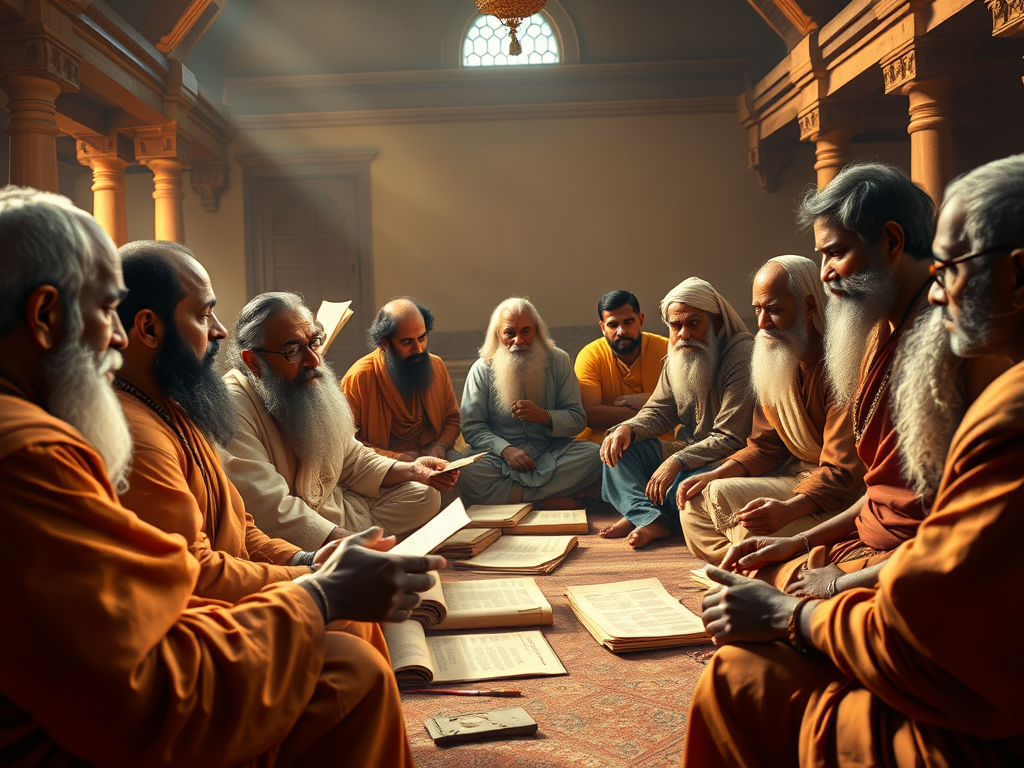
This sutta is deepest of all which shows what is “self” view which is the key backdrop of all traditions and religions who propose that there is indestructible self due to the fact it there is “perception” and hence stays like that forever. Poṭṭhapāda brings in this important aspect to Buddha explaining through various philosophies of India and many of it is found in Brhiadarnyaka Upanishad. This would be an interesting read and experience for all of us.
Link to Poṭṭhapādasutta(DN9) here
Let us take key paragraphs from this sutta for our analysis indepth:
📜 Paragraph 1
Purimāni, bhante, divasāni purimatarāni, nānātitthiyānaṁ samaṇabrāhmaṇānaṁ kotūhalasālāya sannisinnānaṁ sannipatitānaṁ abhisaññānirodhe kathā udapādi: ‘kathaṁ nu kho, bho, abhisaññānirodho hotī’ti?
📖 “Venerable sir, in the past, some days earlier, a discussion arose among various wandering ascetics and brahmins, who had assembled and gathered together in the curiosity debating hall (kotūhalasālā), concerning the cessation of perception. They started talking: ‘Friends, how indeed does the cessation of perception occur?’”
🔎 Explanation
Purimāni divasāni purimatarāni – “some days earlier” sets the time-frame of the event.
Nānātitthiyānaṁ samaṇabrāhmaṇānaṁ – refers to ascetics and brahmins of various sects and philosophies
Kotūhalasālāya – literally “hall of curiosity” or “debating hall”; a place where spiritual seekers, philosophers, or mendicants debated doctrines — often seen as lively centers for philosophical discourse.
Sannisinnānaṁ sannipatitānaṁ – “assembled and gathered,” emphasizing many thinkers coming together.
Abhisaññānirodha – higher cessation of perception; this is key: they were trying to understand how or why perception stops due to what reason.
Their question kathaṁ… abhisaññānirodho hoti? reveals confusion and diversity of ideas in India about the mechanics of mind and perception.
📜 Paragraph 2
Tatrekacce evamāhaṁsu: ‘ahetū appaccayā purisassa saññā uppajjantipi nirujjhantipi. Yasmiṁ samaye uppajjanti, saññī tasmiṁ samaye hoti. Yasmiṁ samaye nirujjhanti, asaññī tasmiṁ samaye hotī’ti. Ittheke abhisaññānirodhaṁ paññapenti.
📖 “There, some said: ‘Perception in a person arises and ceases without any cause or condition. At the moment it arises, he is percipient. At the moment it ceases, he is non-percipient.’ Thus, some proposed this as the explanation for the cessation of perception.”
🔎 Explanation
Ahetū appaccayā – “without cause or condition,” reflecting a fatalistic or indeterministic view, implying perceptions arise or stop randomly, denying dependent origination (paṭiccasamuppāda).
Uppajjantipi nirujjhantipi – “arise and cease.”
Saññī/asaññī – “percipient/non-percipient”; identity is defined solely by whether perception is present.
This view negates any causality, contrary to the Buddha’s teachings on conditionality.
📜 Paragraph 3
Tamañño evamāha: ‘na kho pana metaṁ, bho, evaṁ bhavissati. Saññā hi, bho, purisassa attā. Sā ca kho upetipi apetipi. Yasmiṁ samaye upeti, saññī tasmiṁ samaye hoti. Yasmiṁ samaye apeti, asaññī tasmiṁ samaye hotī’ti. Ittheke abhisaññānirodhaṁ paññapenti.
📖 “Another said: ‘No, friends, it should not be like that. Perception itself is the self (attā) of a person. And it either comes or goes. When it comes, he is percipient; when it goes, he is non-percipient.’ Thus, others proposed this as the explanation.”
🔎 Explanation
Saññā hi… attā – “perception is the self,” reflecting an eternalist or identity theory, equating selfhood directly with perception.
Upetipi apetipi – “it comes and goes”; they see the self as a flux of perception.
This view makes perception synonymous with self, contradicting anattā (non-self) as taught by the Buddha.
📜 Paragraph 4
Tamañño evamāha: ‘na kho pana metaṁ, bho, evaṁ bhavissati. Santi hi, bho, samaṇabrāhmaṇā mahiddhikā mahānubhāvā. Te imassa purisassa saññaṁ upakaḍḍhantipi apakaḍḍhantipi. Yasmiṁ samaye upakaḍḍhanti, saññī tasmiṁ samaye hoti. Yasmiṁ samaye apakaḍḍhanti, asaññī tasmiṁ samaye hotī’ti. Ittheke abhisaññānirodhaṁ paññapenti.
📖 “Another said: ‘No, friends, it should not be like that. There are ascetics and brahmins who possess great psychic power and influence. They can draw in or withdraw a person’s perception. When they draw it in, he is percipient; when they withdraw it, he is non-percipient.’ Thus, others proposed this as the explanation.”
🔎 Explanation
Samaṇabrāhmaṇā mahiddhikā mahānubhāvā – “powerful ascetics and brahmins with great influence”; attributing control of others’ perception to external spiritual agents.
Upakaḍḍhanti/apakaḍḍhanti – “pull in/pull away”; i.e., the theory here is external control by human spiritual adepts.
It represents a magical or theistic view, externalizing agency rather than understanding perception’s internal conditions.
📜 Paragraph 5
Tamañño evamāha: ‘na kho pana metaṁ, bho, evaṁ bhavissati. Santi hi, bho, devatā mahiddhikā mahānubhāvā. Tā imassa purisassa saññaṁ upakaḍḍhantipi apakaḍḍhantipi. Yasmiṁ samaye upakaḍḍhanti, saññī tasmiṁ samaye hoti. Yasmiṁ samaye apakaḍḍhanti, asaññī tasmiṁ samaye hotī’ti. Ittheke abhisaññānirodhaṁ paññapenti.
📖 “Another said: ‘No, friends, it should not be like that. There are deities who possess great psychic power and influence. They can draw in or withdraw a person’s perception. When they draw it in, he is percipient; when they withdraw it, he is non-percipient.’ Thus, others proposed this as the explanation.”
🔎 Explanation
Devatā mahiddhikā mahānubhāvā – “powerful deities”; attributing perception’s arising and ceasing to supernatural beings’ whims, a theistic determinism which reflects pre-Buddhist Indian cosmologies where gods were seen as controllers of fate or consciousness. Again, this contradicts Buddha’s principle of natural causality (dhammaniyāma).
📜 Paragraph 6
Tassa mayhaṁ, bhante, bhagavantaṁyeva ārabbha sati udapādi: ‘aho nūna bhagavā, aho nūna sugato, yo imesaṁ dhammānaṁ sukusalo’ti. Bhagavā, bhante, kusalo, bhagavā pakataññū abhisaññānirodhassa. Kathaṁ nu kho, bhante, abhisaññānirodho hotī”ti?
📖 “Then, venerable sir, mindfulness arose in me regarding the Blessed One himself: ‘Oh, the Blessed One! Oh, the Well-Gone One! How skilled he is in these things!’ Venerable sir, the Blessed One is skilled, the Blessed One knows the reality of the cessation of perception as it actually is. Venerable sir, how indeed does the cessation of perception occur?”
🔎 Explanation
Sati udapādi – “mindfulness arose,” a moment of clarity realizing the Buddha’s unique insight.
Aho nūna bhagavā… sukusalo – “Oh, the Buddha, so skilled!” expressing deep faith in the Buddha’s unparalleled understanding.
Pakataññū – “knower of the actual nature,” Buddha’s direct knowledge of how perceptions arise and cease according to dependent origination.
This sets the stage for the Buddha’s explanation of abhisaññānirodha not as random, externally controlled, or self-based, but arising from causal mental factors, especially refined meditative absorptions like saññāvedayitanirodha (cessation of perception and feeling).
🪷 Key Doctrinal Points
✅ Perception (saññā) is conditioned – Buddha rejects all these external or identity-based views, teaching instead that perception arises and ceases through dependent origination.
✅ Three flawed views illustrated:
1. Random (acausal) arising/ceasing.
2. Perception as self (eternalism).
3. External control by spiritual agents or deities (theism or magical manipulation).
✅ Establishes Buddhist insight – The sutta culminates in the Buddha’s explanation that only through deep meditative absorption leading to cessation (nirodha samāpatti) does true abhisaññānirodha occur, not by random chance or divine intervention.
Let us now take up Bṛhadāraṇyaka Upaniṣad with relation to this important point relating to perception
The most striking resonance is in Bṛhadāraṇyaka Upaniṣad 2.4.12–2.4.14, where Yājñavalkya explains to Maitreyī what happens at death and how the “self” or consciousness seems to disappear, which puzzled many early Indian philosophers about whether it was annihilation, absorption, or something else.
📜 Bṛhadāraṇyaka Upaniṣad 2.4.12
यथा मधु मधुकृतो नि ष्क्रम्य नानात्ययो भूतानां संनिधायात्मानमेवाभिसंवर्तयते |
एवं वा अरेऽस्मिन्न आत्मनि सर्वाणि भूतानि संनिधायात्मानमेवाभिसंवर्तन्ते |
स एष नेति नेत्यात्मा |
अग्राह्यमणिर्वाच्यमप्रत्याख्यातमनिर्वाच्यमप्रतिषिद्धमनिर्वाच्यमप्रतिषिद्धं |
अस्तीत्यग्राह्यमन्यत्र सर्वात् |
इति नेति नेत्यात्मा |
“Just as bees collect nectar from many flowers and make their honey, in the same way, all beings merge into the Self, not knowing ‘I am he’ or ‘I am this.’ This Self, my dear, is not this, not that (neti neti); it is incomprehensible, for it is never perceived; it is indestructible, never bound or undone. It is neither positive nor negative; it is beyond all attributes. Only when all beings merge in it, they do not know that they have merged.”
🔎 Explanation
✅ “Neti Neti” (नेति नेति) — “Not this, not this” — mirrors the idea of negating all empirical perceptions to find the true Self (ātman) beyond sensory and mental objects.
✅ The Upaniṣad discusses the cessation of empirical experience as a merging into the Self, but unlike the Buddha’s dependent cessation (paṭiccasamuppāda), here it is interpreted as an eternal, unchanging consciousness.
✅ Yājñavalkya’s metaphor of bees and honey: individual experiences (like perceptions) merge indistinguishably into one undifferentiated existence at death.
📜 Another Parallel: Bṛhadāraṇyaka Upaniṣad 4.3.32
यत्र तु द्वैतमिव भवति तत्र तदन्यः पश्यति तदन्यः जिघ्रति तदन्यः रमते |
यत्र्वस्यमिदं सर्वमात्मैवाभूत् तत्केन कं पश्येत् |
📖 “Where there is duality, one sees another, one smells another, one enjoys another; but when to the knower of Brahman all has become the Self, then what and whom will one see?”
Let us continue further on the sutta:
📜 Tatra, poṭṭhapāda, ye te samaṇabrāhmaṇā evamāhaṁsu: ‘ahetū appaccayā purisassa saññā uppajjantipi nirujjhantipī’ti, āditova tesaṁ aparaddhaṁ. Taṁ kissa hetu? Sahetū hi, poṭṭhapāda, sappaccayā purisassa saññā uppajjantipi nirujjhantipi. Sikkhā ekā saññā uppajjati, sikkhā ekā saññā nirujjhati.
📖 “Poṭṭhapāda, those ascetics and brahmins who said: ‘Perception in a person arises and ceases without cause or condition,’ are mistaken right from the start. Why? Because, Poṭṭhapāda, it is through causes and conditions that perception in a person arises and ceases. Through training in one way, one kind of perception arises; through training in another way, another perception ceases.”
🔎 Explanation
Ahetū appaccayā: “without cause, without condition” — the nihilistic or random view.
Sahetū sappaccayā: “with cause, with condition” — the Buddha affirms causality: perception is conditioned.
Sikkhā ekā… sikkhā ekā: “one training gives rise; another training causes cessation.” Training here means moral, concentration, and wisdom training, which condition perceptions.
📜 Kā ca sikkhā? Bhagavā avoca.
“Idha, poṭṭhapāda, tathāgato loke uppajjati arahaṁ, sammāsambuddho, vijjācaraṇasampanno, sugato, lokavidū, anuttaro purisadammasārathi, satthā devamanussānaṁ, buddho, bhagavā.
📖 “‘And what is that training?’ the Blessed One said:
‘Here, Poṭṭhapāda, a Tathāgata arises in the world — an Arahant, Perfectly Enlightened One, accomplished in true knowledge and conduct, well-gone, knower of the worlds, incomparable trainer of persons fit to be tamed, teacher of devas and humans, the Buddha, the Blessed One.”
🔎 Explanation
This is the standard ninefold epithet of the Buddha, fully spelled out instead of elided:
Arahaṁ — worthy, destroyer of defilements
Sammāsambuddho — fully self-awakened
Vijjācaraṇasampanno — perfect in knowledge & conduct
Sugato — well-gone (to Nibbāna)
Lokavidū — knower of worlds
Anuttaro purisadammasārathi — incomparable guide of people
Satthā devamanussānaṁ — teacher of gods & humans
Buddho — awakened
Bhagavā — Blessed One
Why here? Because realization of causally conditioned perception depends on having the Buddha as teacher.
📜 So imaṁ lokaṁ sadevakaṁ samārakaṁ sabrahmakaṁ sassamaṇabrāhmaṇiṁ pajaṁ sadevamanussaṁ sayaṁ abhiññā sacchikatvā pavedeti. So dhammaṁ deseti ādi kalyāṇaṁ majjhe kalyāṇaṁ pariyosāne kalyāṇaṁ sātthaṁ sabyañjanaṁ kevalaparipuṇṇaṁ parisuddhaṁ brahmacariyaṁ pakāsenti.
Taṁ dhammaṁ suṇāti gahapati vā gahapatiputto vā aññatarasmiṁ vā kulaputte. So taṁ dhammaṁ sutvā tathāgate saddhaṁ paṭilabhati. So tena saddhāpaṭilābhena samannāgato iti paṭisañcikkhati: “Gharāvāsaṁ nama hi bahukiccaṁ bahukaraṇīyaṁ, tattha anekavihitāni kāyakammāni vacīkammāni manokammāni pāpakāni akusalāni saṅkiliṭṭhāni pavatanti. Na sukaraṁ agāraṁ ajjhāvasatā ekantaparipuṇṇaṁ ekantaparisuddhaṁ brahmacariyaṁ carituṁ. Yannūnāhaṁ kesamassuṁ ohāretvā kāsāyāni vatthāni acchādetvā agārasmā anagāriyaṁ pabbajeyyaṁ.”
“He realizes with his own direct knowledge this world with its devas, Māra, Brahmā, with recluses and brahmins, with its princes and people, and proclaims the Dhamma — excellent in the beginning, middle, and end, with the meaning and phrasing complete, perfect, and pure, revealing the perfectly purified spiritual life.
A householder or his son or someone from another family hears this Dhamma. On hearing, he gains faith in the Tathāgata. Possessing that faith, he reflects: ‘The household life is crowded, a dusty path; going forth is like open air. It’s not easy, living at home, to lead the utterly perfect, pure holy life. Why don’t I shave off hair and beard, put on the ochre robe, and go forth from the household life into homelessness?’”
🔎 Explanation
The steps of going forth are fully spelled out:
Hearing the dhamma, faith in the Buddha, reflecting on the drawbacks of lay life & advantages of renunciation and decision to ordain
📜 So aparena samayena appaṁ piṇḍāya caritvā piṇḍapātaṁ ādāya paccāgacchati. Pacchābhattaṁ piṇḍapātapaṭikkanto nisīdati pallaṅkaṁ ābhujitvā ujum kāyaṁ paṇidhāya parimukhaṁ satiṁ upaṭṭhapetvā. So pāpake akusale dhamme pajahati sīlavipattipaccayā uppannā vā diṭṭhigatasaṅkilesā vā, anavajjena sīlena samannāgato indriyesu guttadvāro bhojane mattaññū jāgariyaṁ anuyutto sato sampajāno vihārati.
📖 “He, after some time, obtains alms food, returns from alms round, sits down cross-legged, keeping his body straight, establishes mindfulness in front. He abandons unwholesome mental states born of ethical failure or wrong views. He is possessed of blameless virtue, guards his sense doors, is moderate in eating, devoted to wakefulness, and dwells mindful and fully aware.”
Sīla (virtue) → Sense restraint → Moderation in food → Wakefulness → Mindfulness & clear knowing — these ethical trainings condition perception by purifying the mind.
📜 Five Hindrances Abandoned → Joy → Jhāna
Tassime pañcanīvaraṇe pahīne attani samanupassato pāmojjaṁ jāyati, pamuditassa pīti jāyati, pītimanassa kāyo passambhati, passaddhakāyo sukhaṁ vedeti, sukhino cittaṁ samādhiyati.
📖 “When he sees within himself the five hindrances abandoned, joy arises. From joy comes rapture. When the mind is rapturous, the body becomes tranquil. When the body is tranquil, he feels happiness. In one who is happy, the mind becomes connected or with oneness.”
🔎 Explanation
Five hindrances are given up and hence Pāmojja (joy) → Pīti (rapture) → Passaddhi (tranquility) → Sukha (happiness) → Samādhi (connectedness) — each causally dependent arises
📜 First Jhāna → Cessation of earlier perceptions
So vivicceva kāmehi, vivicca akusalehi dhammehi, savitakkaṁ savicāraṁ vivekajaṁ pītisukhaṁ paṭhamaṁ jhānaṁ upasampajja viharati. Tassa yā purimā kāmasaññā, sā nirujjhati. Vivekajapītisukhasukhumasaccasaññā tasmiṁ samaye hoti, vivekajapītisukhasukhumasaccasaññīyeva tasmiṁ samaye hoti. Evampi sikkhā ekā saññā uppajjati, sikkhā ekā saññā nirujjhati. Ayaṁ sikkhā”ti bhagavā avoca.
📖 “Quite secluded from sensual pleasures, secluded from unwholesome states, he enters and dwells in the first jhāna, which is accompanied by applied and sustained thought, born of seclusion, filled with rapture and pleasure. At that time, his earlier perception of sensual pleasures ceases, and there arises the subtle perception of the truth of rapture and pleasure born of seclusion. Thus, through training, one perception arises and through training, another perception ceases. This, Poṭṭhapāda, is the training,” said the Blessed One.
🔎 Explanation
✅ Key causal insight: By cultivating ethical discipline, sense restraint, and concentration → old perception (kāmasaññā, perception of sensual objects) ceases, and new refined perception (vivekajapītisukhasukhumasaccasaññā) arises.
✅ This is conditioned arising and cessation of saññā — neither random nor due to external forces.
✅ Each jhānic state successively refines perception, culminating (in higher jhānas and saññāvedayitanirodha) in temporary cessation of all perceptions, but always through cause & condition.
📜 Second Jhāna
Puna caparaṁ, poṭṭhapāda, bhikkhu vitakkavicārānaṁ vūpasamā ajjhattaṁ sampasādanaṁ cetaso ekodibhāvaṁ avitakkaṁ avicāraṁ samādhijaṁ pītisukhaṁ dutiyaṁ jhānaṁ upasampajja viharati. Tassa yā purimā vivekajapītisukhasukhumasaccasaññā, sā nirujjhati. Samādhijapītisukhasukhumasaccasaññā tasmiṁ samaye hoti, samādhijapītisukhasukhumasaccasaññīyeva tasmiṁ samaye hoti. Evampi sikkhā ekā saññā uppajjati, sikkhā ekā saññā nirujjhati. Ayampi sikkhā”ti bhagavā avoca.
📖 “Furthermore, Poṭṭhapāda, with the stilling of applied and sustained thought, a bhikkhu enters and dwells in the second jhāna, which has internal confidence, unification of mind, is without applied and sustained thought, and is born of concentration, filled with rapture and pleasure. At that time, the earlier perception of the subtle truth of seclusion-born rapture and pleasure ceases, and there arises the subtle perception of the truth of rapture and pleasure born of concentration. Thus, through training, one perception arises, and through training, another perception ceases. This too is the training,” said the Blessed One.
🔎 Explanation
✅ Vitakkavicāra vūpasama — silencing initial & sustained thought → marks shift from 1st to 2nd jhāna.
✅ Purimā saññā (earlier perception): vivekajapītisukhasukhumasaccasaññā — “perception of the subtle truth of seclusion-born rapture.”
✅ New saññā: samādhijapītisukhasukhumasaccasaññā — “perception of subtle truth of rapture born of concentration.”
📜 Third Jhāna
Puna caparaṁ, poṭṭhapāda, bhikkhu pītiyā ca virāgā upekkhako ca viharati sato ca sampajāno, sukhañca kāyena paṭisaṁvedeti, yaṁ taṁ ariyā ācikkhanti: ‘upekkhako satimā sukhavihārī’ti, tatiyaṁ jhānaṁ upasampajja viharati. Tassa yā purimā samādhijapītisukhasukhumasaccasaññā, sā nirujjhati. Upekkhāsukhasukhumasaccasaññā tasmiṁ samaye hoti, upekkhāsukhasukhumasaccasaññīyeva tasmiṁ samaye hoti. Evampi sikkhā ekā saññā uppajjati, sikkhā ekā saññā nirujjhati. Ayampi sikkhā”ti bhagavā avoca.
📖 “Furthermore, Poṭṭhapāda, with the fading away of rapture, a bhikkhu dwells equanimous, mindful, and fully aware, experiencing bodily pleasure, which the noble ones describe as: ‘He dwells in equanimity and mindfulness, and is happy.’ He enters and dwells in the third jhāna. At that time, the earlier perception of the subtle truth of rapture and pleasure born of concentration ceases, and there arises the subtle perception of the truth of pleasure with equanimity. Thus, through training, one perception arises, and through training, another perception ceases. This too is the training,” said the Blessed One.
🔎 Explanation
✅ Pīti virāga — rapture fades → shift from second to third jhāna.
✅ Purimā: samādhijapītisukhasukhumasaccasaññā ceases.
✅ New: upekkhāsukhasukhumasaccasaññā arises → perception of subtle truth of equanimous pleasure.
📜 Fourth Jhāna
Puna caparaṁ, poṭṭhapāda, bhikkhu sukhassa ca pahānā dukkhassa ca pahānā pubbeva somanassadomanassānaṁ atthaṅgamā adukkhamasukhaṁ upekkhāsatipārisuddhiṁ catutthaṁ jhānaṁ upasampajja viharati. Tassa yā purimā upekkhāsukhasukhumasaccasaññā, sā nirujjhati. Adukkhamasukhasukhumasaccasaññā tasmiṁ samaye hoti, adukkhamasukhasukhumasaccasaññīyeva tasmiṁ samaye hoti. Evampi sikkhā ekā saññā uppajjati, sikkhā ekā saññā nirujjhati. Ayampi sikkhā”ti bhagavā avoca.
📖 “Furthermore, Poṭṭhapāda, with the abandoning of pleasure and pain, and with the earlier disappearance of joy and sorrow, a bhikkhu enters and dwells in the fourth jhāna, which is neither painful nor pleasant, and has purity of mindfulness due to equanimity. At that time, the earlier perception of the subtle truth of equanimous pleasure ceases, and there arises the subtle perception of the truth of neutral feeling. Thus, through training, one perception arises, and through training, another perception ceases. This too is the training,” said the Blessed One.
🔎 Explanation
✅ Both sukha & dukkha are abandoned → neutral, neither pleasure nor pain → 4th jhāna.
✅ Purimā: upekkhāsukhasukhumasaccasaññā ceases.
✅ New: adukkhamasukhasukhumasaccasaññā arises → perception of subtle truth of neither-pain-nor-pleasure.
📜 Fifth attainment: Ākāsānañcāyatana (Infinite Space)
Puna caparaṁ, poṭṭhapāda, bhikkhu sabbaso rūpasaññānaṁ samatikkamā paṭighasaññānaṁ atthaṅgamā nānattasaññānaṁ amanasikārā ‘ananto ākāso’ti ākāsānañcāyatanaṁ upasampajja viharati. Tassa yā purimā rūpasaññā, sā nirujjhati. Ākāsānañcāyatanasukhumasaccasaññā tasmiṁ samaye hoti, ākāsānañcāyatanasukhumasaccasaññīyeva tasmiṁ samaye hoti. Evampi sikkhā ekā saññā uppajjati, sikkhā ekā saññā nirujjhati. Ayampi sikkhā”ti bhagavā avoca.
📖 “Furthermore, Poṭṭhapāda, by completely transcending perceptions of form, with the disappearance of perceptions of resistance and by not attending to perceptions of variety, a bhikkhu enters and dwells in the base of infinite space, thinking, ‘Infinite space.’ At that time, the earlier perception of forms ceases, and there arises the subtle perception of the truth of the base of infinite space. Thus, through training, one perception arises, and through training, another perception ceases. This too is the training,” said the Blessed One.
🔎 Explanation
✅ Transcending rūpasaññā (form perceptions) → marks transition from rūpajhānas → arūpa attainments.
✅ Purimā: rūpasaññā ceases.
✅ New: ākāsānañcāyatanasukhumasaccasaññā arises → perception of infinite space.
📜 Sixth attainment: Viññāṇañcāyatana (Infinite Consciousness)
Puna caparaṁ, poṭṭhapāda, bhikkhu sabbaso ākāsānañcāyatanaṁ samatikkamma ‘anantaṁ viññāṇan’ti viññāṇañcāyatanaṁ upasampajja viharati. Tassa yā purimā ākāsānañcāyatanasukhumasaccasaññā, sā nirujjhati. Viññāṇañcāyatanasukhumasaccasaññā tasmiṁ samaye hoti, viññāṇañcāyatanasukhumasaccasaññīyeva tasmiṁ samaye hoti. Evampi sikkhā ekā saññā uppajjati, sikkhā ekā saññā nirujjhati. Ayampi sikkhā”ti bhagavā avoca.
📖 “Furthermore, Poṭṭhapāda, by completely transcending the base of infinite space, a bhikkhu enters and dwells in the base of infinite consciousness, thinking, ‘Infinite consciousness.’ At that time, the earlier perception of the subtle truth of the base of infinite space ceases, and there arises the subtle perception of the truth of the base of infinite consciousness. Thus, through training, one perception arises, and through training, another perception ceases. This too is the training,” said the Blessed One.🔎 Explanation
✅ Transcending ākāsānañcāyatana → entry to viññāṇañcāyatana.
✅ Purimā: ākāsānañcāyatanasukhumasaccasaññā ceases.
✅ New: viññāṇañcāyatanasukhumasaccasaññā arises → perception of infinite consciousness.
📜 Ākiñcaññāyatana (Base of Nothingness)
Puna caparaṁ, poṭṭhapāda, bhikkhu sabbaso viññāṇañcāyatanaṁ samatikkamma ‘natthi kiñcī’ti ākiñcaññāyatanaṁ upasampajja viharati. Tassa yā purimā viññāṇañcāyatanasukhumasaccasaññā, sā nirujjhati. Ākiñcaññāyatanasukhumasaccasaññā tasmiṁ samaye hoti, ākiñcaññāyatanasukhumasaccasaññīyeva tasmiṁ samaye hoti. Evampi sikkhā ekā saññā uppajjati, sikkhā ekā saññā nirujjhati. Ayampi sikkhā”ti bhagavā avoca.
📖 “Furthermore, Poṭṭhapāda, by completely transcending the base of infinite consciousness, a bhikkhu enters and dwells in the base of nothingness, thinking, ‘There is nothing.’ At that time, the earlier perception of the subtle truth of the base of infinite consciousness ceases, and there arises the subtle perception of the truth of the base of nothingness. Thus, through training, one perception arises, and through training, another perception ceases. This too is the training,” said the Blessed One.
🔎 Explanation
✅ Viññāṇañcāyatana → Ākiñcaññāyatana: Here, the meditator moves from infinite consciousness to perceiving the absence of objects — “nothingness.”
✅ Purimā saññā: viññāṇañcāyatanasukhumasaccasaññā ceases.
✅ New saññā: ākiñcaññāyatanasukhumasaccasaññā arises.
This shows continued conditioning of perception even in the most rarefied arūpa attainments.
📜 Transition to Cessation: Reaching the Limit of Perception
Yato kho, poṭṭhapāda, bhikkhu idha sakasaññī hoti, so tato amutra tato amutra anupubbena saññaggaṁ phusati. Tassa saññagge ṭhitassa evaṁ hoti: ‘cetayamānassa me pāpiyo, acetayamānassa me seyyo. Ahañceva kho pana ceteyyaṁ, abhisaṅkhareyyaṁ, imā ca me saññā nirujjheyyuṁ, aññā ca oḷārikā saññā uppajjeyyuṁ; yannūnāhaṁ na ceva ceteyyaṁ na ca abhisaṅkhareyyan’ti. So na ceva ceteti, na ca abhisaṅkharoti. Tassa acetayato anabhisaṅkharoto tā ceva saññā nirujjhanti, aññā ca oḷārikā saññā na uppajjanti. So nirodhaṁ phusati. Evaṁ kho, poṭṭhapāda, anupubbābhisaññānirodhasampajānasamāpatti hoti.
📖 “When, Poṭṭhapāda, a bhikkhu here has perception, and from there progresses gradually from one stage to another, he reaches the highest limit of perception. Standing at the limit of perception, this thought arises in him: ‘If I were to intend and construct volitionally, it would be worse for me; if I do not intend and do not construct, it would be better for me. For if I were to intend and construct, these perceptions of mine would cease and grosser perceptions would arise; what if I neither intend nor construct?’ So he neither intends nor constructs. In one who does not intend or construct, those perceptions cease, and other grosser perceptions do not arise. He attains cessation. Thus, Poṭṭhapāda, there is the progressive attainment of cessation of perception with clear comprehension.”
🔎 Explanation
✅ Saññagga — “limit/top of perception” — corresponds to nevasaññānāsaññāyatana (base of neither-perception-nor-non-perception) which is elided here but implied in context.
✅ The meditator realizes that volition (cetana) & formations (abhisaṅkhāra) condition perception; if he engages them, coarser perceptions arise; if he refrains, refined perceptions cease without backsliding into grosser states.
✅ By deliberate non-intending (acetana) and non-fabricating (anabhisaṅkhāra) → perceptions simply fade → saññāvedayitanirodha (cessation of perception & feeling) is reached.
✅ This entire process is anupubbābhisaññānirodhasampajānasamāpatti — “sequential, progressive attainment of cessation with clear knowing.”
📜 Buddha’s Final Question
Taṁ kiṁ maññasi, poṭṭhapāda, api nu te ito pubbe evarūpā anupubbābhisaññānirodhasampajānasamāpatti sutapubbā”ti?
📖 “What do you think, Poṭṭhapāda — have you ever heard before of such a sequential, progressive attainment of cessation of perception with clear comprehension?”
🔎 Explanation
The Buddha challenges Poṭṭhapāda to see whether any ascetic or brāhmaṇa ever taught this precise, causal, stepwise path. This question points out the unique brilliance of the Buddha’s insight — that perceptions arise and cease not by fate, randomness, or divine intervention, but by precisely conditioned training and mental processes.
🪷 Core Insight
🔥 Each level of jhāna and arūpa samāpatti is a deliberate, causal refinement of perception — culminating in the cessation of perception & feeling not as a mystical gift but a natural, knowable, trainable process.
🔥 The meditator sees the danger of volitional fabrication, realizing how even subtle intention can re-trigger coarse perceptions, and thus learns to rest in complete non-fabrication, allowing perceptions to cease peacefully and without regression.
🔥 This shows dependent cessation applied to the most refined states of consciousness, a unique teaching of the Buddha absent in Upaniṣhadic or other contemporary systems.
📜 Poṭṭhapāda agrees with Buddha
“No hetaṁ, bhante. Evaṁ kho ahaṁ, bhante, bhagavato bhāsitaṁ ājānāmi:
Yato kho, poṭṭhapāda, bhikkhu idha sakasaññī hoti, so tato amutra tato amutra anupubbena saññaggaṁ phusati:
So sabbaso ākiñcaññāyatanaṁ samatikkamma ‘nevasaññānāsaññā’ti nevasaññānāsaññāyatanaṁ upasampajja viharati. Tassa yā purimā ākiñcaññāyatanasukhumasaccasaññā, sā nirujjhati. Nevasaññānāsaññāyatanasukhumasaccasaññā tasmiṁ samaye hoti, nevasaññānāsaññāyatanasukhumasaccasaññīyeva tasmiṁ samaye hoti.
Tassa saññagge ṭhitassa evaṁ hoti: ‘cetayamānassa me pāpiyo, acetayamānassa me seyyo. Ahañceva kho pana ceteyyaṁ, abhisaṅkhareyyaṁ, imā ca me saññā nirujjheyyuṁ, aññā ca oḷārikā saññā uppajjeyyuṁ; yannūnāhaṁ na ceva ceteyyaṁ na ca abhisaṅkhareyyan’ti. So na ceva ceteti, na ca abhisaṅkharoti. Tassa acetayato anabhisaṅkharoto tā ceva saññā nirujjhanti, aññā ca oḷārikā saññā na uppajjanti. So nirodhaṁ phusati. Evaṁ kho, poṭṭhapāda, anupubbābhisaññānirodhasampajānasamāpatti hoti.
“No indeed, venerable sir. This is how, venerable sir, I understand what has been spoken by the Blessed One:
“When, Poṭṭhapāda, a bhikkhu here has perception, he proceeds from there, going further and further, gradually attaining the peak of perception:
Having completely transcended the base of nothingness, he enters and dwells in the base of neither-perception-nor-non-perception, thinking, ‘This is the base of neither-perception-nor-non-perception.’ At that time, his earlier perception of the subtle truth of the base of nothingness ceases, and there arises the subtle perception of the truth of the base of neither-perception-nor-non-perception.
Standing at the limit of perception, it occurs to him: ‘If I were to intend and construct, it would be worse for me; if I do not intend and do not construct, it would be better for me. For if I were to intend and construct, these subtle perceptions would cease and grosser perceptions would arise; what if I neither intend nor construct?’
So he neither intends nor constructs. And because he does not intend and does not construct, those subtle perceptions cease, and other grosser perceptions do not arise. He reaches cessation.
Thus, Poṭṭhapāda, this is called the sequential attainment of cessation of perception with clear comprehension.”
🔎 Detailed Explanation of Each Key Element
✅ sakasaññī hoti – “he has perception” — starts with an existing subtle saññā (perception) already refined through earlier jhānas/arūpas.
✅ tato amutra tato amutra anupubbena – “from here to there, progressively” — refers to sequential advancement through the arūpa spheres:
🟢 ākāsānañcāyatana → base of infinite space
🟢 viññāṇañcāyatana → base of infinite consciousness
🟢 ākiñcaññāyatana → base of nothingness
🔵 nevasaññānāsaññāyatana → base of neither-perception-nor-non-perception (fully restored here!)
✅ saññaggaṁ phusati – “he reaches the limit/peak of perception” — this refers specifically to standing at nevasaññānāsaññāyatana, where perception is so subtle it’s neither clearly present nor absent.
✅ cetayamānassa me pāpiyo – “if I intend, it would be worse” — the meditator realizes any volitional movement disrupts subtle perception, triggering coarser perceptions.
✅ acetayamānassa me seyyo – “if I do not intend, it would be better” — recognizes non-fabrication as the key to maintaining and deepening the cessation process.
✅ abhisaṅkhareyyaṁ – “if I were to fabricate” — intentional mental constructions that re-ignite activity in the mind.
✅ acetayato anabhisaṅkharoto – “not intending and not constructing” — the meditator refrains completely from forming new mental fabrications.
✅ tā ceva saññā nirujjhanti, aññā ca oḷārikā saññā na uppajjanti – “those subtle perceptions cease, and no grosser perceptions arise” — leads to saññāvedayitanirodha (attainment of cessation of perception & feeling).
✅ nirodhaṁ phusati – “he reaches cessation” — the culmination of refined perception, resulting in temporary, complete suspension of perception & feeling, experienced by advanced practitioners like arahants or non-returners.
✅ anupubbābhisaññānirodhasampajānasamāpatti – literally: “the sequential attainment of cessation of perception with clear knowing.”
📜 “Evaṁ, poṭṭhapādā”ti.
📖 “Yes, Poṭṭhapāda,” [said the Blessed One].
📜 “Ekaññeva nu kho, bhante, bhagavā saññaggaṁ paññapeti, udāhu puthūpi saññagge paññapetī”ti?
📖 “Does the Blessed One teach only one peak of perception, venerable sir, or does he teach many peaks of perception?”
🔎 Explanation: Poṭṭhapāda wants clarity: is saññagga a single point everyone reaches the same way, or can there be multiple peaks depending on the practitioner?
📜 “Ekampi kho ahaṁ, poṭṭhapāda, saññaggaṁ paññapemi, puthūpi saññagge paññapemī”ti.
📖 “Poṭṭhapāda, I teach one peak of perception, and I also teach many peaks of perception.”
🔎 Explanation
✅ Ekampi: The Buddha teaches the singular universal limit of perception — i.e., the point at which perception ceases completely (nirodha).
✅ Puthūpi: But he also recognizes many individual peaks — as each meditator can reach different refined levels depending on their capacity, e.g., stopping at a certain jhāna or āyatana.
📜 “Yathā kathaṁ pana, bhante, bhagavā ekampi saññaggaṁ paññapeti, puthūpi saññagge paññapetī”ti?
📖 “But how, venerable sir, does the Blessed One teach one peak of perception and many peaks of perception?”
📜 “Yathā yathā kho, poṭṭhapāda, nirodhaṁ phusati tathā tathāhaṁ saññaggaṁ paññapemi. Evaṁ kho ahaṁ, poṭṭhapāda, ekampi saññaggaṁ paññapemi, puthūpi saññagge paññapemī”ti.
📖 “Poṭṭhapāda, however one reaches cessation, in just that way do I teach the peak of perception. Thus, I teach one peak of perception and also many peaks.”
🔎 Explanation
✅ The universal endpoint (ekam saññagga) is cessation (nirodha).
✅ The multiple peaks (puthū saññagga) are the various levels of subtle perception meditators can reach before cessation, depending on their development.
This is profound: the Buddha accommodates individual differences in capacity, while affirming the common final goal.
📜 “Saññā nu kho, bhante, paṭhamaṁ uppajjati, pacchā ñāṇaṁ, udāhu ñāṇaṁ paṭhamaṁ uppajjati, pacchā saññā, udāhu saññā ca ñāṇañca apubbaṁ acarimaṁ uppajjantī”ti?
📖 “Venerable sir, does perception arise first and then knowledge, or does knowledge arise first and then perception, or do perception and knowledge arise simultaneously?”
🔎 Explanation
✅ Poṭṭhapāda seeks clarity on cognition dynamics: is there a sequential or simultaneous relationship between saññā (perception) and ñāṇa (knowledge/knowing)?
📜 Buddha’s decisive answer
“Saññā kho, poṭṭhapāda, paṭhamaṁ uppajjati, pacchā ñāṇaṁ, saññuppādā ca pana ñāṇuppādo hoti. So evaṁ pajānāti: ‘idappaccayā kira me ñāṇaṁ udapādī’ti. Iminā kho etaṁ, poṭṭhapāda, pariyāyena veditabbaṁ— yathā saññā paṭhamaṁ uppajjati, pacchā ñāṇaṁ, saññuppādā ca pana ñāṇuppādo hotī”ti.
📖 “Perception, Poṭṭhapāda, arises first, then knowledge. From the arising of perception comes the arising of knowledge. One understands thus: ‘It is because of these conditions that my knowledge has arisen.’ By this reasoning, Poṭṭhapāda, it should be understood that perception arises first, then knowledge, and from the arising of perception comes the arising of knowledge.”
🔎 Explanation
✅ Saññā → ñāṇa: The Buddha decisively teaches that perception precedes knowledge; first one perceives an object, and only then does one know/discern it.
✅ He points to idappaccayatā (specific conditionality) — it is precisely because perception has arisen that knowledge arises.
✅ This underscores dependent arising even in the dynamics of the most refined meditative consciousness: cognition isn’t mystical but proceeds through cause and condition.
📜 Poṭṭhapāda’s question: Is perception the self?
“Saññā nu kho, bhante, purisassa attā, udāhu aññā saññā añño attā”ti?
📖 “Venerable sir, is perception the self of a person, or is perception one thing and the self another?”
🔎 Explanation
Poṭṭhapāda asks the central question: Does saññā = attā (identity theory)? Or are they separate realities?
📜 Buddha counters with a question
“Kaṁ pana tvaṁ, poṭṭhapāda, attānaṁ paccesī”ti?
📖 “But, Poṭṭhapāda, what do you take to be the self?”
📜 Poṭṭhapāda’s first idea: Coarse, material self
“Oḷārikaṁ kho ahaṁ, bhante, attānaṁ paccemi rūpiṁ cātumahābhūtikaṁ kabaḷīkārāhārabhakkhan”ti.
📖 “Venerable sir, I think the self is coarse, material, consisting of the four great elements, and feeding on physical food.”
📜 Buddha refutes the coarse self view
“Oḷāriko ca hi te, poṭṭhapāda, attā abhavissa rūpī cātumahābhūtiko kabaḷīkārāhārabhakkho. Evaṁ santaṁ kho te, poṭṭhapāda, aññāva saññā bhavissati añño attā. Tadamināpetaṁ, poṭṭhapāda, pariyāyena veditabbaṁ yathā aññāva saññā bhavissati añño attā. Tiṭṭhateva sāyaṁ, poṭṭhapāda, oḷāriko attā rūpī cātumahābhūtiko kabaḷīkārāhārabhakkho, atha imassa purisassa aññā ca saññā uppajjanti, aññā ca saññā nirujjhanti. Iminā kho etaṁ, poṭṭhapāda, pariyāyena veditabbaṁ yathā aññāva saññā bhavissati añño attā”ti.
📖 “Poṭṭhapāda, if your self were indeed coarse, material, consisting of the four great elements, feeding on physical food, then in that case perception would have to be something other than the self, because even while that coarse self remains, various perceptions arise and cease. Therefore, Poṭṭhapāda, by this reasoning it should be understood that perception must be other than the self.”
📜 Poṭṭhapāda’s second idea: Mind-made self
“Manomayaṁ kho ahaṁ, bhante, attānaṁ paccemi sabbaṅgapaccaṅgiṁ ahīnindriyan”ti.
📖 “Venerable sir, I think the self is mind-made, complete in all its parts, and not deficient in faculties.”
📜 Buddha refutes mind-made self view
“Manomayo ca hi te, poṭṭhapāda, attā abhavissa sabbaṅgapaccaṅgī ahīnindriyo, evaṁ santampi kho te, poṭṭhapāda, aññāva saññā bhavissati añño attā. Tadamināpetaṁ, poṭṭhapāda, pariyāyena veditabbaṁ yathā aññāva saññā bhavissati añño attā. Tiṭṭhateva sāyaṁ, poṭṭhapāda, manomayo attā sabbaṅgapaccaṅgī ahīnindriyo, atha imassa purisassa aññā ca saññā uppajjanti, aññā ca saññā nirujjhanti. Imināpi kho etaṁ, poṭṭhapāda, pariyāyena veditabbaṁ yathā aññāva saññā bhavissati añño attā”ti.
📖 “Poṭṭhapāda, if your self were mind-made, complete in all parts, and without defective faculties, still, even then, perception would have to be other than the self, since even while that mind-made self remains, various perceptions arise and cease. Therefore, Poṭṭhapāda, by this reasoning it should be understood that perception must be other than the self.”
📜 Poṭṭhapāda’s third idea: Formless, perception-made self
“Arūpiṁ kho ahaṁ, bhante, attānaṁ paccemi saññāmayan”ti.
📖 “Venerable sir, I think the self is formless, made only of perception.”
📜 Buddha refutes formless perception-made self view
“Arūpī ca hi te, poṭṭhapāda, attā abhavissa saññāmayo, evaṁ santampi kho te, poṭṭhapāda, aññāva saññā bhavissati añño attā. Tadamināpetaṁ, poṭṭhapāda, pariyāyena veditabbaṁ yathā aññāva saññā bhavissati añño attā. Tiṭṭhateva sāyaṁ, poṭṭhapāda, arūpī attā saññāmayo, atha imassa purisassa aññā ca saññā uppajjanti, aññā ca saññā nirujjhanti. Imināpi kho etaṁ, poṭṭhapāda, pariyāyena veditabbaṁ yathā aññāva saññā bhavissati añño attā”ti.
📖 “Poṭṭhapāda, if your self were formless, made of perception, still, even then, perception would have to be other than the self, since while that formless perception-made self remains, various perceptions arise and cease. Therefore, by this reasoning it should be understood that perception must be other than the self.”
📜 Poṭṭhapāda seeks certainty
“Sakkā panetaṁ, bhante, mayā ñātuṁ: ‘saññā purisassa attā’ti vā ‘aññāva saññā añño attā’ti vā”ti?
📖 “Is it possible, venerable sir, for me to know whether perception is the self or perception is other than the self?”
📜 Buddha declares it unknowable through speculation
“Dujjānaṁ kho etaṁ, poṭṭhapāda, tayā aññadiṭṭhikena aññakhantikena aññarucikena aññatrāyogena aññatrācariyakena: ‘saññā purisassa attā’ti vā, ‘aññāva saññā añño attāti’ vā”ti.
📖 “It is hard for you to know this, Poṭṭhapāda, since you hold different views, have different inclinations, different preferences, lack proper practice, and lack guidance from a true teacher.”
📜 Poṭṭhapāda’s statement & question
“Sacetaṁ, bhante, mayā dujjānaṁ aññadiṭṭhikena aññakhantikena aññarucikena aññatrāyogena aññatrācariyakena: ‘saññā purisassa attā’ti vā, ‘aññāva saññā añño attā’ti vā; kiṁ pana, bhante, ‘sassato loko, idameva saccaṁ moghamaññan’”ti?
📖 “If, venerable sir, it is difficult for me — being of different views, different beliefs, different inclinations, lacking proper practice, and lacking a true teacher — to know whether perception is the self or whether perception is one thing and the self another; then, venerable sir, is the world eternal, and is this alone the truth and all else false?”
📜 Buddha’s reply on eternalism
“Abyākataṁ kho etaṁ, poṭṭhapāda, mayā: ‘sassato loko, idameva saccaṁ moghamaññan’”ti.
📖 “Poṭṭhapāda, I have left undeclared: ‘The world is eternal, and this alone is the truth; all else is false.’”
📜 Poṭṭhapāda’s question on non-eternalism
“Kiṁ pana, bhante, ‘asassato loko, idameva saccaṁ moghamaññan’”ti?
📖 “Then, venerable sir, is the world not eternal, and is this alone the truth and all else false?”
📜 Buddha’s reply on non-eternalism
“Etampi kho, poṭṭhapāda, mayā abyākataṁ: ‘asassato loko, idameva saccaṁ moghamaññan’”ti.
📖 “This too, Poṭṭhapāda, I have left undeclared: ‘The world is not eternal, and this alone is the truth; all else is false.’”
📜 Poṭṭhapāda’s compound question covering the rest of the avyākata points
“Kiṁ pana, bhante, ‘antavā loko, idameva saccaṁ moghamaññan’; ‘anantavā loko, idameva saccaṁ moghamaññan’; ‘taṁ jīvaṁ taṁ sarīraṁ, idameva saccaṁ moghamaññan’; ‘aññaṁ jīvaṁ aññaṁ sarīraṁ, idameva saccaṁ moghamaññan’; ‘hoti tathāgato paraṁ maraṇā, idameva saccaṁ moghamaññan’; ‘na hoti tathāgato paraṁ maraṇā, idameva saccaṁ moghamaññan’; ‘hoti ca na ca hoti tathāgato paraṁ maraṇā, idameva saccaṁ moghamaññan’; ‘neva hoti na na hoti tathāgato paraṁ maraṇā, idameva saccaṁ moghamaññan’”ti?
📖 “Then, venerable sir, is the world finite, and is this alone the truth and all else false? Is the world infinite, and this alone the truth and all else false? Is the soul the same as the body, and this alone the truth and all else false? Is the soul different from the body, and this alone the truth and all else false? Does the Tathāgata exist after death, and this alone the truth and all else false? Does the Tathāgata not exist after death, and this alone the truth and all else false? Does the Tathāgata both exist and not exist after death, and this alone the truth and all else false? Does the Tathāgata neither exist nor not exist after death, and this alone the truth and all else false?”
📜 Buddha’s reply to all remaining views
“Etampi kho, poṭṭhapāda, mayā abyākataṁ: ‘neva hoti na na hoti tathāgato paraṁ maraṇā, idameva saccaṁ moghamaññan’”ti.
📖 “This too, Poṭṭhapāda, I have left undeclared: ‘That the Tathāgata neither exists nor does not exist after death, and this alone is the truth; all else is false.’”
📜 Poṭṭhapāda asks why these are undeclared
“Kasmā panetaṁ, bhante, bhagavatā abyākatan”ti?
📖 “Why, venerable sir, has the Blessed One left these undeclared?”
📜 Buddha explains why he leaves them undeclared
“Na hetaṁ, poṭṭhapāda, atthasaṁhitaṁ na dhammasaṁhitaṁ nādibrahmacariyakaṁ, na nibbidāya na virāgāya na nirodhāya na upasamāya na abhiññāya na sambodhāya na nibbānāya saṁvattati, tasmā etaṁ mayā abyākatan”ti.
📖 “Because, Poṭṭhapāda, these questions are not connected with what is beneficial, not connected with the Dhamma, not related to the beginning of the holy life, and they do not lead to disenchantment, dispassion, cessation, peace, direct knowledge, enlightenment, or Nibbāna. That is why I have left them undeclared.”
📜 Poṭṭhapāda asks what the Buddha declares
“Kiṁ pana, bhante, bhagavatā byākatan”ti?
📖 “Then, venerable sir, what has the Blessed One declared?”
📜 Buddha states what he teaches: the Four Noble Truths
“Idaṁ dukkhanti kho, poṭṭhapāda, mayā byākataṁ. Ayaṁ dukkhasamudayoti kho, poṭṭhapāda, mayā byākataṁ. Ayaṁ dukkhanirodhoti kho, poṭṭhapāda, mayā byākataṁ. Ayaṁ dukkhanirodhagāminī paṭipadāti kho, poṭṭhapāda, mayā byākatan”ti.
📖 “Poṭṭhapāda, I have declared: ‘This is suffering.’
I have declared: ‘This is the origin of suffering.’
I have declared: ‘This is the cessation of suffering.’
I have declared: ‘This is the path leading to the cessation of suffering.’”
📜 Poṭṭhapāda asks why these are declared
“Kasmā panetaṁ, bhante, bhagavatā byākatan”ti?
📖 “Why, venerable sir, has the Blessed One declared these?”
📜 Buddha explains why he declares the Four Noble Truths
“Etañhi, poṭṭhapāda, atthasaṁhitaṁ, etaṁ dhammasaṁhitaṁ, etaṁ ādibrahmacariyakaṁ, etaṁ nibbidāya virāgāya nirodhāya upasamāya abhiññāya sambodhāya nibbānāya saṁvattati; tasmā etaṁ mayā byākatan”ti.
📖 “Because, Poṭṭhapāda, these are connected with what is beneficial, connected with the Dhamma, related to the beginning of the holy life, and they lead to disenchantment, dispassion, cessation, peace, direct knowledge, enlightenment, and Nibbāna. That is why I have declared them.”
📜 Poṭṭhapāda expresses agreement and invites departure
“Evametaṁ, bhagavā, evametaṁ, sugata. Yassadāni, bhante, bhagavā kālaṁ maññatī”ti. Atha kho bhagavā uṭṭhāyāsanā pakkāmi.
📖 “So it is, Blessed One, so it is, Well-Gone One (Sugata). Now, venerable sir, let the Blessed One do as he thinks fit.” Then the Blessed One rose from his seat and departed.
📜 Wanderers criticize Poṭṭhapāda after the Buddha departs
Atha kho te paribbājakā acirapakkantassa bhagavato poṭṭhapādaṁ paribbājakaṁ samantato vācā sannitodakena sañjhabbharimakaṁsu: “evameva panāyaṁ bhavaṁ poṭṭhapādo yaññadeva samaṇo gotamo bhāsati, taṁ tadevassa abbhanumodati: ‘evametaṁ, bhagavā, evametaṁ, sugatā’ti. Na kho pana mayaṁ kiñci samaṇassa gotamassa ekaṁsikaṁ dhammaṁ desitaṁ ājānāma: ‘sassato loko’ti vā, ‘asassato loko’ti vā, ‘antavā loko’ti vā, ‘anantavā loko’ti vā, ‘taṁ jīvaṁ taṁ sarīran’ti vā, ‘aññaṁ jīvaṁ aññaṁ sarīran’ti vā, ‘hoti tathāgato paraṁ maraṇā’ti vā, ‘na hoti tathāgato paraṁ maraṇā’ti vā, ‘hoti ca na ca hoti tathāgato paraṁ maraṇā’ti vā, ‘neva hoti na na hoti tathāgato paraṁ maraṇā’ti vā”ti.
📖 Then, soon after the Blessed One had left, those wanderers surrounded Poṭṭhapāda and criticized him with harsh words from all sides: “So this master Poṭṭhapāda just agrees with whatever the ascetic Gotama says: ‘So it is, Blessed One; so it is, Well-Gone One!’ But we do not understand any definite doctrine taught by the ascetic Gotama — whether it is: ‘the world is eternal,’ or ‘the world is not eternal,’ or ‘the world is finite,’ or ‘the world is infinite,’ or ‘the soul is the same as the body,’ or ‘the soul is different from the body,’ or ‘the Tathāgata exists after death,’ or ‘does not exist,’ or ‘both exists and does not exist,’ or ‘neither exists nor does not exist after death.’”
📜 Poṭṭhapāda defends the Buddha’s teaching
Evaṁ vutte, poṭṭhapādo paribbājako te paribbājake etadavoca: “ahampi kho, bho, na kiñci samaṇassa gotamassa ekaṁsikaṁ dhammaṁ desitaṁ ājānāmi: ‘sassato loko’ti vā, ‘asassato loko’ti vā … ‘neva hoti na na hoti tathāgato paraṁ maraṇā’ti vā; api ca samaṇo gotamo bhūtaṁ tacchaṁ tathaṁ paṭipadaṁ paññapeti dhammaṭṭhitataṁ dhammaniyāmataṁ. Bhūtaṁ kho pana tacchaṁ tathaṁ paṭipadaṁ paññapentassa dhammaṭṭhitataṁ dhammaniyāmataṁ, kathañhi nāma mādiso viññū samaṇassa gotamassa subhāsitaṁ subhāsitato nābbhanumodeyyā”ti?
📖 When this was said, Poṭṭhapāda the wanderer said to those wanderers: “Friends, I also do not understand any definite doctrine taught by the ascetic Gotama such as: ‘the world is eternal’ or ‘the world is not eternal’ … or ‘the Tathāgata neither exists nor does not exist after death.’ But the ascetic Gotama teaches what is factual, true, and a correct path — the stability of the Dhamma, the lawfulness of the Dhamma. Since he teaches what is factual, true, and a correct path that accords with the stability and lawfulness of the Dhamma, how could an intelligent person like me not approve of the ascetic Gotama’s well-spoken words?”
📜 Citta and Poṭṭhapāda visit the Buddha
Atha kho dvīhatīhassa accayena citto ca hatthisāriputto poṭṭhapādo ca paribbājako yena bhagavā tenupasaṅkamiṁsu; upasaṅkamitvā citto hatthisāriputto bhagavantaṁ abhivādetvā ekamantaṁ nisīdi. Poṭṭhapādo pana paribbājako bhagavatā saddhiṁ sammodi. Sammodanīyaṁ kathaṁ sāraṇīyaṁ vītisāretvā ekamantaṁ nisīdi.
📖 Then, after two or three days had passed, Citta Hatthisāriputta and Poṭṭhapāda the wanderer went to the Blessed One. Having approached, Citta Hatthisāriputta paid homage to the Blessed One and sat down to one side. But Poṭṭhapāda the wanderer exchanged friendly greetings with the Blessed One, and after this courteous and amiable talk, he too sat down to one side.
📜 Poṭṭhapāda recounts criticism from his peers
Ekamantaṁ nisinno kho poṭṭhapādo paribbājako bhagavantaṁ etadavoca: “tadā maṁ, bhante, te paribbājakā acirapakkantassa bhagavato samantato vācāsannitodakena sañjhabbharimakaṁsu: ‘evameva panāyaṁ bhavaṁ poṭṭhapādo yaññadeva samaṇo gotamo bhāsati, taṁ tadevassa abbhanumodati: “evametaṁ, bhagavā, evametaṁ, sugatā”ti. Na kho pana mayaṁ kiñci samaṇassa gotamassa ekaṁsikaṁ dhammaṁ desitaṁ ājānāma: “sassato loko”ti vā, “asassato loko”ti vā, “antavā loko”ti vā, “anantavā loko”ti vā, “taṁ jīvaṁ taṁ sarīran”ti vā, “aññaṁ jīvaṁ aññaṁ sarīran”ti vā, “hoti tathāgato paraṁ maraṇā”ti vā, “na hoti tathāgato paraṁ maraṇā”ti vā, “hoti ca na ca hoti tathāgato paraṁ maraṇā”ti vā, “neva hoti na na hoti tathāgato paraṁ maraṇā”ti vā’ti.
📖 Sitting to one side, Poṭṭhapāda the wanderer said to the Blessed One: “Venerable sir, just after the Blessed One had departed, those wanderers surrounded me on all sides with a shower of harsh words: ‘So this master Poṭṭhapāda just agrees with whatever the ascetic Gotama says, saying: “So it is, Blessed One; so it is, Well-Gone One!” But we do not understand any definite doctrine taught by the ascetic Gotama — whether “the world is eternal,” or “the world is not eternal,” or “the world is finite,” or “the world is infinite,” or “the soul is the same as the body,” or “the soul is different from the body,” or “the Tathāgata exists after death,” or “does not exist after death,” or “both exists and does not exist,” or “neither exists nor does not exist after death.”’”
📜 Poṭṭhapāda recounts his own defense
Evaṁ vuttāhaṁ, bhante, te paribbājake etadavocaṁ: ‘ahampi kho, bho, na kiñci samaṇassa gotamassa ekaṁsikaṁ dhammaṁ desitaṁ ājānāmi: “sassato loko”ti vā, “asassato loko”ti vā … “neva hoti na na hoti tathāgato paraṁ maraṇā”ti vā; api ca samaṇo gotamo bhūtaṁ tacchaṁ tathaṁ paṭipadaṁ paññapeti dhammaṭṭhitataṁ dhammaniyāmataṁ. Bhūtaṁ kho pana tacchaṁ tathaṁ paṭipadaṁ paññapentassa dhammaṭṭhitataṁ dhammaniyāmataṁ, kathañhi nāma mādiso viññū samaṇassa gotamassa subhāsitaṁ subhāsitato nābbhanumodeyyā’”ti.
📖 “When this was said, venerable sir, I replied to those wanderers: ‘Friends, I too do not know of any definite doctrine taught by the ascetic Gotama such as: “the world is eternal,” or “the world is not eternal” … or “neither exists nor does not exist after death.” But the ascetic Gotama teaches what is factual, true, and a correct practice — the stability of the Dhamma and the lawfulness of the Dhamma. Since he teaches what is factual, true, and a correct practice that accords with the stability and lawfulness of the Dhamma, how could an intelligent person like me not approve of the ascetic Gotama’s well-spoken words?’”
📜 Buddha’s rebuke and praise
“Sabbeva kho ete, poṭṭhapāda, paribbājakā andhā acakkhukā; tvaṁyeva nesaṁ eko cakkhumā.”
📖 “All those other wanderers, Poṭṭhapāda, are blind and without eyes; you alone among them are one with eyes.”
🔎 Explanation
The Buddha commends Poṭṭhapāda’s discernment: unlike other wanderers, he sees beyond speculative traps.
📜 Buddha asserts he teaches both definite and indefinite doctrines
“Ekaṁsikāpi hi kho, poṭṭhapāda, mayā dhammā desitā paññattā; anekaṁsikāpi hi kho, poṭṭhapāda, mayā dhammā desitā paññattā.”
📖 “Poṭṭhapāda, there are teachings that I have taught and declared as definite, and there are teachings that I have taught and declared as indefinite.”
🔎 Explanation
✅ Ekaṁsika = definite, certain (e.g., Four Noble Truths).
✅ Anekaṁsika = indefinite, undecided (e.g., speculative metaphysics).
📜 Listing the indefinite doctrines
“Katame ca te, poṭṭhapāda, mayā anekaṁsikā dhammā desitā paññattā? ‘Sassato loko’ti kho, poṭṭhapāda, mayā anekaṁsiko dhammo desito paññatto; ‘asassato loko’ti kho, poṭṭhapāda, mayā anekaṁsiko dhammo desito paññatto; ‘antavā loko’ti kho, poṭṭhapāda, mayā anekaṁsiko dhammo desito paññatto; ‘anantavā loko’ti kho, poṭṭhapāda, mayā anekaṁsiko dhammo desito paññatto; ‘taṁ jīvaṁ taṁ sarīran’ti kho, poṭṭhapāda, mayā anekaṁsiko dhammo desito paññatto; ‘aññaṁ jīvaṁ aññaṁ sarīran’ti kho, poṭṭhapāda, mayā anekaṁsiko dhammo desito paññatto; ‘hoti tathāgato paraṁ maraṇā’ti kho, poṭṭhapāda, mayā anekaṁsiko dhammo desito paññatto; ‘na hoti tathāgato paraṁ maraṇā’ti kho, poṭṭhapāda, mayā anekaṁsiko dhammo desito paññatto; ‘hoti ca na ca hoti tathāgato paraṁ maraṇā’ti kho, poṭṭhapāda, mayā anekaṁsiko dhammo desito paññatto; ‘neva hoti na na hoti tathāgato paraṁ maraṇā’ti kho, poṭṭhapāda, mayā anekaṁsiko dhammo desito paññatto.”
📖 “And what are the teachings that I have taught and declared as indefinite, Poṭṭhapāda?
‘The world is eternal’ — I have taught this as an indefinite doctrine.
‘The world is not eternal’ — indefinite.
‘The world is finite’ — indefinite.
‘The world is infinite’ — indefinite.
‘The soul is the same as the body’ — indefinite.
‘The soul is different from the body’ — indefinite.
‘The Tathāgata exists after death’ — indefinite.
‘The Tathāgata does not exist after death’ — indefinite.
‘The Tathāgata both exists and does not exist after death’ — indefinite.
‘The Tathāgata neither exists nor does not exist after death’ — indefinite.”
📜 Why these are indefinite?
“Kasmā ca te, poṭṭhapāda, mayā anekaṁsikā dhammā desitā paññattā? Na hete, poṭṭhapāda, atthasaṁhitā na dhammasaṁhitā na ādibrahmacariyakā na nibbidāya na virāgāya na nirodhāya na upasamāya na abhiññāya na sambodhāya na nibbānāya saṁvattanti. Tasmā te mayā anekaṁsikā dhammā desitā paññattā.”
📖 “And why, Poṭṭhapāda, have these teachings been taught and declared by me as indefinite? Because, Poṭṭhapāda, they are not connected with what is beneficial, not connected with the Dhamma, not related to the beginning of the holy life, and they do not lead to disenchantment, dispassion, cessation, peace, direct knowledge, enlightenment, or Nibbāna. That is why I have taught and declared them as indefinite.”
📜 Buddha lists the definite teachings (ekaṁsikā dhammā)
Katame ca te, poṭṭhapāda, mayā ekaṁsikā dhammā desitā paññattā? Idaṁ dukkhanti kho, poṭṭhapāda, mayā ekaṁsiko dhammo desito paññatto. Ayaṁ dukkhasamudayoti kho, poṭṭhapāda, mayā ekaṁsiko dhammo desito paññatto. Ayaṁ dukkhanirodhoti kho, poṭṭhapāda, mayā ekaṁsiko dhammo desito paññatto. Ayaṁ dukkhanirodhagāminī paṭipadāti kho, poṭṭhapāda, mayā ekaṁsiko dhammo desito paññatto.
📖 “And what are the teachings, Poṭṭhapāda, that I have taught and declared as definite?
‘This is suffering’ — I have taught this as a definite doctrine.
‘This is the origin of suffering’ — definite.
‘This is the cessation of suffering’ — definite.
‘This is the path leading to the cessation of suffering’ — definite.”
📜 Why these are declared definite?
Kasmā ca te, poṭṭhapāda, mayā ekaṁsikā dhammā desitā paññattā? Ete hi, poṭṭhapāda, atthasaṁhitā, ete dhammasaṁhitā, ete ādibrahmacariyakā ete nibbidāya virāgāya nirodhāya upasamāya abhiññāya sambodhāya nibbānāya saṁvattanti. Tasmā te mayā ekaṁsikā dhammā desitā paññattā.
📖 “And why, Poṭṭhapāda, have these teachings been taught and declared by me as definite? Because, Poṭṭhapāda, they are connected with what is beneficial, connected with the Dhamma, related to the beginning of the holy life, and they lead to disenchantment, dispassion, cessation, peace, direct knowledge, enlightenment, and Nibbāna. That is why I have taught and declared them as definite.”
📜 Buddha critiques other ascetics’ views on eternal bliss
Santi, poṭṭhapāda, eke samaṇabrāhmaṇā evaṁvādino evaṁdiṭṭhino: ‘ekantasukhī attā hoti arogo paraṁ maraṇā’ti. Tyāhaṁ upasaṅkamitvā evaṁ vadāmi: ‘saccaṁ kira tumhe āyasmanto evaṁvādino evaṁdiṭṭhino: “ekantasukhī attā hoti arogo paraṁ maraṇā”’ti? Te ce me evaṁ puṭṭhā ‘āmā’ti paṭijānanti.
📖 “There are, Poṭṭhapāda, some ascetics and brahmins who hold this view: ‘After death, the self will experience exclusive bliss, free of disease.’ When I approach them, I ask: ‘Is it true, venerable sirs, that you hold this view: “The self will be exclusively happy, without illness, after death”?’ If questioned thus, they admit, ‘Yes.’”
📜 The Buddha cross-examines them: have they seen such a state?
Tyāhaṁ evaṁ vadāmi: ‘api pana tumhe āyasmanto ekantasukhaṁ lokaṁ jānaṁ passaṁ viharathā’ti? Iti puṭṭhā ‘no’ti vadanti.
📖 “Then I say to them: ‘But do you, venerable sirs, dwell knowing and seeing a world of exclusive bliss?’ When asked thus, they reply, ‘No.’”
📜 Have they even experienced it for a short time?
Tyāhaṁ evaṁ vadāmi: ‘api pana tumhe āyasmanto ekaṁ vā rattiṁ ekaṁ vā divasaṁ upaḍḍhaṁ vā rattiṁ upaḍḍhaṁ vā divasaṁ ekantasukhiṁ attānaṁ sañjānāthā’ti? Iti puṭṭhā ‘no’ti vadanti.
📖 “Then I say: ‘Have you, venerable sirs, even for one night or day, or half a night or day, known yourselves to be exclusively happy?’ When asked thus, they answer, ‘No.’”
📜 Do they know a path leading to that bliss?
Tyāhaṁ evaṁ vadāmi: ‘api pana tumhe āyasmanto jānātha: “ayaṁ maggo ayaṁ paṭipadā ekantasukhassa lokassa sacchikiriyāyā”’ti? Iti puṭṭhā ‘no’ti vadanti.
📖 “Then I ask: ‘Do you know a path or practice that leads to the realization of such a world of exclusive bliss?’ When asked thus, they reply, ‘No.’”
📜 Do they hear such assurances from beings already there?
Tyāhaṁ evaṁ vadāmi: ‘api pana tumhe āyasmanto yā tā devatā ekantasukhaṁ lokaṁ upapannā, tāsaṁ bhāsamānānaṁ saddaṁ suṇātha: “suppaṭipannāttha, mārisā, ujuppaṭipannāttha, mārisā, ekantasukhassa lokassa sacchikiriyāya; mayampi hi, mārisā, evaṁpaṭipannā ekantasukhaṁ lokaṁ upapannā”’ti? Iti puṭṭhā ‘no’ti vadanti.
📖 “Then I ask: ‘Do you hear, venerable sirs, voices of deities who have been reborn in such a world of exclusive bliss, saying: “You are practicing well, friends, rightly practicing for the realization of a world of exclusive bliss; for we too, friends, practiced thus and attained that world”?’ When asked thus, they answer, ‘No.’”
📜 Buddha challenges their unfounded claim
Taṁ kiṁ maññasi, poṭṭhapāda, nanu evaṁ sante tesaṁ samaṇabrāhmaṇānaṁ appāṭihīrakataṁ bhāsitaṁ sampajjatī”ti?
📖 “What do you think, Poṭṭhapāda: isn’t it the case that in such circumstances, the speech of those ascetics and brahmins turns out to be baseless and groundless?”
📜 Poṭṭhapāda’s agreement
“Addhā kho, bhante, evaṁ sante tesaṁ samaṇabrāhmaṇānaṁ appāṭihīrakataṁ bhāsitaṁ sampajjatī”ti.
📖 “Surely, venerable sir, in such circumstances, the speech of those ascetics and brahmins turns out to be baseless and groundless.”
📜 Simile of the man in love with the unseen village beauty
“Seyyathāpi, poṭṭhapāda, puriso evaṁ vadeyya: ‘ahaṁ yā imasmiṁ janapade janapadakalyāṇī, taṁ icchāmi taṁ kāmemī’ti. Tamenaṁ evaṁ vadeyyuṁ: ‘ambho purisa, yaṁ tvaṁ janapadakalyāṇiṁ icchasi kāmesi, jānāsi taṁ janapadakalyāṇiṁ khattiyī vā brāhmaṇī vā vessī vā suddī vā’ti? Iti puṭṭho ‘no’ti vadeyya. Tamenaṁ evaṁ vadeyyuṁ: ‘ambho purisa, yaṁ tvaṁ janapadakalyāṇiṁ icchasi kāmesi, jānāsi taṁ janapadakalyāṇiṁ evaṁnāmā evaṅgottāti vā, dīghā vā rassā vā majjhimā vā kāḷī vā sāmā vā maṅguracchavī vāti, amukasmiṁ gāme vā nigame vā nagare vā’ti? Iti puṭṭho ‘no’ti vadeyya. Tamenaṁ evaṁ vadeyyuṁ: ‘ambho purisa, yaṁ tvaṁ na jānāsi na passasi, taṁ tvaṁ icchasi kāmesī’ti? Iti puṭṭho ‘āmā’ti vadeyya.
📖 “Suppose, Poṭṭhapāda, a man were to say: ‘I am in love with and desire the most beautiful woman in this country.’ Then someone might ask him: ‘Good man, this woman you desire, do you know if she is a noblewoman, a brahmin woman, a merchant woman, or a worker woman?’ When asked thus, he would answer, ‘No.’ Then they would ask: ‘Good man, this woman you desire, do you know her name and clan? Is she tall, short, or medium height? Is she dark, fair, or golden-skinned? Does she live in this village, town, or city?’ When asked thus, he would answer, ‘No.’ Then they would say: ‘Good man, if you neither know nor see this woman, do you still desire and love her?’ When asked thus, he would reply, ‘Yes.’”
📜 Buddha confirms the simile’s conclusion
“Taṁ kiṁ maññasi, poṭṭhapāda, nanu evaṁ sante tassa purisassa appāṭihīrakataṁ bhāsitaṁ sampajjatī”ti?
📖 “What do you think, Poṭṭhapāda? Isn’t it the case that in such circumstances, that man’s talk turns out to be baseless and groundless?”
📜 Poṭṭhapāda agrees – “Addhā kho, bhante, evaṁ sante tassa purisassa appāṭihīrakataṁ bhāsitaṁ sampajjatī”ti.
📖 “Surely, venerable sir, in such circumstances, that man’s talk turns out to be baseless and groundless.”
📜 Buddha applies the simile directly to speculative ascetics
“Evameva kho, poṭṭhapāda, ye te samaṇabrāhmaṇā evaṁvādino evaṁdiṭṭhino: ‘ekantasukhī attā hoti arogo paraṁ maraṇā’ti. Tyāhaṁ upasaṅkamitvā evaṁ vadāmi: ‘saccaṁ kira tumhe āyasmanto evaṁvādino evaṁdiṭṭhino: “ekantasukhī attā hoti arogo paraṁ maraṇā”’ti? Te ce me evaṁ puṭṭhā ‘āmā’ti paṭijānanti. Tyāhaṁ evaṁ vadāmi: ‘api pana tumhe āyasmanto ekantasukhaṁ lokaṁ jānaṁ passaṁ viharathā’ti? Iti puṭṭhā ‘no’ti vadanti.”
📖 “Just so, Poṭṭhapāda, with those ascetics and brahmins who hold this view: ‘After death, the self will be exclusively happy, without disease.’ When I approach them, I ask: ‘Is it true, venerable sirs, that you hold this view: “The self will be exclusively happy, without disease, after death”?’ If questioned thus, they admit, ‘Yes.’ Then I ask: ‘But do you, venerable sirs, dwell knowing and seeing a world of exclusive bliss?’ When asked thus, they answer, ‘No.’”
📜 The Buddha asks if they have directly experienced exclusive bliss even briefly
Tyāhaṁ evaṁ vadāmi: ‘api pana tumhe āyasmanto ekaṁ vā rattiṁ ekaṁ vā divasaṁ upaḍḍhaṁ vā rattiṁ upaḍḍhaṁ vā divasaṁ ekantasukhiṁ attānaṁ sañjānāthā’ti? Iti puṭṭhā ‘no’ti vadanti.
📖 “Then I say: ‘Venerable sirs, have you ever known yourselves to be exclusively happy for even one night, one day, half a night, or half a day?’ When asked thus, they answer, ‘No.’”
📜 The Buddha asks if they know the path leading to exclusive bliss
Tyāhaṁ evaṁ vadāmi: ‘api pana tumhe āyasmanto jānātha: “ayaṁ maggo ayaṁ paṭipadā ekantasukhassa lokassa sacchikiriyāyā”’ti? Iti puṭṭhā ‘no’ti vadanti.
📖 “Then I ask: ‘Venerable sirs, do you know: “This is the path, this is the practice for realizing a world of exclusive bliss”?’ When asked thus, they answer, ‘No.’”
📜 The Buddha asks if they’ve heard assurances from devas who attained exclusive bliss
Tyāhaṁ evaṁ vadāmi: ‘api pana tumhe āyasmanto yā tā devatā ekantasukhaṁ lokaṁ upapannā, tāsaṁ bhāsamānānaṁ saddaṁ suṇātha: “suppaṭipannāttha, mārisā, ujuppaṭipannāttha, mārisā, ekantasukhassa lokassa sacchikiriyāya; mayampi hi, mārisā, evaṁpaṭipannā ekantasukhaṁ lokaṁ upapannā”’ti? Iti puṭṭhā ‘no’ti vadanti.
📖 “Then I ask: ‘Venerable sirs, do you hear the voices of deities who have been reborn in a world of exclusive bliss, saying: “Well done, friends! You are practicing rightly for realizing a world of exclusive bliss; for we, friends, practiced thus and attained that world”?’ When asked thus, they answer, ‘No.’”
📜 The Buddha’s final challenge
Taṁ kiṁ maññasi, poṭṭhapāda, nanu evaṁ sante tesaṁ samaṇabrāhmaṇānaṁ appāṭihīrakataṁ bhāsitaṁ sampajjatī”ti?📖 “What do you think, Poṭṭhapāda? Isn’t it the case that, given these circumstances, the speech of those ascetics and brahmins turns out to be baseless and groundless?”
📜 Poṭṭhapāda agrees
“Addhā kho, bhante, evaṁ sante tesaṁ samaṇabrāhmaṇānaṁ appāṭihīrakataṁ bhāsitaṁ sampajjatī”ti.
📖 “Surely, venerable sir, in these circumstances, their speech is indeed baseless and groundless.”
📜 The simile of the man building a staircase to an unseen palace
“Seyyathāpi, poṭṭhapāda, puriso cātumahāpathe nisseṇiṁ kareyya pāsādassa ārohaṇāya. Tamenaṁ evaṁ vadeyyuṁ: ‘ambho purisa, yassa tvaṁ pāsādassa ārohaṇāya nisseṇiṁ karosi, jānāsi taṁ pāsādaṁ puratthimāya vā disāya dakkhiṇāya vā disāya pacchimāya vā disāya uttarāya vā disāya ucco vā nīco vā majjhimo vā’ti? Iti puṭṭho ‘no’ti vadeyya. Tamenaṁ evaṁ vadeyyuṁ: ‘ambho purisa, yaṁ tvaṁ na jānāsi na passasi, tassa tvaṁ pāsādassa ārohaṇāya nisseṇiṁ karosī’ti? Iti puṭṭho ‘āmā’ti vadeyya.”
📖 “Suppose, Poṭṭhapāda, a man were to build a staircase in the middle of a crossroads for climbing into a palace. Then people would ask him: ‘Good man, this palace for which you are building the staircase — do you know whether that palace is to the east, south, west, or north? Is it high, low, or medium in height?’ When asked thus, he would answer, ‘No.’ Then they would say: ‘Good man, are you building a staircase to climb into something you neither know nor see?’ When asked thus, he would reply, ‘Yes.’”
📜 Buddha’s final question to Poṭṭhapāda (restating the challenge)
Taṁ kiṁ maññasi, poṭṭhapāda, nanu evaṁ sante tassa purisassa appāṭihīrakataṁ bhāsitaṁ sampajjatī”ti?
📖 “What do you think, Poṭṭhapāda? Isn’t it the case that, given these circumstances, that man’s talk turns out to be baseless and groundless?”
📜 Poṭṭhapāda’s agreement
“Addhā kho, bhante, evaṁ sante tassa purisassa appāṭihīrakataṁ bhāsitaṁ sampajjatī”ti.
📖 “Surely, venerable sir, in these circumstances, that man’s talk is indeed baseless and groundless.”
📜 Buddha draws the parallel with speculative ascetics
“Evameva kho, poṭṭhapāda, ye te samaṇabrāhmaṇā evaṁvādino evaṁdiṭṭhino: ‘ekantasukhī attā hoti arogo paraṁ maraṇā’ti. Tyāhaṁ upasaṅkamitvā evaṁ vadāmi: ‘saccaṁ kira tumhe āyasmanto evaṁvādino evaṁdiṭṭhino: “ekantasukhī attā hoti arogo paraṁ maraṇā”’ti? Te ce me evaṁ puṭṭhā ‘āmā’ti paṭijānanti.”
📖 “In just the same way, Poṭṭhapāda, with those ascetics and brahmins who hold the view: ‘After death, the self will be exclusively happy, free from illness.’ When I approach them, I ask: ‘Is it true, venerable sirs, that you hold this view: “The self will be exclusively happy, without disease, after death”?’ If questioned thus, they admit, ‘Yes.’”
📜 Buddha probes: do they directly see such a state?
Tyāhaṁ evaṁ vadāmi: ‘api pana tumhe āyasmanto ekantasukhaṁ lokaṁ jānaṁ passaṁ viharathā’ti? Iti puṭṭhā ‘no’ti vadanti.
📖 “Then I ask: ‘But do you, venerable sirs, live knowing and seeing a world of exclusive bliss?’ When asked thus, they answer, ‘No.’”
📜 Buddha asks: do they experience it even briefly?
Tyāhaṁ evaṁ vadāmi: ‘api pana tumhe āyasmanto ekaṁ vā rattiṁ ekaṁ vā divasaṁ upaḍḍhaṁ vā rattiṁ upaḍḍhaṁ vā divasaṁ ekantasukhiṁ attānaṁ sañjānāthā’ti? Iti puṭṭhā ‘no’ti vadanti.
📖 “Then I ask: ‘Have you, venerable sirs, even for one night or day, or half a night or day, known yourselves to be exclusively happy?’ When asked thus, they answer, ‘No.’”
📜 Buddha asks: do they know the path to such bliss?
Tyāhaṁ evaṁ vadāmi: ‘api pana tumhe āyasmanto jānātha ayaṁ maggo ayaṁ paṭipadā ekantasukhassa lokassa sacchikiriyāyā’ti? Iti puṭṭhā ‘no’ti vadanti.
📖 “Then I ask: ‘Do you know, venerable sirs, that “this is the path, this is the practice leading to the realization of a world of exclusive bliss”?’ When asked thus, they answer, ‘No.’”
📜 Buddha asks: do they hear any devas confirming such attainment?
Tyāhaṁ evaṁ vadāmi: ‘api pana tumhe āyasmanto yā tā devatā ekantasukhaṁ lokaṁ upapannā tāsaṁ devatānaṁ bhāsamānānaṁ saddaṁ suṇātha: “suppaṭipannāttha, mārisā, ujuppaṭipannāttha, mārisā, ekantasukhassa lokassa sacchikiriyāya; mayampi hi, mārisā, evaṁ paṭipannā ekantasukhaṁ lokaṁ upapannā”’ti? Iti puṭṭhā ‘no’ti vadanti.
📖 “Then I ask: ‘Do you hear, venerable sirs, the voices of those deities who have been reborn in a world of exclusive bliss, saying: “You are practicing well, friends, rightly practicing for the realization of a world of exclusive bliss; for we too, friends, practiced thus and attained that world”?’ When asked thus, they answer, ‘No.’”
📜 Buddha’s final question: do their claims stand up?
Taṁ kiṁ maññasi, poṭṭhapāda, nanu evaṁ sante tesaṁ samaṇabrāhmaṇānaṁ appāṭihīrakataṁ bhāsitaṁ sampajjatī”ti?
📖 “What do you think, Poṭṭhapāda? Isn’t it the case that, given these circumstances, the speech of those ascetics and brahmins turns out to be baseless and groundless?”
📜 Poṭṭhapāda’s final agreement
“Addhā kho, bhante, evaṁ sante tesaṁ samaṇabrāhmaṇānaṁ appāṭihīrakataṁ bhāsitaṁ sampajjatī”ti.
📖 “Surely, venerable sir, in these circumstances, the speech of those ascetics and brahmins is indeed baseless and groundless.”
📜 The three kinds of “acquisition of self”
Tayo kho me, poṭṭhapāda, attapaṭilābhā— oḷāriko attapaṭilābho, manomayo attapaṭilābho, arūpo attapaṭilābho.
📖 “There are, Poṭṭhapāda, three kinds of acquisition of self: the coarse acquisition of self, the mind-made acquisition of self, the formless acquisition of self.”
📜 The coarse acquisition of self
Katamo ca, poṭṭhapāda, oḷāriko attapaṭilābho? Rūpī cātumahābhūtiko kabaḷīkārāhārabhakkho, ayaṁ oḷāriko attapaṭilābho.
📖 “And what, Poṭṭhapāda, is the coarse acquisition of self? It is the form-based self: material, composed of the four great elements, feeding on physical food — this is the coarse acquisition of self.”
📜 The mind-made acquisition of self
Katamo manomayo attapaṭilābho? Rūpī manomayo sabbaṅgapaccaṅgī ahīnindriyo, ayaṁ manomayo attapaṭilābho.
📖 “And what is the mind-made acquisition of self? It is the mind-made form: complete with all faculties and not deficient in sense abilities — this is the mind-made acquisition of self.”
📜 The formless acquisition of self
Katamo arūpo attapaṭilābho? Arūpī saññāmayo, ayaṁ arūpo attapaṭilābho.
📖 “And what is the formless acquisition of self? It is the formless, perception-based self — this is the formless acquisition of self.”
📜 On abandoning the coarse acquisition of self
Oḷārikassapi kho ahaṁ, poṭṭhapāda, attapaṭilābhassa pahānāya dhammaṁ desemi: ‘yathāpaṭipannānaṁ vo saṅkilesikā dhammā pahīyissanti, vodāniyā dhammā abhivaḍḍhissanti, paññāpāripūriṁ vepullattañca diṭṭheva dhamme sayaṁ abhiññā sacchikatvā upasampajja viharissathā’ti.
📖 “Poṭṭhapāda, I teach the Dhamma for the abandonment of the coarse acquisition of self, saying: ‘For those who practice accordingly, defiling mental states will be abandoned, purifying mental states will grow, and you will live having directly known and realized the fullness and perfection of wisdom in this very life.’”
📜 Addressing the mistaken view that practice leads to suffering
Siyā kho pana te, poṭṭhapāda, evamassa: ‘saṅkilesikā dhammā pahīyissanti, vodāniyā dhammā abhivaḍḍhissanti, paññāpāripūriṁ vepullattañca diṭṭheva dhamme sayaṁ abhiññā sacchikatvā upasampajja viharissati, dukkho ca kho vihāro’ti. Na kho panetaṁ, poṭṭhapāda, evaṁ daṭṭhabbaṁ.
📖 “But you might think, Poṭṭhapāda: ‘When defiling states are abandoned, purifying states are increased, and wisdom reaches its perfection through direct realization in this very life — still, living like this must be a painful way of abiding.’ Yet, Poṭṭhapāda, it should not be seen like this.”
📜 The fruits of true practice: joy, rapture, peace, mindfulness, and bliss
Saṅkilesikā ceva dhammā pahīyissanti, vodāniyā ca dhammā abhivaḍḍhissanti, paññāpāripūriṁ vepullattañca diṭṭheva dhamme sayaṁ abhiññā sacchikatvā upasampajja viharissati, pāmujjañceva bhavissati pīti ca passaddhi ca sati ca sampajaññañca sukho ca vihāro.
📖“For when defiling states are abandoned, purifying states increase, and one lives having directly realized the fullness of wisdom in this very life, then there will be gladness, rapture, tranquility, mindfulness, clear comprehension, and a blissful abiding.”
📜 On abandoning the mind-made acquisition of self (repeats structure of coarse self)
Manomayassapi kho ahaṁ, poṭṭhapāda, attapaṭilābhassa pahānāya dhammaṁ desemi: ‘yathāpaṭipannānaṁ vo saṅkilesikā dhammā pahīyissanti, vodāniyā dhammā abhivaḍḍhissanti, paññāpāripūriṁ vepullattañca diṭṭheva dhamme sayaṁ abhiññā sacchikatvā upasampajja viharissathā’ti.
📖 “Poṭṭhapāda, I also teach the Dhamma for the abandonment of the mind-made acquisition of self, saying: ‘For those who practice accordingly, defiling states will be abandoned, purifying states will increase, and you will live having directly known and realized the perfection of wisdom in this very life.’”
📜 Addressing mistaken views on mind-made self practice
Siyā kho pana te, poṭṭhapāda, evamassa: ‘saṅkilesikā dhammā pahīyissanti, vodāniyā dhammā abhivaḍḍhissanti, paññāpāripūriṁ vepullattañca diṭṭheva dhamme sayaṁ abhiññā sacchikatvā upasampajja viharissati, dukkho ca kho vihāro’ti. Na kho panetaṁ, poṭṭhapāda, evaṁ daṭṭhabbaṁ.
📖 “But you might think: ‘When defiling states are abandoned, purifying states increase, and wisdom reaches perfection through direct realization in this very life, this must be a painful abiding.’ Yet, Poṭṭhapāda, it should not be seen like this.”
📜 The fruits of practice abandoning mind-made self (parallel to coarse self)
Saṅkilesikā ceva dhammā pahīyissanti, vodāniyā ca dhammā abhivaḍḍhissanti, paññāpāripūriṁ vepullattañca diṭṭheva dhamme sayaṁ abhiññā sacchikatvā upasampajja viharissati, pāmujjañceva bhavissati pīti ca passaddhi ca sati ca sampajaññañca sukho ca vihāro.
📖“For when defiling states are abandoned, purifying states increase, and one lives having directly realized the fullness of wisdom in this very life, then there will be gladness, rapture, tranquility, mindfulness, clear comprehension, and a blissful abiding.”
📜 The Buddha teaches abandoning the formless acquisition of self
Arūpassapi kho ahaṁ, poṭṭhapāda, attapaṭilābhassa pahānāya dhammaṁ desemi: ‘yathāpaṭipannānaṁ vo saṅkilesikā dhammā pahīyissanti, vodāniyā dhammā abhivaḍḍhissanti, paññāpāripūriṁ vepullattañca diṭṭheva dhamme sayaṁ abhiññā sacchikatvā upasampajja viharissathā’ti.
📖 “Poṭṭhapāda, I also teach the Dhamma for the abandonment of the formless acquisition of self, saying: ‘For those who practice accordingly, defiling states will be abandoned, purifying states will increase, and you will live having directly realized the fullness of wisdom in this very life.’”
📜 The mistaken view that such practice leads to suffering
Siyā kho pana te, poṭṭhapāda, evamassa: ‘saṅkilesikā dhammā pahīyissanti, vodāniyā dhammā abhivaḍḍhissanti, paññāpāripūriṁ vepullattañca diṭṭheva dhamme sayaṁ abhiññā sacchikatvā upasampajja viharissati, dukkho ca kho vihāro’ti. Na kho panetaṁ, poṭṭhapāda, evaṁ daṭṭhabbaṁ.
📖 “But you might think, Poṭṭhapāda: ‘When defiling states are abandoned, purifying states increase, and wisdom is perfected through direct realization — still, living like this must be a painful abiding.’ Yet, Poṭṭhapāda, it should not be seen like this.”
📜 The fruits of practice abandoning the formless self
Saṅkilesikā ceva dhammā pahīyissanti, vodāniyā ca dhammā abhivaḍḍhissanti, paññāpāripūriṁ vepullattañca diṭṭheva dhamme sayaṁ abhiññā sacchikatvā upasampajja viharissati, pāmujjañceva bhavissati pīti ca passaddhi ca sati ca sampajaññañca sukho ca vihāro.
📖 “For when defiling states are abandoned, purifying states increase, and one lives having directly realized the fullness of wisdom in this very life, there will be gladness, rapture, tranquility, mindfulness, clear comprehension, and a blissful abiding.”
📜 How to explain the coarse self if asked
Pare ce, poṭṭhapāda, amhe evaṁ puccheyyuṁ: ‘katamo pana so, āvuso, oḷāriko attapaṭilābho, yassa tumhe pahānāya dhammaṁ desetha…’ tesaṁ mayaṁ evaṁ puṭṭhā evaṁ byākareyyāma: ‘ayaṁ vā so, āvuso, oḷāriko attapaṭilābho…’
📖 “If others, Poṭṭhapāda, were to ask us: ‘What, friends, is that coarse acquisition of self for which you teach the Dhamma for its abandonment, so that when practiced accordingly, defiling states are abandoned, purifying states increase, and wisdom is realized?’ — we would answer them thus: ‘This, friends, is the coarse acquisition of self for which we teach the Dhamma for its abandonment…’”
📜 How to explain the mind-made self if asked
Pare ce, poṭṭhapāda, amhe evaṁ puccheyyuṁ: ‘katamo pana so, āvuso, manomayo attapaṭilābho…’ tesaṁ mayaṁ evaṁ puṭṭhā evaṁ byākareyyāma: ‘ayaṁ vā so, āvuso, manomayo attapaṭilābho…’
📖 “If others were to ask: ‘What, friends, is that mind-made acquisition of self for which you teach the Dhamma for its abandonment…?’ — we would answer them thus: ‘This, friends, is the mind-made acquisition of self for which we teach the Dhamma for its abandonment…’”
📜 How to explain the formless self if asked
Pare ce, poṭṭhapāda, amhe evaṁ puccheyyuṁ: ‘katamo pana so, āvuso, arūpo attapaṭilābho…’ tesaṁ mayaṁ evaṁ puṭṭhā evaṁ byākareyyāma: ‘ayaṁ vā so, āvuso, arūpo attapaṭilābho’
📖 “If others were to ask: ‘What, friends, is that formless acquisition of self for which you teach the Dhamma for its abandonment…?’ — we would answer them thus: ‘This, friends, is the formless acquisition of self for which we teach the Dhamma for its abandonment…’”
📜 Buddha’s question: isn’t this teaching clear?
Taṁ kiṁ maññasi, poṭṭhapāda, nanu evaṁ sante sappāṭihīrakataṁ bhāsitaṁ sampajjatī”ti?
📖 “What do you think, Poṭṭhapāda? Isn’t it the case that, given these circumstances, the talk turns out to be unassailable and beyond reproach?”
📜 Poṭṭhapāda’s affirmation
“Addhā kho, bhante, evaṁ sante sappāṭihīrakataṁ bhāsitaṁ sampajjatī”ti.
📖 “Surely, venerable sir, in these circumstances, the talk is indeed unassailable and beyond reproach.”
📜 The simile of building the staircase directly below a known palace
“Seyyathāpi, poṭṭhapāda, puriso nisseṇiṁ kareyya pāsādassa ārohaṇāya tasseva pāsādassa heṭṭhā. Tamenaṁ evaṁ vadeyyuṁ: ‘ambho purisa, yassa tvaṁ pāsādassa ārohaṇāya nisseṇiṁ karosi, jānāsi taṁ pāsādaṁ, puratthimāya vā disāya…’ so evaṁ vadeyya: ‘ayaṁ vā so, āvuso, pāsādo, yassāhaṁ ārohaṇāya nisseṇiṁ karomi, tasseva pāsādassa heṭṭhā’ti.”
📖 “Just as, Poṭṭhapāda, if a man were to build a staircase for climbing into a palace right underneath that very palace, and people asked him: ‘Good man, the palace for which you are building this staircase — do you know whether it lies to the east, south, west, or north…?’ — and he would answer: ‘This, friends, is the very palace for which I am building the staircase, directly below it.’”
📜 Buddha reaffirms clear, unassailable teaching
Taṁ kiṁ maññasi, poṭṭhapāda, nanu evaṁ sante sappāṭihīrakataṁ bhāsitaṁ sampajjatī”ti?
📖 “What do you think, Poṭṭhapāda? Isn’t it the case that, given these circumstances, the talk turns out to be unassailable and beyond reproach?”
📜 Poṭṭhapāda’s affirmation
“Addhā kho, bhante, evaṁ sante sappāṭihīrakataṁ bhāsitaṁ sampajjatī”ti.
📖 “Surely, venerable sir, in these circumstances, the talk is indeed unassailable and beyond reproach.”
📜 Citta Hatthisāriputta poses a question on the reality of the three selves
Evaṁ vutte, citto hatthisāriputto bhagavantaṁ etadavoca: “yasmiṁ, bhante, samaye oḷāriko attapaṭilābho hoti, moghassa tasmiṁ samaye manomayo attapaṭilābho hoti, mogho arūpo attapaṭilābho hoti; oḷāriko vāssa attapaṭilābho tasmiṁ samaye sacco hoti. Yasmiṁ, bhante, samaye manomayo attapaṭilābho hoti, moghassa tasmiṁ samaye oḷāriko attapaṭilābho hoti, mogho arūpo attapaṭilābho hoti; manomayo vāssa attapaṭilābho tasmiṁ samaye sacco hoti. Yasmiṁ, bhante, samaye arūpo attapaṭilābho hoti, moghassa tasmiṁ samaye oḷāriko attapaṭilābho hoti, mogho manomayo attapaṭilābho hoti; arūpo vāssa attapaṭilābho tasmiṁ samaye sacco hotī”ti.
📖 Then Citta Hatthisāriputta said to the Blessed One: “Venerable sir, at the time when the coarse acquisition of self is present, then in that moment the mind-made acquisition of self is false, and the formless acquisition of self is false; only the coarse acquisition of self is real in that moment.
At the time when the mind-made acquisition of self is present, then the coarse and formless acquisitions of self are false; only the mind-made acquisition of self is real in that moment.
At the time when the formless acquisition of self is present, then the coarse and mind-made acquisitions of self are false; only the formless acquisition of self is real in that moment.”
📜 The Buddha confirms this understanding
“Yasmiṁ, citta, samaye oḷāriko attapaṭilābho hoti, neva tasmiṁ samaye manomayo attapaṭilābhoti saṅkhaṁ gacchati, na arūpo attapaṭilābhoti saṅkhaṁ gacchati; oḷāriko attapaṭilābhotveva tasmiṁ samaye saṅkhaṁ gacchati. Yasmiṁ, citta, samaye manomayo attapaṭilābho hoti, neva tasmiṁ samaye oḷāriko attapaṭilābhoti saṅkhaṁ gacchati, na arūpo attapaṭilābhoti saṅkhaṁ gacchati; manomayo attapaṭilābhotveva tasmiṁ samaye saṅkhaṁ gacchati. Yasmiṁ, citta, samaye arūpo attapaṭilābho hoti, neva tasmiṁ samaye oḷāriko attapaṭilābhoti saṅkhaṁ gacchati, na manomayo attapaṭilābhoti saṅkhaṁ gacchati; arūpo attapaṭilābhotveva tasmiṁ samaye saṅkhaṁ gacchati.”
📖 “The time, Citta, when the coarse acquisition of self is present, neither the mind-made nor the formless acquisition of self is considered to exist; only the coarse acquisition of self is considered to exist in that moment.
At the time when the mind-made acquisition of self is present, neither the coarse nor the formless acquisition of self is considered to exist; only the mind-made acquisition of self is considered to exist.
At the time when the formless acquisition of self is present, neither the coarse nor the mind-made acquisition of self is considered to exist; only the formless acquisition of self is considered to exist.”
📜 Buddha’s first question on personal identity across time
Sace taṁ, citta, evaṁ puccheyyuṁ: ‘ahosi tvaṁ atītamaddhānaṁ, na tvaṁ nāhosi; bhavissasi tvaṁ anāgatamaddhānaṁ, na tvaṁ na bhavissasi; atthi tvaṁ etarahi, na tvaṁ natthī’ti. Evaṁ puṭṭho tvaṁ, citta, kinti byākareyyāsī”ti?
📖 “If, Citta, someone were to ask you: ‘You existed in the past — or did you not exist? You will exist in the future — or will you not exist? Do you exist now — or do you not exist?’ When asked thus, Citta, how would you reply?”
📜 Citta’s reply about personal continuity
“Sace maṁ, bhante, evaṁ puccheyyuṁ: ‘ahosi tvaṁ atītamaddhānaṁ, na tvaṁ na ahosi; bhavissasi tvaṁ anāgatamaddhānaṁ, na tvaṁ na bhavissasi; atthi tvaṁ etarahi, na tvaṁ natthī’ti. Evaṁ puṭṭho ahaṁ, bhante, evaṁ byākareyyaṁ: ‘ahosāhaṁ atītamaddhānaṁ, nāhaṁ na ahosiṁ; bhavissāmahaṁ anāgatamaddhānaṁ, nāhaṁ na bhavissāmi; atthāhaṁ etarahi, nāhaṁ natthī’ti. Evaṁ puṭṭho ahaṁ, bhante, evaṁ byākareyyan”ti.
📖 “Venerable sir, if I were asked thus: ‘Did you exist in the past or not? Will you exist in the future or not? Do you exist now or not?’ I would answer: ‘I did exist in the past; I did not not exist. I will exist in the future; I will not not exist. I exist now; I am not non-existent.’ Asked thus, venerable sir, I would answer in this way.”
📜 Buddha’s deeper question about the reality of attapaṭilābho across time
“Sace pana taṁ, citta, evaṁ puccheyyuṁ: ‘yo te ahosi atīto attapaṭilābho, sova te attapaṭilābho sacco, mogho anāgato, mogho paccuppanno? Yo te bhavissati anāgato attapaṭilābho, sova te attapaṭilābho sacco, mogho atīto, mogho paccuppanno? Yo te etarahi paccuppanno attapaṭilābho, sova te attapaṭilābho sacco, mogho atīto, mogho anāgato’ti. Evaṁ puṭṭho tvaṁ, citta, kinti byākareyyāsī”ti?
📖 “But if, Citta, someone were to ask you: ‘Was your past acquisition of self the only real one, with the future and present acquisitions false? Will your future acquisition of self be the only real one, with the past and present false? Is your present acquisition of self the only real one, with the past and future false?’ When asked thus, Citta, how would you answer?”
📜 Citta’s precise understanding of temporal conditionality
“Sace pana maṁ, bhante, evaṁ puccheyyuṁ: ‘yo te ahosi atīto attapaṭilābho, sova te attapaṭilābho sacco, mogho anāgato, mogho paccuppanno. Yo te bhavissati anāgato attapaṭilābho, sova te attapaṭilābho sacco, mogho atīto, mogho paccuppanno. Yo te etarahi paccuppanno attapaṭilābho, sova te attapaṭilābho sacco, mogho atīto, mogho anāgato’ti. Evaṁ puṭṭho ahaṁ, bhante, evaṁ byākareyyaṁ: ‘yo me ahosi atīto attapaṭilābho, sova me attapaṭilābho tasmiṁ samaye sacco ahosi, mogho anāgato, mogho paccuppanno. Yo me bhavissati anāgato attapaṭilābho, sova me attapaṭilābho tasmiṁ samaye sacco bhavissati, mogho atīto, mogho paccuppanno. Yo me etarahi paccuppanno attapaṭilābho, sova me attapaṭilābho sacco, mogho atīto, mogho anāgato’ti. Evaṁ puṭṭho ahaṁ, bhante, evaṁ byākareyyan”ti.
📖 “Venerable sir, if I were asked thus: ‘Was your past acquisition of self alone real, with future and present false? Will your future acquisition alone be real, with past and present false? Is your present acquisition alone real, with past and future false?’ I would answer: ‘My past acquisition of self was real at that time; the future and present were false then. My future acquisition of self will be real at that time; the past and present will be false then. My present acquisition of self is real now; the past and future are false now.’ Asked thus, venerable sir, I would answer in this way.”
📜 Buddha restates how only one attapaṭilābho exists at a time
Evameva kho, citta, yasmiṁ samaye oḷāriko attapaṭilābho hoti, neva tasmiṁ samaye manomayo attapaṭilābhoti saṅkhaṁ gacchati, na arūpo attapaṭilābhoti saṅkhaṁ gacchati. Oḷāriko attapaṭilābhotveva tasmiṁ samaye saṅkhaṁ gacchati. Yasmiṁ, citta, samaye manomayo attapaṭilābho hoti …pe… yasmiṁ, citta, samaye arūpo attapaṭilābho hoti, neva tasmiṁ samaye oḷāriko attapaṭilābhoti saṅkhaṁ gacchati, na manomayo attapaṭilābhoti saṅkhaṁ gacchati; arūpo attapaṭilābhotveva tasmiṁ samaye saṅkhaṁ gacchati.
📖 “In just the same way, Citta, at the time when the coarse acquisition of self is present, neither the mind-made nor the formless acquisitions of self are designated; only the coarse acquisition of self is designated at that time. When the mind-made acquisition of self is present … and when the formless acquisition of self is present, neither the coarse nor the mind-made acquisitions are designated; only the formless acquisition of self is designated at that time.”
📜 The simile of milk transforming step by step
Seyyathāpi, citta, gavā khīraṁ, khīramhā dadhi, dadhimhā navanītaṁ, navanītamhā sappi, sappimhā sappimaṇḍo. Yasmiṁ samaye khīraṁ hoti, neva tasmiṁ samaye dadhīti saṅkhaṁ gacchati, na navanītanti saṅkhaṁ gacchati, na sappīti saṅkhaṁ gacchati, na sappimaṇḍoti saṅkhaṁ gacchati; khīrantveva tasmiṁ samaye saṅkhaṁ gacchati. Yasmiṁ samaye dadhi hoti …pe… navanītaṁ hoti … sappi hoti … sappimaṇḍo hoti, neva tasmiṁ samaye khīranti saṅkhaṁ gacchati, na dadhīti saṅkhaṁ gacchati, na navanītanti saṅkhaṁ gacchati, na sappīti saṅkhaṁ gacchati; sappimaṇḍotveva tasmiṁ samaye saṅkhaṁ gacchati.
📖 “Just as, Citta, from the cow comes milk, from milk curd, from curd butter, from butter ghee, from ghee the cream of ghee. When there is milk, it is not designated curd, nor butter, nor ghee, nor cream of ghee; it is only designated milk at that time. When there is curd … when there is butter … when there is ghee … when there is cream of ghee, it is not designated milk, curd, butter, or ghee; it is only designated cream of ghee at that time.”
📜 The conclusion: worldly conventions & the Buddha’s use of them
Evameva kho, citta, yasmiṁ samaye oḷāriko attapaṭilābho hoti …pe… yasmiṁ, citta, samaye manomayo attapaṭilābho hoti …pe… yasmiṁ, citta, samaye arūpo attapaṭilābho hoti, neva tasmiṁ samaye oḷāriko attapaṭilābhoti saṅkhaṁ gacchati, na manomayo attapaṭilābhoti saṅkhaṁ gacchati; arūpo attapaṭilābhotveva tasmiṁ samaye saṅkhaṁ gacchati. Imā kho, citta, lokasamaññā lokaniruttiyo lokavohārā lokapaññattiyo, yāhi tathāgato voharati aparāmasan”ti.
📖 “In just the same way, Citta, at the time when the coarse, mind-made, or formless acquisition of self is present, only that one is designated; the others are not designated. These, Citta, are worldly conventions, worldly expressions, worldly usages, worldly designations, by which the Tathāgata communicates without clinging.”
📜 Poṭṭhapāda’s joyful declaration of refuge
Evaṁ vutte, poṭṭhapādo paribbājako bhagavantaṁ etadavoca: “abhikkantaṁ, bhante, abhikkantaṁ, bhante. Seyyathāpi, bhante, nikkujjitaṁ vā ukkujjeyya, paṭicchannaṁ vā vivareyya, mūḷhassa vā maggaṁ ācikkheyya, andhakāre vā telapajjotaṁ dhāreyya: ‘cakkhumanto rūpāni dakkhantī’ti; evamevaṁ bhagavatā anekapariyāyena dhammo pakāsito. Esāhaṁ, bhante, bhagavantaṁ saraṇaṁ gacchāmi dhammañca bhikkhusaṅghañca. Upāsakaṁ maṁ bhagavā dhāretu ajjatagge pāṇupetaṁ saraṇaṁ gatan”ti.
📖 “When this was said, the wanderer Poṭṭhapāda said to the Blessed One: ‘Excellent, venerable sir, excellent! Just as one might set upright what was overturned, reveal what was hidden, show the way to one who was lost, or hold up a lamp in the dark so those with eyes could see forms — just so has the Blessed One explained the Dhamma in many ways. I go for refuge to the Blessed One, to the Dhamma, and to the Saṅgha of bhikkhus. May the Blessed One accept me as a lay follower who has gone for refuge from this day forth for life.’”
📜 Citta’s exclamation of joy and request for ordination
Citto pana hatthisāriputto bhagavantaṁ etadavoca: “abhikkantaṁ, bhante, abhikkantaṁ, bhante. Seyyathāpi, bhante, nikkujjitaṁ vā ukkujjeyya, paṭicchannaṁ vā vivareyya, mūḷhassa vā maggaṁ ācikkheyya, andhakāre vā telapajjotaṁ dhāreyya: ‘cakkhumanto rūpāni dakkhantī’ti; evamevaṁ bhagavatā anekapariyāyena dhammo pakāsito. Esāhaṁ, bhante, bhagavantaṁ saraṇaṁ gacchāmi dhammañca bhikkhusaṅghañca. Labheyyāhaṁ, bhante, bhagavato santike pabbajjaṁ, labheyyaṁ upasampadan”ti.
📖 “But Citta Hatthisāriputta said this to the Blessed One: ‘Excellent, venerable sir, excellent! Just as one might set upright what was overturned, reveal what was hidden, show the way to one who was lost, or hold up a lamp in the darkness so those with eyes could see forms — just so has the Blessed One explained the Dhamma in many ways. I go for refuge to the Blessed One, to the Dhamma, and to the Saṅgha of bhikkhus. May I receive, venerable sir, the going forth in the Blessed One’s presence; may I receive the full acceptance.’”
📜 Citta’s ordination
Alattha kho citto hatthisāriputto bhagavato santike pabbajjaṁ, alattha upasampadaṁ.
📖 “And Citta Hatthisāriputta received the going forth (pabbajjā) in the Blessed One’s presence, and he received the full ordination (upasampadā).”
📜 Citta’s practice and arahantship
Acirūpasampanno kho panāyasmā citto hatthisāriputto eko vūpakaṭṭho appamatto ātāpī pahitatto viharanto na cirasseva—yassatthāya kulaputtā sammadeva agārasmā anagāriyaṁ pabbajanti, tadanuttaraṁ—brahmacariyapariyosānaṁ diṭṭheva dhamme sayaṁ abhiññā sacchikatvā upasampajja vihāsi. “khīṇā jāti, vusitaṁ brahmacariyaṁ, kataṁ karaṇīyaṁ, nāparaṁ itthattāyā”ti abbhaññāsi. Aññataro kho panāyasmā citto hatthisāriputto arahataṁ ahosīti.
📖 “And soon after his full ordination, the venerable Citta Hatthisāriputta, living alone, diligent, ardent, and resolute, before long realized for himself with direct knowledge, in this very life, the supreme goal of the holy life — for the sake of which clansmen rightly go forth from the household life into homelessness — and dwelt having attained it. He knew: ‘Birth is destroyed, the holy life has been lived, what had to be done has been done, there is no more of this state of being.’ Thus the venerable Citta Hatthisāriputta became one of the arahants.”