This sutta is all about riddle which has deeper connotation and helps in meditation for long time
🐜 Introduction of the Riddle by the Devatā
“Bhikkhu bhikkhu, ayaṁ vammiko rattiṁ dhūmāyati, divā pajjalati.
Brāhmaṇo evamāha: ‘abhikkhaṇa, sumedha, satthaṁ ādāyā’ti.”
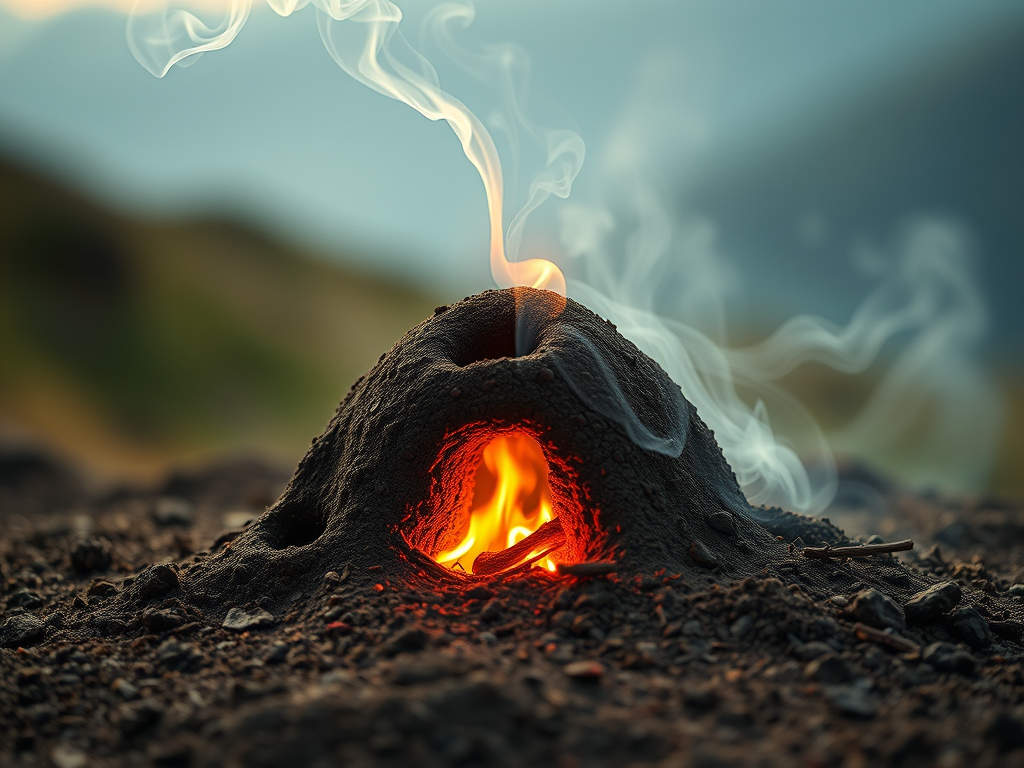
“Bhikkhu, bhikkhu, this anthill (vammika) smokes at night and blazes during the day.
The brahmin says: ‘Dig, Sumedha, with the knife.’”
Explanation:
Abhikkhaṇa = energetic digging, i.e., application of effort (vīriyārambha).
Vammiko = anthill: metaphor for the body made of four great elements (cātumahābhūtika kāya).
Rattiṁ dhūmāyati = “smokes at night”: mental proliferation during the night, reflecting on the day’s actions (vitakka-vicāra).
Divā pajjalati = “blazes during the day”: bodily, verbal, and mental actions ignited by those thoughts.
Brāhmaṇo = the Tathāgata (fully awakened one).
Sumedha = the trainee monk (sekha bhikkhu), one developing wisdom.
Satthaṁ = the knife, representing noble wisdom (ariyā paññā).
Let us get detailed into vammika
Vammiko’ti kho, bhikkhu, imassetaṁ cātumahābhūtikassa kāyassa adhivacanaṁ, mātāpettikasambhavassa odanakummāsūpacayassa aniccucchādanaparimaddanabhedanaviddhaṁsanadhammassa.
✅ Vammiko
Derived from vamma → “anthill” – Root possibly related to vammaṇa (covering or mound)
Symbolic sense: The body is like an anthill — full of hidden things, the result of many past actions, and continuously burning with desires, intentions, decay.
✅ Imassa etaṁ… kāyassa adhivacanaṁ
Imassa = “of this” Etaṁ… adhivacanaṁ = “this is a designation / conventional name” Kāyassa = “for the body”
Together: “This term vammika is a conventional designation for the body.” The body is not a self, but just conventionally labeled.
✅ Cātumahābhūtikassa kāyassa
Cātu- = four Mahābhūtika = composed of mahābhūtas (great elements)
Paṭhavī – earth (solidity), Āpo – water (cohesion), Tejo – fire (temperature), Vāyo – air (movement)
The body is merely a compound of four elemental processes, not a being.
✅ Mātāpettika-sambhavassa
Mātā + pettika = mother and father Sambhava = origin, production, “Born of mother and father” — emphasizes biological, conditioned origin, not something divine or self-created.
✅ Odanakummāsa-upacayassa
Odana = cooked rice, Kummāsa = barley porridge or gruel, Upacaya = accumulation, nourishment, building up
“Built up through rice and gruel”:
The body is sustained by coarse food, not inherently powerful — it’s dependent on constant intake.
✅ Anicca-ucchādana-parimaddana-bhedana-viddhaṁsana-dhammassa
This long compound describes the inherent nature of the body in five qualities:
Anicca = impermanent – Arising and passing moment to moment
Ucchādana = subject to being wiped or cleaned, i.e., requiring external maintenance
Parimaddana = compressed, squeezed, i.e., subject to pressure and friction (from aging, disease, exertion)
Bhedana = subject to breaking — as in bones, organs, tissues
Viddhaṁsana = subject to total destruction, i.e., final death, dissolution
This body is inherently unstable, decaying, non-enduring, and not worth clinging to.
“The term vammika, bhikkhu, is a designation for this body made up of the four great elements, born of mother and father, sustained by rice and gruel, and of a nature that is impermanent (anicca), unclean and needing wiping (ucchādana), compressed and subject to pressure (parimaddana), liable to fracture and breakdown (bhedana), and ultimately destined for disintegration and ruin (viddhaṁsana).”
🧘 Implications for Meditation and Insight
| Term | Meaning | Meditation Insight |
|---|---|---|
| Anicca | Impermanence | Observe change in breath, body, sensations, thoughts |
| Ucchādana | Needs cleaning | Reflect on how body accumulates waste, impurity |
| Parimaddana | Compressed, stressed | Notice tension, fatigue, imperfection in posture |
| Bhedana | Breakable, fragile | Contemplate injury, aging, sickness possibilities |
| Viddhaṁsana | Destined for destruction | Visualize own death, corpse stages (asubha/anussati) |
The devatā gives a series of symbolic items that Sumedha uncovers while digging. Each one represents an internal obstruction to be removed with wisdom.
a) Laṅgī – The Obstruction of Ignorance
Abhikkhaṇanto sumedho satthaṁ ādāya addasa laṅgiṁ.
‘Laṅgī, bhadante’ti.
Brāhmaṇo evamāha: ‘ukkhipa laṅgiṁ; abhikkhaṇa, sumedha, satthaṁ ādāyā’ti.
As Sumedha dug with the knife, he saw a iron bar (laṅgī).
“The bar, venerable sir.”
The brahmin said: “Remove the iron bar; dig, Sumedha, with the knife.”
Laṅgī symbolizes avijjā – ignorance.
Instruction: Remove ignorance with wisdom and continue the energetic search.
b) Uddhumāyikā – Anger and Frustration
Abhikkhaṇanto sumedho satthaṁ ādāya addasa uddhumāyikaṁ
‘Uddhumāyikā, bhadante’ti.
Brāhmaṇo evamāha: ‘ukkhipa uddhumāyikaṁ; abhikkhaṇa, sumedha…’
Explanation:
Uddhumāyikā = a bloated carcass — representing anger, ill-will, frustration. (in some text/commentary, it is indicated as “bull-frog” due to bloating nature
Kodhūpāyāsa is heavy and inflamed, like a swollen corpse.
Remove by practicing mettā, khanti, and wise attention.
These must be cast off to proceed on the path.
c) Dvidhāpatho – Vicikicchā (Doubt)
Abhikkhaṇanto sumedho satthaṁ ādāya addasa dvidhāpathaṁ.
‘Dvidhāpatho, bhadante’ti.
Brāhmaṇo evamāha: ‘ukkhipa dvidhāpathaṁ; abhikkhaṇa, sumedha, satthaṁ ādāyā’ti.
Explanation:
Dvidhāpatha = fork in the road — metaphor for vicikicchā (skeptical doubt).
Doubt about teacher, Dhamma, or oneself creates indecision.
Overcome by direct experience, saddhā, and yonisomanasikāra.
d) Caṅgavāraṁ – Pañca Nīvaraṇāni (Five Hindrances)
Abhikkhaṇanto sumedho satthaṁ ādāya addasa caṅgavāraṁ.
‘Caṅgavāro, bhadante’ti.
Brāhmaṇo evamāha: ‘ukkhipa caṅgavāraṁ; abhikkhaṇa, sumedha, satthaṁ ādāyā’ti.
Explanation:
Caṅgavāra = fence or barrier — represents the five hindrances:
Kāmacchanda – sensual desire
Byāpāda – ill-will
Thīna-middha – sloth and torpor
Uddhacca-kukkucca – restlessness and remorse
Vicikicchā – doubt
These block jhāna and insight. Remove through satipaṭṭhāna and samatha.
Etymology and Literal Meaning
The word caṅgavāraṁ (also sometimes seen as caṅkavāraṁ or paṅkavāraṁ in variants) is not directly used elsewhere in the Canon. Traditional interpretation aligns it with a filter, especially an ash filter, used to trap impurities when cleaning or refining. Thus, Caṅgavāraṁ = ash filter, a mesh or screen that holds back waste residue.
🔥 Why “ash filter”?
Just as an ash filter traps waste, these hindrances trap the mind, preventing it from moving into jhāna or vipassanā.
You try to pass clean water through, but it gets caught in the grime. Similarly, a meditator’s wholesome aspirations get filtered or obstructed by these five.
🧘 Practice Implication:
Ukkhipa caṅgavāraṁ = remove the ash filter, i.e., overcome the five hindrances.
This is done through:
Sati (mindfulness)
Samādhi (concentration)
Paṭipatti (right practice)
e) Kummo – Pañcupādānakkhandhā (Five Aggregates of Clinging)
Abhikkhaṇanto sumedho satthaṁ ādāya addasa kummaṁ.
‘Kummo, bhadante’ti.
Brāhmaṇo evamāha: ‘ukkhipa kummaṁ; abhikkhaṇa, sumedha, satthaṁ ādāyā’ti.
Explanation:
Kummo = tortoise — symbolizing the five upādānakkhandhā: – Rūpa, Vedanā, Saññā, Saṅkhāra, Viññāṇa
The tortoise withdraws inward — like ego clings to these heaps.
Insight reveals their anicca, dukkha, anattā nature — cut through them.
f) Asisūnā – Pañca Kāmaguṇā (Five Sense Pleasures)
Abhikkhaṇanto sumedho satthaṁ ādāya addasa asisūnaṁ.
‘Asisūnā, bhadante’ti.
Brāhmaṇo evamāha: ‘ukkhipa asisūnaṁ; abhikkhaṇa, sumedha, satthaṁ ādāyā’ti.
Explanation:
Asisūnā = slaughterhouse with knives — image of five sense pleasures:
Rūpa (sights), Saddā (sounds), Gandhā (smells), Rasā (tastes), Phoṭṭhabbā (touches).
These entice, then kill with craving and rebirth. Remove by nibbida, restraint, and jhāna.
cakkhuviññeyyānaṁ rūpānaṁ iṭṭhānaṁ kantānaṁ manāpānaṁ piyarūpānaṁ kāmūpasaṁhitānaṁ rajanīyānaṁ,
Cakkhuviññeyyā rūpā – Cakkhu: Eye or vision (the faculty of seeing). Viññeyyā: Perceived or known through. Rūpā: Forms or visual objects. “Forms perceived by the eye.”
Iṭṭhā -Attractive or desirable. Refers to forms that are pleasing or appealing.
Kantā – Lovely or charming. Indicates forms that evoke affection or admiration.
Manāpā – Agreeable or delightful. Refers to forms that bring satisfaction or pleasure.
Piyarūpā – Piya: Beloved, dear, or pleasing. Rūpā: Forms or objects. Forms that are dear or cherished
Kāmūpasaṁhitā – Kāma: Sensual desire or pleasure. Upasaṁhitā: Connected with or associated with.. Associated with sensual pleasure or desire.
Rajanīyā – Delightful, enticing, or capable of arousing attachment. Refers to forms that evoke clinging or craving.
g) Maṁsapesī – Nandīrāga (Delight & Attachment)
Abhikkhaṇanto sumedho satthaṁ ādāya addasa maṁsapesiṁ.
‘Maṁsapesi, bhadante’ti.
Brāhmaṇo evamāha: ‘ukkhipa maṁsapesiṁ; abhikkhaṇa, sumedha, satthaṁ ādāyā’ti.
Explanation:
Maṁsapesī = lump of flesh — represents nandīrāga, the delight in sense experience.
The mind gets glued to sense pleasure and clings to rebirth.
Must be abandoned through wisdom, virāga, and disenchantment.
h) Nāga – Khīṇāsava (Arahant)
Abhikkhaṇanto sumedho satthaṁ ādāya addasa nāgaṁ.
‘Nāgo, bhadante’ti.
Brāhmaṇo evamāha: ‘tiṭṭhatu nāgo, mā nāgaṁ ghaṭṭesi; namo karohi nāgassā’ti.
Explanation: Nāga = noble serpent — epithet for a Khīṇāsava, one who has ended all āsavas. Do not disturb him — bow in reverence. This is the goal of the path, fruit of cutting through all fetters.