
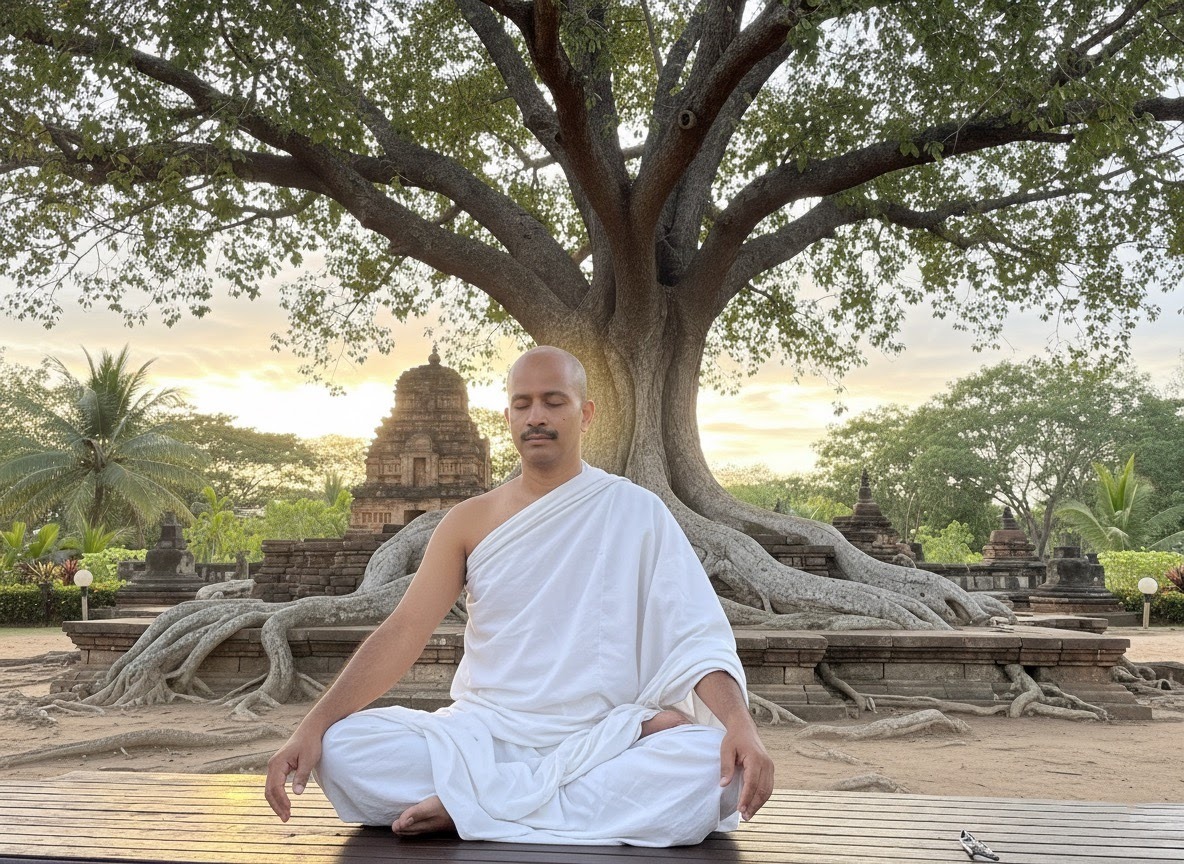
1️⃣ What Is Āneñja in the Suttas?
The word āneñja appears in key contexts:
📌 a) Jhānic Imperturbability
In MN 66, MN 106, and SN 40, āneñja is used for the fourth jhāna and for certain formless attainments where the mind becomes:
Upekkhā-satipārisuddhi: purified through equanimity
Not shaken by pain or pleasure
Not moved by external sense data – E.g., from the current sutta – MN 106:
“Āneñjaṁ samāpajjati…” – He enters the unshakable.
📌 b) Associated with Brahmavihāras & Liberation
In AN 4.123, āneñja is connected to upekkhā developed through the brahmavihāras.
In MN 121 (Cūḷasuññatasutta), when the monk reflects that “this is empty of self,” and does not cling even to that emptiness, his mind becomes āneñjaṁ — imperturbable.
📌 c) Opposed to Māra’s Domain
In MN 106, kāmā and kāmasaññā are called mārassesa visayo – Māra’s domain or of operation or influence. Hence, āneñja is the opposite: a mind unshaken by sense pleasure, perception, or formations.
Let us take up Āneñjasappāyā” (MN106) and understand it deeper so that we can have meditative attainments.
2️⃣ Etymology of “Āneñjasappāyā” – The compound āneñjasappāyā breaks into:
| Component | Root or Meaning |
|---|---|
| Ā- | Prefix indicating toward, into, completely |
| -neñja | From root nijjati / nañjati: to shake, be disturbed |
| a- + neñja = āneñja | Unshakable, unmoving, imperturbable |
| Sappāyā | From sappāya = suitable, supportive, conducive |
Āneñjasappāyā = “Suitable (paṭipadā) for the unshakable”
= A practice or path that leads to āneñja — the unshakable state of mind
3️⃣ Āneñja as a Meditative Threshold
🔄 Transition from Rūpa to Arūpa
Āneñja occurs at the peak of the fourth jhāna and supports entry into formless meditations:
Ākiñcaññāyatana – base of nothingness
Nevasaññānāsaññāyatana – base of neither-perception-nor-non-perception
Thus, the Āneñjasappāyā paṭipadā (the suitable path for āneñja) includes:
Deep renunciation (not just from kāma, but from saññā itself)
Entry into the imperturbable states
But it must be accompanied by non-clinging, otherwise leads only to refined rebirth, not liberation
4️⃣ Distinction Between Āneñja and Nibbāna
A critical point: Āneñja ≠ Nibbāna
Even though āneñja is sublime, it’s still a conditioned mental state (saṅkhata):
| Āneñja | Nibbāna |
|---|---|
| Fourth jhāna and beyond | Beyond all jhāna and saññā |
| Still based on perception | Nibbāna is cessation of all saṅkhārā |
| Can be clung to | Cannot be clung to; clinging stops |
| Leads to rebirth if relished | Leads to parinibbāna if not clung to |
🧘 In Summary
| Term | Meaning | Significance |
|---|---|---|
| Āneñja | Imperturbability, unshakability | The mental purity of high jhānas |
| Sappāya | Supportive, conducive | That which leads toward or supports liberation |
| Āneñjasappāyā | That which leads to āneñja | A path of deep detachment and jhānic mastery |
| Warning from Sutta | Even āneñja must not be clung to | Else it becomes upādānaseṭṭha – supreme clinging |
Let us now understand six stages of gradual Renunciation as indicated in MN106
| Stage | Reflection Theme | Realization/Samāpatti | Post-mortem Destination | Paṭipadā Name |
|---|---|---|---|---|
| 1 | Kāma & kāmasaññā are Māra’s domain | Mahaggata-ceto-vimutti (Rūpajjhāna) | Āneñjūpaga rebirth (Rūpa realm) | Paṭhamā Āneñjasappāyā |
| 2 | Kāma, kāmasaññā, and rūpa are impermanent | Insight into rūpa and mahābhūta which almost relate to Bhanga state indicated in Burmese techniques | Āneñjūpaga rebirth | Dutiyā Āneñjasappāyā |
| 3 | Kāma, rūpa, rūpasaññā are all anicca — not to be relished or clung to | Dispassion toward form | Āneñjūpaga rebirth | Tatiyā Āneñjasappāyā |
| 4 | All perception (including āneñjasaññā) cease in ākiñcaññāyatana | Samāpatti into ākiñcaññāyatana | Rebirth in ākiñcaññāyatanūpaga | Paṭhamā Ākiñcaññāyatanasappāyā |
| 5 | Reflection on not-self: “This is empty of self or anything of self” | Samāpatti through emptying of self and ākiñcaññāyatana | Rebirth in ākiñcaññāyatanūpaga | Dutiyā Ākiñcaññāyatanasappāyā |
| 6 | All perceptions (even the most subtle) are conditioned; complete letting go of all | Samāpatti into nevasaññānāsaññāyatana | Rebirth in nevasaññānāsaññāyatanūpaga | Nevasaññānāsaññāyatanasappāyā |
🔥 CRUCIAL TURNING POINT: Upekkhā and the Danger of Subtle Clinging
Ānanda asks: “If a bhikkhu reflects: ‘Let me abandon whatever exists,’ and attains upekkhā, will he attain parinibbāna?” The Buddha answers: “Some will, some won’t.”
Why? Because: If one clings to that upekkhā (abhinandati, abhivadati, ajjhosāya tiṭṭhati) → viññāṇa becomes tannissita (dependent on that), leading to upādāna and rebirth (even in nevasaññānāsaññāyatana).
But if one does not cling (n’abhinandati… na ajjhosāya tiṭṭhati) → no upādāna → parinibbāna.
This is a masterclass in anupādā cittavimutti.
🔓 FINAL UNLOCKING: Ariyo Vimokkho
The true noble liberation: “Esa sakkāyo yāvatā sakkāyo. Etaṁ amataṁ yadidaṁ— anupādā cittassa vimokkho.”
“This entire sakkāya (identity) as far as it goes — this is the limit of sakkāya. The deathless is this: the mind’s liberation through non-clinging.” This makes clear that: Even the highest perception is part of sakkāya.
Nibbāna = cessation of clinging (upādāna), not a place or state to be reached through perception.
Let us now go over paragraph by paragraph
📜 Paragraph 1
Tatra, bhikkhave, ariyasāvako iti paṭisañcikkhati: ‘Ye ca diṭṭhadhammikā kāmā, ye ca samparāyikā kāmā; yā ca diṭṭhadhammikā kāmasaññā, yā ca samparāyikā kāmasaññā— ubhayametaṁ māradheyyaṁ, mārassesa visayo, mārassesa nivāpo, mārassesa gocaro. Etthete pāpakā akusalā mānasā abhijjhāpi byāpādāpi sārambhāpi saṁvattanti, teva ariyasāvakassa idhamanusikkhato antarāyāya sambhavanti. Yannūnāhaṁ vipulena mahaggatena cetasā vihareyyaṁ abhibhuyya lokaṁ adhiṭṭhāya manasā. Vipulena hi me mahaggatena cetasā viharato abhibhuyya lokaṁ adhiṭṭhāya manasā ye pāpakā akusalā mānasā abhijjhāpi byāpādāpi sārambhāpi te na bhavissanti. Tesaṁ pahānā aparittañca me cittaṁ bhavissati appamāṇaṁ subhāvitan’ti.
📙 Translation
“There, monks, a noble disciple reflects thus: ‘Both the sensual pleasures of this very life (diṭṭhadhammikā kāmā) and of the future (samparāyikā kāmā), and the perception of sensual pleasures of this life and the next—all these are Māra’s domain: his territory, his bait, his pasture. In these (objects and perceptions), the evil, unwholesome mental states such as excess desire (abhijjhā), ill will (byāpāda), and aggression (sārambha) arise. These very things, for a noble disciple training in this way, become obstructions. What if I were to dwell with a vast and exalted mind (vipulena mahaggatena cetasā), having overcome the world and established myself mentally above it?
For, when I dwell with a vast, exalted mind, having overcome the world mentally, then these evil unwholesome mental states—craving, ill will, and aggression—do not arise. Through their abandonment, my mind would become **unlimited, immeasurable, well-developed.’”
🧠 Deeper Analysis: 🪤 Māradheyyaṁ – The Domain of Māra
The first insight is disenchantment with sensuality (kāma) and its perception (kāmasaññā), in both present and future lives. These are called Māra’s traps, because: They are attractive, creating delusion and feed craving. They give rise to defilements: especially abhijjhā (excess desire), byāpāda (ill will), and sārambha (aggression/violence). This is the foundation of renunciation: to see that sensual perception itself is dangerous.
🧘 Vipulena mahaggatena cetasā vihareyyaṁ – Entering Sublime Mind States
The noble disciple sees that the antidote is cultivating mahaggata-citta: These are jhanic states — particularly the four rūpa-jhānas. The phrase “abhibhuyya lokaṁ” means transcending the sensory world. The jhānas are not merely calming techniques; they are tools for purification and displacement of Māra’s domain.
🕊️ Appamāṇaṁ subhāvitaṁ – Limitless, Well-Cultivated Mind
The mind becomes unmeasured (appamāṇa) — i.e., unbound by desire, non-limited by forms or sensual contact. This is the first transformation: abandoning kāma and kāmasaññā by cultivating the rūpa-jhānas.
✅ Summary of Paragraph 1:
| Theme | Meaning |
|---|---|
| Diṭṭhadhammika & samparāyika kāma | Present and future sensuality, both gross and refined |
| Danger Identified | Māra’s bait → gives rise to defilements |
| Resolution | Dwell in mahaggata-citta (jhana) to transcend sense domain |
| Result | Mind becomes limitless, defilements subside, citta is purified |
📜 Paragraph 2
Puna caparaṁ, bhikkhave, ariyasāvako iti paṭisañcikkhati:
‘Ye ca diṭṭhadhammikā kāmā, ye ca samparāyikā kāmā; yā ca diṭṭhadhammikā kāmasaññā, yā ca samparāyikā kāmasaññā; yaṁ kiñci rūpaṁ sabbaṁ rūpaṁ cattāri ca mahābhūtāni, catunnañca mahābhūtānaṁ upādāyarūpan’ti. Tassa evaṁpaṭipannassa tabbahulavihārino āyatane cittaṁ pasīdati.
Sampasāde sati etarahi vā āneñjaṁ samāpajjati paññāya vā adhimuccati.
Kāyassa bhedā paraṁ maraṇā, ṭhānametaṁ vijjati yaṁ taṁsaṁvattanikaṁ viññāṇaṁ assa āneñjūpagaṁ.
Ayaṁ, bhikkhave, dutiyā āneñjasappāyā paṭipadā akkhāyati.
📘 Translation
“Again, monks, a noble disciple reflects thus: ‘Whatever sensual pleasures there are in this life or in the next, whatever perceptions of sensual pleasures there are in this life or in the next; whatever material form exists — all form — the four great elements, and the material form derived from the four great elements.’ For one who practices in this way, who frequently abides in such reflection, the mind becomes settled (pasīdati) in that base. When the mind is settled, one may either enter the state of āneñja (imperturbability), or incline toward it with wisdom (paññāya adhimuccati). Upon the breakup of the body, after death, it is possible that his viññāṇa would be established in a plane of āneñjūpaga — one who is reborn in an imperturbable realm. This, monks, is called the second practice that is suitable for āneñja (the imperturbable state).
What is Upaga ?
From upa + √gam (to go, to reach, to arrive at) Upa- = near, toward, Gacchati / upagacchati = goes to, reaches. Upaga = having gone to, having reached, having arisen in
🧠 Deeper Doctrinal Analysis
🌀 1. Expansion of the Domain of Disenchantment
This paragraph builds upon the first. Previously, the ariyasāvaka reflected only on kāma and kāmasaññā. Now the reflection deepens to: rūpaṁ sabbaṁ rūpaṁ — all form, all matter
He includes: The Four Great Elements (cattāri mahābhūtāni): Paṭhavī (earth – solidity), Āpo (water – cohesion), Tejo (fire – temperature/heat/cold), Vāyo (wind – motion) Upādāya rūpa: derived material form — as in vañña, rasa, gandha and ojhas, especially can be seen in sentient bodily form.
📚 What Constitutes Upādāya Rūpa? Though this is not covered in any Nikaya in a direct way, we can make out from the Vibhanga section of Abhidhamma and also from Abhidhamma itself.
Should we know Upādāya Rūpa? There is no need to go into such detail and we can workout using the five qualities of rupa mentioned in MN140 and MN62 for our practice. However, for clarity, indicating below a table on each one of the Upādāya Rūpa.
| Pāli Term | Meaning |
|---|---|
| Vaṇṇa | Visible form, color |
| Rasa | Essence as in taste, sap, flavor, relish, emotional tone |
| Gandha | Scent / Fragrance / Odor |
| Ojā | Nutritive essence (vitality) / Energy / Life-supporting nutritive energy |
🔍 Why include rūpa?
Because: Sensuality depends on rūpa (material contact with sense objects) To go beyond craving, one must also transcend attachment to form — not just objects of pleasure, but the very body and world of form. The jhānic states that are imperturbable (āneñja) require detachment from rūpasaññā. Thus, kāma → kāmasaññā → rūpa → rūpasaññā is the progression of insight.
🧘 2. Āneñja Samāpatti or Paññāya Adhimuccati
Once this reflection deepens and becomes habitual (tabbahulavihārī), two things are possible:
Āneñjaṁ samāpajjati – One enters the state of unshakability:
This refers to jhānas 3 or 4 (often 4), or the formless jhānas where the mind is unshaken by contact.
Āneñja literally means “non-moved” — indicating deep internal stability beyond pleasure/pain.
Paññāya adhimuccati – One does not attain absorption but inclines toward insight, penetrating the nature of perception and form through wisdom and this allows the sutta to accommodate both:
The jhāna practitioner – The dry insight (sukkhavipassaka) meditator. Both paths are valid as long as clinging does not arise.
🧬 3. Post-Mortem Rebirth: Āneñjūpaga Viññāṇa
If the practitioner still harbors subtle clinging, the purified and imperturbable mind leads to rebirth in the āneñjūpaga bhūmi — usually a higher rūpadhātu realm. This is not final liberation, but still within samsāra and hence, this is called the second path “suitable for āneñja”, not yet nibbāna.
📊 Summary of Paragraph 2
| Key Elements | Explanation |
|---|---|
| Kāma, kāmasaññā, rūpa, mahābhūta, upādāyarūpa | All forms of sensuality and materiality are examined and abandoned |
| Tabbahulavihārino | Frequent, habitual contemplation deepens into stable insight or absorption |
| Āneñjaṁ samāpajjati / Paññāya adhimuccati | Two paths: unshakeable meditative absorption OR profound insight |
| Āneñjūpagaṁ viññāṇaṁ | If clinging remains → rebirth in imperturbable form realm |
| Dutiyā āneñjasappāyā paṭipadā | This is the second path supportive of imperturbability, but not final yet |
📜 Paragraph 3
Puna caparaṁ, bhikkhave, ariyasāvako iti paṭisañcikkhati: ‘Ye ca diṭṭhadhammikā kāmā, ye ca samparāyikā kāmā; yā ca diṭṭhadhammikā kāmasaññā, yā ca samparāyikā kāmasaññā; ye ca diṭṭhadhammikā rūpā, ye ca samparāyikā rūpā; yā ca diṭṭhadhammikā rūpasaññā, yā ca samparāyikā rūpasaññā— ubhayametaṁ aniccaṁ. Yadaniccaṁ taṁ nālaṁ abhinandituṁ, nālaṁ abhivadituṁ, nālaṁ ajjhositun’ti. Tassa evaṁpaṭipannassa tabbahulavihārino āyatane cittaṁ pasīdati.
Sampasāde sati etarahi vā āneñjaṁ samāpajjati paññāya vā adhimuccati.
Kāyassa bhedā paraṁ maraṇā, ṭhānametaṁ vijjati yaṁ taṁsaṁvattanikaṁ viññāṇaṁ assa āneñjūpagaṁ.
Ayaṁ, bhikkhave, tatiyā āneñjasappāyā paṭipadā akkhāyati.
📘 Translation
“Again, monks, a noble disciple reflects thus: ‘Whatever sensual pleasures there are here and now (diṭṭhadhammikā kāmā) or hereafter (samparāyikā kāmā); whatever perceptions of sensuality in this life and the next; whatever forms (rūpā) in this life or hereafter; whatever perceptions of form—all these are impermanent (aniccaṁ). What is impermanent is not fit to be delighted in, not fit to be approved of, not fit to be clung to.’ For one practicing in this way and dwelling in such contemplation, the mind becomes serene in that base. When serenity is present, he either enters into the state of imperturbability (āneñja), or leans toward it with wisdom. Upon the dissolution of the body, after death, it is possible that the consciousness may be reborn in the āneñjūpaga realm. This, monks, is called the third practice suitable for āneñja.”
🧠 In-Depth Analysis & Doctrinal Insights
1️⃣ Building on Earlier Reflections
In the first two paragraphs, the noble disciple reflected on: Kāma and kāmasaññā (sensual pleasures and their perception) Rūpa and the four elements (materiality) Upādāya-rūpa (derived form) Now he moves even deeper to: Perceptions of rūpa (rūpasaññā) And introduces a new insight lens: Anicca — Impermanence
2️⃣ “Ubhayametaṁ aniccaṁ” – Both Are Impermanent
This applies to: Objects (kāmā and rūpā) and Perceptions (kāmasaññā and rūpasaññā). This shows that not just external stimuli are impermanent, but even the internal recognition, labelling, and experience of them (saññā) are unstable, conditioned, and unreliable. This shifts the practitioner’s insight from mere renunciation to wisdom-based disenchantment. Insight into anicca is the seed of non-abhinandana — not delighting.
3️⃣ Three-Fold Guard Against Clinging
The disciple sees:
nālaṁ abhinandituṁ – Not fit to be delighted in
nālaṁ abhivadituṁ – Not fit to be affirmed/approved of
nālaṁ ajjhositun’ti – Not fit to be clung to or attached to
This threefold rejection parallels:
| Term | Meaning |
|---|---|
| Abhinandati | Relishing, taking joy in |
| Abhivadati | Affirming as “this is good,” endorsing |
| Ajjhosāya tiṭṭhati | Mentally adhering or sticking to (grasping) |
This is a profound diagnostic of how clinging happens — not just grossly through desire, but subtly through approval, identity, and perceptual fixation.
4️⃣ The Path Splits: Jhāna or Wisdom
Again, the practitioner can:
Enter āneñja samāpatti: A rūpajjhāna or even early arūpajjhāna state characterized by deep upekkhā
Or incline by wisdom (paññāya adhimuccati): developing clear seeing of anicca → dukkha → anattā
But still, because some residual attachment might remain, the viññāṇa may incline toward āneñjūpaga (an imperturbable rebirth, e.g., rūpabrahma realm), not parinibbāna.
📊 Summary Table
| Contemplated Domain | Insight Applied | Liberative Insight |
|---|---|---|
| Kāma, kāmasaññā, rūpa, rūpasaññā | All are anicca | Hence not to be enjoyed, affirmed, or clung to |
| Mode of Liberation | Jhāna (āneñja) or wisdom | Either deep absorption or paññā-based inclination |
| Result if clinging remains | Rebirth in āneñjūpaga | Not parinibbāna yet |
| Paṭipadā Level | Tatiyā Āneñjasappāyā | Third practice supportive of āneñja |
📜 Paragraph 4
Puna caparaṁ, bhikkhave, ariyasāvako iti paṭisañcikkhati: ‘Ye ca diṭṭhadhammikā kāmā, ye ca samparāyikā kāmā; yā ca diṭṭhadhammikā kāmasaññā, yā ca samparāyikā kāmasaññā; ye ca diṭṭhadhammikā rūpā, ye ca samparāyikā rūpā; yā ca diṭṭhadhammikā rūpasaññā, yā ca samparāyikā rūpasaññā; yā ca āneñjasaññā— sabbā saññā. Yatthetā aparisesā nirujjhanti etaṁ santaṁ etaṁ paṇītaṁ— yadidaṁ ākiñcaññāyatanan’ti. Tassa evaṁpaṭipannassa tabbahulavihārino āyatane cittaṁ pasīdati.
Sampasāde sati etarahi vā ākiñcaññāyatanaṁ samāpajjati paññāya vā adhimuccati.
Kāyassa bhedā paraṁ maraṇā, ṭhānametaṁ vijjati yaṁ taṁsaṁvattanikaṁ viññāṇaṁ assa ākiñcaññāyatanūpagaṁ.
Ayaṁ, bhikkhave, paṭhamā ākiñcaññāyatanasappāyā paṭipadā akkhāyati.
📘 Translation
“Again, monks, a noble disciple reflects thus: ‘Whatever sensual pleasures there are in this life or in the next; whatever perceptions of sensual pleasure; whatever forms in this life or the next; whatever perceptions of form; whatever perception of the imperturbable (āneñjasaññā)—all perceptions (sabbā saññā). Where all these perceptions utterly cease (aparisesā nirujjhanti)—that is peaceful, that is sublime: namely, the base of nothingness (ākiñcaññāyatana).’ For one practicing in this way and dwelling often in that manner, the mind becomes serene in that base. When there is serenity, he either enters the ākiñcaññāyatana samāpatti, or inclines toward it with wisdom. Upon the dissolution of the body, after death, it is possible that his consciousness is established in the ākiñcaññāyatana realm. This, monks, is called the first practice that is suitable for ākiñcaññāyatana.
🧠 Doctrinal and Experiential Explanation
1️⃣ The Radical Step: Sabba Saññā – All Perception
Now the noble disciple expands the reflection further:
From sensuality (kāma) and form (rūpa) – From perception of sensuality (kāmasaññā), form (rūpasaññā), and even imperturbability (āneñjasaññā)
All these are now recognized as: Sabbā saññā — “All perception” This includes even the refined jhānic perceptions, and acknowledges that: As long as there is perception, there is distortion, identification, and subtle fabrication. Even the notion “I am equanimous” or “I am stable” carries latent clinging if perception is relished.
2️⃣ “Yatthetā aparisesā nirujjhanti…” — Where All Perception Ceases
Here the noble disciple directs the mind toward that which is: Santaṁ – peaceful ; Paṇītaṁ – sublime, excellent That is: ākiñcaññāyatana — the base of nothingness This formless meditative state is: A complete dropping of all content, all mental objects. “Nothingness” doesn’t mean nihilism, but rather an absence of any perceived ‘thing’. The goal is not just to suppress, but to penetrate perception’s constructed nature and incline the mind toward a radical absence of conceptual content.
3️⃣ Two Outcomes Once Again:
Samāpajjati ākiñcaññāyatanaṁ — Enters that absorption Paññāya adhimuccati — Inclines toward it via insight (vipassanā) This reaffirms that both samatha and vipassanā practitioners can approach ākiñcaññāyatana — as long as there is dispassion toward all saññā.
4️⃣ Post-Mortem Result: Rebirth in the Realm of Nothingness “ṭhānametaṁ vijjati…”
There is the possibility that if any subtle clinging remains, viññāṇa inclines toward rebirth in the ākiñcaññāyatanūpaga loka — the formless Brahmā realm corresponding to the base of nothingness. This again is not final liberation, but the highest rebirth possible without full awakening.
📊 Summary Table
| Contemplated Domain | Insight Applied | Liberative Aim |
|---|---|---|
| All saññā — including kāma, rūpa, āneñja | Perception itself is to be transcended | Ceasing of perception is peaceful and sublime |
| Object of Meditation | Ākiñcaññāyatana (Base of Nothingness) | Entry or inclination through samādhi or wisdom |
| Post-Mortem Destiny if Clinging Remains | Rebirth in ākiñcaññāyatanūpaga realm | Not yet nibbāna (requires full non-clinging) |
| Paṭipadā Level | Paṭhamā Ākiñcaññāyatanasappāyā | First practice suitable for the realm of nothingness |
🔎 Special Note on “sabbā saññā”
This is an extraordinary expression. The Buddha rarely speaks in such absolute terms. “All perception” includes everything cognized, felt, and mentally fabricated. The cessation of sabbā saññā here prepares the path toward even subtler relinquishment: the next step, neither-perception-nor-non-perception.
📜 Paragraph 5
Puna caparaṁ, bhikkhave, ariyasāvako araññagato vā rukkhamūlagato vā suññāgāragato vā iti paṭisañcikkhati: ‘Suññamidaṁ attena vā attaniyena vā’ti.
Tassa evaṁpaṭipannassa tabbahulavihārino āyatane cittaṁ pasīdati.
Sampasāde sati etarahi vā ākiñcaññāyatanaṁ samāpajjati paññāya vā adhimuccati.
Kāyassa bhedā paraṁ maraṇā, ṭhānametaṁ vijjati yaṁ taṁsaṁvattanikaṁ viññāṇaṁ assa ākiñcaññāyatanūpagaṁ.
Ayaṁ, bhikkhave, dutiyā ākiñcaññāyatanasappāyā paṭipadā akkhāyati.
📘 Translation
“Again, monks, a noble disciple, having gone to the forest, to the root of a tree, or to an empty hut, reflects thus:’ This is empty of a self or anything belonging to self.’ (‘Suññamidaṁ attena vā attaniyena vā’)
For one practicing in this way and dwelling often in that manner, the mind becomes serene in that base.
When there is serenity, he either enters the base of nothingness (ākiñcaññāyatana) or inclines toward it by wisdom.
Upon the breakup of the body, after death, it is possible that his consciousness may be established in the ākiñcaññāyatana realm.
This, monks, is called the second practice suitable for the base of nothingness.
🧠 Detailed Doctrinal Analysis
1️⃣ “Araññagato vā rukkhamūlagato vā suññāgāragato vā” – The Setting
These are traditional settings for deep meditative seclusion:
Arañña – forest in one sense or going inside mind and noticing conflicts
Rukkhamūla – foot of a tree or knowing the root cause
Suññāgāra – empty dwelling or emptying mind of contents
These places reduce distraction, sense stimulation, and encourage direct insight.
This mirrors MN 121 (Cūḷasuññatasutta), where the Buddha leads Ānanda through stages of emptiness contemplation.
2️⃣ “Suññamidaṁ attena vā attaniyena vā” – Emptiness of Self or Ownership
This is a key phrase used throughout the Suññatā Suttas, particularly: (MN 1, MN 121, SN 35.85, SN 22.95)
It reflects a twofold contemplation:
| Pāli | Meaning |
|---|---|
| Atta | A “self” or core essence |
| Attaniya | What is “mine,” belonging to a self |
So the reflection is: “This is empty of any self or anything that belongs to a self.”
It covers both identity-view (sakkāyadiṭṭhi) and possessiveness or hanging onto (upādāna).
3️⃣ How This Supports Ākiñcaññāyatana
The perception “I am” is built upon:
1. Perception of form,
2. Clinging to feelings,
3. Subtle perceptions (saññā) of presence.
But by seeing “this is empty”, the meditator lets go of even the tiniest residue of ownership or self-construction. This prepares the mind to abandon all objectification, leading to:
Ākiñcaññāyatana – the meditative base where “there is nothing”, not even “I” or “mine”.
Thus, this emptiness contemplation functions as a door to either:
Direct samāpatti, or Insight-based release into that formless perception.
4️⃣ Outcome If Clinging Remains: Rebirth in Ākiñcaññāyatana Realm
Even this deep emptiness reflection, if subtly clung to (as “this is my emptiness” or “this is sublime”), can result in: Rebirth in ākiñcaññāyatanūpaga loka – a very refined, yet conditioned realm. Again, it’s not final liberation unless clinging is completely abandoned.
📊 Summary Table
| Key Theme | Explanation |
|---|---|
| Suññamidaṁ attena vā attaniyena vā | “This is empty of self or what belongs to self” — cutting self-reference |
| Supportive Setting | Forest, tree root, or empty dwelling — seclusion for insight |
| Target Meditative State | Ākiñcaññāyatana (Base of Nothingness) |
| Risk of Clinging | Rebirth in ākiñcaññāyatanūpaga realm if non-clinging is not complete |
| Paṭipadā Level | Dutiyā ākiñcaññāyatanasappāyā paṭipadā — Second path to Nothingness |
📜 Paragraph 6
Puna caparaṁ, bhikkhave, ariyasāvako iti paṭisañcikkhati: ‘Nāhaṁ kvacani kassaci kiñcanatasmiṁ, na ca mama kvacani kismiñci kiñcanaṁ natthī’ti.
Tassa evaṁpaṭipannassa tabbahulavihārino āyatane cittaṁ pasīdati.
Sampasāde sati etarahi vā ākiñcaññāyatanaṁ samāpajjati paññāya vā adhimuccati.
Kāyassa bhedā paraṁ maraṇā, ṭhānametaṁ vijjati yaṁ taṁsaṁvattanikaṁ viññāṇaṁ assa ākiñcaññāyatanūpagaṁ.
Ayaṁ, bhikkhave, tatiyā ākiñcaññāyatanasappāyā paṭipadā akkhāyati.
📘 Translation
“Again, monks, a noble disciple reflects thus: ‘Nowhere in any way do I exist as a “something” in relation to anything. Nor anywhere does anything exist as a “something” that is mine.’
For one practicing in this way and dwelling in such contemplation, the mind becomes serene in that base. When serenity is present, he either enters the base of nothingness (ākiñcaññāyatana) or inclines toward it by wisdom.
Upon the dissolution of the body, after death, it is possible that his viññāṇa is established in the ākiñcaññāyatana realm. This, monks, is called the third practice suitable for the base of nothingness.
🧠 Doctrinal & Experiential Explanation
This paragraph is pivotal. It conveys the deepest level of identitylessness (anattā) prior to full release.
🔍 1️⃣ Phrase Breakdown:
“Nāhaṁ kvacani kassaci kiñcanatasmiṁ”
Nāhaṁ – I am not ; Kvacani – anywhere / in any way; Kassaci – to anyone / to anything; Kiñcanatasmiṁ – in the form of anything / as anything whatsoever
Translation: “Nowhere in any way am I anything to anyone.”, “Na ca mama kvacani kismiñci kiñcanaṁ natthi”, Na ca mama – Nor is there for me, Kvacani – anywhere, Kismiñci kiñcanaṁ – anything whatsoever
Translation: “Nor is there anywhere anything whatsoever that is mine.”
🧘 2️⃣ This Is Direct Insight Into Anattā
This reflection cuts off: Pāli Word Defilement It Targets
asmi (“I am”) Asmi māna (conceit: “I am”)
mama (“mine”) Upādāna (clinging to mine)
It abandons not just conceptual identity, but also the deep, residual assumption of being someone, somewhere, with any ownership or reference point.
This is more radical than “this is not mine”; it’s the complete erasure of referential identification with anything at all.
🌌 3️⃣ How This Leads to Ākiñcaññāyatana
This reflection naturally inclines the mind toward:
The base of nothingness (ākiñcaññāyatana), Where no “thing” is perceived, No “owner” or “observer” arises. The absence of ‘I’ and ‘mine’ is coherent with ākiñcañña — the realm of non-objectification, of no content, of “nothing present.”
🔄 4️⃣ Two Paths Again:
Samāpajjati – Attains absorption in ākiñcaññāyatana. Paññāya adhimuccati – Inclines toward it through paññā, via full insight into the emptiness of all ownership or identity.
⚰️ 5️⃣ Rebirth Possibility
If any residual clinging remains, the mind is refined enough that: Upon death, viññāṇa arises in ākiñcaññāyatanūpaga loka — a sublime but conditioned realm. Still not parinibbāna unless abhinandana and upādāna are fully abandoned.
📊 Summary Table
| Theme | Explanation |
|---|---|
| “Nāhaṁ… na ca mama…” | Complete non-identification with any experience or object |
| Insight Level | Final stage of anattā contemplation before liberation |
| Samādhi Correlation | Base of Nothingness (ākiñcaññāyatana) |
| Post-Mortem Rebirth (if clinging remains) | Ākiñcaññāyatanūpaga loka — refined, but still within saṁsāra |
| Paṭipadā Level | Tatiyā ākiñcaññāyatanasappāyā paṭipadā — Third practice leading to the same |
This paragraph completes the threefold ākiñcaññāyatanasappāyā path, through:
Letting go of all saññā, Recognizing suññatā (emptiness), Total abandonment of “I” and “mine”. The practitioner now stands at the threshold of perception’s end — ready to either incline toward the most subtle formless base, or go beyond perception altogether.
📜 Paragraph 7
Tassa evaṁpaṭipannassa tabbahulavihārino āyatane cittaṁ pasīdati.
Sampasāde sati etarahi vā nevasaññānāsaññāyatanaṁ samāpajjati paññāya vā adhimuccati.
Kāyassa bhedā paraṁ maraṇā, ṭhānametaṁ vijjati yaṁ taṁsaṁvattanikaṁ viññāṇaṁ assa nevasaññānāsaññāyatanūpagaṁ.
Ayaṁ, bhikkhave, nevasaññānāsaññāyatanasappāyā paṭipadā akkhāyatī”ti. Puna caparaṁ, bhikkhave, ariyasāvako iti paṭisañcikkhati: ‘Ye ca diṭṭhadhammikā kāmā, ye ca samparāyikā kāmā; yā ca diṭṭhadhammikā kāmasaññā, yā ca samparāyikā kāmasaññā; ye ca diṭṭhadhammikā rūpā, ye ca samparāyikā rūpā; yā ca diṭṭhadhammikā rūpasaññā, yā ca samparāyikā rūpasaññā; yā ca āneñjasaññā, yā ca ākiñcaññāyatanasaññā— sabbā saññā. Yatthetā aparisesā nirujjhanti etaṁ santaṁ etaṁ paṇītaṁ— yadidaṁ nevasaññānāsaññāyatanan’ti.
📘 Translation
“Again, monks, a noble disciple reflects thus: ‘Whatever sensual pleasures exist in this life or the next; whatever perceptions of sensuality; whatever forms in this life or hereafter; whatever perceptions of form; whatever perception of imperturbability (āneñjasaññā); whatever perception of the base of nothingness (ākiñcaññāyatanasaññā) — all are perceptions. Where all these perceptions utterly cease (aparisesā nirujjhanti) — that is peaceful, that is sublime: namely, the base of neither-perception-nor-non-perception (nevasaññānāsaññāyatana). For one practicing in this way and frequently dwelling in this manner, the mind becomes serene in that base. When serenity is present, he either enters that state or inclines toward it through wisdom. Upon death, it is possible that his consciousness arises in the realm of nevasaññānāsaññāyatanūpaga. This, monks, is called the practice suitable for the base of neither-perception-nor-non-perception.”
🧠 Doctrinal Analysis and Deep Meaning
1️⃣ Complete Inclusion of All Perceptions
This paragraph repeats the structure of Paragraph 4 but adds one crucial layer: Now it includes: Āneñjasaññā – perception of unshakeability (from jhāna/upekkhā)
Ākiñcaññāyatanasaññā – perception of “nothingness”
These are the most refined perceptions prior to full cessation. By stating “sabbā saññā”, the disciple is recognizing: Even the subtlest meditative perceptions are still constructs, still anicca, and still not safe. This is aligned with MN 1 (Mūlapariyāya Sutta) and AN 10.60 (Girimānandasutta), where even upekkhā is to be known, understood, and let go of.
2️⃣ “Yatthetā aparisesā nirujjhanti” – Where Perceptions Cease Entirely
The reflection is directed toward the state where:
Perception doesn’t exist, Yet it’s not unconsciousness, Nor is it non-experience.
That is the base of: Nevasaññānāsaññāyatana — “the base of neither-perception-nor-non-perception.”
Here, saññā is so attenuated, so subtle, that: It cannot be said to exist (as in jhāna), Nor said to be entirely absent (as in unconsciousness). This is the limit of perception — beyond this lies only cessation (nirodha) or liberation (vimutti).
3️⃣ “Etaṁ santaṁ, etaṁ paṇītaṁ” – This is Peaceful, This is Sublime
This is the last level the Buddha ever called sublime but conditioned.
The phrase is not used for Nibbāna here, but for a deep meditative state that serves as a threshold to final liberation — or a very refined rebirth if clung to.
4️⃣ Two Outcomes: Samāpatti or Wisdom-Inclined Insight
Again, the sutta is inclusive: Some may absorb into nevasaññānāsaññāyatana (via arūpajjhāna)
Others may penetrate it with insight, inclining toward detachment, not jhānic dwelling. Yet even at this level, the risk of upādāna remains — as we’ll soon see in the next dramatic dialogue with Ānanda.
5️⃣ Post-Death Rebirth: Nevasaññānāsaññāyatanūpaga Loka
If clinging persists (e.g., relishing the sublime stillness), then viññāṇa takes re-becoming in the highest arūpa loka — beyond which no perception remains to cling to.
📊 Summary Table
| Stage | Insight or Realization |
|---|---|
| Saññā including even āneñja and ākiñcaññā | All perception is fabricated and not worth grasping |
| Object of Contemplation | Nevasaññānāsaññāyatana – base of neither-perception-nor-non-perception |
| Dual Possibility | Samāpatti (absorption) or paññāya adhimuccati (wisdom-based transcendence) |
| Rebirth Possibility (if clinging remains) | Nevasaññānāsaññāyatanūpaga loka – the most subtle rebirth in saṁsāra |
| Practice Level | Nevasaññānāsaññāyatanasappāyā paṭipadā – suitable path to the final formless base |
This concludes the progressive deconstruction of perception (saññā) in six profound steps — from gross kāmasaññā to the cessation of even ākiñcaññāyatana saññā — preparing for the final turn: not clinging even to upekkhā, which we’ll now see in the Buddha’s conversation with Ānanda.
In the next section, Ānanda asks whether the monk who abandons all becomes fully liberated — and the Buddha distinguishes between non-clinging and clinging to upekkhā. Clinging even to the subtlest upekkhā obstructs parinibbāna.
📜 Section – Ānanda and Buddha discussion
Evaṁ vutte, āyasmā ānando bhagavantaṁ etadavoca: “Idha, bhante, bhikkhu evaṁ paṭipanno hoti: ‘no cassa, no ca me siyā; na bhavissati, na me bhavissati; yadatthi yaṁ bhūtaṁ—taṁ pajahāmī’ti. Evaṁ upekkhaṁ paṭilabhati. Parinibbāyeyya nu kho so, bhante, bhikkhu na vā parinibbāyeyyā”ti? “Apetthekacco, ānanda, bhikkhu parinibbāyeyya, apetthekacco bhikkhu na parinibbāyeyyā”ti. “Ko nu kho, bhante, hetu, ko paccayo yenapetthekacco bhikkhu parinibbāyeyya, apetthekacco bhikkhu na parinibbāyeyyā”ti?
*“Idhānanda, bhikkhu evaṁ paṭipanno hoti: ‘no cassa, no ca me siyā; na bhavissati, na me bhavissati; yadatthi, yaṁ bhūtaṁ—taṁ pajahāmī’ti. Evaṁ upekkhaṁ paṭilabhati. So taṁ upekkhaṁ abhinandati, abhivadati, ajjhosāya tiṭṭhati. Tassa taṁ upekkhaṁ abhinandato abhivadato ajjhosāya tiṭṭhato tannissitaṁ hoti viññāṇaṁ, tadupādānaṁ. Saupādāno, ānanda, bhikkhu na parinibbāyatī”ti.
“Kahaṁ pana so, bhante, bhikkhu upādiyamāno upādiyatī”ti?
“Nevasaññānāsaññāyatanaṁ, ānanda”ti.
“Upādānaseṭṭhaṁ kira so, bhante, bhikkhu upādiyamāno upādiyatī”ti?
“Upādānaseṭṭhañhi so, ānanda, bhikkhu upādiyamāno upādiyati. Upādānaseṭṭhañhetaṁ, ānanda, yadidaṁ— nevasaññānāsaññāyatanaṁ.”
📘 Translation
Then the Venerable Ānanda said to the Blessed One:
“Bhante, here a monk practices thus: ‘Let me not be, may nothing be mine, let what is come to be abandoned.’ He attains upekkhā in this way. Would such a monk attain final Nibbāna or not?”
The Buddha replied:
“Some, Ānanda, would attain parinibbāna; some would not.”
“What is the reason, Bhante, what is the cause, why one would, and another would not attain parinibbāna?”
The Buddha explained:
“Here, Ānanda, a monk reflects: ‘Let me not be, may nothing be mine, let what has come to be be abandoned.’ He attains upekkhā in this way.
But if he relishes that upekkhā (abhinandati), approves of it (abhivadati), adheres to it (ajjhosāya tiṭṭhati), then viññāṇa becomes dependent on that and clings to it. With such clinging (saupādāna), that monk does not attain parinibbāna.”
Ānanda asked:
“Where, Bhante, does such a clinging monk take rebirth?”
The Blessed One replied:
“In the base of neither-perception-nor-non-perception (nevasaññānāsaññāyatana).”
Ānanda said:
“So such a monk clings to the highest of clinging objects?”
“Yes, Ānanda, it is the most refined clinging. The supreme object of clinging, Ānanda, is indeed nevasaññānāsaññāyatana.”
🧠 Doctrinal and Practice-Based Analysis
1️⃣ Ānanda’s Question: Can Deep Upekkhā Lead to Nibbāna?
He asks: if a bhikkhu reflects:
“no cassa, no ca me siyā; na bhavissati, na me bhavissati; yadatthi, yaṁ bhūtaṁ taṁ pajahāmī”
= “Let there be no ‘I’; nothing be mine; I abandon whatever has arisen”
And then attains upekkhā, a deep state of equanimity and mental neutrality…
Is that monk liberated or not?
2️⃣ Buddha’s Crucial Distinction: Liberation Depends on Clinging
“Apetthekacco parinibbāyeyya, apetthekacco na parinibbāyeyya”
Some attain parinibbāna; some don’t. Why?
It depends on whether one clings to upekkhā or not.
Clinging occurs in three ways:
Abhinandati – delighting in it
Abhivadati – approving it, affirming it
Ajjhosāya tiṭṭhati – mentally adhering or attaching to it
If one does this, consciousness becomes supported (tannissita) by upekkhā, and upādāna arises.
That clinging (saupādāna) obstructs parinibbāna.
3️⃣ Where Is Such a Monk Reborn?
“Nevasaññānāsaññāyatanaṁ, ānanda”
Even without coarse clinging, if there’s subtle delight or identity in this most refined state, viññāṇa re-arises in the highest arūpa loka.
This is why the Buddha calls:
“Upādānaseṭṭhaṁ” – “The supreme object of clinging.”
This shows that even clinging to cessation-like equanimity is dangerous — because it maintains the seed of saṁsāra.
📊 Summary
| Aspect | Explanation |
|---|---|
| Upekkhā arises from deep insight | “Let there be no self or mine; let all be abandoned” |
| Two possible reactions | 1. Clinging (abhinandati, etc.) → rebirth in highest arūpa realm |
| 2. Non-clinging → leads to parinibbāna | |
| Clinging’s subtle form | Even refined upekkhā can be upādāna if reified |
| Destination if clinging remains | Nevasaññānāsaññāyatanūpaga loka |
| Buddha’s summary | “This is the supreme object of clinging” |
Final Section
“Acchariyaṁ, bhante, abbhutaṁ, bhante. Nissāya nissāya kira no, bhante, bhagavatā oghassa nittharaṇā akkhātā. Katamo pana, bhante, ariyo vimokkho”ti? “Idhānanda, bhikkhu ariyasāvako iti paṭisañcikkhati:
‘Ye ca diṭṭhadhammikā kāmā, ye ca samparāyikā kāmā; yā ca diṭṭhadhammikā kāmasaññā, yā ca samparāyikā kāmasaññā; ye ca diṭṭhadhammikā rūpā, ye ca samparāyikā rūpā; yā ca diṭṭhadhammikā rūpasaññā, yā ca samparāyikā rūpasaññā; yā ca āneñjasaññā, yā ca ākiñcaññāyatanasaññā, yā ca nevasaññānāsaññāyatanasaññā— esa sakkāyo yāvatā sakkāyo. Etaṁ amataṁ yadidaṁ—anupādā cittassa vimokkho.”
📘 Translation
Ānanda exclaimed:
“It is wonderful, Bhante, it is amazing! Step by step, the Blessed One has shown us the way to cross over the flood (saṁsāra). But, Bhante, what is the noble liberation (ariyo vimokkho)?”
The Blessed One replied:
“Here, Ānanda, a noble disciple reflects thus:
‘Whatever sensual pleasures are here and now or in the future; whatever perceptions of sensual pleasure; whatever forms in this life or the next; whatever perceptions of form; the perception of the imperturbable; the perception of nothingness; the perception of neither-perception-nor-non-perception — this is sakkāya to the extent that sakkāya exists.’
What is the deathless (amata)? It is the mind’s liberation through non-clinging — anupādā cittassa vimokkho.”
🧠 Profound Doctrinal and Practical Meaning
🔥 1️⃣ This Entire Saṁsāric World = Sakkāya
“Esa sakkāyo yāvatā sakkāyo”
— “This is identity (sakkāya) to the extent identity exists.”
Sakkāya = “the aggregate of that which is clung to as self” (pañcupādānakkhandhā)
The Buddha now expands sakkāya to include:
| Stage | Included in sakkāya |
|---|---|
| Kāmā (sensual objects) | Gross craving and identification |
| Kāmasaññā (perceptions of them) | Internal craving and delight |
| Rūpa / Rūpasaññā | Form, body, refined jhānic experiences |
| Āneñjasaññā | Unshakable equanimity |
| Ākiñcaññāyatanasaññā | Perception of nothingness |
| Nevasaññānāsaññāyatanasaññā | Even the most subtle quasi-non-perception |
These are all part of what is mistaken as “I” or “mine”, sought or rested in.
💥 2️⃣ The Supreme Break: Anupādā Cittassa Vimokkho
“Etaṁ amataṁ yadidaṁ—anupādā cittassa vimokkho.” “This is the deathless — namely, the liberation of mind by non-clinging.” This is: – The true ariyo vimokkho — not a jhāna, not an arūpa state.
Not dependent on any saññā, however refined.
Not a state to be attained but a freedom from dependence on any state.
Compare:
SN 22.53 (Upādāparitassanāsutta): All fear arises with clinging (upādāna).
AN 10.60: Even equanimity must be known, not clung to.
🚪 3️⃣ This Is the Door Out of Saṁsāra
Ānanda calls it the gradual stepping off (nissāya nissāya) of the flood (ogha) — that is, of:
Kāmogha – flood of sensuality
Bhavogha – flood of becoming
Diṭṭhoghā – flood of views
Avijjogha – flood of ignorance
By stepping off each saññā, one reaches the threshold of letting go completely.
🏁 Final Message of the Sutta
This sutta is not merely about jhāna or arūpa attainments.
It is a precision map of: How perception builds identity, How relishing subtle equanimity obstructs release, How abandoning clinging to all saññā leads to the deathless
Closing Paragraph
“Iti kho, ānanda, desitā mayā āneñjasappāyā paṭipadā, desitā ākiñcaññāyatanasappāyā paṭipadā, desitā nevasaññānāsaññāyatanasappāyā paṭipadā, desitā nissāya nissāya oghassa nittharaṇā, desito ariyo vimokkho. Yaṁ kho, ānanda, satthārā karaṇīyaṁ sāvakānaṁ hitesinā anukampakena anukampaṁ upādāya, kataṁ vo taṁ mayā. Etāni, ānanda, rukkhamūlāni, etāni suññāgārāni. Jhāyathānanda, mā pamādattha, mā pacchā vippaṭisārino ahuvattha. Ayaṁ vo amhākaṁ anusāsanī”ti.
📘 Translation
“Thus, Ānanda, I have taught:
the practice conducive to the imperturbable (āneñjasappāyā paṭipadā),
the practice conducive to the base of nothingness,
the practice conducive to the base of neither-perception-nor-non-perception,
the step-by-step crossing over of the flood,
and the noble liberation (ariyo vimokkho).
Ānanda, whatever should be done by a teacher out of compassion for his disciples — for their welfare — that I have done.
There are the roots of trees, there are empty huts. Meditate, Ānanda. Do not be heedless. Lest you regret it later — this is my instruction to you.”
🧠 Doctrinal and Meditative Significance
1️⃣ Fivefold Completion
The Buddha declares that he has delivered:
| Paṭipadā | What it supports |
|---|---|
| Āneñjasappāyā paṭipadā | For reaching jhānic equanimity (upekkhā) |
| Ākiñcaññāyatanasappāyā paṭipadā | For transcending all perceived “things” |
| Nevasaññānāsaññāyatanasappāyā paṭipadā | For dropping even subtle perception/non-perception duality |
| Nissāya nissāya oghassa nittharaṇā | For step-by-step escape from the floods (kāma, bhava, etc.) |
| Ariyo vimokkho | The non-clinging mind’s release — Nibbāna |
All five form a progressive ladder of letting go — from content to perception to reference point to clinging itself.
2️⃣ The Teacher Has Fulfilled His Role
“Yaṁ kho… kataṁ vo taṁ mayā” – “I’ve done what a teacher should. Now, it is your turn.”
This mirrors the Buddha’s closing to DN 16 (Mahāparinibbānasutta) and many other suttas, where the responsibility of practice is handed over.
3️⃣ Final Exhortation: Jhāyatha!
“Etāni rukkhamūlāni, etāni suññāgārāni. Jhāyatha!”
This powerful forest refrain is used repeatedly in the Majjhima Nikāya, Saṁyutta, and Aṅguttara:
Find solitude, Sit beneath a tree or in an empty hut, Jhāyatha – Meditate! Dwell in absorption and insight
Mā pamādattha – Do not be heedless
Mā pacchā vippaṭisārino ahuvattha – Lest regret arises later
This is not a poetic ending — it is a direct imperative to take the teaching from hearing to realization.
🔚 Final Summary of MN 106 Āneñjasappāya Sutta
This sutta is:
A map of progressive renunciation, from sensuality to formless attainments
A critique of subtle clinging, even to equanimity and deep states
A precise demonstration that only non-clinging leads to Nibbāna
A reaffirmation of the Buddha’s complete instruction
A challenge to the disciple: “Now meditate — or later you will regret.”
| Step | Contemplated Phenomena | Insight/Reflection | Resulting State | Rebirth (if clung to) | If Clung To? | If Not Clung To? |
|---|---|---|---|---|---|---|
| 1 | Kāma, Kāmasaññā (Sensual pleasures and their perception) | “These are Māra’s domain, unwholesome states arise” | Mahaggata citta / Jhāna (rūpa) | Rūpabrahma loka (imperturbable) | Yes | Leads to disenchantment |
| 2 | Rūpa, Mahābhūta, Upādāyarūpa | “All form is impermanent and to be transcended” | Āneñja (imperturbability) or paññā | Āneñjūpaga loka | Yes | Insight into rūpasaññā |
| 3 | Rūpasaññā, Āneñjasaññā | “Perceptions are impermanent and not to be relished” | Āneñja samāpatti or paññā | Āneñjūpaga loka | Yes | Dispassion toward perception |
| 4 | Sabba saññā (All perception including nothingness perception) | “All saññā are to be transcended” | Ākiñcaññāyatana (Nothingness) | Ākiñcaññāyatanūpaga loka | Yes | Dropping all objectification |
| 5 | Suññatā: “This is empty of self or what belongs to self” | Seeing emptiness of identity/ownership | Ākiñcaññāyatana or paññā | Ākiñcaññāyatanūpaga loka | Yes | Directs to no-thingness |
| 6 | “I am not anything anywhere; nothing is mine anywhere” | Total non-identification, ultimate anattā | Ākiñcaññāyatana or paññā | Ākiñcaññāyatanūpaga loka | Yes | Final preparation for letting go of all self-reference |
| 7 | Āneñjasaññā, Ākiñcaññāyatana saññā, Nevasaññānāsaññāyatana saññā | “Even these are saññā; they too cease” | Nevasaññānāsaññāyatana | Nevasaññānāsaññāyatanūpaga loka | Yes | Final perceptional refinement |
| 8 | Upekkhā (from renunciation of all things) | If relishing it → clinging remains | Nevasaññānāsaññāyatana | Yes — supreme clinging (upādānaseṭṭha) | Yes | No Parinibbāna |
| 9 | Upekkhā (without delight, approval, or adherence) | No abhinandana, no abhivadana, no ajjhosāna | Anupādā cittassa vimokkho — Nibbāna | No rebirth — parinibbāna | ❌ No Clinging | ✅ Final Liberation |
🧩 Key Doctrinal Milestones Along the Path:
Letting go of sensuality Mārassesa visayo… pāpakā mānasā saṁvattanti Seeing kāma as domain of Māra, source of defilement
Insight into impermanence of perception Ubhayametaṁ aniccaṁ Even refined perception is impermanent and not to be clung to
Total emptiness reflection Suññamidaṁ attena vā attaniyena vā Recognizing no self or ownership in phenomena
Anattā realization Nāhaṁ kvacani kassaci kiñcanatasmiṁ… Total absence of “I” and “mine”
Transcending all saññā Sabbā saññā… yatthetā aparisesā nirujjhanti Cessation of all perception
Liberation defined Etaṁ amataṁ yadidaṁ—anupādā cittassa vimokkho Non-clinging mind’s release is the deathless
🛎️ Buddha’s Final Exhortation
“Etāni rukkhamūlāni, etāni suññāgārāni. Jhāyatha, mā pamādattha.”
– “There are roots of trees, there are empty huts — meditate! Do not be heedless.”