
1. सुत्तन्तभाजनीय (Suttantabhājanīya)
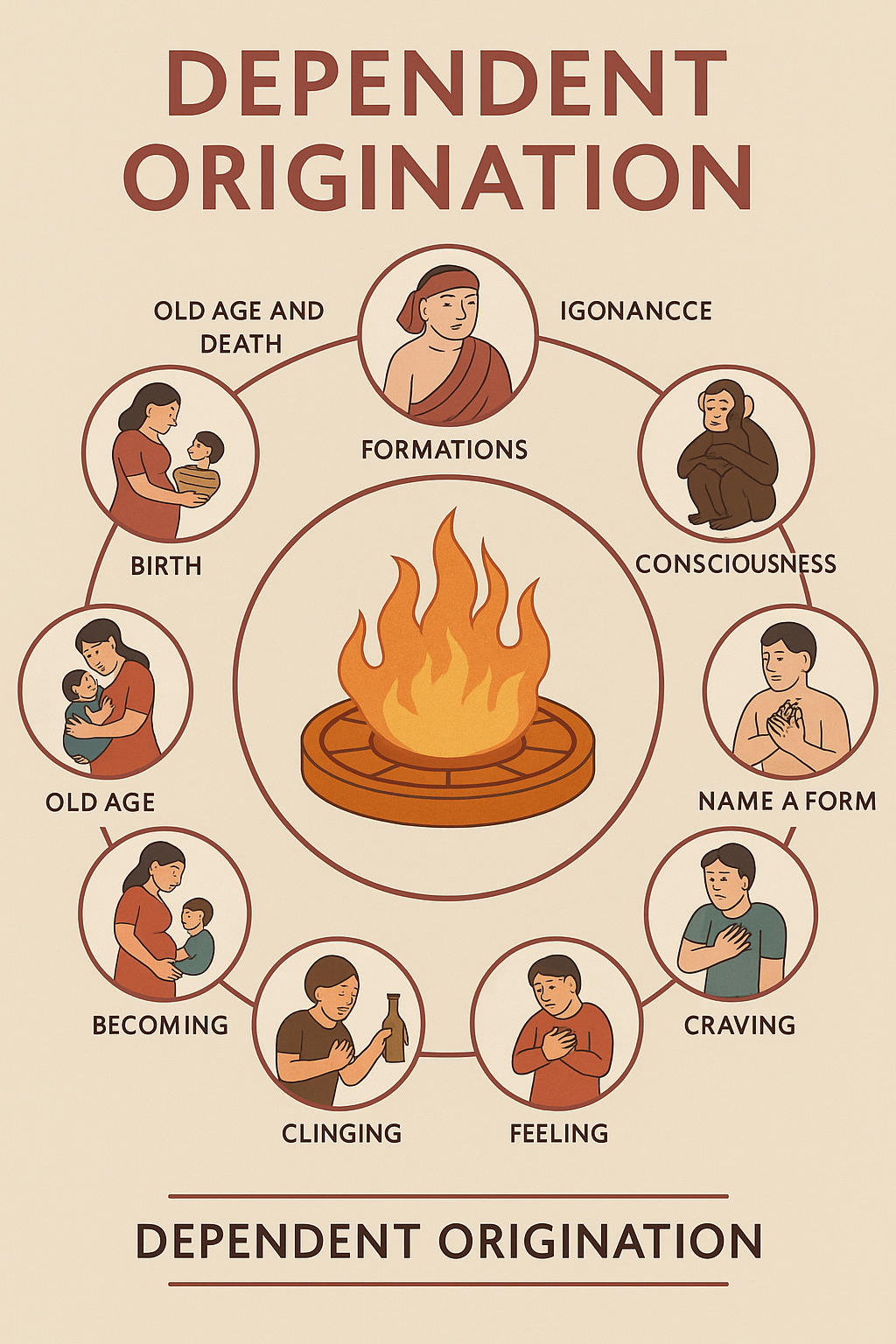
Here is the exposition on Paṭiccasamuppāda which is known as “Dependent Origination” in English. Everything in this world is dependent and Buddha explains on how this works and how “dukkha” or suffering comes to be and what helps in removing that suffering from endless samsara.
1.0. The Outline of Conditioned Origination
अविज्जापच्चया सङ्खारा, सङ्खारपच्चया विञ्ञाणं, विञ्ञाणपच्चया नामरूपं, नामरूपपच्चया सळायतनं, सळायतनपच्चया फस्सो, फस्सपच्चया वेदना, वेदनापच्चया तण्हा, तण्हापच्चया उपादानं, उपादानपच्चया भवो, भवपच्चया जाति, जातिपच्चया जरामरणं सोकपरिदेवदुक्खदोमनस्सुपायासा सम्भवन्ति. एवमेतस्स केवलस्स दुक्खक्खन्धस्स समुदयो होति.
Avijjāpaccayā saṅkhārā, saṅkhārapaccayā viññāṇaṃ, viññāṇapaccayā nāmarūpaṃ, nāmarūpapaccayā saḷāyatanaṃ, saḷāyatanapaccayā phasso, phassapaccayā vedanā, vedanāpaccayā taṇhā, taṇhāpaccayā upādānaṃ, upādānapaccayā bhavo, bhavapaccayā jāti, jātipaccayā jarāmaraṇaṃ sokaparidevadukkhadomanassupāyāsā sambhavanti. Evametassa kevalassa dukkhakkhandhassa samudayo hoti.
Explanation:
With ignorance as a condition, comes to be – sankhara which is free will process
With free will process as a condition, comes to be conscious action
With conscious action as a condition, comes to be names & forms – that which gets identified and symbolised through memory in the mind
With name and form as a condition, comes to be 6 sense doors as faculty
With Six sense doors as a condition, comes to be feelings (good, bad and neutral)
With feelings as a condition, comes to be craving
With craving as a condition, comes to be grasping or attachment or bringing near
With grasping as a condition, comes to becoming or executing the plan
With becoming as a condition, comes to be birth
With birth as a condition, comes to be ageing, death, sorrow, lamentation, pain, grief, helplessness which is in a nutshell, a whole mass of suffering.
1.1. Definition of avijjā or Ignorance
तत्थ कतमा अविज्जा? दुक्खे अञ्ञाणं, दुक्खसमुदये अञ्ञाणं, दुक्खनिरोधे अञ्ञाणं, दुक्खनिरोधगामिनिया पटिपदाय अञ्ञाणं— अयं वुच्चति “ अविज्जा”.
Tattha katamā avijjā? Dukkhe aññāṇaṃ, dukkhasamudaye aññāṇaṃ, dukkhanirodhe aññāṇaṃ, dukkhanirodhagāminiyā paṭipadāya aññāṇaṃ—ayaṃ vuccati “avijjā”.
Not knowing or ignorant about dukkha :
1. Suffering or dukkha from micro to macro level in every aspect
2. Root cause of dukkha
3. Cessation of dukkha
4. Steps or path followed to remove dukkha
How does dukkha come to be?
When one has nicca sanna (never arising and never passing away) and has a feeling and perception of “I existed in the past”, I’m existing now, and would exist in future which is all 3 time periods.
Here avijjā or ignorance is about not knowing the tilakkhana or characteristics of existence consisting of:
anicca [ arising and passing away of everything] and anatta [ no personal or personality, but just phenomenon].
This causes one to conceptualise past, future and present thus creating stories and proliferating over it all the time till the end of his/her life.
Tattha katamā ‘avijjā’?
Herein, what is ‘ignorance’?
Yaṁ aññāṇaṁ adassanaṁ anabhisamayo,
That which is a lack of knowledge, a lack of seeing, a lack of penetration,
ananubodho asambodho appaṭivedho,
a lack of recognition, a lack of awakening, a lack of realisation,
asaṅgāhaṇā apariyogāhaṇā asamapekkhanā,
a lack of comprehension, a lack of realising, a lack of consideration,
apaccavekkhaṇā apaccakkhakammaṁ dummejjhaṁ bālyaṁ,
a lack of reflection, a lack of perception, poor intelligence, foolishness,
asampajaññaṁ moho pamoho sammoho,
a lack of full knowledge, delusion, deception, confusion,
avijjā avijjogho avijjāyogo avijjānusayo,
ignorance, the flood of ignorance, the yoke of ignorance, the tendency to ignorance,
avijjāpariyuṭṭhānaṁ avijjālaṅgī moho akusalamūlaṁ:
the pervasion of ignorance, the barrier of ignorance, delusion, the root of unwholesomeness:
ayaṁ vuccati ‘avijjā’.
this is said to be ‘ignorance.’
1.2. Definition of Preparatory or Free-will Processes
तत्थ कतमे अविज्जापच्चया सङ्खारा? पुञ्ञाभिसङ्खारो, अपुञ्ञाभिसङ्खारो, आनेञ्जाभिसङ्खारो, कायसङ्खारो, वचीसङ्खारो, चित्तसङ्खारो.
Tattha katame avijjāpaccayā saṅkhārā? Puññābhisaṅkhāro, apuññābhisaṅkhāro, āneñjābhisaṅkhāro, kāyasaṅkhāro, vacīsaṅkhāro, cittasaṅkhāro.
Now, what is this avijjāpaccayā saṅkhārā?
1. puññābhisaṅkhāro (Puñña + abhi +saṅkhāro) = free will used in doing meritorious deeds.
2. apuññābhisaṅkhāro (apuñña + abhi + saṅkhāro) = free will used in doing demeritorious deeds
3. āneñjābhisaṅkhāro (āneñja + abhi + saṅkhāro) = free will used in attaining 4 arupa jhanas
4. kāyasaṅkhāro – Actions using the body which includes in and out breathing
5. vacīsaṅkhāro – Actions using mental speech as in thinking and pondering (vittaka and vichara)
6. cittasaṅkhāro – Actions using mind as in feelings and perceptions (vedana and sañña)
तत्थ कतमो पुञ्ञाभिसङ्खारो? कुसला चेतना कामावचरा रूपावचरा दानमया सीलमया भावनामया— अयं वुच्चति “पुञ्ञाभिसङ्खारो”. Tattha katamo puññābhisaṅkhāro? Kusalā cetanā kāmāvacarā rūpāvacarā
dānamayā sīlamayā bhāvanāmayā—ayaṃ vuccati “puññābhisaṅkhāro”.
Now what is free will meritorious deeds?
Those which is done with a merit intention and frequented with 5 sense doors, are sensual based and those frequented with forms which has generosity (dāna), morality based (sīla) and positive mental development (bhāvanā). These would qualify for free will meritorious deeds.
तत्थ कतमो अपुञ्ञाभिसङ्खारो? अकुसला चेतना कामावचरा— अयं वुच्चति “ अपुञ्ञाभिसङ्खारो”. Tattha katamo apuññābhisaṅkhāro? Akusalā cetanā kāmāvacarā—ayaṃ vuccati “apuññābhisaṅkhāro”.
Now what is free will demeritorious deeds?
Those deeds done with an intent to bring harm to oneself and others, which are frequently done through 5 sense doors qualify for demeritorious deeds.
Katame dhammā akusalā? Yasmiṃ samaye akusalaṃ cittaṃ uppannaṃ hoti somanassasahagataṃ diṭṭhigatasampayuttaṃ rūpārammaṇaṃ vā saddārammaṇaṃ vā gandhārammaṇaṃ vā rasārammaṇaṃ vā phoṭṭhabbārammaṇaṃ vā dhammārammaṇaṃ vā yaṃ yaṃ vā panārabbha,
Akusala intentions are following:
katamanca bhikkhave, akusalam? pānātipātō, adinnādānaṃ, kāmesumicchācārō, musāvādō, pisunā vācā, parusā vācā, samphappalāpō, abhijjhā, vyāpādō, micchādiṭṭhi akusalaṃ
Which means: Killing – physical or character assassination ; stealing ; using senses in a wrong way; telling lies; slander; harsh speech; blabber without any purpose; excessive liking to a extent of anxiety and despair; ill-will; wrong view – These forms immoral or demeritorious deeds.
तत्थ कतमो आनेञ्जाभिसङ्खारो? कुसला चेतना अरूपावचरा— अयं वुच्चति “ आनेञ्जाभिसङ्खारो”. Tattha katamo āneñjābhisaṅkhāro? Kusalā cetanā arūpāvacarā—ayaṃ vuccati “āneñjābhisaṅkhāro”.
Now what is free will for meditative attainments?
Those moral intentions that lead to meditative states of 4 formless realms:
1. Infinite Space in faculty or ayatana
2. Infinite Consciousness or ayatana
3. Nothingness in faculty or ayatana
4. Neither perception or non perception in faculty or ayatana
तत्थ कतमो कायसङ्खारो? कायसञ्चेतना कायसङ्खारो, वचीसञ्चेतना वचीसङ्खारो, मनोसञ्चेतना चित्तसङ्खारो. इमे वुच्चन्ति “ अविज्जापच्चया सङ्खारा”.
Tattha katamo kāyasaṅkhāro? Kāyasañcetanā kāyasaṅkhāro, vacīsañcetanā vacīsaṅkhāro, manosañcetanā cittasaṅkhāro. Ime vuccanti “avijjāpaccayā saṅkhārā”.
Now what is free will using body? – Those intention done through body; speech and mind are together called kāyasaṅkhāro. These is also called as avijjāpaccayā saṅkhārā or actions done out of ignorance as the being does not understand and has vision of:
a. Arising and passing away (anicca)
b. Four noble truth of suffering (dukkha)
c. No personality; person but just process (anatta) and hence no way to place ‘control by will’
Tattha katamo ‘avijjāpaccayā saṅkhāro?’
Herein, what is ‘with ignorance as condition there is a freewill process?’
Yā cetanā sañcetanā sañcetayitattaṁ:
That which is intention, directed intention, intentionality:
ayaṁ vuccati ‘avijjāpaccayā saṅkhāro.’
this is said to be ‘with ignorance as condition there is a free will process.’
1.3. Definition of Conscious actions
तत्थ कतमं सङ्खारपच्चया विञ्ञाणं? चक्खुविञ्ञाणं, सोतविञ्ञाणं, घानविञ्ञाणं, जिव्हाविञ्ञाणं, कायविञ्ञाणं, मनोविञ्ञाणं— इदं वुच्चति “सङ्खारपच्चया विञ्ञाणं”. Tattha katamaṃ saṅkhārapaccayā viññāṇaṃ? Cakkhuviññāṇaṃ, sotaviññāṇaṃ, ghānaviññāṇaṃ, jivhāviññāṇaṃ, kāyaviññāṇaṃ, manoviññāṇaṃ—idaṃ vuccati “saṅkhārapaccayā viññāṇaṃ”.
Now how does free will preparations lead to Conscious actions?
Those actions which are performed when consciousness connects:
1. Eye to sight -> Cakkhuviññāṇaṃ, conscious action through eye
2. Ear to sound -> sotaviññāṇaṃ, conscious action through ear
3. Nose to smell -> ghānaviññāṇaṃ, conscious action through nose
4. Tongue to taste -> jivhāviññāṇaṃ, conscious action through tongue
5. Body to touch -> kāyaviññāṇaṃ, conscious action through body
6. Mind to dhamma or mind objects -> manoviññāṇaṃ conscious action through mind.
These actions lead to one of the following:
1. Liking
2. Disliking
3. Neutral
This is said to be free will preparations leading to conscious actions saṅkhārapaccayā viññāṇaṃ.
Tattha katamaṁ ‘saṅkhārapaccayā viññāṇaṁ?’
Herein, what is ‘with a freewill process as condition: consciousness?’
Yaṁ cittaṁ mano mānasaṁ hadayaṁ, paṇḍaraṁ mano manāyatanaṁ manindriyaṁ, viññāṇaṁ viññāṇakkhandho tajjāmanoviññāṇadhātu:
idaṁ vuccati ‘saṅkhārapaccayā viññāṇaṁ.’
cittaṁ – pure consciousness which is aware of itself.
mano – ability to compare and measure with past experience to gauge the type of object like person, car, home etc.,
mānasaṁ – deciding the object which has come through the 5 sense doors with a specific connection.
hadayaṁ – Generate a saññā or perception of what the relationship is due to feeling and get attached with it to make it himself/herself.
paṇḍaraṁ – getting close to possessing the object seen like mother, wife, son, daughter, home etc., as “mine”
mano manāyatanaṁ – here āyatana represents mind faculty/medium to becoming receptive. Thus, what object is appearing in mano is now fully engrossed into it
manindriyaṁ – mano + indriyam – sensing the object which appeared in the mind with the strong feelings – pleasure, displeasure and neutral
viññāṇaṁ – vi + ññāṇaṁ – without any wisdom or not having any reality but perceived reality.
viññāṇakkhandho – It is strengthened by what is called as “personal experience” with images of past, hopes of future and what should be done in present based upon one’s gati or habit pattern. Thus, you get heaps of viññāṇa that one experiences called as “one thought moment” before such action is taken.
1.4. Definition of Mind and Form (nama and rupa)
Conscious actions require a definition and conceptualisation which is done by the mind and does identification of forms and makes a note or symbolisation creating memories of those experiences.
तत्थ कतमं विञ्ञाणपच्चया नामरूपं? अत्थि नामं, अत्थि रूपं. तत्थ कतमं नामं? वेदनाक्खन्धो, सञ्ञाक्खन्धो, सङ्खारक्खन्धो— इदं वुच्चति “नामं”. तत्थ कतमं रूपं? चत्तारो महाभूता, चतुन्नञ्च महाभूतानं उपादायरूपं— इदं वुच्चति “रूपं”. इति इदञ्च नामं, इदञ्च रूपं. इदं वुच्चति “विञ्ञाणपच्चया नामरूपं”.
Tattha katamaṃ viññāṇapaccayā nāmarūpaṃ? Atthi nāmaṃ, atthi rūpaṃ. Tattha katamaṃ nāmaṃ? Vedanākkhandho, saññākkhandho, saṅkhārakkhandho—idaṃ vuccati “nāmaṃ”. Tattha katamaṃ rūpaṃ? Cattāro mahābhūtā, catunnañca mahābhūtānaṃ upādāyarūpaṃ—idaṃ vuccati “rūpaṃ”. Iti idañca nāmaṃ, idañca rūpaṃ. Idaṃ vuccati “viññāṇapaccayā nāmarūpaṃ”.
Now what is Name and Form? How is it defined and to be understood?
When said about mind which does naming
Vedanākkhandho – Different feelings that arise as in pleasurable, painful and neutral
saññākkhandho – Perceptions that get created based upon feeling
saṅkhārakkhandho – Freewill preparations in order to execute based upon feelings and perceptions.
When said about forms (rupa) on which mind identifies which arises due to avijja
Four mahabhuta or elements of – pathavi, āpo, tejo, vāyo
Pathavi representing hardness and softness
āpo representing flowing and binding
vāyo representing movement
tejo representing temperature of cold and warm/hot
Four upadaya rupa which occurs due to taṇhā.
vaṇṇa – colour
gandha – smelling essence
rasa – flavour
oja – nutritive essence of everything
This is said to be conscious actions leading to name & form identification
1.5. Definition of the Six Sense Spheres or world
तत्थ कतमं नामरूपपच्चया सळायतनं? चक्खायतनं, सोतायतनं, घानायतनं, जिव्हायतनं, कायायतनं, मनायतनं— इदं वुच्चति “नामरूपपच्चया सळायतनं”.
Tattha katamaṃ nāmarūpapaccayā saḷāyatanaṃ? Cakkhāyatanaṃ, sotāyatanaṃ, ghānāyatanaṃ, jivhāyatanaṃ, kāyāyatanaṃ, manāyatanaṃ—idaṃ vuccati “nāmarūpapaccayā saḷāyatanaṃ”.
Now how does mind & form gets experienced through 5 sense faculties?
These are experienced through eye, ear, nose, tongue, body and mind
1.6. Definition of Contact
तत्थ कतमो सळायतनपच्चया फस्सो? चक्खुसम्फस्सो सोतसम्फस्सो घानसम्फस्सो जिव्हासम्फस्सो कायसम्फस्सो मनोसम्फस्सो— अयं वुच्चति “सळायतनपच्चया फस्सो”.
Tattha katamo saḷāyatanapaccayā phasso? Cakkhusamphasso sotasamphasso ghānasamphasso jivhāsamphasso kāyasamphasso manosamphasso—ayaṃ vuccati “saḷāyatanapaccayā phasso”.
That experience which comes to be by contact with objects of senses with the sense of eye, ear, nose, tongue, body and mind. This is what meant by the sense faculties or world created through connecting them to sense objects.
1.7. Definition of Feeling
तत्थ कतमा फस्सपच्चया वेदना? चक्खुसम्फस्सजा वेदना, सोतसम्फस्सजा वेदना, घानसम्फस्सजा वेदना, जिव्हासम्फस्सजा वेदना, कायसम्फस्सजा वेदना, मनोसम्फस्सजा वेदना— अयं वुच्चति “फस्सपच्चया वेदना”. Tattha katamā phassapaccayā vedanā? Cakkhusamphassajā vedanā, sotasamphassajā vedanā, ghānasamphassajā vedanā, jivhāsamphassajā vedanā, kāyasamphassajā vedanā, manosamphassajā vedanā—ayaṃ vuccati “phassapaccayā vedanā”.
Feeling (pleasurable, painful and neutral) got through or created by contact of sense with sense objects relating to eye, ear, nose, tongue, body and mind.
That which is mental agreeableness, mental pleasure, pleasant and agreeable experience born of contact with the mind, pleasant and agreeable feeling born of contact with the mind: this is said to be ‘with contact as condition: feeling’.
Tattha katamā ‘phassapaccayā vedanā?’
Herein, what is ‘with contact as condition: feeling?’
Yaṁ cetasikaṁ sātaṁ cetasikaṁ sukhaṁ,
That which is mental agreeableness, mental pleasure,
cetosamphassajaṁ sātaṁ sukhaṁ vedayitaṁ,
pleasant and agreeable experience born of contact with the mind,
cetosamphassajā sātā sukhā vedanā:
pleasant and agreeable feeling born of contact with the mind:
ayaṁ vuccati ‘phassapaccayā vedanā.’
this is said to be ‘with contact as condition: feeling.’
1.8. Definition of Craving
तत्थ कतमा वेदनापच्चया तण्हा? रूपतण्हा, सद्दतण्हा, गन्धतण्हा, रसतण्हा, फोट्ठब्बतण्हा, धम्मतण्हा— अयं वुच्चति “वेदनापच्चया तण्हा”. Tattha katamā vedanāpaccayā taṇhā? Rūpataṇhā, saddataṇhā, gandhataṇhā, rasataṇhā, phoṭṭhabbataṇhā, dhammataṇhā—ayaṃ vuccati “vedanāpaccayā taṇhā”.
There is craving for likeable forms, sounds, smells, flavour, tangibles and thoughts. This is what is called as “vedanāpaccayā taṇhā”.
Tattha katamā vedanāpaccayā taṇhā?
Herein, what is ‘with feeling as condition: craving?’
Yo rāgo sārāgo anunayo anurodho,
That which is passion, passionateness, fawning, compliance,
nandī nandirāgo cittassa sārāgo:
enjoyment, passionate enjoyment, passionateness of mind:
ayaṁ vuccati ‘vedanāpaccayā taṇhā.’
this is said to be ‘with feeling as condition: craving.’
1.9. Definition of Grasping / Attachment
तत्थ कतमं तण्हापच्चया उपादानं? कामुपादानं, दिट्ठुपादानं, सीलब्बतुपादानं, अत्तवादुपादानं— इदं वुच्चति “तण्हापच्चया उपादानं”.
Tattha katamaṃ taṇhāpaccayā upādānaṃ? Kāmupādānaṃ, diṭṭhupādānaṃ, sīlabbatupādānaṃ, attavādupādānaṃ—idaṃ vuccati “taṇhāpaccayā upādānaṃ”.
There is this holding onto sensual pleasures, one’s views, rituals and its practice, self-theories which he/she believes to be true.
Tattha katamaṁ ‘taṇhāpaccayā upādānaṁ?’
Herein, what is ‘with craving as condition: attachment or holding onto?’
Yā diṭṭhi diṭṭhigataṁ diṭṭhigahanaṁ,
That which is (wrong) view, resorting to (wrong) view, the jungle of (wrong) view,
diṭṭhikantāro diṭṭhivisūkāyikaṁ,
the wilderness of (wrong) view, the distortion of (wrong) view,
diṭṭhivipphanditaṁ diṭṭhisaṁyojanaṁ,
the agitation of (wrong) view, the fetter of (wrong) view,
gāho patiṭṭhāho abhiniveso parāmāso,
obsession, tenacity, inclination, grasping,
kummaggo micchāpatho micchattaṁ,
bad road, wrong path, the state of being wrong,
titthāyatanaṁ vipariyāsaggāho:
within the heretical world, obsession with what is perverse:
idaṁ vuccati ‘taṇhāpaccayā upādānaṁ.’
this is said to be ‘with craving as condition: attachment or holding onto.’
Yā vedanāsu nandi tadupādāna, “whatever delighting there is in feeling, that is a grasping or holding on to or to bring near to oneself(a sense of I). It is also fuel for existence or bhava.
Tattha katamaṃ kāmupādānaṃ? Yo kāmesu kāmacchando kāmarāgo kāmanandī kāmataṇhā kāmasineho kāmapariḷāho kāmamucchā kāmajjhosānaṃ – idaṃ vuccati kāmupādānaṃ.
Tattha katamaṃ diṭṭhupādānaṃ? Natthi dinnaṃ, natthi yiṭṭhaṃ, natthi hutaṃ, natthi sukatadukkaṭānaṃ kammānaṃ phalaṃ vipāko, natthi ayaṃ loko, natthi paro loko, natthi mātā, natthi pitā, natthi sattā opapātikā, natthi loke samaṇabrāhmaṇā sammaggatā sammāpaṭipannā, ye imañca lokaṃ parañca lokaṃ sayaṃ abhiññā sacchikatvā pavedentīti – yā evarūpā diṭṭhi diṭṭhigataṃ diṭṭhigahanaṃ diṭṭhikantāro diṭṭhivisūkāyikaṃ diṭṭhivipphanditaṃ diṭṭhisaṃyojanaṃ gāho patiṭṭhāho abhiniveso parāmāso kummaggo micchāpatho micchattaṃ titthāyatanaṃ vipariyāsaggāho – idaṃ vuccati diṭṭhupādānaṃ. Ṭhapetvā sīlabbatupādānañca attavādupādānañca sabbāpi micchādiṭṭhi diṭṭhupādānaṃ.
- natthi dinnaṃ – Giving (däna) has no merits
- natthi yiṭṭhaṃ – Being grateful and responding in kind (for what others have done for oneself) has no merits
- natthi hutaṃ – respecting and making offerings to those with higher virtues has no merits
- natthi sukatadukkaṭānaṃ kammānaṃ phalaṃ vipāko – what we enjoy/suffer in this life is not due to kamma vipaka but they “just happen”
- natthi ayaṃ loko – this world does not exist
- natthi paro loko – paraloka or the other world of gandhabba and other unseen beings does not exist
- natthi mātā – there is no special person as a mother
- natthi pitā – there is no special person as a father
- natthi sattā opapātikā – there are no opapatika (instantaneous) births
- natthi loke samaṇabrāhmaṇā sammaggatā sammāpaṭipannā, ye imañca lokaṃ parañca lokaṃ sayaṃ abhiññā sacchikatvā pavedentīti – there are no samana brahmana (basically Ariyas or yogis) with abhinna powers who can see both this world (imanca lokam) and paraloka (paranca lokam)
Tattha katamaṃ sīlabbatupādānaṃ? Ito bahiddhā samaṇabrāhmaṇānaṃ sīlena suddhi, vatena suddhi, sīlabbatena suddhīti – yā evarūpā diṭṭhi diṭṭhigataṃ diṭṭhigahanaṃ diṭṭhikantāro diṭṭhivisūkāyikaṃ diṭṭhivipphanditaṃ diṭṭhisaṃyojanaṃ gāho patiṭṭhāho abhiniveso parāmāso kummaggo micchāpatho micchattaṃ titthāyatanaṃ vipariyāsaggāho – idaṃ vuccati sīlabbatupādānaṃ.
Tattha katamaṃ attavādupādānaṃ? Idha assutavā puthujjano ariyānaṃ adassāvī ariyadhammassa akovido ariyadhamme avinīto sappurisānaṃ adassāvī sappurisadhammassa akovido sappurisadhamme avinīto rūpaṃ attato samanupassati, rūpavantaṃ vā attānaṃ, attani vā rūpaṃ, rūpasmiṃ vā attānaṃ. Vedanaṃ…pe… saññaṃ…pe… saṅkhāre…pe… viññāṇaṃ attato samanupassati, viññāṇavantaṃ vā attānaṃ, attani vā viññāṇaṃ viññāṇasmiṃ vā attānaṃ. Yā evarūpā diṭṭhi diṭṭhigataṃ diṭṭhigahanaṃ diṭṭhikantāro diṭṭhivisūkāyikaṃ diṭṭhivipphanditaṃ diṭṭhisaṃyojanaṃ gāho patiṭṭhāho abhiniveso parāmāso kummaggo micchāpatho micchattaṃ titthāyatanaṃ vipariyāsaggāho – idaṃ vuccati attavādupādānaṃ.
1.10. Definition of Continuation
तत्थ कतमो उपादानपच्चया भवो? भवो दुविधेन— अत्थि कम्मभवो, अत्थि उपपत्तिभवो. तत्थ कतमो कम्मभवो? पुञ्ञाभिसङ्खारो, अपुञ्ञाभिसङ्खारो, आनेञ्जाभिसङ्खारो— अयं वुच्चति “कम्मभवो”. सब्बम्पि भवगामिकम्मं कम्मभवो. Tattha katamo upādānapaccayā bhavo? Bhavo duvidhena—atthi kammabhavo, atthi upapattibhavo. Tattha katamo kammabhavo? Puññābhisaṅkhāro, apuññābhisaṅkhāro, āneñjābhisaṅkhāro—ayaṃ vuccati “kammabhavo”. Sabbampi bhavagāmikammaṃ kammabhavo.
तत्थ कतमो उपपत्तिभवो? कामभवो, रूपभवो, अरूपभवो, सञ्ञाभवो, असञ्ञाभवो, नेवसञ्ञानासञ्ञाभवो, एकवोकारभवो, चतुवोकारभवो, पञ्चवोकारभवो— अयं वुच्चति “ उपपत्तिभवो”. अयं वुच्चति “ उपादानपच्चया भवो”. Tattha katamo upapattibhavo? Kāmabhavo, rūpabhavo, arūpabhavo, saññābhavo, asaññābhavo, nevasaññānāsaññābhavo, ekavokārabhavo, catuvokārabhavo, pañcavokārabhavo—ayaṃ vuccati “upapattibhavo”. Ayaṃ vuccati “upādānapaccayā bhavo”.
What is upapattibhavo?
A strong intention to continue in sensual world, fine material world, non-material world, perceptive world, non perceptive world, neither perception nor non perception world. Also an innate desire to have only one constituent out 5 khandas, innate desire to have only four of them, innate desire to have all five of them. These are what is called as upapattibhavo and also upādānapaccayā bhavo.
1.11. Definition of Birth
तत्थ कतमा भवपच्चया जाति? या तेसं तेसं सत्तानं तम्हि तम्हि सत्तनिकाये जाति सञ्जाति ओक्कन्ति अभिनिब्बत्ति, खन्धानं पातुभावो, आयतनानं पटिलाभो— अयं वुच्चति “भवपच्चया जाति”.
Tattha katamā bhavapaccayā jāti? Yā tesaṃ tesaṃ sattānaṃ tamhi tamhi sattanikāye jāti sañjāti okkanti abhinibbatti, khandhānaṃ pātubhāvo, āyatanānaṃ paṭilābho—ayaṃ vuccati “bhavapaccayā jāti”.
This is what is called as “rebirth” in all class of beings
jāti – formation of kammaja kaya is commencement or jāti wherein the consciousness or “chitta” joins along with kammaja.
sañjāti – Both kammaja and cittaja kaya start producing very subtle rupa which gives rise to very fine physical form called the utuja kaya. At this stage, cakkhu, sota, ghana, and jivha dasaka are also formed. This is called the “sanjati” moment of birth. It also can take the food through smell and hence has karaja kaya.
This gives rise to gandhabba and hence has all the FOUR kaya along with FIVE dasaka (cakku, sota, ghana, jivha, kaya) along with hadaya vattu or seat of mind waiting for the right moment to enter into the womb.
okkanti – When kamma matches with the parents and the mother is in right rutu and father is able to provide the seed and mother is able to conceive, then the gandhabba would collapse into the womb and merges into the single cell at the time of mutation or zygote. This then divides and subdivides into a blastocyst and turns into a embryo. This whole process is okkanti.
abhinibbati – The fine body then starts to develop based upon the ‘blueprint’ brought in by the being or gandhabba. Each organ and it’s development and under development is dependent on this blueprint which is the kamma and its vipaka. The being has no power to change or modify what it has reaped. The initial growth stage of the fetus inside the womb is called the “abhinibbanti stage” of birth.
khandhānaṃ pātubhāvo – At this stage the 5 khandas or aggregates are developed and able to sense rūpakkhandho, vedanākkhandho, saññākkhandho , saṅkhārakkhandho, viññāṇakkhandho
āyatanānaṃ paṭilābho – The sense faculties start developing and completes in such a way that the baby can now sense outside world which include hearing, seeing, smelling, tasting and touching through its eyes, ears, nose, tongue and body. The baby is now able to feel and interact too.
This is what is called as “rebirth” or jāti.
1.12. Definition of Ageing and Death
तत्थ कतमं जातिपच्चया जरामरणं? अत्थि जरा, अत्थि मरणं.
तत्थ कतमा जरा? या तेसं तेसं सत्तानं तम्हि तम्हि सत्तनिकाये जरा जीरणता खण्डिच्चं पालिच्चं वलित्तचता आयुनो संहानि इन्द्रियानं परिपाको— अयं वुच्चति “जरा”.
तत्थ कतमं मरणं? या तेसं तेसं सत्तानं तम्हा तम्हा सत्तनिकाया चुति चवनता भेदो अन्तरधानं मच्चु मरणं कालकिरिया खन्धानं भेदो कळेवरस्स निक्खेपो जीवितिन्द्रियस्सुपच्छेदो— इदं वुच्चति “मरणं”. इति अयञ्च जरा, इदञ्च मरणं. इदं वुच्चति “जातिपच्चया जरामरणं”.
Tattha katamaṃ jātipaccayā jarāmaraṇaṃ? Atthi jarā, atthi maraṇaṃ. Tattha katamā jarā? Yā tesaṃ tesaṃ sattānaṃ tamhi tamhi sattanikāye jarā jīraṇatā khaṇḍiccaṃ pāliccaṃ valittacatā āyuno saṃhāni indriyānaṃ paripāko—ayaṃ vuccati “jarā”.
Tattha katamaṃ maraṇaṃ? Yā tesaṃ tesaṃ sattānaṃ tamhā tamhā sattanikāyā cuti cavanatā bhedo antaradhānaṃ maccu maraṇaṃ kālakiriyā khandhānaṃ bhedo kaḷevarassa nikkhepo jīvitindriyassupacchedo—idaṃ vuccati “maraṇaṃ”. Iti ayañca jarā, idañca maraṇaṃ. Idaṃ vuccati “jātipaccayā jarāmaraṇaṃ”.
Tattha katamaṁ ‘jātipaccayā jarāmaraṇaṁ?’
Herein, what is ‘with birth as condition: ageing, death?’
Atthi jarā, atthi maraṇaṁ.
There is ageing, there is death.
Tattha katamā ‘jarā?’
Herein, what is ‘ageing?’
Yā tesaṁ tesaṁ dhammānaṁ
For various nature of things
jarā jīraṇatā āyuno saṁhāni:
(there is) ageing, agedness, the dwindling away of the life span:
ayaṁ vuccati ‘jarā.’
this is said to be ‘ageing.’
Tattha katamaṁ ‘maraṇaṁ?’
Herein, what is ‘death?’
Yo tesaṁ tesaṁ dhammānaṁ
For various nature of things
khayo vayo bhedo paribhedo,
(there is) destruction, decay, a breaking up, a complete breaking up,
aniccatā antaradhānaṁ:
arising and passing away, a disappearance:
idaṁ vuccati ‘maraṇaṁ.’
this is called ‘death.’
Iti ayañ-ca jarā idañ-ca maraṇaṁ,
Thus, this is ageing and this is death,
idaṁ vuccati ‘jātipaccayā jarāmaraṇaṁ.’
this is said to be ‘with birth as condition: ageing, death.’
1.12.1. Definition of Sorrow
तत्थ कतमो सोको? ञातिब्यसनेन वा फुट्ठस्स, भोगब्यसनेन वा फुट्ठस्स, रोगब्यसनेन वा फुट्ठस्स, सीलब्यसनेन वा फुट्ठस्स, दिट्ठिब्यसनेन वा फुट्ठस्स, अञ्ञतरञ्ञतरेन ब्यसनेन समन्नागतस्स, अञ्ञतरञ्ञतरेन दुक्खधम्मेन फुट्ठस्स सोको सोचना सोचितत्तं अन्तोसोको अन्तोपरिसोको चेतसो परिज्झायना दोमनस्सं सोकसल्लं— अयं वुच्चति “सोको”.
Tattha katamo ‘soko?’
Herein, what is ‘Sorrow?’
Ñātibyasanena vā phuṭṭhassa, bhogabyasanena vā phuṭṭhassa,
To one touched by misfortune regarding relatives, to one touched by misfortune regarding wealth,
rogabyasanena vā phuṭṭhassa, sīlabyasanena vā phuṭṭhassa,
to one touched by misfortune regarding health, to one touched by misfortune regarding (loss of) morality,
diṭṭhibyasanena vā phuṭṭhassa,
to one touched by misfortune regarding his views,
aññataraññatarena byasanena samannāgatassa,
for he who has some sort of misfortune or other,
aññataraññatarena dukkhadhammena phuṭṭhassa,
who is touched by some sort of painful thing or another,
soko socanā socitattaṁ antosoko antoparisoko,
there is grief, grieving, the state of grieving, inner grief, great inner grief,
cetaso parijjhāyanā domanassaṁ sokasallaṁ.
his mind is sorrowful, being pierced with the dart of grief.
Ayaṁ vuccati ‘soko.’
This is said to be ‘grief.’
1.12.2. Definition of Lamentation
तत्थ कतमो परिदेवो? ञातिब्यसनेन वा फुट्ठस्स, भोगब्यसनेन वा फुट्ठस्स, रोगब्यसनेन वा फुट्ठस्स, सीलब्यसनेन वा फुट्ठस्स, दिट्ठिब्यसनेन वा फुट्ठस्स, अञ्ञतरञ्ञतरेन ब्यसनेन समन्नागतस्स, अञ्ञतरञ्ञतरेन दुक्खधम्मेन फुट्ठस्स आदेवो परिदेवो आदेवना परिदेवना आदेवितत्तं परिदेवितत्तं वाचा पलापो विप्पलापो लालप्पो लालप्पना लालप्पितत्तं— अयं वुच्चति “परिदेवो”.
Tattha katamo ‘paridevo?’
Herein, what is ‘lamentation?’
Ñātibyasanena vā phuṭṭhassa, bhogabyasanena vā phuṭṭhassa,
To one touched by misfortune regarding relatives, to one touched by misfortune regarding wealth,
rogabyasanena vā phuṭṭhassa, sīlabyasanena vā phuṭṭhassa,
to one touched by misfortune regarding health, to one touched by misfortune regarding (loss of) morality,
diṭṭhibyasanena vā phuṭṭhassa,
to one touched by misfortune regarding his views,
aññataraññatarena byasanena samannāgatassa,
for he who has some sort of misfortune or other,
aññataraññatarena dukkhadhammena phuṭṭhassa,
who is touched by some sort of painful thing or another,
ādevo paridevo ādevanā paridevanā ādevitattaṁ paridevitattaṁ,
there are laments, great laments, lamenting, great lamenting, the state of lamenting, the state of great lamentation,
vācā palāpo vippalāpo lālappo lālappanā lālappitattaṁ.
words of wailing, great wailing, moaning, great moaning, the state of moaning.
Ayaṁ vuccati ‘paridevo.’
This is said to be ‘lamentation.’
1.12.3. Definition of Body Pain
तत्थ कतमं दुक्खं? यं कायिकं असातं कायिकं दुक्खं कायसम्फस्सजं असातं दुक्खं वेदयितं कायसम्फस्सजा असाता दुक्खा वेदना— इदं वुच्चति “दुक्खं”.
Tattha katamaṁ ‘dukkhaṁ?’
Herein, what is ‘body pain?’
Yaṁ kāyikaṁ asātaṁ kāyikaṁ dukkhaṁ,
That which is bodily pain, bodily disagreeableness,
kāyasamphassajaṁ asātaṁ dukkhaṁ vedayitaṁ,
pain arising from contact with the body, disagreeable feeling,
kāyasamphassajā asātā dukkhā vedanā.
pain and painful feeling that is born in the body.
Idaṁ vuccati ‘dukkhaṁ.’
This is said to be ‘pain.’
1.12.4. Definition of Mental Pain
तत्थ कतमं दोमनस्सं? यं चेतसिकं असातं, चेतसिकं दुक्खं, चेतोसम्फस्सजं असातं दुक्खं वेदयितं, चेतोसम्फस्सजा असाता दुक्खा वेदना— इदं वुच्चति “दोमनस्सं”.
Tattha katamaṁ ‘domanassaṁ?’
Herein, what is ‘mental pain?’
Yaṁ cetasikaṁ asātaṁ, cetasikaṁ dukkhaṁ,
That which is mental pain, mental disagreeableness,
cetosamphassajaṁ asātaṁ dukkhaṁ vedayitaṁ,
pain arising from contact with the mind, disagreeable feeling,
cetosamphassajā asātā dukkhā vedanā.
pain and painful feeling that is born in the mind.
Idaṁ vuccati ‘domanassaṁ.’
This is said to be ‘grief.’
1.12.5. Definition of Despair
तत्थ कतमो उपायासो? ञातिब्यसनेन वा फुट्ठस्स, भोगब्यसनेन वा फुट्ठस्स, रोगब्यसनेन वा फुट्ठस्स, सीलब्यसनेन वा फुट्ठस्स, दिट्ठिब्यसनेन वा फुट्ठस्स, अञ्ञतरञ्ञतरेन ब्यसनेन समन्नागतस्स, अञ्ञतरञ्ञतरेन दुक्खधम्मेन फुट्ठस्स आयासो उपायासो आयासितत्तं उपायासितत्तं— अयं वुच्चति “ उपायासो”.
Tattha katamo ‘upāyāso?’
Herein, what is ‘despair?’
Ñātibyasanena vā phuṭṭhassa, bhogabyasanena vā phuṭṭhassa,
To one touched by misfortune regarding relatives, to one touched by misfortune regarding wealth,
rogabyasanena vā phuṭṭhassa, sīlabyasanena vā phuṭṭhassa,
to one touched by misfortune regarding health, to one touched by misfortune regarding (loss of) morality,
diṭṭhibyasanena vā phuṭṭhassa,
to one touched by misfortune regarding his views,
aññataraññatarena byasanena samannāgatassa,
for he who has some sort of misfortune or other,
aññataraññatarena dukkhadhammena phuṭṭhassa,
who is touched by some sort of painful thing or another,
āyāso upāyāso āyāsitattaṁ upāyāsitattaṁ.
there is desponding, despairing, the state of despondency, the state of despair.
Ayaṁ vuccati ‘upāyāso.’
This is said to be ‘despair.’
एवमेतस्स केवलस्स दुक्खक्खन्धस्स समुदयो होतीति, एवमेतस्स केवलस्स दुक्खक्खन्धस्स सङ्गति होति, समागमो होति, समोधानं होति, पातुभावो होति. तेन वुच्चति “ एवमेतस्स केवलस्स दुक्खक्खन्धस्स समुदयो होती”ति.
Evam-etassa kevalassa dukkhakkhandhassa samudayo hoti,
So there is an origination of this whole mass of suffering,
evam-etassa kevalassa dukkhakkhandhassa saṅgati hoti,
and so there is an association with this whole mass of suffering,
samāgamo hoti, samodhānaṁ hoti, pātubhāvo hoti.
a meeting with it, a connection with it, a manifestation of it.
Tena vuccati ‘evam-etassa kevalassa dukkhakkhandhassa samudayo hotī.’ ti
This is said to be ‘the origination of this whole mass of suffering’
Definitions section: