Ambapālītherīgāthā
 VISUAL SUMMARYSee this study in a pictureOpen the complete infographic for a visual overview before or after reading the full study.View infographic →
Beauty is not denied; its inability to remain is directly known
Ambapālītherīgāthā, Thig 13.1, contains nineteen verses, numbered 252–270. Ambapālī remembers black curled hair, fragrance, shaped eyebrows, brilliant eyes, well-formed ears and teeth, a sweet voice, smooth skin, strong limbs and a body compared to polished gold.
Then every remembered sign is placed beside jarā. Hair becomes coarse, sparse and bald; eyes lose brilliance; the voice falters; the body bends, wrinkles, cracks and weakens. Each comparison closes with Saccavādivacanaṁ anaññathā — “The word of the Truth-speaker has not turned out otherwise.”
The central reflection is therefore not “the body is ugly.” It is more exact: what is conditioned cannot be made to remain according to desire. What was attractive really was attractive, but it could not be preserved.
What the early texts actually establish about Ambapālī
In DN 16 Mahāparinibbānasutta, Ambapālī is explicitly identified as the courtesan of Vesālī and owner of the mango grove where the Buddha stayed. She approached him, heard a Dhamma talk, invited the Buddha and Saṅgha for the next day’s meal, served them herself, and afterward donated her park to the Saṅgha.
The Therīgāthā later preserves these verses under the name Ambapālī Therī. The poem itself does not narrate her birth, childhood, relationship with kings, ordination ceremony, or the moment of attainment.
Later biographical stories may be retained elsewhere as tradition, but they should not be blended into the canonical poem as though Ambapālī herself stated them.
Source discipline: DN 16 supplies the early canonical setting; Thig 13.1 supplies the nineteen verses. Later legendary biography has been removed from the main study.

Ambapālī before renunciation — teaching illustration, not a historical portrait
Click infographic to enlarge ↗
Thig 252–270 — full Pāḷi and translation
01 Thig 252 — Hair — black like bees, now coarse like hemp
Kāḷakā bhamaravaṇṇasādisā,
Vellitaggā mama muddhajā ahuṁ;
Te jarāya sāṇavākasādisā,
Saccavādivacanaṁ anaññathā.
My hair was black, like the colour of bees, with curled tips upon my head. Through aging it has become like coarse hemp fibre. The word of the Truth-speaker has not turned out otherwise.
02 Thig 253 — Hair — once fragrant, now changed in smell
Vāsitova surabhī karaṇḍako,
Pupphapūra mama uttamaṅgajo;
Taṁ jarāyatha salomagandhikaṁ,
Saccavādivacanaṁ anaññathā.
The hair growing on the crown of my head was fragrant, like a perfumed casket filled with flowers. Now, through aging, it has acquired the smell of animal fur. The word of the Truth-speaker has not turned out otherwise.
03 Thig 254 — Hair — once thick and dressed, now sparse
Kānanaṁva sahitaṁ suropitaṁ,
Kocchasūcivicitaggasobhitaṁ;
Taṁ jarāya viralaṁ tahiṁ tahiṁ,
Saccavādivacanaṁ anaññathā.
My hair was thick like a well-planted grove, its tips made beautiful with combs and pins. Through aging it has become sparse here and there. The word of the Truth-speaker has not turned out otherwise.
04 Thig 255 — Hair — adorned with braids and gold, now bald
Kaṇhakhandhakasuvaṇṇamaṇḍitaṁ,
Sobhate suveṇīhilaṅkataṁ;
Taṁ jarāya khalitaṁ siraṁ kataṁ,
Saccavādivacanaṁ anaññathā.
My head once looked splendid, its dark locks adorned with gold and arranged in beautiful braids. Through aging that head has become bald. The word of the Truth-speaker has not turned out otherwise.
05 Thig 256 — Eyebrows — artistically shaped, now folded with wrinkles
Cittakārasukatāva lekhikā,
Sobhare su bhamukā pure mama;
Tā jarāya valibhippalambitā,
Saccavādivacanaṁ anaññathā.
Formerly my eyebrows were beautiful, like lines skillfully drawn by a painter. Through aging they now hang down amid folds and wrinkles. The word of the Truth-speaker has not turned out otherwise.
06 Thig 257 — Eyes — brilliant like jewels, now dimmed by age
Bhassarā surucirā yathā maṇī,
Nettahesumabhinīlamāyatā;
Te jarāyabhihatā na sobhare,
Saccavādivacanaṁ anaññathā.
My eyes were radiant and lovely like jewels, deep blue and elongated. Struck by aging, they are beautiful no longer. The word of the Truth-speaker has not turned out otherwise.
07 Thig 258 — Nose — beautiful in youth, now shriveled
Saṇhatuṅgasadisī ca nāsikā,
Sobhate su abhiyobbanaṁ pati;
Sā jarāya upakūlitā viya,
Saccavādivacanaṁ anaññathā.
My nose was fine and well-raised, beautiful in the full bloom of youth. Through aging it has become shriveled and altered. The word of the Truth-speaker has not turned out otherwise.
08 Thig 259 — Ears — well-shaped like bracelets, now drooping
Kaṅkaṇaṁva sukataṁ suniṭṭhitaṁ,
Sobhare su mama kaṇṇapāḷiyo;
Tā jarāya valibhippalambitā,
Saccavādivacanaṁ anaññathā.
My outer ears were once beautiful, like bracelets carefully fashioned and finished. Through aging they now droop amid folds and wrinkles. The word of the Truth-speaker has not turned out otherwise.
09 Thig 260 — Teeth — like plantain buds, now broken and discoloured
Pattalīmakulavaṇṇasādisā,
Sobhare su dantā pure mama;
Te jarāya khaṇḍitā cāsitā,
Saccavādivacanaṁ anaññathā.
Formerly my teeth were beautiful, resembling plantain buds in colour and appearance. Through aging they are broken and discoloured. The word of the Truth-speaker has not turned out otherwise.
10 Thig 261 — Voice — once sweet like a cuckoo, now faltering
Kānanamhi vanasaṇḍacārinī,
Kokilāva madhuraṁ nikūjihaṁ;
Taṁ jarāya khalitaṁ tahiṁ tahiṁ,
Saccavādivacanaṁ anaññathā.
Like a cuckoo moving through a forest grove, I once sang with a sweet voice. Through aging that voice now falters here and there. The word of the Truth-speaker has not turned out otherwise.
11 Thig 262 — Neck — once smooth like polished conch, now bent
Saṇhakamburiva suppamajjitā,
Sobhate su gīvā pure mama;
Sā jarāya bhaggā vināmitā,
Saccavādivacanaṁ anaññathā.
Formerly my neck was beautiful, smooth like a well-polished conch shell. Through aging it is weakened, bent and bowed. The word of the Truth-speaker has not turned out otherwise.
12 Thig 263 — Arms — once like rounded bars, now weakened and drooping
Vaṭṭapalighasadisopamā ubho,
Sobhare su bāhā pure mama;
Tā jarāya yatha pāṭalibbalitā,
Saccavādivacanaṁ anaññathā.
Formerly both my arms were beautiful, comparable to rounded crossbars. Through aging they have weakened and droop like old trumpet-flower branches. The word of the Truth-speaker has not turned out otherwise.
13 Thig 264 — Hands — adorned with gold rings, now like roots
Saṇhamuddikasuvaṇṇamaṇḍitā,
Sobhare su hatthā pure mama;
Te jarāya yathā mūlamūlikā,
Saccavādivacanaṁ anaññathā.
Formerly my hands were beautiful, adorned with delicate golden rings. Through aging they have become like roots and tubers, knotted and irregular. The word of the Truth-speaker has not turned out otherwise.
14 Thig 265 — Breasts — once full and high, now hanging
Pīnavaṭṭasahituggatā ubho,
Sobhare su thanakā pure mama;
Thevikīva lambanti nodakā,
Saccavādivacanaṁ anaññathā.
Formerly both my breasts were beautiful—full, rounded, close-set and raised. Now they hang like empty water-bags. The word of the Truth-speaker has not turned out otherwise.
15 Thig 266 — Body — once like polished gold, now covered in fine wrinkles
Kañcanassa phalakaṁva sammaṭṭhaṁ,
Sobhate su kāyo pure mama;
So valīhi sukhumāhi otato,
Saccavādivacanaṁ anaññathā.
Formerly my body was beautiful, like a well-polished slab of gold. Now it is covered over with fine wrinkles. The word of the Truth-speaker has not turned out otherwise.
16 Thig 267 — Thighs — once like an elephant’s trunk, now like bamboo
Nāgabhogasadisopamā ubho,
Sobhare su ūrū pure mama;
Te jarāya yathā veḷunāḷiyo,
Saccavādivacanaṁ anaññathā.
Formerly both my thighs were beautiful, comparable to the trunk of an elephant. Through aging they have become like bamboo stems. The word of the Truth-speaker has not turned out otherwise.
17 Thig 268 — Calves — once adorned with gold anklets, now like sesame stalks
Saṇhanūpurasuvaṇṇamaṇḍitā,
Sobhare su jaṅghā pure mama;
Tā jarāya tiladaṇḍakāriva,
Saccavādivacanaṁ anaññathā.
Formerly my calves were beautiful, adorned with delicate golden anklets. Through aging they have become like sesame stalks. The word of the Truth-speaker has not turned out otherwise.
18 Thig 269 — Feet — once soft and full, now cracked and wrinkled
Tūlapuṇṇasadisopamā ubho,
Sobhare su pādā pure mama;
Te jarāya phuṭitā valīmatā,
Saccavādivacanaṁ anaññathā.
Formerly both my feet were beautiful, soft and full as though padded with cotton. Through aging they are cracked and covered with wrinkles. The word of the Truth-speaker has not turned out otherwise.
19 Thig 270 — The whole body — an aging house with its plaster fallen
Ediso ahu ayaṁ samussayo,
Jajjaro bahudukkhānamālayo;
Sopalepapatito jarāgharo,
Saccavādivacanaṁ anaññathā.
Such was this bodily structure. Now it is decrepit, a dwelling-place for many pains—an aging house with its plaster fallen away. The word of the Truth-speaker has not turned out otherwise.
How remembered beauty becomes liberating knowledge
20 Why the poem begins by fully acknowledging beauty
Ambapālī does not begin by denying that her youthful body was attractive. Again and again she says that a feature sobhate / sobhare—was splendid or beautiful. The meditation therefore does not depend on pretending that beauty is ugly. It begins from honesty: what was regarded as beautiful really did appear beautiful.
The liberating movement occurs because beauty is placed beside jarā. The problem is not bare recognition of an attractive appearance. The problem is expecting that appearance to remain, provide security, or sustain identity.

Youth and beauty — the condition Ambapālī remembers without denying
Click infographic to enlarge ↗
21 Jarā is the repeated causal contrast
Nearly every verse turns on the same hinge: jarāya—through aging, because of aging. The poem is therefore not a catalogue of unattractive body parts. It is an observation of transformation.
Hair changes texture and smell; eyes lose brilliance; the voice falters; skin wrinkles; limbs weaken. This directly illuminates jarāpi dukkhā: conditioned rūpa cannot remain according to desire.
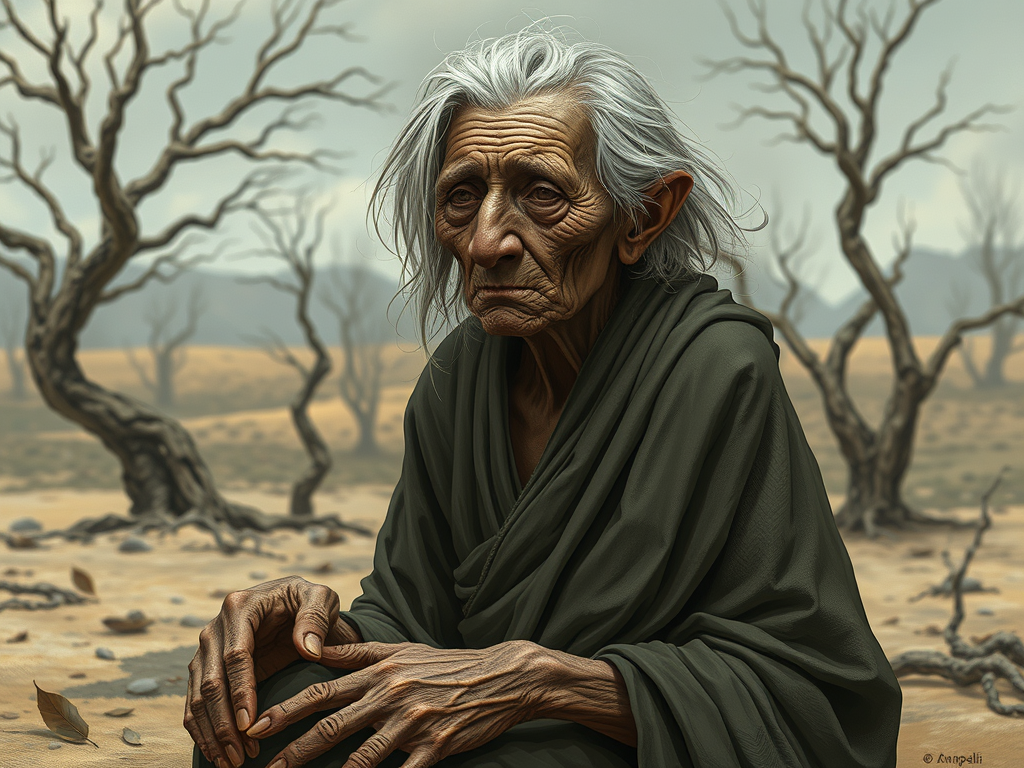
Jarā — the same body later revealing change, decline and unreliability
Click infographic to enlarge ↗
22 Pure mama — what was ‘mine’ could not obey ownership
Several verses use pure mama—formerly mine. Eyes, teeth, hands, neck, arms, thighs and feet were all experienced as ‘mine’, yet none accepted the command implied by ownership: remain as I want you to remain.
The body may conventionally be called mine, but its behavior is governed by conditions rather than by possession. That is a powerful opening toward relinquishing etaṁ mama.
23 Four verses on hair — four different attractive signs
The first four verses all concern hair, but on different axes: colour and texture, fragrance, density, and ornamentation. Attraction is not a single perception; it is assembled from many signs.
Jarā dismantles each one: black becomes coarse, fragrance changes, thickness becomes sparseness, ornamented braids end in baldness. Ambapālī examines fascination at the level of its components.
24 From face to voice to the entire body
After the hair, the poem passes through eyebrows, eyes, nose, ears, teeth, voice, neck, arms, hands, breasts, skin, thighs, calves and feet. The descent is systematic.
This prevents selective escape. The mind cannot preserve one privileged beautiful feature untouched by the teaching. Wherever attention turns, jarā has already entered.
25 Saccavādivacanaṁ anaññathā — nineteen confirmations
The refrain Saccavādivacanaṁ anaññathā follows every verse. A careful rendering is: ‘The word of the Truth-speaker has not turned out otherwise.’
Ambapālī is not merely repeating doctrine. She is comparing the Buddha’s teaching with direct evidence in her own body. Nineteen times the body verifies Dhamma.
26 Why this is not body-hatred
The poem does not say that youth was never beautiful. Nor does it replace attraction with disgust as another fixation. The decisive contrast is between beauty and reliability.
Aversion to the aging body is still attachment to how the body should be. Wisdom is quieter: youth looked one way; age looks another; both are conditioned.
27 From selective signs to yathābhūta recognition
Beauty normally works through selected signs: dark hair, bright eyes, smooth skin, fragrance, firmness, ornaments. Attention gathers these signs into the compelling perception ‘beautiful’.
Ambapālī widens the field. The same feature is seen across time. When arising, alteration and decay are included, the attractive sign can no longer promise lasting satisfaction.
28 Relationship to kāyānupassanā — close, but not identical
These verses are exceptionally useful for kāyānupassanā because they sustain attention on the changing body. But the poem itself does not use the Satipaṭṭhāna formula.
The careful claim is therefore that Ambapālī’s verses are powerful material for bodily contemplation, not that she explicitly labels the practice kāyānupassanā.
29 Relationship to rūpa and identity
The youthful body and the aged body are not two different selves. They are changing configurations of rūpa.
If ‘I am beautiful’ becomes identity, jarā feels like an assault on ‘me’. If beauty is seen as a conditioned phase of rūpa, its alteration can be known without the same collapse of identity.
30 The final shift from body parts to samussaya
For eighteen verses individual features are examined. Verse 270 then calls the whole thing ayaṁ samussayo—this bodily accumulation, this built-up structure.
The attractive whole is now understood as an assembled construction. The poem changes scale from parts that were admired to the conditioned structure made from them.
31 Jajjaro bahudukkhānamālayo
Jajjaro describes what is worn, fragile or decrepit. Bahudukkhānam ālayo calls the aging body a dwelling-place for many pains.
The issue has moved beyond loss of appearance. The body’s increasing vulnerability shows why attachment to rūpa cannot provide lasting security.
32 Jarāghara — the old house
The final image is jarāghara: an aging house, its plaster fallen away. A house may once be polished and decorated, but its materials reveal their conditions as time passes.
The image allows aging to be seen without insult or disgust. This is simply what happens to a constructed dwelling.
33 Reflection without self-pity
Aging can easily become a story of ‘what I have lost’. Ambapālī repeatedly shifts the emphasis away from personal tragedy and toward Dhamma verification.
The question becomes not ‘Why is this happening to me?’ but ‘What does this show about conditioned form?’ That movement transforms grief into paññā.
34 How to practise with the nineteen verses
Choose one bodily feature strongly tied to identity—hair, skin, eyes, teeth, voice, strength, shape or mobility. Acknowledge its present condition without praise or blame. Compare it with an earlier condition and notice what changed without permission.
Then recollect the refrain: Saccavādivacanaṁ anaññathā. Aging is not contradicting the Dhamma; it is demonstrating it.
Finally extend the reflection universally. Everyone admired for youth, beauty, strength or vitality is subject to the same jarā. This turns a personal observation into wisdom about conditioned existence.
Use jarā as evidence rather than as an enemy
Remember accurately — do not deny that youth, health or beauty once appeared pleasing.
Place past beside present — identify what changed without asking permission from “me” or “mine.”
Name the condition — jarā is not personal injustice; it is the nature of conditioned rūpa.
Verify the teaching — “Saccavādivacanaṁ anaññathā.” What the Buddha taught has not turned out otherwise.
Let fascination weaken without creating aversion — the aim is wisdom toward rūpa, not hatred of the body.
| Field of reflection | Question | Observation | Direction |
|---|---|---|---|
| Hair / appearance | What feature do I still expect to remain as it is? | Compare past and present without praise or blame. | See jarā rather than personal failure. |
| Face / eyes / teeth | How much identity depends on being seen as attractive? | Notice that admired signs alter despite ownership. | Loosen ‘I am this appearance’. |
| Voice / strength / mobility | Do I treat present ability as guaranteed? | Observe changes in capacity across years. | Replace entitlement with clear comprehension. |
| Other people’s beauty | Does attraction ignore the future of the body? | Remember that the same jarā applies universally. | Let attraction be informed by impermanence. |
| Aging itself | Do I resist age because it contradicts how I think life should be? | Use the refrain: the Truth-speaker’s word has not turned out otherwise. | Turn aging into verification of Dhamma. |